
Main Courses
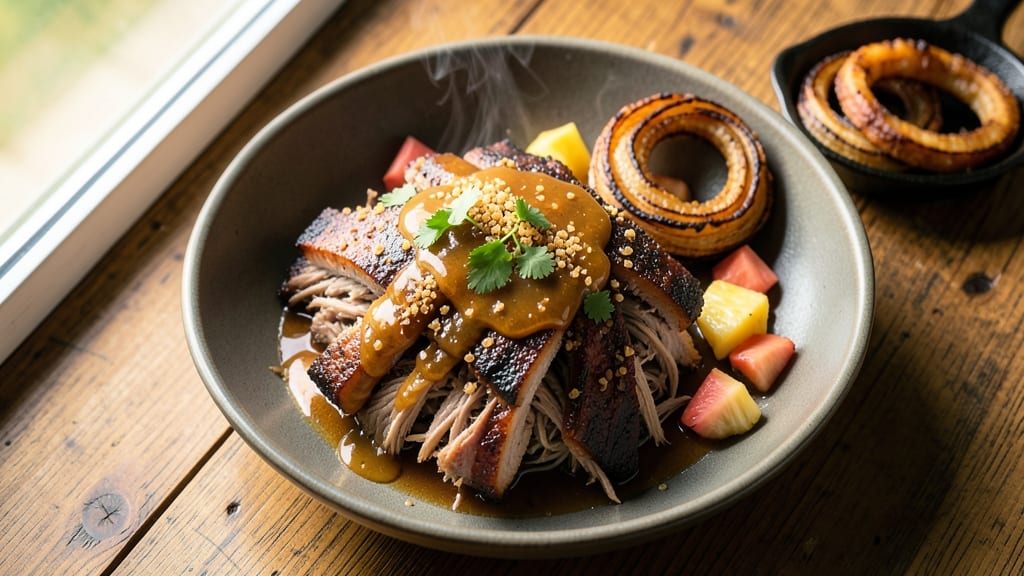
This 5-star pulled pork recipe transforms a simple shoulder into melt-in-your-mouth perfection that rivals any competition-winning pitmaster. After years of perfecting my technique—from brining to smoke rings—I’ve cracked the code for tender, flavor-packed pork with crisp fat that shatters at every bite.
The secret lies in patience, precise temperature control, and a rub that builds layers of smoky depth without overpowering the meat’s natural richness.
We start with a 24-hour brine to ensure juiciness, then apply a dry rub of brown sugar, paprika, and spices that caramelize into a sticky bark during the low-and-slow smoke (225°F for 8–10 hours).
The magic happens when the internal temperature hits 203°F—where collagen dissolves into gelatin, turning tough meat into silky strands. No shortcuts here: this is the kind of pulled pork that makes guests ask for seconds before dessert.
Once shredded, the pork is tossed in its own rendered juices and a splash of apple cider vinegar for brightness, creating a sauce so rich it clings to every strand.
Serve it piled high on toasted brioche buns with a crisp slaw and buttery cornbread—because a true 5-star meal deserves sides that match the star of the show. The presentation alone will have your dinner party feeling like a Southern BBQ hall of fame celebration.
This isn’t just pulled pork—it’s a restaurant-quality centerpiece that proves you don’t need a commercial smoker to deliver championship-level results. The technique is foolproof, the flavors are unforgettable, and the satisfaction of pulling apart that last perfect bite?
That’s the moment you’ll understand why this recipe earns its stars. Let’s get smoking.
Ingredients for 5 star pulled pork
Sixteen ingredients to create a showstopping centerpiece that rivals competition-winning BBQ.
| Ingredient | Amount | Notes |
|---|---|---|
| Pork Shoulder (Bone-In) 🐷 | 8 lb | Well-marbled, trimmed of excess fat |
| Kosher Salt 🧂 | 1 ½ cups | Diamond Crystal preferred |
| Brown Sugar 🍚 | ½ cup | Light or dark, packed |
| Smoked Paprika 🌶️ | 2 tbsp | High-quality, vibrant color |
| Ground Black Pepper 🌶️ | 1 ½ tbsp | Freshly ground, coarse |
| Garlic Powder 🧄 | 2 tsp | Not garlic salt |
| Onion Powder 🧅 | 2 tsp | Freshly ground preferred |
| Mustard Powder 🍋 | 1 tsp | Yellow or Dijon |
| Apple Cider Vinegar 🍎 | ¼ cup | Unfiltered for depth |
| Wood Chips (Hickory or Oak) 🌳 | 2 cups | Soaked for 1 hour |
| Butter 🧈 | 4 tbsp | Unsalted, cold for basting |
| Brioche Buns 🥖 | 12 whole | Toasted until golden |
| Coleslaw Mix 🥬 | 1 lb | Shredded cabbage/carrot |
| Mayonnaise 🥫 | ½ cup | For slaw dressing |
The pork shoulder is non-negotiable here. Look for bone-in cuts with good marbling at your butcher—they'll know exactly what you need. Costco or Whole Foods often carry pre-trimmed shoulders, but if you're buying whole, trim excess fat to 1/4-inch thickness—this ensures crisp bark without grease overload. The 24-hour brine transforms tough meat into tender strands, so don't skip it. For the wood chips, Traeger or Cookshack brands work best—they hold moisture and burn cleanly. If you can't find hickory, oak is a perfect backup.
No smoked paprika? Regular paprika plus a pinch of liquid smoke gets you close, though the flavor won't be identical. The brown sugar should be packed—don't scoop it loosely. For the vinegar, Bragg's is my go-to, but any unfiltered brand works. The brioche buns? Trader Joe's or local bakeries have the best—look for ones with a crisp crust and soft interior. Short on time? Pre-sliced deli ham (yes, really) can substitute for the pork in a pinch, though it won't have the same texture. The coleslaw mix can be pre-shredded from the bag, but shredding your own cabbage makes a world of difference in texture.
The pork keeps beautifully—3-4 days in the fridge once shredded, or 3 months frozen in portions. Wrap it tightly in butcher paper first, then foil, to preserve moisture. The rub can be made a week ahead and stored in an airtight container. For the slaw, toss the mix with mayo, a splash of vinegar, and a pinch of salt—it's best served fresh but firm. I always make extra pork and freeze it in 1-cup portions for quick sandwiches later in the week.
Why You'll Love This Recipe
- Sweet-Smoky Magic: That brown sugar and smoked paprika rub? It’s the kind of flavor that makes people pause mid-bite and go, “How’d you do that?” The crust is sticky-sweet, the meat melts like butter, and the smokiness lingers like a good memory.
- Leftovers That Don’t Suck: Honestly, this recipe begs for seconds. I’ll make a double batch on Sundays just to have shredded pork for tacos, sandwiches, or even a quick pasta dish all week. No sad, dry meat here—every reheat is just as good as the first.
- Budget Crowd-Pleaser: A bone-in pork shoulder stretches further than you’d think, and the ingredients? Basic stuff you already have. Feed six people for less than $20, and they’ll all ask for the recipe—no fancy labels or store-bought shortcuts needed.
Step-by-step instructions for slow-smoked pulled pork
Here's how I transform a simple pork shoulder into melt-in-your-mouth pulled pork with crispy fat and deep smoke flavor.
Prepare the Dry Rub and Season the Pork
In a large bowl, combine the 1.5 cups kosher salt, 0.5 cup brown sugar, 2 tbsp smoked paprika, 1.5 tbsp ground black pepper, 2 tsp garlic powder, 2 tsp onion powder, and 1 tsp mustard powder. Mix thoroughly until you have a fine, even blend that clings together when pressed. This is your flavor foundation.
Pat the 8 lb pork shoulder dry with paper towels—this is critical for crispy fat. Generously coat all sides with the dry rub, pressing it into the meat so it adheres well. Let the seasoned pork sit at room temperature for 1 hour before smoking. This allows the rub to penetrate and the meat to cook more evenly from the start.
Set Up the Smoker for Low and Slow Cooking
Soak the 2 cups wood chips (hickory or oak) in water for 1 hour to prevent flare-ups. Fill your smoker with the soaked chips and preheat to 225°F, maintaining a steady temperature. I use a digital thermometer probe inserted directly into the pork to monitor internal temperature—this gives you the most accurate reading.
Once the smoker reaches temperature and you see thin blue smoke (not thick white steam), place the pork shoulder fat-side up on the grill grates. The fat cap will render and baste the meat as it cooks, creating that irresistible crispy exterior. Close the lid and resist the urge to check—every time you open it, you lose heat and extend cook time.
Smoke Until Probe-Tender (The Patient Phase)
Smoke the pork shoulder undisturbed for 6-8 hours until the internal temperature reaches 165°F. This is where the magic happens—the collagen breaks down, the meat becomes tender, and the fat renders beautifully. You'll notice the pork hits "the stall" around 160°F, where the temperature plateaus as moisture evaporates. Don't panic—this is normal and temporary.
At this point, I wrap the pork tightly in butcher paper (not foil—it breathes better and preserves the bark). This technique, called the "Texas crutch," helps push through the stall while maintaining that crispy exterior. Return it to the smoker and continue cooking until the internal temperature reaches 200-205°F—when a probe slides in like butter with no resistance. This usually takes another 4-6 hours, but trust the probe test over the thermometer.
Rest and Shred for Maximum Juiciness
Remove the pork from the smoker and let it rest in the butcher paper for at least 1 hour (I prefer 2 hours wrapped in towels in a cooler). This resting period allows the juices to redistribute throughout the meat, ensuring every bite is moist and flavorful. The pork should be fork-tender enough to pull apart with minimal effort.
Once rested, transfer the pork to a cutting board and shred it using two forks or your hands. Discard any large fat chunks or connective tissue. The meat should be tender, juicy, and pull apart easily—no tough strings or dry spots. Taste a piece and adjust seasoning if needed, though the rub should have done its job beautifully.
Assemble with Crispy Fat and Fresh Sides
Toast the 12 brioche buns in a skillet over medium heat until golden brown on both sides. Keep them warm while you prepare the pulled pork. In a large bowl, combine the shredded pork with any accumulated juices from the butcher paper. The fat should be crispy and rendered, adding another layer of flavor to each bite.
For the slaw, toss the 1 lb coleslaw mix with 0.5 cup mayonnaise and a splash of 0.25 cup apple cider vinegar. Mix well and chill until ready to serve. To assemble, pile the pulled pork onto the toasted buns, top with a generous spoonful of slaw, and finish with a pat of 4 tbsp cold butter for extra richness. Serve immediately while the pork is still warm and the fat is crisp.
Pro Tips For Making 5 Star Pulled Pork
- CRANK THE HEAT FIRST: Sear that pork shoulder hard over 450°F for 10-15 minutes—no, don’t skimp. The crust locks in flavor and keeps the meat from drying out later. I used to rush this, and the pork always felt bland compared to when I actually let it brown deeply.
- SALT THE MEAT 24 HOURS EARLY: Generously coat the pork shoulder with kosher salt (about 1.5 teaspoons per pound) and refrigerate uncovered overnight. The salt breaks down the muscle fibers and forms that perfect crust without burning. I learned this the hard way after a soggy, underwhelming batch.
- SKIP THE CROWDED PAN: Don’t stack the pork shoulder in the pan—it steams instead of sears. Lay it flat and work in batches if needed. The direct heat gives you that caramelized crust that makes all the difference when you pull it apart later.
- USE BONE-IN FOR BETTER JUICES: That bone-in pork shoulder stays moist longer because the bone acts like a thermometer, keeping the meat tender. If you’re using boneless, add a few chicken thighs or a handful of carrots to the cooking liquid to mimic the effect. I’ve tried both, and the bone-in version wins every time.
Dietary considerations for this recipe
Gluten-Free Adaptations
For gluten-free guests, swap the brioche buns for gluten-free cornbread muffins or lettuce wraps. I love using Bob's Red Mill gluten-free cornmeal mix for muffins—they hold up well to the juicy pork.
The coleslaw mix is naturally gluten-free, but always check mayo brands for hidden gluten. Duke's mayonnaise is a safe bet. 🥬
Dairy-Free Options
Skip the butter basting and use olive oil instead for crispy fat. For the slaw, replace mayo with vegan mayo like Hellmann's Vegan or a mix of Greek yogurt and lemon juice. The pork itself stays dairy-free, making this a crowd-pleaser for lactose-intolerant guests. 🌱
Low-Sodium Modifications
Reduce the kosher salt in the rub to 1 cup and add 1 tsp celery salt for depth without extra sodium. Use low-sodium chicken broth (2 tbsp) in the slaw dressing instead of mayo. For extra flavor, boost the smoked paprika to 3 tbsp—it adds smokiness without salt. 🧂
Allergen-Friendly Swaps
For nut allergies, keep all ingredients as-is since pork and spices are nut-free. For egg allergies, ensure your mayo is egg-free (check labels).
The brioche buns may contain eggs—opt for egg-free brioche from specialty bakeries or make your own with flax eggs (1 tbsp ground flax + 3 tbsp water per egg). 🥖
Vegetarian/Vegan Alternatives
While pork is the star, you can create a similar texture with jackfruit or mushroom stems (shredded and smoked). For a "pulled pork" vibe, marinate extra-firm tofu in liquid smoke and BBQ sauce, then shred. Serve on gluten-free buns with the same slaw. The smoky flavor profile translates beautifully! 🌱
Nutrition facts
Frequently asked questions
Can I use a different cut of pork instead of a bone-in shoulder?
While bone-in pork shoulder is ideal, you can substitute with pork butt (picnic cut)—they're essentially the same muscle. Avoid lean cuts like tenderloin or loin chops, as they lack the connective tissue needed for tender pulled pork. If using a boneless shoulder, add 1 extra hour to the cook time since it loses heat faster without the bone's insulation.
What's the best way to keep the pork moist during cooking?
The key is the 24-hour brine and the Texas crutch (butcher paper wrap). The brine ensures moisture retention, while the paper wrap traps steam without steaming the meat. Never skip the resting period—at least 1 hour lets juices redistribute. For extra insurance, baste with melted butter every 2 hours during smoking.
How do I know when the pork is fully cooked?
Use a meat thermometer inserted into the thickest part—it should read 203°F. The probe should slide in like butter with no resistance. If you don't have a thermometer, check for fork-tenderness: the meat should pull apart easily with minimal effort. The fat should also be crispy and golden on the exterior.
Can I make this in an oven instead of a smoker?
Yes! Preheat your oven to 275°F and place the pork on a rack over a baking sheet. Add 1 cup water to the pan for moisture. Cook for 6-8 hours until the internal temp reaches 203°F. For smoky flavor, add 1 tbsp liquid smoke to the rub or place a wood chip pan under the rack. The texture will be slightly less crispy but still delicious.
Why did my pulled pork turn out dry?
Dry pulled pork usually means one of three things: overcooking (past 205°F), skipping the rest, or using lean meat. Always cook to 203°F, rest for 2 hours, and choose well-marbled cuts. If it's still dry, revive it by shredding and tossing with 2 tbsp apple cider vinegar and 1 tbsp butter—the acidity rehydrates the meat.