Why I started Pork Recipes Chop
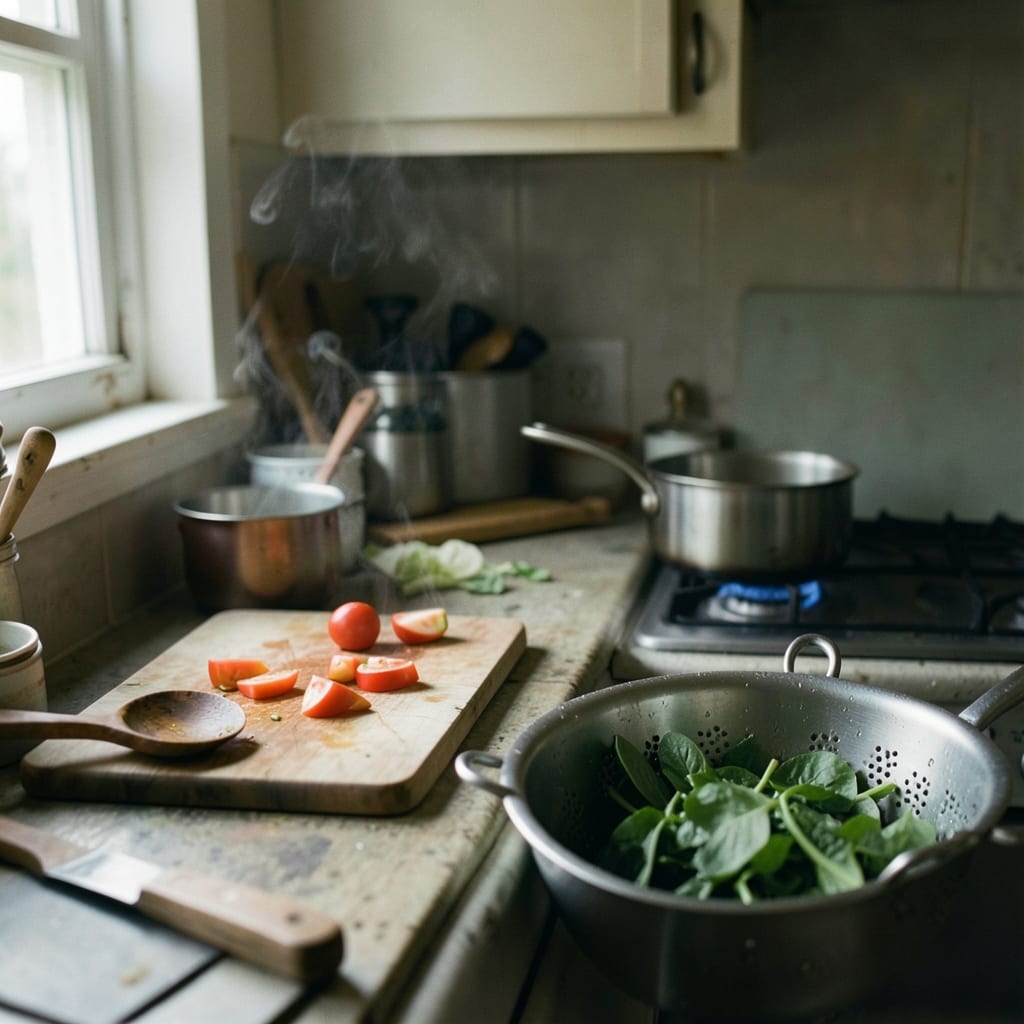
It was a Sunday afternoon in my grandmother’s kitchen, and I was trying to carve a leg of pork she’d spent all morning slow-roasting.
The knife slipped, the blade caught the bone, and suddenly there was blood on the cutting board and a curse from the other side of the table.
She didn’t yell—just sighed, wiped her hands on her apron, and said, *‘You’re holding it like you’re afraid of it.’* That’s when I realised cooking wasn’t about following steps. It was about understanding the thing in your hands.
This site is for anyone who’s ever stood in their kitchen wondering why a recipe didn’t work—or worse, why it *did* work but still didn’t taste like it should. Here, you’ll find recipes that explain the *why* behind every step, not just the *how*. No shortcuts, no magic.
Just the slow science of turning salt, smoke, and time into something worth sharing.
Meet the founder

My grandmother’s kitchen was where I learned that a good recipe isn’t just a list—it’s a conversation.
She’d hand me a knife at twelve years old and say, *‘Now you’ll see why we don’t rush the brine.’* I burnt the first batch of pulled pork I ever made, but she didn’t scold me. She just pointed at the thermometer and said, *‘Patience isn’t a virtue here.
It’s the only thing that matters.’* That’s the lesson I still carry: a recipe is only as good as the time you’re willing to give it.
The only tool I’ve kept from that kitchen is a cast-iron skillet with a handle so warped it’s practically a work of art.
It’s got a dent from when I dropped it (the pork was fine, but my pride wasn’t), and a scorch mark from the time I walked away for *‘just a minute.’* I still use it because it’s the only pan that’s seen every failure and still delivers. It doesn’t lie.
The night I ruined a batch of smoked ribs by trusting a ‘foolproof’ recipe that skipped the bark-building step. The first hour went fine—then the smoke stopped penetrating, the meat stayed tough, and by the time I pulled them off the rack, I had a science project, not dinner.
That’s when I realised recipes aren’t just instructions. They’re hypotheses. And every one needs an experiment to prove it.
I tap every pan twice before I start cooking. Once to make sure it’s hot enough. Twice to remind myself that no matter how many times I’ve done this, the meat could still surprise me. My grandmother did it too, though she’d never admit it.
I think it’s the only habit I’ve inherited that isn’t about flavor—it’s about respect.
Meet the mascot
It started on a napkin at a diner in Memphis, where I’d gone to argue with the cook about his ‘dry’ pulled pork.
The first scribble was just a stick figure with a cleaver, but the cleaver looked more like a butter knife, and the figure’s arms were too short to hold it properly.
I crumpled it up and started over—this time, the figure was hunched over a smoker, but the smoke was coming out in straight lines like a factory, not the lazy curl of real wood smoke.
The drawn version had more detail: a proper cleaver, a smoker with a crooked chimney, and a pork shoulder suspended by chains that looked suspiciously like they were about to snap.
The figure’s face was just a blank circle, but the posture was right—shoulders tense, like they were bracing for something. I realised then that the mascot wasn’t about the food. It was about the *waiting*.
When I scaled it down for the site’s logo, I had to lose the smoker’s chimney (too fussy at small sizes) and simplify the cleaver to three lines.
The pork shoulder became a single, unbroken shape, and the figure’s blank face turned into a smudge—like they’re squinting at something just out of frame. I call him *Smudge*, because that’s what he looks like when you blink.
What I promise you
This isn’t a site that tells you how to make food. It’s a site that tells you how food *really* works—and what happens when it doesn’t.
What you can hold me to
- If a step says *‘until the bark forms,’* I’ve watched it happen in my own kitchen—not in a lab or someone else’s.
- Every ‘pro tip’ is something I’ve actually messed up first, then fixed the hard way.
- The ‘equipment’ section lists what you *need*, not what I wish you had.
- If a recipe has a ‘fail point,’ it’s because I’ve hit it myself—and I’ll tell you how to avoid it.
How I create a recipe
A recipe starts with a question, not an ingredient list. Why does this dish work in one kitchen but not another? What’s the difference between a smoker’s first hour and its last? I don’t begin with a hypothesis—I begin with a *mistake*.
The best recipes here are the ones that survived my own failures first.
The first cut
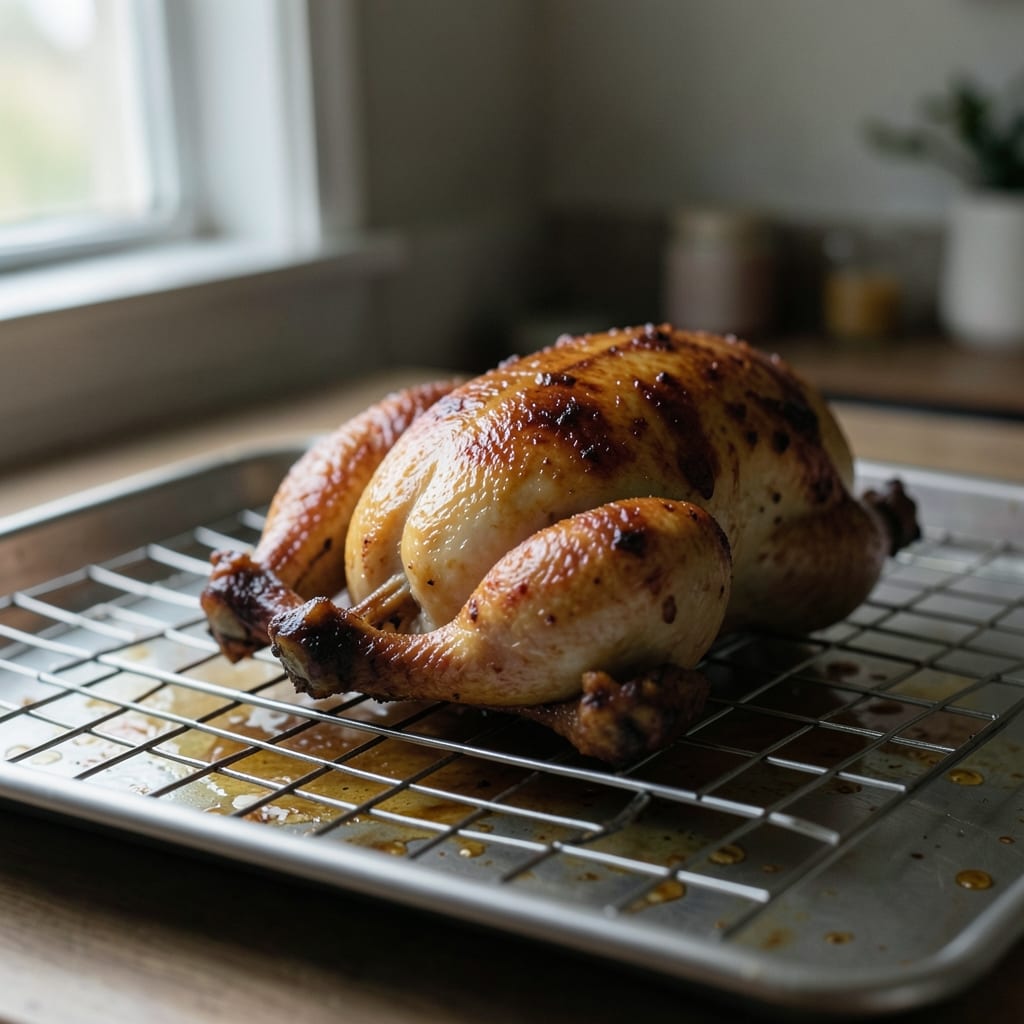
This is where you learn whether the meat respects you. A pork shoulder, brined for 24 hours, comes out of the ice bath at 38°F.
You sear it skin-side down in a 400°F oven for 20 minutes—no peeking, no poking—until the fat renders into a pool that smells like bacon but isn’t quite there yet. If the skin isn’t blistering by then, you’ve got a problem.
If it’s burning too fast, you’re using the wrong pan.
The real test comes when you flip it. The crust should crack like parchment, not tear like wet paper. If it doesn’t, you’re not patient enough. Or the oven’s too hot. Or the meat was too cold. Or all three.
There’s no ‘fix’ at this stage—just a choice: walk away or walk out. I’ve done both.
The slow fix
After the first hour, the smoker’s temp drops to 225°F, and the meat’s internal temp climbs at 1°F per hour—no faster, no slower. That’s the rhythm you follow. The bark thickens, the fat cap softens, and the meat starts to *give*.
At 160°F internal, you pull it, let it rest for 90 minutes (no cutting, no checking), and only then do you separate the shoulder from the bone. If the pull isn’t tender enough, you didn’t wait long enough. If it’s mushy, you overdid it.
The fix isn’t in the cooking. It’s in the *waiting*. A pork butt that’s 203°F at the bone isn’t done—it’s *almost* done. The collagen needs time to dissolve, the fibers to soften. That’s why the best pulled pork isn’t the one you rush.
It’s the one you let *unravel* on its own.
How a page gets onto this site
The notes go down while the meat’s still warm—temperature logs, bark thickness, the exact moment the smoke ring formed. I type them into a notebook with a grease pen because ink smudges when you’re pulling pork, and I don’t trust myself not to smear a 180°F reading.
The first draft of a recipe is always a mess: too many steps, not enough context. The second draft cuts the fluff and keeps the *why*.
A page gets rewritten months later when I realise I skipped the part where the reader has to *decide*. Should they use apple wood or hickory? How do they know when the bark is ‘just right’?
The best recipes don’t just tell you what to do—they tell you what to *watch for*. And if I haven’t included that, I go back and add it.
Write to me
I love hearing about the dishes that went wrong *and* the ones that surprised you. Did you nail a recipe on the first try? Or did you turn a roast into a science experiment?
Send me the story—the good, the bad, and the *‘I have no idea how this worked’* moments. You’ll find the contact page in the menu above.
This site is for the people who cook because they want to understand, not just replicate. If that’s you, welcome. Now go ruin something. Then fix it.
The recipes are grouped by category: Appetizers, Beverages, Breakfast & Brunch, Desserts, Main Courses and Reviews.