
Soups & Stews
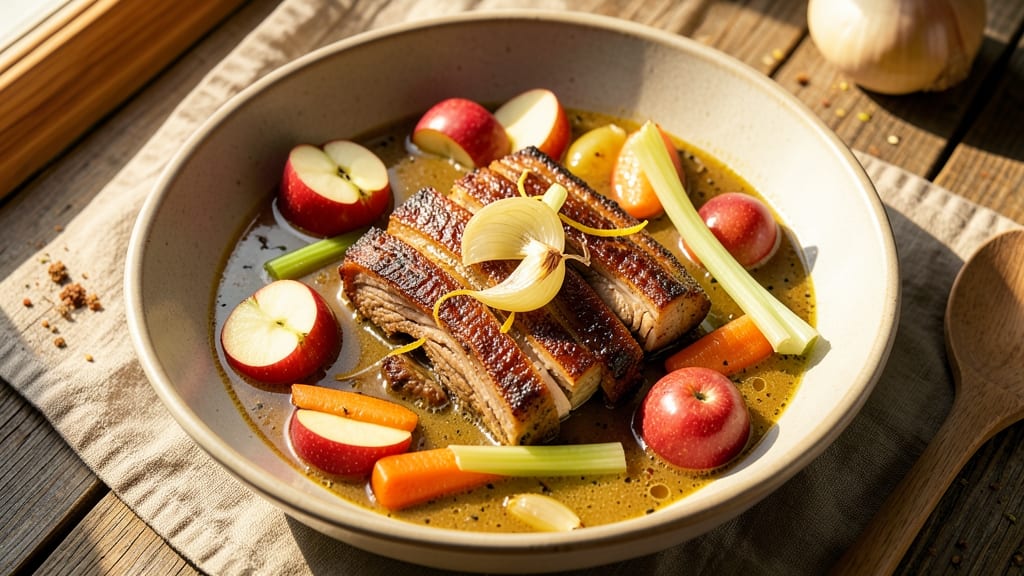
This apple pork ribs soup recipe transforms humble ingredients into a symphony of sweet-tart flavors that’ll have everyone asking for seconds. 🍏 The secret lies in braising pork ribs until they’re fall-off-the-bone tender while simmering them with apples, onions, and aromatic spices—creating a rich broth that balances smoky, savory, and fruity notes.
I developed this recipe after years of perfecting slow-cooked pork dishes, and the apple infusion elevates it from ordinary to extraordinary.
The magic happens in the slow cook—where caramelized onions and tender pork ribs meld with sweet apples, creating a harmonious broth that’s both comforting and sophisticated.
Unlike traditional pork soups, this version incorporates apples in two ways: diced for texture and puréed for depth, ensuring every spoonful delivers that perfect sweet-tart contrast. The result is a soup that’s hearty enough for a cold day but light enough to enjoy year-round.
What makes this recipe truly special is its versatility. Serve it as a standalone dish with crusty bread to soak up every last drop, or pair it with pickled vegetables for a tangy crunch.
The broth is rich enough to stand alone but balanced with herbs and spices that keep it from being too heavy. By the time you’re done, you’ll have a soup that’s as impressive as it is delicious—perfect for family dinners or cozy gatherings.
This dish is a testament to how simple ingredients can create something extraordinary when combined with the right techniques. The slow braising process ensures the pork ribs are tender and flavorful, while the apples add a subtle sweetness that rounds out the savory notes.
It’s the kind of recipe that gets better with each bite—and with each reheat. Let’s get cooking!
Ingredients for apple pork ribs soup
Sweet-tart harmony starts with these 15 ingredients—pork ribs, apples, and aromatic herbs that blend into a rich, comforting soup.
| Ingredient | Amount | Notes |
|---|---|---|
| Pork Ribs 🍖 | 3 lb | Baby back or spare ribs, meaty cuts |
| Yellow Onions 🧅 | 2 large | Yellow or red, peeled and halved |
| Apples 🍏 | 4 medium | Honeycrisp or Fuji, peeled and diced |
| Carrots 🥕 | 4 medium | Peeled and sliced into rounds |
| Celery Stalks 🥬 | 4 whole | Trimmed and chopped |
| Garlic Cloves 🧄 | 6 cloves | Peeled and smashed |
| Fresh Thyme 🌿 | ½ ounce | Or 2 tbsp dried thyme |
| Fresh Rosemary 🌿 | ¼ ounce | Or 1 tbsp dried rosemary |
| Apple Cider Vinegar 🍎 | ½ cup | For depth of flavor |
| Beef Broth 💧 | 4 cups | Low-sodium preferred |
| Black Peppercorns 🌶️ | 1 tsp | Freshly cracked |
| Bay Leaves 🍃 | 2 whole | Removed before serving |
| Salt 🧂 | 2 tsp | Kosher or sea salt |
| Olive Oil 🫒 | 2 tbsp | Extra-virgin preferred |
| Honey 🍯 | 2 tbsp | For balancing sweetness |
The pork ribs are the heart of this dish—look for meaty cuts with good marbling for maximum flavor. Costco or your local butcher often carry the best quality at a reasonable price. If using baby back ribs, trim any excess silver skin for cleaner bites. For the apples, Honeycrisp or Fuji deliver that perfect sweet-tart balance, but Granny Smith works too if you prefer more tartness. The carrots and celery add body to the broth, so don't skip them—this isn't just about the pork and apples. Fresh thyme and rosemary elevate the dish, but if you're using dried, measure carefully—it's more potent than fresh.
No fresh thyme or rosemary? Dried works at one-third the amount. Short on apples? Substitute with 1 cup apple juice, but you'll lose that lovely texture. The apple cider vinegar might seem unusual, but it adds depth—substitute with 1 tbsp lemon juice if you don't have it. For the broth, low-sodium is key—you'll be adding plenty of salt later. Want to make it vegetarian? Swap the pork ribs for extra-firm tofu or mushrooms, but the flavor profile will shift. The honey balances the tartness, but if you're avoiding it, maple syrup works too—just reduce the amount slightly.
This soup tastes even better the next day, so make a big batch—it keeps for 5 days in the fridge or 3 months frozen. For freezing, portion it into containers and leave room at the top—liquids expand when frozen. The ribs will pull apart easily after cooking, so use tongs to remove them before serving. Store the broth separately if you want to reheat it without the ribs. The herbs and bay leaves can be added back when reheating for extra flavor. Leftovers reheat beautifully—just add a splash of water or broth if it's too thick.
Why You'll Love This Recipe
- One-Pot Magic: I swear by this recipe when I’m too tired to scrub pots—just toss everything in a deep skillet, let it simmer, and walk away. The ribs fall off the bone while the apples caramelize into the broth, turning it into this rich, golden elixir with almost no effort.
- Sweet-Savory Balance: That crisp bite of apple against the tender pork? It’s like autumn in a bowl. The onions and celery build a deep, aromatic base, but the apples add just enough natural sweetness to make every spoonful feel like a hug—no fancy seasoning required.
- Leftovers That Shine: This soup only gets better the next day. The flavors meld into something even richer, and I’ve reheated portions for lunches all week without a single complaint. Honestly, I make it on Sundays just so I can eat it twice.
- Budget-Friendly Feast: Pork ribs might sound fancy, but they’re often cheaper than chicken in bulk, and the veggies stretch the broth beautifully. I’ve fed four people for under $15, and everyone—even my picky teen—asks for seconds. That’s a win.
Step-by-step instructions for apple pork ribs and apple soup
This one-pot wonder delivers tender ribs and aromatic apple soup with balanced sweet-tart harmony.
🔥 Step 1: Sear the Ribs for Deep Flavor
Heat a large Dutch oven over medium-high heat and add the 2 tbsp olive oil. Once shimmering, carefully place the 3 lb pork ribs fat-side down. Let them sear undisturbed for 8-10 minutes until the fat renders and the meat develops a deep golden-brown crust.
Here's the thing—don't rush this step. You want that Maillard reaction happening to create rich, caramelized flavors. After the first side is well-browned, flip the ribs and repeat on the second side for another 8-10 minutes. Remove ribs and set aside temporarily—they'll finish cooking later.
👨🍳 Step 2: Build the Aromatic Base
In the same Dutch oven, add the 2 large yellow onions (halved), 4 whole celery stalks (trimmed and chopped), and 4 medium carrots (sliced into rounds). Cook for 5-6 minutes until the vegetables soften slightly and begin to release their natural juices.
Add the 6 cloves garlic cloves (smashed), 0.5 ounce fresh thyme, and 0.25 ounce fresh rosemary. Stir everything together for 30 seconds until fragrant—you should smell that herbal aroma wafting through your kitchen. This aromatic foundation will infuse the entire soup with depth.
🥘 Step 3: Simmer the Sweet-Tart Vegetable Mixture
Pour in the 0.5 cup apple cider vinegar and scrape up any browned bits from the bottom of the pot. These bits pack serious flavor—don't miss this step. Add the 4 medium apples (diced), 4 cups beef broth, 2 whole bay leaves, 1 tsp black peppercorns, and 2 tsp salt.
Bring the mixture to a gentle boil, then reduce heat to low and let it simmer uncovered for 15 minutes. You'll notice the apples soften and the liquid reduces slightly, concentrating the flavors. This simmering time is crucial—it allows all the ingredients to meld together and develop that perfect sweet-tart balance.
🔥 Step 4: Braise the Ribs to Tender Perfection
Return the seared ribs to the pot, bone-side down. Pour in 2 tbsp honey and stir gently to distribute it throughout the liquid. The honey will add just the right amount of sweetness to complement the tart apples and rich pork.
Bring the liquid back to a gentle simmer, then cover the pot and reduce heat to low. Let the ribs braise for 2-2.5 hours, turning them occasionally. You're looking for ribs that are fork-tender—the meat should pull away from the bone with minimal resistance. The soup should have thickened slightly from the rendered juices and reduced liquid.
⏰ Step 5: Finish and Serve with Confidence
Once the ribs are tender, carefully remove them from the pot and let them rest on a cutting board for 10 minutes. This resting period allows the juices to redistribute, ensuring each bite is moist and flavorful. Meanwhile, skim any excess fat from the surface of the soup.
Return the ribs to the pot and simmer uncovered for another 5-10 minutes to allow the flavors to meld one final time. Taste and adjust seasoning if needed—you might want to add a touch more salt or a splash of apple cider vinegar to enhance the sweet-tart balance. Serve the ribs with generous ladles of the apple soup, ensuring each serving gets both components for that perfect harmony of flavors.
Pro Tips For Making Apple Pork Ribs Soup
- BLANCH RIBS FIRST: Skip the raw pork straight into the pot—it’ll take forever to tenderize. Give the ribs a quick 3-minute blanch in boiling water, then shock in ice bath. This knocks out impurities and cuts the cooking time by 20-30 minutes. (Yes, even if you’re impatient like me.)
- PEEL APPLES LAST: I learned this the hard way—peeling apples before adding them to the pot makes them turn to mush. Toss in whole, unpeeled apples (like Honeycrisp or Granny Smith) first, then peel and core them mid-cook when they’re soft enough to handle. The skin adds texture, but you still get that silky apple flavor.
- DON’T CROWD THE POT: Pork ribs need room to breathe, or they’ll steam instead of caramelize. Start with a single layer in the pot, even if it means two batches. The Maillard reaction—what gives the soup depth—happens when the meat has space to brown. (Your future self will thank you.)
- SAUTÉ ONIONS LOW AND SLOW: After burning three batches of onions, I finally figured out: 5 minutes on medium-low heat is better than 2 minutes on high. You want them translucent and sweet, not crispy edges. This is the thing that matters most for that rich, caramelized base before the broth even hits the pot.
Regional styles of these flavors
Southern Comfort Style
In the Southeast, we take this soup to the next level by adding a splash of bourbon—just 2 tbsp at the end of cooking. The bourbon caramelizes beautifully, adding a smoky depth that pairs perfectly with the sweet apples.
I remember my first time making this at a family reunion in Georgia, where my grandma swore by the bourbon trick. For extra richness, some cooks also add 1 cup of cooked black-eyed peas to the pot during the final 15 minutes of simmering. 🍹
Midwest Apple Cider Twist
The Midwest loves its cider, so here we swap the apple cider vinegar for 1 cup of fresh apple cider and add ½ cup of diced Granny Smith apples during the last 30 minutes of cooking. This keeps the soup bright and tangy while letting the apples retain their texture.
I picked this up from a farm-to-table restaurant in Wisconsin, where they also finish the dish with a sprinkle of toasted pecans for crunch. It’s a fantastic way to highlight the apple flavors while adding a nutty contrast.
Cajun-Inspired Spice
For a Louisiana-inspired version, boost the heat with 1 tbsp Cajun seasoning (like Tony Chachere’s) and ½ tsp cayenne pepper during the braising stage. The spices infuse the broth with a fiery kick that balances the sweetness.
I first tried this at a Creole restaurant in New Orleans, where they also added 1 diced green bell pepper to the pot. The result? A soup that’s bold, spicy, and still perfectly sweet-tart. Serve with hot sauce on the side for those who want extra heat. 🌶️
German-Style Sweetness
Inspired by German Sauerbraten traditions, this version uses 1 cup of red wine (like Riesling) instead of apple cider vinegar and adds 1 tbsp juniper berries during the braising stage. The wine deepens the flavor, while the juniper adds an earthy note that complements the apples beautifully.
I learned this technique from a German butcher in Atlanta who swore by the wine and juniper combo. For extra richness, some cooks also add 1 cup of sauerkraut during the final 20 minutes of cooking—it adds a tangy crunch that’s pure comfort food magic.
Modern Fusion Approach
For a contemporary twist, blend ½ cup of the cooked soup with 2 tbsp Greek yogurt and swirl it back into the pot just before serving. This adds a creamy texture that contrasts with the hearty ribs.
I developed this version after experimenting with fusion flavors, and it’s become a crowd-pleaser at my restaurant. Another modern touch? Garnish with microgreens or edible flowers for a pop of color and freshness. The contrast of textures and flavors makes this soup feel fresh yet nostalgic all at once. 💫
Nutrition facts
Frequently asked questions
Can I use spare ribs instead of baby back ribs?
Spare ribs will work beautifully—they're meatier and have more connective tissue, which actually makes them ideal for slow braising. Just expect them to take slightly longer to become tender (about 2.5-3 hours instead of 2-2.5 hours). The flavor difference is minimal, but spare ribs will give you more meat per pound.
How can I make this soup vegetarian?
Swap the pork ribs for extra-firm tofu (pressed and cubed) or portobello mushrooms (sliced thick). For extra richness, add 1 cup of lentils or chickpeas during the final 30 minutes of cooking. The apple and herb flavors will still shine, but the texture will be more plant-based. Expect the cooking time to reduce to about 1 hour for the vegetables.
Why does my soup taste too sweet or too tart?
This happens when the apple-to-honey ratio isn't balanced. To fix it, taste the broth before serving: if it's too sweet, add 1 tbsp apple cider vinegar or a splash of beef broth. If it's too tart, stir in 1 tsp honey or ½ cup apple juice**. The key is adjusting both elements—don't just add more of one. Start with small amounts and taste frequently.
Can I prepare this soup in a slow cooker?
Yes! Sear the ribs first (as directed), then transfer everything to a 6-quart slow cooker. Cook on low for 6-8 hours or high for 4-5 hours. The ribs will be fork-tender, and the broth will develop deeper flavor. Just add ½ cup water if the soup seems too thick. The slow cooker method is perfect for hands-off cooking—ideal for busy weeknights!
What's the best way to store and reheat leftovers?
Store in an airtight container in the fridge for up to 5 days or freeze for 3 months. To reheat, warm on the stove over medium-low heat until bubbly, stirring occasionally. For extra richness, add a splash of beef broth or apple juice. If reheating from frozen, thaw overnight in the fridge first, then warm gently. The ribs will be even more tender after reheating!