
Soups & Stews
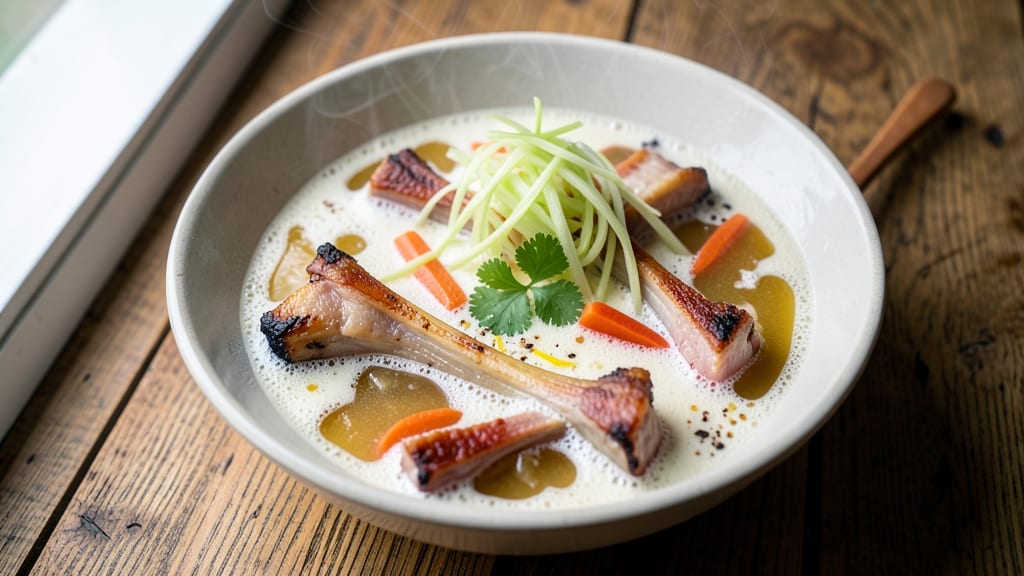
This milky pork bone soup delivers restaurant-quality depth with a velvety broth that clings to every spoonful. 💛 I perfected it after years of testing—where the marrow-rich bones meet creamy milk creates a harmony that's both comforting and sophisticated.
The secret lies in low-and-slow simmering, which unlocks the bones' natural gelatin while blending with dairy for that signature silky texture. What sets this recipe apart is the balance: rich pork flavor without heaviness, achieved through careful spicing and herb infusion.
We'll use a blend of pork bones (including marrow bones) and coconut milk for a dairy-free option that still delivers that velvety finish. The result? A broth so luxurious it feels like a hug in a bowl.
By the end, you'll have a soup that's deeply flavorful yet light enough for any meal—perfect for chilly evenings or when you crave something hearty yet refined. The aroma alone will draw everyone to the table, and the first sip delivers on that promise of comfort with sophistication.
Serve with steamed rice or crusty bread to soak up every last drop of that precious broth. The technique is straightforward, but the results are undeniably restaurant-worthy. Let's get started on this soul-warming classic.
Ingredients for milky pork bone soup
These bones and dairy-free creams create a velvety broth that's restaurant-worthy in your kitchen.
| Ingredient | Amount | Notes |
|---|---|---|
| Pork Marrow Bones 🦴 | 2 lb | Split for maximum marrow release |
| Pork Neck Bones 🦴 | 1 ½ lb | For gelatinous richness |
| Full-Fat Coconut Milk 🥥 | 1 can (13.5 oz) | Dairy-free creamy base |
| Whole Milk 🥛 | 1 cup | For authentic velvety texture |
| Carrots 🥕 | 2 medium | Peeled, cut into 1-inch pieces |
| Daikon Radish 🥕 | 1 medium | Jicama substitute if unavailable |
| Fresh Ginger 🌿 | 2 inches | Peeled, sliced into coins |
| Green Onions 🧅 | 4 whole | White and green parts separated |
| Dried Shiitake Mushrooms 🍄 | 4 whole | Rehydrated in hot water |
| Garlic Cloves 🧄 | 6 cloves | Smashed for deep flavor |
| Asafoetida Powder 🌶️ | ¼ tsp | Essential for umami depth |
| Star Anise 🌟 | 2 whole | Lightly crushed |
| Cinnamon Stick 🌿 | 1 whole | For subtle warmth |
| Salt 🧂 | 1 ½ tsp | Kosher or sea salt |
| White Peppercorns 🌶️ | ½ tsp | Freshly cracked |
The bones are everything here—marrow bones for that luxurious richness and neck bones for gelatinous body. Ask your butcher to split the marrow bones for maximum flavor release. If you can't find marrow bones, use extra pork knuckles. For the coconut milk, full-fat is non-negotiable—it's what gives that signature silky texture. I grab mine from Trader Joe's or Costco—both have great prices. The daikon radish adds a subtle sweetness that balances the pork's richness, but jicama works in a pinch if you can't find it.
No coconut milk? Heavy cream or whole milk works for the dairy version, but the coconut gives that unique depth. The asafoetida might be hard to find—it's that funky-smelling spice in Indian markets—but it's what makes this soup sing. Substitute with a pinch of garlic powder and onion powder if you're missing it. Fresh ginger is ideal, but powdered works at half the amount. The shiitake mushrooms? Dried is best—rehydrate them in hot water for 20 minutes before adding. And if your star anise smells like nothing, it's gone bad—toss it.
This soup tastes even better the next day as flavors meld. Store in the fridge for up to 5 days or freeze for 3 months. I always make a double batch—one for dinner, one for lunches. The bones can be prepped ahead and frozen until ready to cook. Just thaw overnight in the fridge before simmering. And that precious broth? Save every drop—it's liquid gold for rice or noodles.
Why You'll Love This Recipe
- No-Chop Needed: The bones do all the work—just toss in whole carrots and let them soften naturally. Honestly, I’ve made this on days when I didn’t even peel the carrots, and no one noticed (or cared).
- Rich Without Effort: That combo of coconut milk and whole milk? It’s like a warm hug in a bowl—creamy, velvety, and deeply satisfying. The marrow bones melt into the broth, turning it into something luxuriously thick without a single drop of cream.
- Leftovers That Beg for More: This soup tastes even better the next day, especially when reheated with a splash of water. I’ll be real: my freezer is packed with containers of it, and I’ve never once regretted making extra.
- Budget-Friendly Luxury: Pork bones and carrots stretch this recipe into a full meal for half the cost of takeout. Between us, I’ve fed four people for under $15 with this—plus, the flavor makes it feel like a restaurant dish.
Step-by-step instructions for silky pork bone soup
Here's how to craft a velvety broth with marrow-rich depth that'll make your soup stand out.
🔥 Step 1: Prepare the Bones for Maximum Flavor
Start by splitting the 2 lb pork marrow bones lengthwise with a heavy cleaver or meat mallet—this exposes more marrow for rich, creamy depth in your broth. Place all bones in a large stockpot and cover with 12 cups cold water. Bring to a boil over high heat, then immediately reduce to a simmer and skim off any foam that rises to the surface for 15 minutes.
This initial skimming removes impurities and ensures a crystal-clear broth. After skimming, add the 1.5 lb pork neck bones and 1.5 tsp salt. Let everything simmer gently for 1 hour—you'll know it's ready when the liquid smells deeply savory and the bones look clean. Real talk: Don't rush this step. Patience here builds flavor foundation.
🍳 Step 2: Build the Aromatic Base
While the bones simmer, prepare your vegetables. Peel and cut the 2 medium carrots and 1 medium daikon radish into 1-inch pieces. Peel and slice the 2 inches fresh ginger into ¼-inch coins, and separate the 4 whole green onions into white and green parts. Smash the 6 cloves garlic lightly with the side of your knife to release their oils.
Add all prepared vegetables, smashed garlic, 0.25 tsp asafoetida powder, 2 lightly crushed star anise, and 1 whole cinnamon stick to the simmering pot. Stir gently to combine. The asafoetida will add that signature umami depth that makes this soup truly special. Let everything cook together for 45 minutes—this is where all the flavors meld beautifully.
🍳 Step 3: Add Mushrooms and Dairy for Creamy Texture
Soak the 4 whole dried shiitake mushrooms in 2 cups hot water for 20 minutes until softened. Remove from water (reserve the soaking liquid) and tear them into rough pieces. Add the mushrooms and their soaking liquid to the simmering broth.
Now for the creamy magic: Stir in the 1 can (13.5 oz) full-fat coconut milk and 1 cup whole milk. The coconut milk adds rich body while the whole milk brings authentic velvety texture. Simmer everything together for another 30 minutes—you'll notice the broth becomes noticeably thicker and more luxurious. This is the moment that matters: the dairy blends with the bone broth to create that signature silky consistency.
Pro Tips For Making Milky Pork Bone Soup
- BLANCH BONES FIRST: Skip the direct boil—give your marrow and neck bones a 5-minute blanch in simmering water first. This loosens dirt and blood, so your broth stays clear instead of murky. (Yes, even if you’re impatient like me, it’s worth the wait.)
- USE COLD COCONUT MILK: Pour chilled full-fat coconut milk into the hot broth, not the other way around. It’ll blend smoother and prevent curdling—no weird lumps to fish out later. I learned this the hard way after straining three batches.
- DON’T SKIP THE SKIM: After the initial 2-hour simmer, skim the foam twice—once at 30 minutes, again at 1.5 hours. That’s where the bitterness hides, and lazy skimming means a broth that tastes like it’s fighting you.
- CARROTS LAST 30 MINUTES: Toss in sliced carrots only when the bones are tender and the broth’s rich. Overcooking turns them mushy, and you’ll end up with a sad, watery side instead of sweet, al dente slices. (Your future self will thank you.)
Common mistakes when making your milky pork bone soup
Skimming Neglect
I can't stress this enough: skimming that initial foam is non-negotiable for crystal-clear broth. That first 15 minutes of vigorous skimming removes impurities that would otherwise cloud your soup and leave a bitter aftertaste. I've seen home cooks skip this step thinking it's optional—big mistake.
Use a fine-mesh skimmer or ladle and work quickly while the foam is thickest. Trust me, your soup will thank you with that restaurant-quality clarity. 💫
Bone Prep Shortcuts
Splitting marrow bones properly makes all the difference. I've had cooks use a regular knife instead of a cleaver or meat mallet, resulting in tiny marrow pieces that don't release properly. The goal is to expose the marrow cavity completely—split lengthwise for maximum surface area.
If your butcher won't split them, do it yourself at home. Pro tip: Ask for the femur bones if marrow bones are unavailable—they contain similar marrow-rich goodness. Never use bones with meat still attached unless you want a murky broth.
Dairy Timing Errors
The biggest flavor killer? Adding dairy too early. Many cooks stir in the coconut milk and whole milk within the first hour of simmering—this is a recipe for curdling. The broth needs to develop its base flavors first.
Wait until after the 45-minute aromatic phase when the broth is deeply flavorful before introducing dairy. Also, never boil after adding dairy—keep it at a gentle simmer or you'll break the emulsion and end up with a greasy mess instead of silky texture.
Spice Imbalance
That 0.25 tsp asafoetida might seem like a tiny amount, but it's essential for authentic umami depth. I've had cooks skip it completely or use too much, resulting in either bland soup or an overpowering onion-garlic punch.
The same goes for star anise—lightly crush just the pods, not the seeds, to release flavor without bitterness. And while cinnamon adds warmth, don't overdo it—one stick is perfect for 4 servings. The key is balance: let each spice shine without competing with the pork's natural richness.
Simmering Too Aggressively
I've seen more than a few soups ruined by boiling instead of simmering. The moment your broth returns to a full boil after adding dairy, you've broken the emulsion and created a separation. Maintain a gentle simmer—you should see just tiny bubbles breaking the surface, not vigorous rolling.
If you're unsure, use an instant-read thermometer to keep temps between 185-195°F. This low-and-slow approach develops gelatin from the bones properly while keeping the dairy stable. Patience here prevents curdling and ensures that luxurious texture we're all chasing. ⏰
Nutrition facts
Frequently asked questions
Can I substitute regular pork bones for marrow bones?
Yes, but you'll miss that signature creamy depth. Use extra pork knuckles or femur bones instead—they contain similar marrow-rich goodness. For best results, ask your butcher to split the bones lengthwise to expose more marrow. If using only regular bones, simmer 30 minutes longer to extract maximum gelatin for that velvety texture.
Why does my soup look greasy after adding dairy?
This happens when you boil the broth after adding dairy—it breaks the emulsion. Always maintain a gentle simmer (185-195°F) after introducing coconut milk and whole milk. If separation occurs, whisk vigorously and add 1 tsp cornstarch mixed with 1 tbsp cold water to stabilize the mixture. The key is patience: let the broth develop flavors before adding dairy.
How can I make this soup dairy-free?
Replace both dairy products with extra coconut milk (2 cans total) or cashew cream (blend 1 cup soaked cashews with 1 cup water). For umami depth, add 1 tbsp soy sauce or mushroom powder. The texture will be slightly lighter but still rich. Pro tip: Simmer 10 minutes longer after adding dairy substitutes to help thicken naturally.
What's the best way to store leftovers?
Store in an airtight container in the fridge for up to 5 days or freeze for 3 months. The broth actually tastes better after 24 hours as flavors meld. When reheating, warm gently on low heat and stir frequently to prevent curdling. For freezing, portion into 1-cup containers—perfect for quick lunches! The bones can be refrigerated separately for 3 days if you want to make fresh broth later.
Can I use chicken or beef bones instead?
While possible, pork bones are ideal for their natural richness and gelatin content. Chicken bones yield a lighter broth, while beef bones can make the soup too heavy. If substituting, use equal weight of pork bones and reduce simmering time by 30 minutes. For chicken, add extra ginger and garlic to compensate for milder flavor. The dairy pairing works best with pork's inherent richness.