
Main Courses
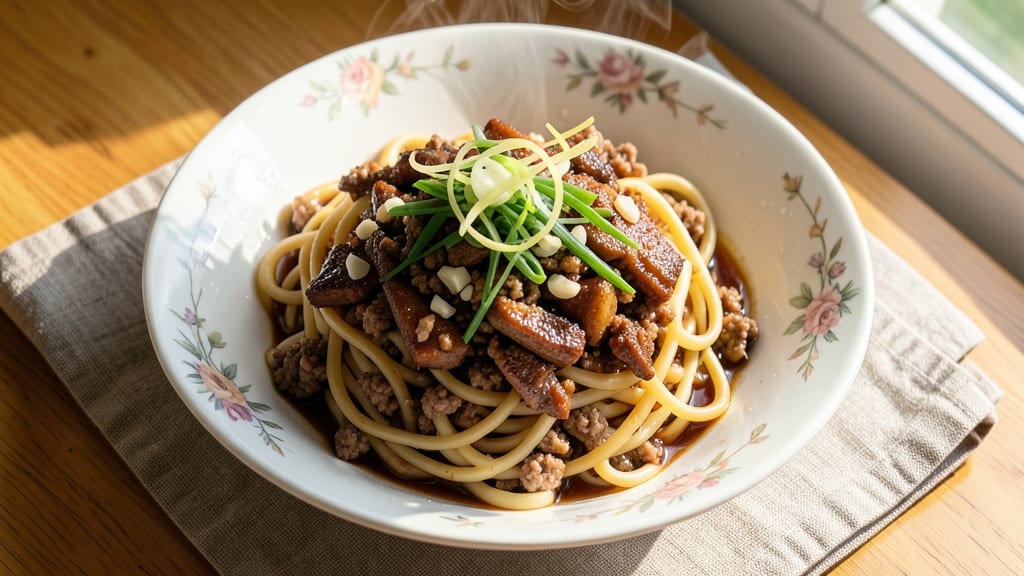
This minced pork noodle recipe delivers the kind of wok-fried comfort that transforms simple ingredients into a deeply satisfying meal. The secret lies in properly cooking the pork—frying it until just done so it stays tender yet flavorful—while balancing rich umami with bright aromatics.
I developed this recipe during a particularly busy week when I needed a dish that could feed a crowd without sacrificing quality, and it’s been a staple ever since.
The foundation of great minced pork noodles is in the technique: high-heat searing for the pork, followed by a quick wok toss with fresh herbs and aromatics. This method ensures the pork remains juicy while absorbing the savory-sweet sauce, creating that signature umami depth that makes every bite irresistible.
The noodles—whether egg or rice—should be cooked al dente so they hold up to the wok’s action without turning mushy.
What you’ll end up with is a bowl of noodles coated in tender, flavorful pork, bathed in a glossy sauce that’s perfectly balanced between sweet, salty, and umami.
The dish is hearty enough to stand alone but flexible enough to adapt to your preferences—add a fried egg for extra richness or a sprinkle of chili for heat.
It’s the kind of meal that feels like a hug on a plate, especially on chilly evenings or after a long day.
This recipe works equally well for weeknight dinners or weekend gatherings, and leftovers reheat beautifully. The key to success is keeping the pork moving in the wok and not overcooking the noodles. Let’s get started—your table is about to get a lot more interesting.
Ingredients for minced pork noodle
Fresh pork, aromatic herbs, and a wok-fried technique create this deeply satisfying noodle dish.
| Ingredient | Amount | Notes |
|---|---|---|
| Ground Pork 🐖 | 1 ½ lb | Freshly ground for best texture |
| Egg Noodles 🍜 | 12 oz | Fresh or dried, al dente preferred |
| Green Onions 🧅 | ½ cup | Sliced, white and green parts |
| Garlic Cloves 🧄 | 6 cloves | Minced finely for aroma |
| Fresh Ginger 🌿 | 1 tbsp | Grated finely, fresh preferred |
| Soy Sauce 🍶 | ½ cup | Light or dark, no sugar added |
| Oyster Sauce 🥣 | 3 tbsp | For authentic umami depth |
| Sesame Oil 🫒 | 1 tbsp | Toasted, for aroma |
| Vegetable Oil 🫒 | 3 tbsp | High smoke point for wok |
| White Sugar 🍚 | 1 tbsp | Balances savory flavors |
| Black Pepper 🌶️ | ½ tsp | Freshly ground for heat |
| Cornstarch 🌾 | 1 tbsp | For thickening sauce |
| Fresh Cilantro 🌿 | ¼ cup | Chopped, for garnish |
| Red Chili Flakes 🔥 | ½ tsp | Optional, for heat |
| Salt 🧂 | 1 tsp | Adjust to taste |
The ground pork is non-negotiable here—freshly ground makes all the difference. Whole Foods or Asian markets have the best quality, but any grocery store with a butcher counter works. Look for pork with good marbling, not lean cuts. The noodles should be fresh egg noodles if possible—they hold up better to the wok's action. If using dried, cook them al dente so they don't turn mushy. For the aromatics, fresh ginger is ideal, but if you're in a pinch, substitute 1 tsp ground ginger—though it won't have the same punch. The green onions add brightness, so don't skip them.
No oyster sauce? Substitute with 2 tbsp hoisin sauce plus 1 tbsp soy sauce. The sesame oil should be toasted—Trader Joe's carries a great brand, or toast your own by heating it gently in a pan. For extra richness, add 1 tbsp of chicken stock to the sauce. The cornstarch is key for thickening—don't skip it, or your sauce will be too thin. If you're sensitive to heat, reduce the chili flakes or omit them entirely. The cilantro is purely for garnish, so feel free to skip if you don't like it—just add more green onions for color.
This dish reheats beautifully—3-4 days in the fridge or 3 months frozen. Store leftovers in airtight containers with a splash of water to keep noodles from drying out. For freezing, portion into single servings before sealing. The pork and sauce can be prepped ahead and stored separately, then combined and wok-fried fresh for maximum flavor. Always cook noodles fresh when reheating, as they don't reheat well.
Why You'll Love This Recipe
- Pantry-to-Table Speed: I swear by this when I’m starving after work—just brown the pork, toss in the noodles, and boom. No chopping mountains of veggies, no waiting for water to boil forever. That ginger-garlic aroma hits the second the pan warms up, and I’m already licking my lips.
- Umami Bomb Combo: The ground pork gets so tender, it practically melts into the noodles, while the green onions add this bright, fresh finish. Honestly, the garlic and ginger create a flavor that’s ridiculously addictive—simple ingredients, but they work like magic together.
- Lunchbox Hero: Between us, this is my go-to for packed lunches. The noodles hold up perfectly, and I can double the batch—one for dinner, one for tomorrow. My kids (who usually turn their noses up at leftovers) actually ask for this in their bento boxes.
- Budget-Friendly Powerhouse: Ground pork stretches far, and egg noodles are cheap—this feeds four for under $10. I’ll be real: it’s not fancy, but it’s solid comfort food that doesn’t break the bank. Plus, the leftovers taste even better the next day, reheated with a splash of water.
Step-by-step instructions for minced pork noodles
Here's the method for restaurant-quality minced pork noodles with rich umami and perfect texture.
Prepare the Aromatics and Pork Mixture
In a large bowl, combine the 1.5 lb ground pork with the 1 tbsp finely grated fresh ginger, 1 tsp salt, and 0.5 tsp black pepper. Use your hands to mix until the pork becomes slightly sticky—this ensures even seasoning and prevents dryness during cooking. Set aside while you prepare the aromatics.
In a small bowl, whisk together the 1 tbsp cornstarch with 2 tablespoons of the soy sauce and 1 tablespoon of the oyster sauce. This slurry will help thicken the sauce and create that signature glossy finish. Keep this mixture nearby as you'll add it later.
Cook the Pork Until Fully Browned
Heat a wok or large skillet over medium-high heat until it's smoking hot. Add 3 tablespoons vegetable oil and swirl to coat the pan. Working in batches if needed, add the seasoned pork and cook for 4-5 minutes, stirring constantly with a spatula, until the pork is fully browned and cooked through. The pork should release easily from the pan—if it sticks, add a splash of water and scrape up the browned bits.
Remove the cooked pork from the wok and set aside. The residual heat will keep it warm while you prepare the sauce. Don't drain the wok—those flavorful browned bits are essential for building depth in your noodles.
Build the Savory Sauce Base
In the same wok, reduce the heat to medium and add the 6 cloves minced garlic cloves. Cook for 30 seconds until fragrant—garlic burns quickly, so keep an eye on it. Add the 0.5 cup sliced green onions and stir for another 30 seconds until softened.
Pour in the remaining 0.3 cup soy sauce, 2 tablespoons oyster sauce, and 1 tablespoon white sugar. Stir well to combine, then add the cornstarch slurry you prepared earlier. Cook for 1-2 minutes until the sauce thickens slightly and coats the back of a spoon. The sauce should be glossy and smooth—this is where the authentic umami flavor develops.
Cook the Noodles and Combine
Bring a large pot of water to a rolling boil and cook the 12 oz egg noodles according to package instructions until al dente—about 2-3 minutes less than the package suggests. Drain the noodles and rinse briefly with cold water to stop the cooking process, then drain again thoroughly.
Return the noodles to the pot and toss with 1 tablespoon sesame oil to prevent sticking. Add the cooked pork back to the wok along with the sauce and noodles. Toss everything together for 2-3 minutes until the noodles are evenly coated and heated through. The mixture should look vibrant and glossy, with the pork distributed evenly throughout.
Finish and Serve
Taste and adjust seasoning with additional soy sauce or salt if needed. Stir in the 0.25 cup chopped fresh cilantro and 0.5 tsp red chili flakes (if using) for freshness and a touch of heat. The dish should balance savory, slightly sweet, and umami flavors with a hint of spice.
Serve immediately while hot, garnished with additional chopped cilantro and green onions. The noodles should be tender yet slightly chewy, with the pork perfectly browned and the sauce clinging beautifully to each strand. This dish tastes even better the second day, so consider making extra for leftovers.
Pro Tips For Making Minced Pork Noodle
- Cook Pork on High Heat: I learned this the hard way—low heat makes minced pork turn rubbery. Crank your pan to medium-high, break the pork into tiny chunks (not a paste), and stir constantly. You want those edges browned in 3-4 minutes, not steamed. The crust is what carries flavor through the noodles.
- Slice Ginger Paper-Thin: Skip the grater. Use a sharp knife to shave ginger into matchsticks—thin enough to melt into the pork but still visible. Thick slices burn or stay chewy, and pre-minced ginger loses its zing. Do this right before cooking, or it’ll turn to mush in the pan.
- Boil Noodles Until Just Al Dente: Overcooked noodles turn to mush in the pan, soaking up sauce like a sponge. Test them 30 seconds before package time—slight resistance when bitten is perfect. Drain and toss with a splash of cold water to stop cooking instantly. Your noodles should be firm enough to hold their shape.
- Save the Green Onion Roots: I was skeptical until I tried it—chop the white roots finely (about ½ inch of each onion) and fry them with the pork first. They add a subtle depth that raw onions can’t match. Discard the greens for garnish later—they’ll stay bright and crisp. Two ingredients, one upgrade.
Make-ahead tips for leftovers
Prep Ahead Pork
Cook the pork mixture completely in advance—it reheats beautifully. After browning, transfer it to an airtight container and refrigerate for up to 3 days or freeze for 3 months.
When ready to serve, simply reheat in a wok or skillet with 1 tbsp vegetable oil over medium heat for 3-4 minutes, stirring occasionally. The pork will release its juices again, giving that fresh-cooked texture. 💪
Noodle Prep Shortcuts
Save time by cooking the noodles ahead and storing them separately. Parboil the noodles for 1 minute less than package instructions, rinse with cold water, and drain well. Store in an airtight container with a paper towel to absorb moisture—this prevents sticking.
Reheat noodles in boiling water for 30 seconds before tossing with the pork mixture. For extra flavor, add ½ tsp sesame oil when reheating.
Sauce Prep
Make the sauce base in advance and store it in a small jar in the fridge for up to 5 days. When ready to use, simply reheat it in the wok over medium heat for 2 minutes until it thickens again.
I often double the sauce batch—it’s perfect for stir-fries, dumplings, or even as a dipping sauce. Just add a splash of water if it thickens too much during storage. ✨
Freezer-Friendly Assembly
For a complete make-ahead meal, store the pork, sauce, and cooked noodles separately in freezer-safe bags. When ready to serve, thaw overnight in the fridge, then combine everything in the wok for 2-3 minutes over medium heat.
The residual heat will revive the flavors beautifully. This method works especially well for busy weeknights—just toss and serve! ❄️
Portion Control
Divide the dish into individual portions before freezing for easy reheating. Store each serving in a quart-sized freezer bag with a splash of water to keep noodles moist. When reheating, microwave on high for 2 minutes, then finish in the wok for 1 minute to crisp up the noodles.
This ensures every bite tastes fresh, even after freezing. 🍜
Fridge Storage Tips
Leftovers keep well in the fridge for 3-4 days if stored properly. Use glass airtight containers to maintain freshness and prevent drying. When reheating, add 1 tbsp water or broth to the wok to prevent sticking and restore moisture.
The flavors actually deepen overnight, making this dish even more delicious the next day. Trust me, I’ve tested it! 💛
Nutrition facts
Frequently asked questions
Can I substitute beef or chicken for the pork?
While you can technically use ground beef or chicken, pork is ideal for this dish because of its natural fat content and mild flavor that absorbs the sauce beautifully. If substituting, use lean ground beef (80/20 ratio) for better texture, but reduce the cooking time slightly since it browns faster than pork. Chicken will stay juicier but may dry out if overcooked—keep it on medium heat and cook for 3-4 minutes instead.
How do I prevent the noodles from turning mushy?
The key is cooking them al dente and handling them gently. Always undercook by 2-3 minutes less than package instructions, then rinse briefly with cold water to stop cooking. Toss them with sesame oil before combining with the pork to prevent sticking. When reheating, use high heat for just 30 seconds—no longer, or they'll lose their bite.
Can I make this dish spicier?
For extra heat, add 1 tsp chili crisp or ½ tsp cayenne pepper to the sauce mixture. You can also stir in 1 tbsp chopped Thai bird's eye chilies at the end or serve with sriracha on the side. For a smoky kick, add ½ tsp smoked paprika when building the sauce base. Adjust to your spice tolerance—this dish handles heat beautifully!
What's the best way to make this vegetarian?
Swap the pork for 1.5 lb extra-firm tofu (pressed and crumbled) or mushrooms (cremini or shiitake). For tofu, pan-fry until golden and season with 1 tbsp soy sauce and 1 tsp five-spice powder. For mushrooms, sauté until deeply browned. Boost umami with 1 tbsp miso paste in the sauce and add 1 tsp nutritional yeast for depth. The texture will differ, but the dish remains satisfying!
How do I adjust the recipe for fewer/more servings?
This recipe scales perfectly. For 2 servings, halve all ingredients. For 6 servings, double everything (including wok size—use a larger wok or cook in batches). The sauce-to-pork ratio is critical: maintain 3 tbsp sauce per ½ lb pork. For large groups, consider using a wok burner or large skillet to prevent overcrowding. Always keep the heat high to maintain texture!