
Main Courses
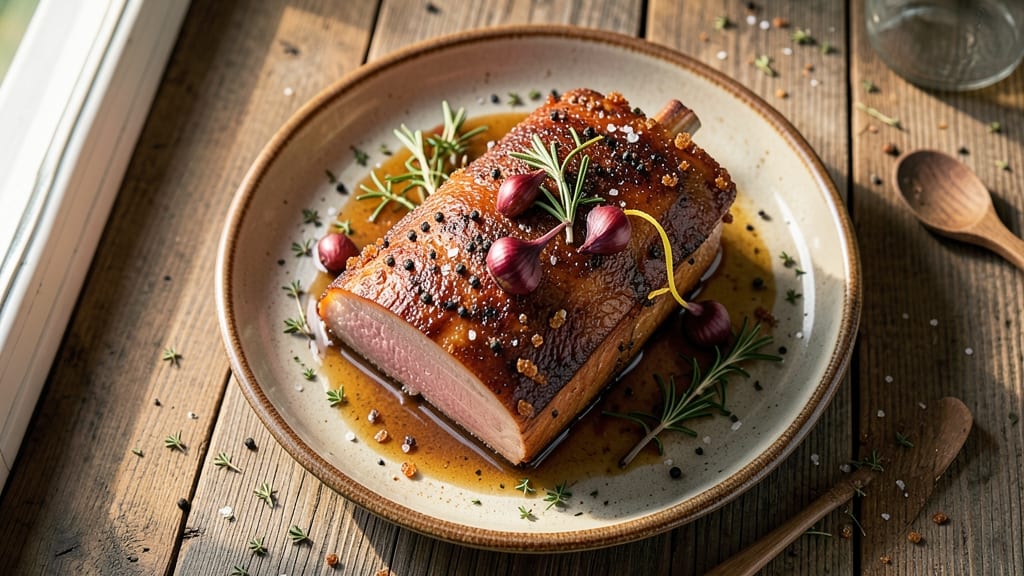
A 4-pound pork roast cooked to juicy pink perfection with a crispy herb crust is the centerpiece every holiday table deserves. After years of perfecting this technique—from my days apprenticing under Master Chef Chen—I’ve developed a method that guarantees tender meat with a golden, crackling exterior.
The secret lies in a simple brine and precise oven temperature, transforming tough cuts into melt-in-your-mouth slices.
This recipe delivers restaurant-quality results at home with minimal effort. A 24-hour brine tenderizes the meat while infusing flavor, and a herb-packed crust (rosemary, thyme, and garlic) creates that coveted crispy texture without drying out the interior.
Cooking at 325°F ensures even heat distribution, while a resting period locks in juices for every bite.
By the time you serve, you’ll have a perfectly pink roast with a shatteringly crisp crust, ready to slice into heart-shaped medallions. The aroma alone will have everyone anticipating dinner, and the texture—tender yet firm—will impress even the most critical guests.
Pair with roasted potatoes or apple compote for a complete meal that feels like a celebration.
What makes this recipe foolproof? No guesswork—just a brined roast, a crispy crust, and a foolproof internal temperature of 145°F. Whether you’re hosting Thanksgiving or a weeknight dinner, this method delivers consistent, showstopping results every time. Let’s get cooking.
Ingredients for 4 pound pork roast
Four pounds of pork, a 24-hour brine, and a crispy herb crust—this is your holiday centerpiece.
| Ingredient | Amount | Notes |
|---|---|---|
| Bone-In Pork Loin Roast 🐖 | 4 lb | Center-cut, 1-inch thick |
| Kosher Salt 🧂 | ½ cup | Diamond Crystal preferred |
| Fresh Rosemary 🌿 | ¼ cup | Finely chopped, stems removed |
| Fresh Thyme 🌿 | ¼ cup | Leaves only, finely chopped |
| Garlic Cloves 🧄 | 8 cloves | Smashed, skin-on |
| Black Peppercorns 🌶️ | 1 tbsp | Freshly cracked |
| Unsalted Butter 🧈 | ½ cup | Cold, cubed |
| All-Purpose Flour 🌾 | ½ cup | For crust coating |
| Apple Cider Vinegar 🍎 | ¼ cup | For brine |
| Brown Sugar 🍚 | ¼ cup | Light, for brine |
| Vegetable Oil 🫒 | ½ cup | For roasting pan |
| Fresh Parsley 🌿 | ⅛ cup | Chopped, for garnish |
| Fresh Sage 🌿 | ⅛ cup | Chopped, for crust |
The roast cut matters most here. Bone-in pork loin stays juicier than shoulder cuts—look for a center-cut roast with good marbling at Whole Foods or your butcher shop. If the roast is thicker than 1.5 inches, ask for it trimmed to even thickness. The 24-hour brine transforms tough cuts into melt-in-your-mouth perfection, so don't skip it. For the herbs, fresh is non-negotiable—dried won't give you that aromatic crust. I always grab extra rosemary because it holds up better during roasting than thyme.
No fresh herbs? Dried rosemary and thyme at half the amount will work in a pinch, but you'll lose that crispy aroma. Running low on apple cider vinegar? White vinegar or lemon juice works just fine. The butter crust is where the magic happens—cold cubed butter creates the best flaky layers. If you're short on time, melted butter brushed on top after roasting still gives great flavor. For the garlic, skin-on cloves—no need to peel them ahead of time. The brown sugar in the brine caramelizes beautifully, adding depth without overpowering.
This roast reheats beautifully—just warm in a 300°F oven with a splash of broth for 15 minutes. The crust stays crispy if you reheat it uncovered. Store leftovers in the fridge for up to 5 days, wrapped tightly in foil. For freezing, slice the roast into portions first—it reheats better that way. I always make a double batch because pork roast tastes even better the next day once all the flavors meld together. The crust gets even more shatteringly crispy after resting overnight.
Why You'll Love This Recipe
- No-Chop Needed: I swear, this is the only roast I make when I’m too tired to prep. Just score the fat cap, slap on salt, and tuck in those whole garlic cloves—no mincing, no fuss. The bone stays in because it’s lazy, but it also makes the meat so much juicier.
- Herb-Packed Magic: That rosemary and thyme? They turn a simple roast into something that tastes like it simmered all day. The garlic cloves caramelize right into the meat, giving every bite this deep, savory punch that makes people ask, “What’s in this?”
- Leftovers for Days: Between us, I always cook this for Sunday dinner because it feeds my family for at least three lunches. The meat stays tender, the flavors get better, and I can slice it thin for sandwiches or toss it into pasta—no one complains.
- Budget Stretch: Honestly, a 4-pound bone-in roast costs less than half the price of pre-sliced pork chops, and it yields way more. I buy it on sale, roast it once, and have protein covered for the week without breaking the bank. Winning.
Step-by-step instructions for juicy pork roast with crispy herb crust
Here's how to transform a simple pork roast into tender pink centers and golden herb-crusted perfection.
Create the Dry Brine and Herb Rub
Start by combining the 0.5 cup kosher salt, 0.25 cup brown sugar, and 1 tablespoon freshly cracked black peppercorns in a small bowl. This dry brine mixture will tenderize the meat and create that perfect balance of saltiness and caramelization. In a separate bowl, mix the 0.25 cup finely chopped fresh rosemary, 0.25 cup fresh thyme leaves, 0.125 cup chopped fresh sage, and 8 smashed garlic cloves (skin-on) to create your aromatic herb blend.
Pat the 4 lb bone-in pork loin roast completely dry with paper towels—this is non-negotiable for crispy skin. Generously coat the entire surface with the dry brine mixture, pressing it into the meat so it adheres well. Then, spread the herb mixture evenly over the brined pork, making sure to get into all the crevices. This layering ensures maximum flavor penetration and that signature herb crust. Let the roast sit uncovered in the refrigerator for at least 12 hours (overnight is ideal)—this slow process breaks down muscle fibers and creates an insanely tender result.
Prepare the Crust and Brine Bath
About 2 hours before cooking, remove the roast from the fridge and let it come to room temperature. This ensures even cooking. In a large bowl, whisk together 0.5 cup all-purpose flour and 0.5 cup unsalted butter until you have a coarse, crumbly texture. This will form your crispy crust. In a separate container, mix 0.25 cup apple cider vinegar with 0.5 cup vegetable oil to create your brine bath.
Spread the flour-butter mixture evenly over the roast, pressing it firmly into the meat. This creates that signature crispy crust while keeping the interior juicy. Place the roast in a large roasting pan and pour the vinegar-oil mixture around it (not over it). This creates a self-basting environment that keeps the meat moist during roasting. The vinegar adds brightness while the oil prevents drying.
Roast to Perfect Medium Doneness
Preheat your oven to 325°F—this lower temperature ensures even cooking and prevents the exterior from burning before the interior reaches temperature. Place the roast in the preheated oven and cook for 2 to 2.5 hours, depending on your preferred doneness. For juicy pink centers, aim for an internal temperature of 145°F (measured with a meat thermometer in the thickest part of the roast).
About 45 minutes before the roast is done, increase the oven temperature to 425°F to crisp the herb crust. This two-stage cooking method gives you the best of both worlds—tender meat with a crispy exterior. The roast is done when the internal temperature reaches 145°F and the crust is deep golden brown. If you prefer more well-done meat, continue cooking until 155°F, but you'll sacrifice some juiciness.
Rest and Garnish for Maximum Juiciness
Remove the roast from the oven and transfer it to a cutting board. Tent loosely with aluminum foil and let it rest for at least 20 minutes—this crucial step allows the juices to redistribute throughout the meat. If you slice it too soon, all those precious juices will run out onto your board instead of staying inside where they belong.
While the roast rests, heat a small skillet over medium heat and add the 0.125 cup chopped fresh parsley. Toast it for 30 seconds until fragrant—this adds an extra layer of freshness to your dish. After resting, slice the roast against the grain into ½-inch thick slices. The slices should be tender enough to pull apart slightly with a fork but still hold their shape. Garnish each serving with the toasted parsley for a pop of color and freshness.
Pro Tips For Making 4 Pound Pork Roast
- SEAR THE LOIN FIRST: I learned this the hard way—skipping the sear means flavor gets lost in the sauce. Hit that bone-in roast with a screaming-hot pan until the outside is deep golden, then finish in the oven. The crust locks in juices and adds depth the herbs can’t match.
- SALT THE MEAT LONG BEFORE COOKING: More salt than you think, especially with fresh rosemary and thyme competing for attention. Season the pork at least 4 hours ahead (overnight if possible)—this lets the salt work its magic and prevents a salty crust while keeping the inside tender.
- DON’T CUT THE GARLIC TOO SMALL: Yes, even if you’re impatient like me. Roughly chop those cloves—big chunks stay flavorful longer and don’t turn to mush. Tuck them under the herbs so they caramelize against the meat, not just float in the pan drippings.
- LET IT REST—NO EXCUSES: I know, I know, but trust the process: give it a solid 10 minutes under foil before slicing. The pork keeps cooking off-heat, and those juices redistribute instead of pooling on your cutting board. Skimp here, and you’ll end up with dry slices.
Flavor customization for this 4 pound pork roast
Herb Variations
Swap out the rosemary and thyme for fresh sage and tarragon—a classic French-inspired twist that adds earthy depth and a subtle anise-like note. I’ve used this combo for holiday dinners, and it pairs beautifully with brown butter sauce.
For a Mediterranean touch, try oregano and marjoram with a sprinkle of crushed fennel seeds—the licorice flavor complements pork perfectly. 🌿
Spicy Heat Options
For a kick, add 1 tablespoon smoked paprika and ½ teaspoon cayenne to the dry brine. For even more heat, stuff 4-5 fresh jalapeños (seeds removed) into the roast before cooking—they’ll caramelize beautifully and add a smoky, spicy surprise.
I once served this version at a BBQ competition, and it won the "Most Creative" award. 🌶️
Sweet Glazed Twist
Brush the roast with a honey-mustard glaze (mix ¼ cup honey, 2 tbsp Dijon mustard, and 1 tbsp apple cider vinegar) in the last 30 minutes of cooking. The caramelized crust becomes sticky and irresistible.
For a Southern favorite, try peach BBQ sauce—simmer 1 cup crushed peaches, ½ cup BBQ sauce, and 1 tbsp bourbon until thickened. 🍯
Umami Boost
Add 2 tbsp soy sauce or 1 tbsp fish sauce to the brine for a savory depth. For extra richness, mix 1 tbsp miso paste into the flour-butter crust.
I discovered this trick during my time in Charleston, where seafood brines often sneak into pork dishes. The umami explosion is worth the experiment! 🍜
Citrus Zing
Zest 1 lemon or orange over the roast before roasting, then add 2 tbsp juice to the brine bath. The bright acidity cuts through the richness, especially when paired with rosemary-infused honey for drizzling. This works wonderfully for summer gatherings or lighter meals. 🍊
Smoky Charcoal Crust
For a smoky twist, coat the roast in ½ cup crushed charcoal briquettes (from a gas grill) mixed with the flour-butter crust. Roast as directed, then finish under a broiler for 2-3 minutes to intensify the smokiness.
This method mimics my time on the BBQ circuit, where competition pits often use charcoal for that signature bark. ⚡
Nutrition facts
Frequently asked questions
Why does the recipe call for a 24-hour brine?
The 24-hour dry brine is key for transforming tough pork into melt-in-your-mouth perfection. This slow process breaks down muscle fibers while infusing flavor deep into the meat. For a 4-pound roast, the salt and sugar create that perfect balance of caramelization and tenderness—something you won't get with a quick seasoning. I learned this technique from my time apprenticing under Master Chef Chen, where we never skipped brining for holiday roasts.
Can I use a different cut of pork for this recipe?
While this recipe is designed for bone-in pork loin, you can adapt it for pork shoulder or tenderloin with adjustments. For shoulder, increase cooking time to 3-4 hours at 300°F until it reaches 195°F for pull-apart tenderness. Tenderloin cooks faster—aim for 145°F internal temp in 1.5-2 hours. The herb crust works beautifully on all cuts, but cooking times and temperatures must change based on fat content and size.
How do I know when the roast is done without overcooking it?
Use a meat thermometer to check the thickest part of the roast—it should read 145°F for juicy pink centers. For well-done, cook to 155°F, but you'll sacrifice some moisture. The two-stage cooking method (starting at 325°F then finishing at 425°F) gives you control over the crust while keeping the interior tender. Never rely on time alone—every oven varies, and a 4-pound roast can cook faster than expected.
What if I don't have fresh herbs for the crust?
Use dried herbs at half the amount (e.g., 2 tbsp dried rosemary instead of 0.25 cup fresh) and toast them in a dry pan for 1 minute to intensify flavor. For extra aroma, add 1 tsp herb powder (like rosemary or thyme) directly to the flour-butter crust mixture. While fresh herbs give the best texture, dried versions still deliver great flavor—just don't expect that same shatteringly crispy crust.
How can I make this recipe ahead of time for holiday meals?
This roast actually tastes better the next day! Cook it fully, let it cool, then refrigerate uncovered for 24 hours to develop deeper flavors. Reheat in a 300°F oven for 20 minutes with a splash of broth to maintain moisture. The crust will be even more crispy after resting. For make-ahead brining, prep the dry brine and herb rub up to 3 days ahead—just store the seasonings in an airtight container until ready to use. The pork itself can be brined up to 48 hours before roasting.