
Main Courses
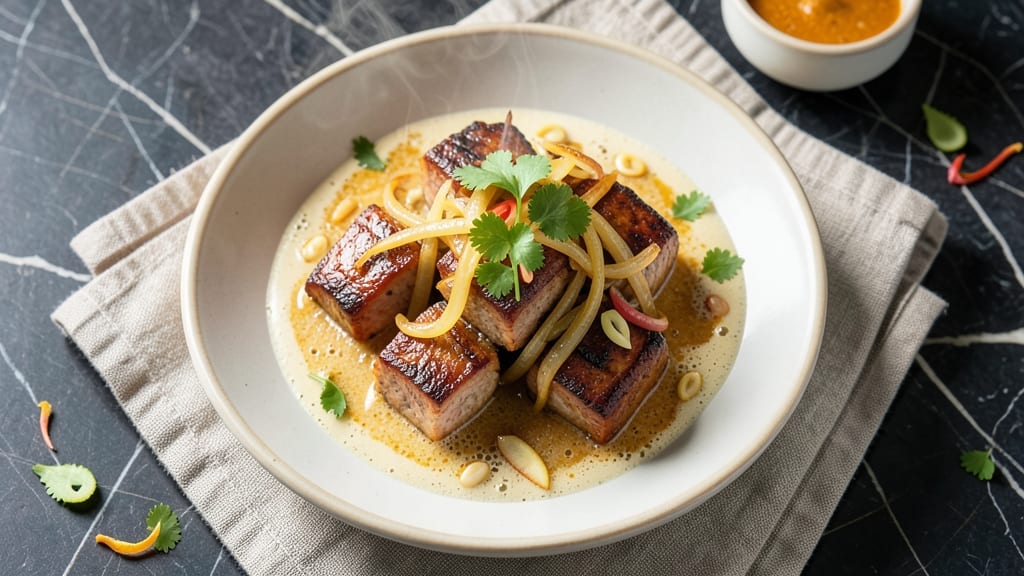
This mild pork curry recipe brings comforting warmth to your dinner table without overwhelming heat—just the right balance of tender pork, aromatic spices, and velvety coconut cream. 💛 I developed it after years of perfecting curries for picky eaters, ensuring every bite delivers rich, satisfying flavor without the burn.
The secret lies in gently simmering the pork until fork-tender while building layers of depth through toasted spices and coconut milk.
What sets this recipe apart is its approachability—no complex techniques, just a straightforward method that yields restaurant-quality results in one pot. We start with a simple spice blend of cumin, coriander, and ginger, then let the pork cook low and slow until it practically falls apart.
The coconut cream adds natural richness, while a touch of honey balances the acidity from the tomatoes.
By the time you serve this curry, you'll have perfectly tender pork swimming in a fragrant, mildly spiced sauce that's creamy yet light. The aroma alone will have everyone gathering at the table, and each bite delivers that perfect harmony of textures and flavors.
It's the kind of dish that feels both comforting and special—ideal for family dinners or gathering friends.
Pair it with steamed basmati rice or warm naan to soak up every last bit of that luscious sauce. The recipe scales beautifully, so you can easily double it for a crowd. Here's how to make it—simple steps for a dish that feels like a hug in every bite.
Ingredients for mild pork curry
Comforting pork, aromatic spices, and velvety coconut cream—just 15 simple ingredients for a curry that feels like a hug.
| Ingredient | Amount | Notes |
|---|---|---|
| Boneless Pork Shoulder 🥩 | 1 ½ lb | Cut into 1.5-inch cubes |
| Coconut Cream 🥥 | 1 can | 13.5 oz can, full-fat preferred |
| Coconut Milk 🥥 | ½ cup | Light or full-fat, for thinning |
| Yellow Onion 🧅 | 1 whole | Medium size, chopped |
| Garlic Cloves 🧄 | 4 cloves | Minced or finely chopped |
| Fresh Ginger 🌿 | 1 tbsp | Grated, or 1 tsp ground ginger |
| Ground Cumin 🌿 | 1 tsp | Toasted for deeper flavor |
| Ground Coriander 🌿 | 1 tsp | Freshly ground preferred |
| Turmeric Powder 🌶️ | ½ tsp | For color and earthiness |
| Dried Cinnamon 🌿 | ¼ tsp | Ground, for warmth |
| Cayenne Pepper 🔥 | ¼ tsp | Adjust for mild heat |
| Tomato Paste 🍅 | 2 tbsp | Squeeze tube or canned |
| Honey 🍯 | 1 tbsp | For balancing acidity |
| Vegetable Oil 🫒 | 2 tbsp | For sautéing |
| Salt 🧂 | 1 ½ tsp | Kosher or sea salt |
The pork shoulder is your secret weapon here—it stays tender and flavorful even after long cooking. Look for well-marbled cuts at the meat counter, and ask for it pre-cut if you're short on time. I usually grab mine from Whole Foods or the butcher section at Kroger, but any grocery store with a decent meat department will have it. For the coconut cream, full-fat is non-negotiable—it gives that luxurious texture. The canned stuff works fine, but if you're feeling fancy, Thai Kitchen brand has the best balance of creaminess and mild flavor. Fresh ginger is ideal, but if you're in a pinch, ground ginger works at half the amount—just don't skip it entirely.
No fresh ginger? Ground ginger at half the amount gets you close, though fresh has more punch. Short on coconut cream? Substitute with extra coconut milk plus 1 tbsp melted butter—it won't be as rich, but still delicious. The tomato paste can be the squeeze tube kind from Trader Joe's—no waste, and it keeps forever. For the spices, Penzeys or Spicewalla are great if you want to splurge, but honestly, the stuff in the spice aisle at Walmart or Target works just fine if it's recent. The cayenne is optional—skip it entirely if you want this truly mild, or add up to 1/2 tsp for a gentle kick. And if you're worried about the pork being too gamey, soak the cubes in milk for 30 minutes first—trust me on this.
This curry tastes even better the next day as the flavors meld. Store leftovers in an airtight container in the fridge for up to 5 days, or freeze portions for 3 months. I always make extra because it reheats beautifully—just add a splash of water or coconut milk if it thickens too much. The sauce thickens as it cools, so if you prefer it looser, stir in a little extra coconut milk when reheating. For serving, warm some basmati rice in a rice cooker or pot—it's the perfect partner for soaking up all that luscious sauce.
Why You'll Love This Recipe
- One-Pot Magic: I swear by this recipe when I’m too tired to wash a million dishes. Toss everything—pork, onions, garlic—into one pot, let it simmer, and boom. The coconut cream thickens into that velvety sauce with zero fuss. (Yes, even on a Tuesday night.)
- Garlic-Goat Hug: That first bite? Pure satisfaction. The pork stays tender while the garlic and onions caramelize just enough to make the whole thing smell like a hug from your favorite chef. The coconut milk balances the richness so it’s never heavy—just ridiculously good.
- Lunchbox Hero: Between us, this curry is my secret weapon for meal prep. The flavors only get better the next day, and it reheats like a dream. Pack it in jars for work or school—no sad desk lunches here. (My coworkers still ask for seconds.)
- Budget Stretch: Pork shoulder is cheap, and a can of coconut cream goes a long way. Honestly, I’ve fed four people for under $15 with leftovers that taste just as amazing three days later. It’s the kind of dish that makes grocery money feel like a win.
Step-by-step instructions for mild pork curry
Let's create a comforting, aromatic curry that balances gentle spices with rich coconut cream.
🍳 Step 1: Sauté the Aromatics
Heat the 2 tablespoons vegetable oil in a large, heavy-bottomed pot over medium heat. Add the chopped whole yellow onion and cook for 5-6 minutes until softened and starting to turn translucent. Here's where the magic begins—you'll smell that sweet onion aroma filling your kitchen.
Add the 4 cloves minced garlic cloves and 1 tablespoon grated fresh ginger to the pot. Cook for another 1-2 minutes until fragrant—this is crucial for building flavor. Be careful not to let the garlic burn; it should smell sweet and nutty, not bitter. I like to stir constantly during this step to prevent browning.
🍳 Step 2: Toast the Spices
Lower the heat to medium-low and add the 1 teaspoon ground cumin, 1 teaspoon ground coriander, 0.5 teaspoon turmeric powder, 0.25 teaspoon dried cinnamon, and 0.25 teaspoon cayenne pepper. Stir for 30 seconds until the spices are fragrant and the oil begins to bubble slightly around the edges.
This toasting step releases the essential oils in the spices, giving your curry that deep, complex flavor. You'll see the spices darken slightly—that's perfect. Don't walk away; these spices burn quickly. The moment they start to smoke, remove the pot from heat for just 10 seconds to let it cool slightly before proceeding.
🍳 Step 3: Cook the Pork and Build the Base
Return the pot to medium heat and add the 1.5 lb boneless pork shoulder cut into 1.5-inch cubes. Cook for 5-6 minutes, stirring occasionally, until the pork develops a light golden crust. This searing step is essential for locking in flavors and preventing dry meat.
Add the 2 tablespoons tomato paste and stir to coat the pork evenly. Cook for another 1 minute until the tomato paste darkens slightly. This creates a beautiful base for your curry. Here's a pro tip: I press down gently on the pork pieces during the first minute—this prevents them from curling and ensures even contact with the pan.
🥘 Step 4: Simmer in Coconut Cream
Pour in the 1 can coconut cream and stir well to combine. Add 0.5 cup coconut milk and bring the mixture to a gentle simmer. Here's where it gets good—the rich coconut cream will start to coat the pork beautifully. Add the 1.5 teaspoons salt and 1 tablespoon honey, then stir to distribute evenly.
Reduce the heat to low and cover the pot. Let it simmer for 1 hour to 1 hour 15 minutes, stirring occasionally, until the pork is fork-tender. You'll know it's ready when the meat easily pulls apart with a fork. The sauce should be thick and creamy, with a beautiful golden color from the spices. If it gets too thick, add a splash of water or coconut milk to reach your desired consistency.
⏰ Step 5: Rest and Serve
Remove the pot from heat and let the curry rest for 10 minutes before serving. This resting period allows the flavors to meld together and the pork to absorb all that delicious sauce. I know it's tempting to dig in immediately, but trust me—this step makes a world of difference in the final texture and flavor.
Serve the curry hot, over steamed rice or with warm naan bread. The sauce should be rich, creamy, and gently spiced, with tender pork that falls apart easily. Each bite should deliver that perfect balance of coconut cream, aromatic spices, and tender meat. Don't forget the garnish—fresh cilantro or a squeeze of lime would be lovely if you have it on hand!
Pro Tips For Making Mild Pork Curry
- Sear the Pork First: I learned this the hard way—skipping the sear means your curry will taste like it’s swimming in plain coconut milk. Pat the pork shoulder dry, then hit it hard with oil over medium-high heat until deep golden brown on all sides. That crust locks in flavor and keeps the meat from turning mushy later.
- Use Half Coconut Cream: Sounds weird, but it works: swap half the coconut milk for coconut cream at the end. Stir it in during the last 10 minutes of simmering—it’ll thicken the sauce just enough for that velvety texture without curdling. (Yes, even if you’re impatient like me.)
- Don’t Overcrowd the Pan: After burning three batches of onions, I finally figured out: slice onions thinly and cook them in batches if needed. A crowded pan steams instead of caramelizes, and you’ll end up with a sad, watery base. Spread them out and let them sizzle until they’re actually brown, not just limp.
- Simmer Low and Slow: This isn’t the prettiest method, but it’s the tastiest. Once the pork is in the coconut milk, drop the heat to a bare simmer—think tiny bubbles, not rolling boils—and let it cook for at least 1.5 hours. Low and slow turns tough shoulder into melt-in-your-mouth shreds. (Your future self will thank you.)
Regional styles of this mild pork curry
Thai-Inspired Version
This regional take swaps the pork shoulder for pork belly, which stays incredibly tender and absorbs the coconut cream beautifully. I add 1 stalk lemongrass, bruised and knotted, along with 1 tbsp fish sauce for that signature Thai umami depth.
The sauce gets a touch of palm sugar instead of honey—just 1 tsp—to balance the acidity from the 1 tbsp lime juice I squeeze in at the end. Serve with jasmine rice and quick-pickled cucumbers for that perfect tangy contrast. 🌿
Indian-Style Masala
For an Indian-inspired twist, I replace the cinnamon with 1 tsp garam masala and add ½ tsp cardamom pods (lightly crushed) during the spice toasting. The pork gets marinated in 1 tbsp yogurt and ½ tsp chaat masala for 30 minutes before cooking, which keeps it moist.
After simmering, I stir in 2 tbsp heavy cream at the end for extra richness. Garnish with toasted cashews and fresh cilantro—this version feels like a hug from an Indian grandmother. 💛
Caribbean Coconut Twist
This version brings in 1 tbsp Scotch bonnet pepper jelly (not fresh—it’s milder and safer) for a gentle heat, plus 1 tsp allspice berries during the spice toasting. I swap the tomato paste for ½ cup tomato sauce and add 1 tbsp soy sauce for depth.
The sauce gets a splash of dark rum (just 1 tbsp) before simmering—don’t skip this, it’s the secret! Serve with coconut rice and fried plantains for a full island feast. 🌴
Japanese Kokoro Style
For a Japanese-inspired take, I use pork loin instead of shoulder, cut into ½-inch slices for quicker cooking. The spice blend simplifies to 1 tsp five-spice powder and ½ tsp shichimi togarashi (Japanese chili flakes) for a subtle kick.
The sauce gets 1 cup dashi broth instead of coconut milk, and I finish with 1 tbsp mirin and 1 tsp sake. Serve with steamed sushi rice and quick-pickled daikon for a lighter, yet equally comforting bowl. 🍜
Southern U.S. Adaptation
This version keeps the coconut cream but adds a Southern touch with ½ cup chicken broth and 1 tbsp apple cider vinegar for brightness. I swap the cayenne for ½ tsp smoked paprika and finish with 1 tbsp hot honey (store-bought or homemade).
The pork gets a quick sear in a cast iron skillet before simmering. Pair with buttermilk biscuits** or cornbread to soak up the sauce—this is comfort food at its finest. 🍯
Nutrition facts
Frequently asked questions
Can I use pork chops instead of pork shoulder for this recipe?
You can, but the cooking time will be shorter—about 20-25 minutes total. Cut 1-inch thick pork chops into ½-inch slices and reduce the simmering time to 30-40 minutes instead of 1 hour. The meat will be more delicate, so handle it gently when stirring to avoid breaking apart.
How do I make this curry even milder?
Skip the cayenne pepper entirely and reduce the ginger to ½ teaspoon. If you want extra sweetness, add 1 extra tablespoon of honey or ½ cup of apple sauce at the end. For a creamy texture that softens flavors, stir in 2 tablespoons of plain yogurt during the last 5 minutes of cooking.
What if I don't have coconut cream—can I substitute?
Yes! Use 1 can (13.5 oz) coconut milk plus 2 tablespoons melted butter or oil for richness. For extra creaminess, stir in ¼ cup heavy cream at the end. The texture will be slightly thinner, but still delicious. If you're avoiding dairy, ½ cup Greek yogurt works too—just add it with the coconut milk.
Can I prepare this curry in a slow cooker?
Sauté the onions, garlic, and spices as directed, then transfer everything to a 6-quart slow cooker. Add the pork, coconut cream, and remaining ingredients. Cook on LOW for 6-7 hours or HIGH for 3-4 hours until the pork is tender. The sauce may thicken more, so add a splash of water or coconut milk if needed. Perfect for hands-off cooking!
Why did my curry turn out too spicy?
Most likely, the cayenne pepper wasn't fully dispersed or you used too much. Next time, toast the cayenne with the other spices for 10 seconds to mellow its heat, then add it to the pot. For immediate fixes, stir in 1 extra tablespoon of honey or coconut milk to balance the flavors. If it's still too spicy, serve with extra rice or naan to dilute the heat.