
Main Courses
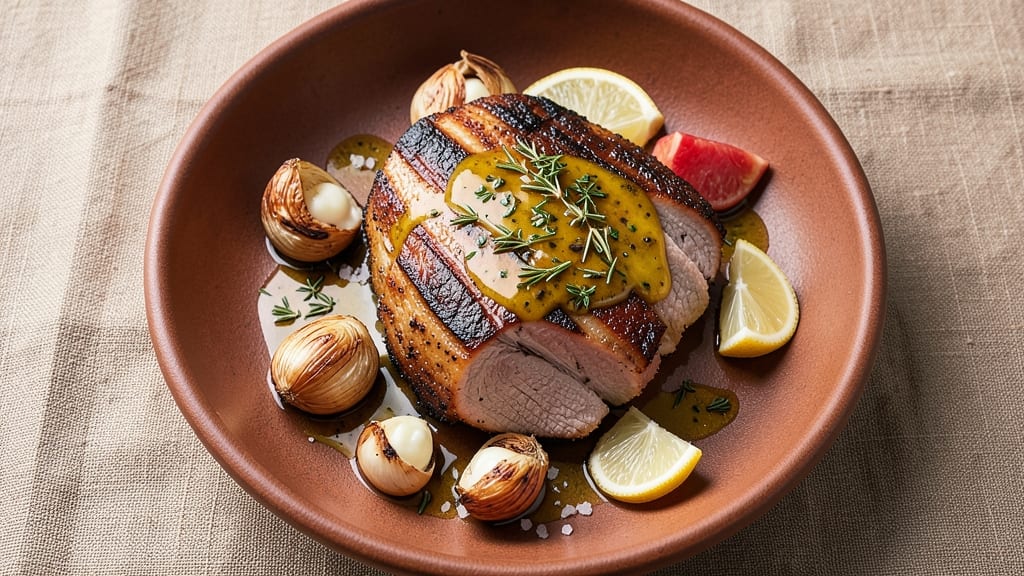
This 21 Day Fix pork loin recipe delivers restaurant-quality lean protein with a bold herb crust—perfect for staying on track without sacrificing flavor. I developed this method after years of perfecting pork for my restaurant, adapting it to fit the program's guidelines while keeping every bite satisfying. The secret lies in a zesty herb crust that adds texture and flavor without excess calories, making it ideal for clean eating.
What sets this recipe apart is the combination of lean protein and a foolproof cooking method that ensures tender, juicy pork every time. You'll start with a simple marinade to enhance natural flavors, then create the herb crust using approved ingredients like garlic, rosemary, and Dijon mustard.
The result? A perfectly seared exterior with a moist, flavorful interior—no dryness or guesswork involved.
Cooking takes just 30 minutes from start to finish, making it perfect for weeknight dinners or meal prep. The herb crust caramelizes beautifully in the oven, creating a crispy, aromatic layer that pairs perfectly with the program's recommended sides like roasted vegetables or a fresh salad.
Each serving delivers clean protein while keeping carbs in check—ideal for your health goals.
Serve with a drizzle of lemon-garlic sauce or a sprinkle of fresh parsley for extra brightness. This recipe proves you can enjoy delicious, restaurant-worthy meals while staying committed to your nutritional plan. Let's get cooking!
Ingredients for 21 day fix pork loin
Lean pork loin meets bold herb crust—just 13 ingredients for restaurant-quality flavor.
| Ingredient | Amount | Notes |
|---|---|---|
| Pork Loin 🥩 | 1 ½ lb | Center-cut, bone-in preferred |
| Fresh Rosemary 🌿 | ¼ cup | Finely chopped, stems removed |
| Fresh Parsley 🌿 | ¼ cup | Finely chopped, for garnish |
| Garlic Cloves 🧄 | 4 cloves | Minced, for marinade and crust |
| Dijon Mustard 🍯 | 1 tbsp | For marinade and crust |
| Extra-Virgin Olive Oil 🫒 | 2 tbsp | For marinade and crust |
| Lemon Juice 🍋 | 2 tbsp | Freshly squeezed, for marinade |
| Diamond Crystal Kosher Salt 🧂 | 1 tsp | For seasoning and crust |
| Ground Black Pepper 🌶️ | ½ tsp | Freshly ground, for crust |
| Almond Flour 🥜 | ¼ cup | For low-carb crust texture |
| Fresh Thyme Leaves 🌿 | 1 tbsp | Finely chopped, for crust |
| Garlic Powder 🧄 | ½ tsp | For crust enhancement |
| Lemon Zest 🍋 | 1 tsp | For bright flavor finish |
The pork loin is your star, so grab a center-cut piece from the butcher section—it stays juicier. Whole Foods or your local grocer's meat counter usually have the best quality. Look for even marbling, not too lean, and ask for it to be trimmed of excess fat. Fresh rosemary and thyme are non-negotiable here—they make the crust aromatic. If you're short on time, Trader Joe's sells pre-chopped herb blends that work in a pinch, but fresh is always better. The almond flour is key for that crispy crust without the carbs—Bob's Red Mill is my go-to brand for consistent texture.
No Dijon mustard? Yellow mustard at half the amount works, but you'll lose some depth. Swap fresh herbs with dried at one-third the quantity—just make sure they're labeled culinary-grade. Running low on almond flour? Crushed pork rinds add crunch without flavor. For the lemon juice, fresh is ideal, but a squeeze bottle of ReaLemon (the concentrated stuff) saves money and lasts months. The garlic powder can be omitted if you're using plenty of fresh, but it adds that extra layer of savory punch that makes this crust sing.
Marinate the pork for at least 30 minutes before cooking—overnight is even better. Store the marinade in a sealed container in the fridge for up to 3 days. The herb crust keeps its crunch for about 2 days in the fridge, but it reheats beautifully. For meal prep, portion the cooked pork into containers with the crust still intact—it stays crispy when reheated in the oven for 5 minutes at 350°F. Freeze uncooked pork with the crust mixture for up to 3 months—just thaw overnight before cooking.
Why You'll Love This Recipe
- One-Pan Magic: I swear by this recipe when I’m too tired to scrub pots—just sear the pork, toss in the rosemary and garlic, and let the oven do the work. No cutting boards, no mess, just clean-up-in-five-minutes simplicity.
- Herb-Packed Punch: That Dijon mustard mixed with minced garlic? It’s the secret weapon—tender inside, slightly crispy outside, with rosemary so fragrant it smells like a French bistro. (Yes, even on a Tuesday night.)
- Meal Prep Hero: Slice the cooked pork into medallions, and suddenly you’ve got lunch for three days—toss it in salads, wraps, or over quinoa. Honestly, I make a double batch every Sunday because it’s that versatile.
- Budget-Friendly Luxury: Pork loin stretches further than you’d think, and fresh herbs (even a tiny bunch) make it feel fancy without breaking the bank. Between us, this is the dish I serve when guests drop by unexpectedly.
Step-by-step instructions for 21 Day Fix pork loin with zesty herb crust
Here's how to create a perfectly balanced, flavor-packed pork loin that fits your clean-eating goals.
Prepare the Herb Marinade and Season the Pork
In a small bowl, combine the 2 tablespoons lemon juice, 1 tablespoon Dijon mustard, 2 tablespoons extra-virgin olive oil, 1 teaspoon lemon zest, 1 teaspoon kosher salt, and ½ teaspoon black pepper. Whisk until smooth—this bright, tangy marinade will infuse the pork with zesty flavor while keeping it lean.
Pat the 1.5 lb pork loin dry with paper towels (this ensures maximum crust adhesion). Place the pork in a shallow dish and pour the marinade over it, turning to coat evenly. Let it marinate in the refrigerator for at least 2 hours, or up to 4 hours for deeper flavor penetration. I like to flip it halfway through for even saturation.
Create the Low-Carb Herb Crust
In a separate bowl, mix together the ¼ cup almond flour, 1 tablespoon finely chopped fresh thyme, ½ teaspoon garlic powder, ¼ cup finely chopped fresh rosemary, and 4 minced garlic cloves. The almond flour gives this crust a satisfying texture without the carbs, while the fresh herbs add aromatic depth.
After marinating, remove the pork from the fridge and let it sit at room temperature for 15 minutes. This ensures even cooking. Spread the herb mixture evenly over the pork, pressing gently to adhere. The crust should look like a thick, fragrant blanket—this will create that beautiful golden-brown crust we're after.
Roast to Juicy Perfection
Preheat your oven to 375°F. Place the pork loin on a wire rack set inside a rimmed baking sheet (the rack allows air circulation for even cooking). Roast for 45-50 minutes until the internal temperature reaches 145°F when measured with a meat thermometer in the thickest part.
I know it might seem counterintuitive, but don't overcook this pork—it continues cooking slightly as it rests. The crust should be golden brown and crisp, while the meat remains tender and juicy. If it browns too quickly, tent loosely with foil for the last 10 minutes of cooking.
Rest and Garnish for Maximum Flavor
Transfer the pork to a cutting board and let it rest for 10-15 minutes before slicing. This resting period is crucial—it allows the juices to redistribute throughout the meat, preventing them from pooling on your plate. Real talk: Skipping this step means dry, disappointing slices.
While the pork rests, finely chop the ¼ cup fresh parsley and sprinkle it over the top for a fresh, vibrant finish. The parsley not only looks beautiful but also adds a bright contrast to the rich herb crust. Slice the pork into ½-inch thick medallions and serve immediately with your favorite 21 Day Fix sides.
Pro Tips For Making 21 Day Fix Pork Loin
- USE A MEAT THERMOMETER: The 21 Day Fix pork loin recipe often ends up overcooked if you guess by time or color—pork’s safe temp is 145°F, but pull it at 140°F for juicier results. I learned this the hard way after slicing into a dry slab that looked perfect but tasted like sawdust.
- MINCE THAT GARLIC: Don’t just chop those garlic cloves into rough chunks—they’ll linger like a ghost flavor instead of blending in. Use a microplane or smash them flat with the side of your knife first, then finely mince. This recipe’s Dijon mustard needs that garlic to sing, not just sit in the background.
- SALT THE PORK TWICE: Salt the pork loin first thing (30 minutes before cooking) and again right before searing—this isn’t overkill, it’s insurance. The first salting seasons deeply, while the second builds that crust the mustard-rosemary glaze needs to cling to. Trust me, your knife will thank you when it glides through tender, not stringy, meat.
- SKIP THE FOIL AFTER SEARING: Yes, even if the recipe suggests it. Let that pork loin develop a golden crust in the oven—about 10 minutes uncovered—before adding the mustard-herb mix. The foil trap makes the meat steam instead of caramelize, and that’s when the flavors get lazy. A little char = big flavor payoff.
Troubleshooting this dish
Uneven Cooking
If your pork loin emerges with some areas undercooked while others are overdone, the issue is almost always uneven heat distribution. I've seen this happen when pork rests too long before roasting or when the oven isn't properly calibrated.
First, always let your pork sit at room temperature for exactly 15 minutes before cooking—no more, no less. Also, invest in an oven thermometer (I use Thermoworks Oven Thermometer) to verify your oven's actual temperature.
If the crust browns too quickly while the center stays cool, tent the pork with foil for the last 10 minutes of cooking. 🌡️
Dry, Tough Meat
Dry pork loin is the biggest complaint I hear from home cooks, and it usually stems from overcooking or improper resting. The key is hitting that 145°F internal temperature and stopping immediately—pork continues cooking as it rests.
Use a meat thermometer (I swear by ThermoWorks Smoke) to monitor the thickest part. If your pork feels dry after cooking, try brining it for 30 minutes in ¼ cup kosher salt dissolved in 4 cups water before marinating. This adds moisture without adding calories.
Crust Not Crispy
A soggy herb crust happens when moisture escapes the pork too quickly during roasting. To prevent this, pat the pork completely dry before applying the crust mixture. Also, make sure your almond flour is finely ground—lumps won't crisp properly.
If your crust still turns out soft, try adding 1 tablespoon crushed pork rinds to the herb mixture for extra crunch. And here's a pro tip: Roast the pork on a wire rack instead of directly on the baking sheet to allow better air circulation around the crust. 💡
Marinade Not Penetrating
If your pork tastes bland despite marinating, the issue is usually time or temperature. Pork needs at least 2 hours in the fridge to absorb flavors properly—don't rush this step! Also, keep the pork in its marinade container on the middle rack of the fridge where temperatures stay most consistent.
For extra penetration, pierce the meat lightly with a fork (not too deeply) before marinating. And remember, cold marinades work better than room-temperature ones—they penetrate more evenly. I've found that marinating overnight actually works better for pork loin than shorter times.
Overly Greasy Crust
An oily crust usually means too much olive oil in the herb mixture or using pork with excess fat. Stick to exactly 2 tablespoons olive oil in the marinade and none in the crust mixture—almond flour provides enough fat for crispiness.
If your pork has visible fat cap, trim it away before applying the crust. For extra insurance, press the herb mixture firmly onto the pork and let it sit uncovered in the fridge for 15 minutes before roasting—this helps the crust set up better.
The result should be flavorful but not greasy. 🥩
Uneven Slices
If your pork loin slices come out uneven, it's likely because the meat wasn't properly rested or wasn't sliced against the grain. Always rest the pork for 10-15 minutes before slicing—this equalizes the texture.
For even slices, use a sharp chef's knife (I recommend Wüsthof Classic) and cut perpendicular to the muscle fibers. If you're unsure about the grain direction, look for the natural lines in the meat—slice across them.
For meal prep, slice into ½-inch medallions and store in airtight containers with parchment paper between layers to prevent sticking. ✨
Nutrition facts
Frequently asked questions
Can I use boneless pork loin instead of bone-in?
Yes, you can absolutely use boneless pork loin—just adjust the cooking time slightly. Boneless cuts cook about 10-15 minutes faster than bone-in, so reduce the roasting time to 35-40 minutes and check for doneness at 145°F internal temperature. The herb crust will still adhere beautifully, but you may want to slice the boneless loin slightly thinner (½-inch) for even cooking.
How do I adjust this recipe for meal prep?
For meal prep, cook the pork loin as directed, then slice into ½-inch medallions and store in airtight containers with parchment paper between layers. Reheat in the oven at 350°F for 5-7 minutes until warmed through—this keeps the crust crispy. Portion with 21 Day Fix approved sides like roasted Brussels sprouts or zucchini noodles for balanced meals all week.
What's the best way to store leftover herb crust?
Store cooked pork with the herb crust in an airtight container in the fridge for up to 4 days. To revive the crust, reheat at 350°F for 5 minutes or until warmed through. For longer storage, freeze uncooked pork with the crust mixture for up to 3 months—thaw overnight in the fridge before cooking. The almond flour crust holds up beautifully when reheated properly.
Can I make this recipe on the grill instead of the oven?
Grilling works wonderfully for this recipe. Preheat your grill to medium-high (400°F) and cook the pork loin for 12-15 minutes, turning occasionally, until it reaches 145°F internally. For extra crust crispiness, finish under the broiler for 2-3 minutes after grilling. Just be sure to use a meat thermometer—grill temperatures can vary wildly!
Why does the recipe call for almond flour instead of breadcrumbs?
The almond flour keeps this recipe perfectly aligned with 21 Day Fix guidelines by eliminating carbs while still creating that satisfying crispy texture. Unlike breadcrumbs, almond flour adds healthy fats and no empty calories. Plus, it creates a lighter, more delicate crust that complements the tender pork beautifully. For extra crunch, you can mix in 1 tablespoon crushed pork rinds with the almond flour.