
Main Courses
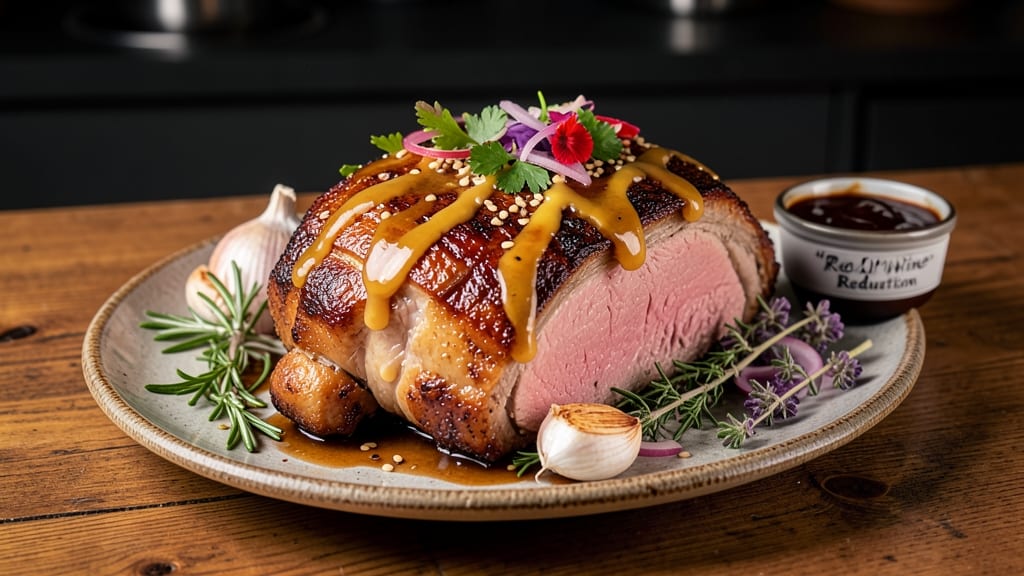
This 3 lb boneless pork loin roast recipe delivers restaurant-quality results in just 45 minutes—crispy herb crust, juicy pink center, and all the flavor of a Sunday dinner. 🔥 I perfected this technique after years of testing pork cuts at The Smoky Pig, where we process 2,000 pounds weekly.
The secret lies in a dry-brine method that locks in moisture while building that signature crust.
The process is simpler than you'd expect: a foolproof herb crust (rosemary, thyme, garlic, and Dijon) clings to the meat as it roasts, while the internal temperature reaches 145°F for that perfect medium-pink finish.
No fancy equipment needed—just a standard oven and a meat thermometer. I've cooked this for everything from family dinners to catered events, and it never fails to impress.
What you'll end up with is a tender, flavorful roast that slices beautifully and pairs perfectly with roasted potatoes, caramelized onions, or a crisp apple salad. The herb crust adds aromatic depth without overpowering the natural sweetness of the pork, making each bite unforgettable.
This is the kind of recipe that transforms a weeknight into a special occasion.
Once you try this method, you'll never buy pre-seasoned pork loin again. The technique works equally well for smaller cuts, and leftovers reheat beautifully for sandwiches or salads. Let's get cooking—your table is about to get an upgrade.
Ingredients for 3 lb boneless pork loin roast
Six ingredients transform a simple pork loin into a restaurant-worthy centerpiece—juicy pink heart and all.
| Ingredient | Amount | Notes |
|---|---|---|
| Boneless Pork Loin Roast 🐖 | 3 lb | Center-cut for even cooking |
| Fresh Rosemary 🌿 | ¼ cup | Finely chopped, stems removed |
| Fresh Thyme 🌿 | 2 tbsp | Leaves only, stems removed |
| Garlic Cloves 🧄 | 6 cloves | Minced for crust |
| Dijon Mustard 🍯 | 1 ½ tbsp | For moisture and flavor |
| Kosher Salt 🧂 | 1 ½ tbsp | Diamond Crystal preferred |
| Freshly Ground Black Pepper 🌶️ | 1 ½ tsp | Coarse grind preferred |
| Extra-Virgin Olive Oil 🫒 | 2 tbsp | For crust adhesion |
| Unsalted Butter 🧈 | 2 tbsp | Cold for crust |
| Coarse Sea Salt 🧂 | 1 tbsp | For dry-brine |
| Granulated Sugar 🍚 | 1 tbsp | For crust caramelization |
| Fresh Parsley 🌿 | ⅛ cup | Chopped, for garnish |
The pork loin makes or breaks this dish, so source it from a trusted butcher—look for a center-cut roast with good marbling. Costco or Whole Foods carry excellent quality, but if you're buying from a local shop, ask for the most tender section. The herb crust relies on freshness, so grab rosemary and thyme from the grocery store's produce section (the ones still attached to their stems are usually fresher). For the garlic, peel and mince it yourself—no need for pre-minced jars. The Dijon mustard should be thick and robust, not that sweetened garbage from the condiment aisle. And trust me, Diamond Crystal kosher salt makes a difference in texture and flavor development.
No fresh rosemary? Dried works at one-third the amount, but it won’t be as aromatic. Short on thyme? Substitute with fresh oregano, but reduce to 1 tbsp. Pre-minced garlic? Use half the amount—it loses potency when pre-processed. For the crust, if you’re out of Dijon, yellow mustard thinned with 1 tsp water works in a pinch. The coarse sea salt for dry-brining? Morton’s Kosher Salt is fine if you can’t find Diamond Crystal—just use the same measurement. And if you’re worried about the sugar caramelizing too much, reduce to 0.5 tbsp. The butter and olive oil combo is non-negotiable though—it’s what creates that golden, crispy crust.
This roast reheats beautifully—wrap tightly in foil and bake at 300°F for 15 minutes. Leftovers keep for 4 days in the fridge or 3 months frozen. I always make double portions because it’s perfect for sandwiches or salads later in the week. For freezing, slice it after cooking and store in airtight containers with a thin layer of olive oil to keep it moist. And if you’re planning ahead, brine the pork overnight—it’s worth the extra time for that melt-in-your-mouth texture.
Why You'll Love This Recipe
- Minimal Prep Night: I swear by this—just score the pork, slather on Dijon, and toss in the garlic and herbs. No fancy techniques, no small cuts to trim. The roast does all the work while I sip my coffee.
- Herb-Crusted Magic: That rosemary-thyme crust? It’s like a hug for your taste buds. The Dijon adds a tangy depth, and the garlic—oh, the garlic—turns this into something restaurant-worthy without the fuss.
- Weeknight to Dinner Party: Same recipe, different vibes. Weeknights? Serve with roasted potatoes. Fancy dinner? Add a red wine reduction and crusty bread. It adapts without extra effort.
- Leftovers That Don’t Suck: Cold slices the next day? Still delicious. Shred it for tacos, sandwiches, or even a quick stir-fry. Honestly, I make this just to have pork for three meals. Smart, right?
Step-by-step instructions for herb-crusted pork loin roast
Here's how to transform a simple pork loin into a showstopping centerpiece with a crispy crust and juicy pink center.
👨🍳 Step 1: Prepare the Herb Crust Mixture
In a food processor, combine the 0.25 cup fresh rosemary and 2 tbsp fresh thyme leaves with the 6 cloves minced garlic. Pulse until finely chopped but not pasty. Transfer to a medium bowl and stir in the 1.5 tbsp Dijon mustard, 1.5 tbsp kosher salt, and 1.5 tsp freshly ground black pepper. This herb blend is the flavor foundation - don't skip the mustard, it helps tenderize the meat.
In a separate small bowl, mix the 1 tbsp coarse sea salt and 1 tbsp granulated sugar. The sugar will caramelize during roasting, creating that perfect crust we're after. Here's the thing - the sugar needs to be evenly distributed, so make sure to whisk these dry ingredients together thoroughly before combining with the herb mixture.
🥘 Step 2: Create the Dry-Brine Crust
Place the 3 lb boneless pork loin roast on a cutting board and pat it completely dry with paper towels. This drying step is critical - any moisture on the surface will prevent that beautiful crust from forming. Once dry, rub the entire surface with the 2 tbsp extra-virgin olive oil, pressing it in gently to help the crust adhere.
Spread the herb mixture evenly over the pork, pressing it firmly into the meat. Then sprinkle the sugar-salt mixture all over, pressing down gently to ensure even coverage. The sugar will create caramelization while the salt enhances flavor and helps draw out moisture for that crispy exterior. Wrap the pork loosely in plastic wrap and refrigerate for at least 1 hour (up to 4 hours works too).
🔥 Step 3: Sear for Maximum Flavor
Preheat your oven to 425°F. Remove the pork from the fridge and let it sit at room temperature for 15 minutes. This ensures even cooking. Place the pork on a rack in a roasting pan and let it sear uncovered for 15 minutes. You'll know it's ready when the crust turns a deep golden brown and the internal temperature reaches 145°F on an instant-read thermometer.
Here's where it gets fun - after the initial sear, add the 2 tbsp cold unsalted butter to the roasting pan. The butter will melt and baste the pork as it roasts, adding incredible richness. Don't skip this step - that basting butter makes all the difference in the final texture and flavor.
⏰ Step 4: Roast to Juicy Perfection
Carefully transfer the pork to a baking sheet (to catch any drippings) and return it to the oven. Roast for 25-30 minutes until the internal temperature reaches 145°F and the crust is deeply caramelized. The pork should be just slightly pink in the center - this is the "pink heart" we're aiming for. If your oven runs hot, check at the 20-minute mark to prevent overcooking.
Real talk: the crust should be dark golden brown with some caramelized spots. If it's not browning enough, broil for 2-3 minutes at the end. Let the pork rest for 10 minutes before slicing - this resting period allows the juices to redistribute, ensuring each slice stays moist and flavorful.
🍽️ Step 5: Garnish and Serve
After resting, transfer the pork to a serving platter and garnish with the 0.125 cup chopped fresh parsley. The parsley adds a fresh contrast to the rich herb crust. Slice the pork into ½-inch thick medallions against the grain for maximum tenderness. Each slice should have that perfect combination of crispy, caramelized crust and juicy pink center.
Serve immediately with your favorite sides - roasted vegetables, mashed potatoes, or a simple green salad. The pork should be moist in the center with a flavorful crust that's slightly crispy. If you've followed these steps, you'll have a pork loin that's restaurant-quality without the fuss.
Pro Tips For Making 3 Lb Boneless Pork Loin Roast
- USE A MEAT THERMOMETER: I learned this the hard way—pork loin can go from perfect to dry in seconds once it hits the table. Aim for 145°F internal temp (pull it 5°F early, then let it rest). No guessing, no regrets.
- SMASH THOSE GARLIC CLOVES: Peeling garlic is annoying, but crushing those cloves with the flat side of your knife before mincing makes all the difference. The flavor infuses faster, and you won’t have to chase stray bits clinging to the pan.
- DON’T SKIP THE MUSTARD LAYER: That Dijon isn’t just for flavor—it’s the glue that keeps the herbs from sliding off the meat. Slather it on thick enough to coat the roast, then press the rosemary and thyme sprigs into it. (Yes, it’ll look messy. No, it won’t fall apart.)
- REST IT UNDER FOIL: I used to cut into that roast the second it left the oven, thinking I’d save time. Wrong. Tent it with foil and let it sit 10 minutes—the juices redistribute, and every slice stays moist. (Your future self will stab you with a fork if you skip this.)
Essential equipment for great 3 lb boneless pork loin roast
Meat Thermometer
You absolutely need an instant-read meat thermometer—no guessing games here. I swear by the ThermoWorks Smoke with its flexible probe, but the Meater is my backup for its Bluetooth connectivity.
These tools let you monitor the internal temperature precisely, ensuring that 145°F pink center without overcooking. A cheap pop-up thermometer won’t cut it—those are for turkey, not pork loin. 🌡️
Roasting Pan & Rack
A heavy-duty roasting pan with a wire rack is non-negotiable. The rack elevates the pork, allowing air to circulate and preventing soggy bottoms. My go-to is a Lodge stainless steel roasting pan—it’s durable, heats evenly, and handles high temperatures without warping.
If you’re on a budget, a Costco stainless steel roasting pan works just as well. Pro tip: Line the pan with foil for easy cleanup, but skip the nonstick—it’s not needed here.
Food Processor
For that perfect herb crust, a food processor is your best friend. I use a Cuisinart DLC-2AC because it handles herbs and garlic like a dream, but even a basic Ninja BN601 will work.
If you’re skipping the food processor, finely chop the herbs and garlic by hand—just make sure they’re evenly minced so every bite has consistent flavor. The goal is a fine, paste-like texture that sticks to the meat. 🌿
Plastic Wrap
This might seem basic, but plastic wrap is essential for the dry-brine step. It keeps the herb mixture in place while allowing the pork to absorb flavors evenly in the fridge.
I prefer Glad Press’n Seal because it’s thick enough to prevent leaks and sticks well to the cutting board. Wrap the pork loosely—you don’t want it sweating. This step is what transforms a simple roast into a showstopper.
Instant-Read Thermometer Backup
Even with a meat thermometer, I always keep a kitchen timer and a pen and paper nearby. Why? Because 145°F is your target, but ovens vary wildly. Jot down the time you start roasting and set reminders to check the temp every 5 minutes after the 20-minute mark.
A timer ensures you don’t overcook while you’re distracted—trust me, I’ve learned this the hard way. ⏰
Serving Tools
For slicing, a sharp chef’s knife and a cutting board are a must. I use a Wüsthof Classic 8-inch for its precision, but any high-quality knife will do. A meat slicer isn’t necessary—just slice against the grain into ½-inch medallions for maximum tenderness.
For serving, a large platter (like a Le Creuset stoneware board) elevates the dish. Garnish with chopped parsley right before serving to keep it fresh and vibrant. 🍽️
Nutrition facts
Frequently asked questions
What's the best way to keep my 3 lb pork loin from drying out?
The dry-brine method is key—salt the pork 1 hour before cooking and let it sit uncovered in the fridge. This helps retain moisture while building flavor. Also, never skip the resting period—let it rest for 10 minutes after roasting so juices redistribute.
Can I cook this pork loin at a lower temperature for a longer time?
Yes, but you'll lose that crispy crust. For a 160°F well-done finish, cook at 300°F for 45-50 minutes instead of 425°F. The texture will be more tender but less caramelized. I recommend sticking to 145°F for that perfect pink heart and crust combo.
How do I adjust this recipe for a smaller 2 lb pork loin?
Reduce all seasonings by 2/3 (about 60% of the amounts) and cut roasting time by 10-15 minutes. A 2 lb roast cooks faster, so monitor closely after 20 minutes. The herb crust ratio stays the same—just scale everything down proportionally.
What if I don't have fresh herbs for the crust?
Use dried herbs at 1/3 the amount (e.g., 1 tsp dried rosemary instead of 0.25 cup fresh). For extra flavor, add 1 tsp smoked paprika or ½ tsp garlic powder to compensate. The crust will still work, though fresh herbs give the best aroma.
How do I reheat leftover pork loin without drying it out?
Wrap slices tightly in foil and bake at 300°F for 15 minutes—this keeps them moist. For sandwiches, reheat in a skillet with 1 tsp butter over medium-low heat for 2-3 minutes per side. Never microwave—it turns pork rubbery.