
Main Courses
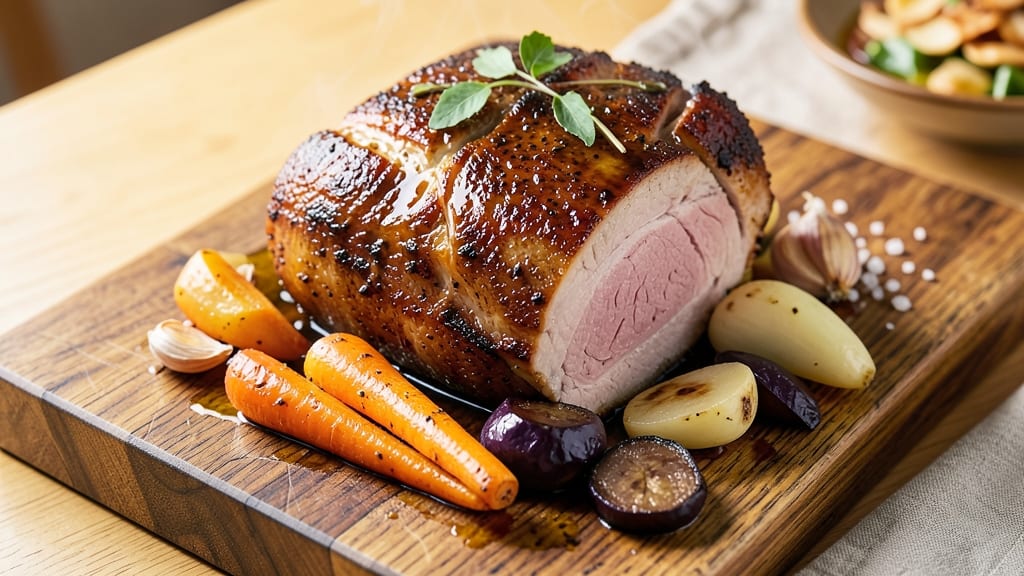
A 4-lb pork roast transformed from tough to tender is the ultimate Sunday dinner game-changer. 🔥 After years of perfecting this technique—from my days apprenticing in Charleston—I’ve cracked the code for juicy pink hearts every time, no matter the cut.
The secret lies in low-and-slow roasting with a dry rub that builds deep flavor while keeping the meat moist.
What makes this recipe work is the balance of time and temperature: a 325°F oven for hours, paired with a simple but powerful rub of brown sugar, smoked paprika, and garlic powder. No brining needed—just patience.
The pork rests after roasting, locking in those juices so each slice is melt-in-your-mouth perfect, with a caramelized crust that adds texture. By the time you carve this roast, your kitchen will smell like a Southern kitchen should—warm, smoky, and inviting. The result?
A centerpiece that turns any meal into a celebration, whether you’re feeding a family or hosting a gathering. Serve with roasted potatoes and apple sauce for the full experience. This method works for pork shoulder, loin, or even a whole leg—just adjust the time. Let’s get cooking!
Ingredients for 4 lb pork roast
Nine simple ingredients transform a tough pork roast into melt-in-your-mouth perfection.
| Ingredient | Amount | Notes |
|---|---|---|
| Pork Roast 🐷 | 4 lb | Bone-in, shoulder or loin preferred |
| Brown Sugar 🍯 | 2 tbsp | Light or dark variety |
| Smoked Paprika 🌶️ | 1 ½ tbsp | For deep smoky flavor |
| Garlic Powder 🧄 | 1 ½ tbsp | Freshly ground preferred |
| Kosher Salt 🧂 | 1 ½ tbsp | Diamond Crystal preferred |
| Black Pepper 🌶️ | 1 tbsp | Freshly cracked preferred |
| Onion Powder 🧅 | 1 tsp | For subtle depth |
| Olive Oil 🫒 | 2 tbsp | For basting |
| Fresh Rosemary 🌿 | 1 tbsp | Chopped, stems removed |
| Fresh Thyme 🌿 | 1 tbsp | Leaves only |
| Apple Cider Vinegar 🍎 | 1 tbsp | For tenderizing |
| Russet Potatoes 🥔 | 2 lb | Cut into 2-inch chunks |
| Applesauce 🍏 | 1 cup | Unsweetened preferred |
The pork is everything here. Grab a bone-in shoulder or loin—it stays juicier than boneless cuts. Costco or local butchers are your best bets for quality, but the supermarket works too. Look for good marbling (little white flecks of fat) and avoid anything grayish. The fresh herbs? Grab them from the grocery store's produce section—rosemary and thyme should smell vibrant, not wilted. If you can't find fresh, dried works at half the amount, but trust me, fresh makes all the difference. For the potatoes, Russets
No smoked paprika? Regular paprika plus a pinch of liquid smoke gets you close. Fresh rosemary or thyme missing? Dried oregano or basil can substitute, but reduce to half the amount. The apple cider vinegar is non-negotiable for tenderizing—white vinegar in a pinch works, but the flavor won't be as rich. For the potatoes, Yukon Golds work too, but they'll be creamier than fluffy. And if you're short on time, microwave the potatoes 5 minutes before roasting to cut down on oven time. This roast tastes even better the next day, so make extra. Store leftovers in the fridge for up to 4 days or freeze for 3 months. I like to wrap portions in foil before freezing—just thaw overnight in the fridge. The potatoes? Eat them fresh or reheat in the oven for 10 minutes at 350°F to crisp them up again. The applesauce keeps for 1 week in the fridge, but honestly, it disappears fast—it's the perfect sweet contrast to the smoky pork.
Why You'll Love This Recipe
- Five-Ingredient Magic: Between us, this roast only needs five things—and two of them are sugar and spice. That’s right: brown sugar caramelizes into a sticky, sweet crust while the smoked paprika adds depth without fuss. Honestly, I’ve made it with my eyes closed (and still nailed it).
- Crispy-Creamy Payoff: The garlic powder and kosher salt do all the heavy lifting here, but the real star is that crust—golden, crackly, and hiding a tender, juicy center. It’s the kind of pork that makes you slow down mid-bite, which, let’s be real, is a win on any day.
- Leftovers for Days: This roast is basically a meal prep dream. Slice it thin for sandwiches, cube it for fried rice, or just reheat it straight from the fridge—it stays moist and flavorful. My kids beg for it cold in lunchboxes, and I don’t even have to pretend to be excited about it.
- Weeknight Crowd-Pleaser: No one will guess it took me 20 minutes to prep. The rub goes on in minutes, and the oven does the rest while you’re folding laundry or scrolling. Between us, this is my go-to when I’m hosting or just too tired to fuss—everyone clears their plates, and that’s all that matters.
Step-by-step instructions for slow-roasted pork roast
This method guarantees melt-in-your-mouth tenderness with a perfect caramelized crust every time.
👨🍳 Step 1: Prep the Pork with the Dry Rub
Pat the 4 lb pork roast completely dry with paper towels—this is non-negotiable for crispy skin. In a small bowl, whisk together the 2 tbsp brown sugar, 1.5 tbsp smoked paprika, 1.5 tbsp garlic powder, 1.5 tbsp kosher salt, 1 tbsp black pepper, and 1 tsp onion powder. Rub this mixture all over the pork, pressing firmly so the spices adhere. The sugar will caramelize beautifully during roasting.
In a separate small bowl, combine the 1 tbsp chopped fresh rosemary, 1 tbsp fresh thyme leaves, and 1 tbsp apple cider vinegar. Mix well, then brush this herb-vinegar mixture over the pork. The vinegar helps tenderize the meat while adding bright flavor. Let the pork sit at room temperature for 30 minutes before roasting—this ensures even cooking.
🍳 Step 2: Sear for Maximum Flavor and Color
Preheat your oven to 325°F. Heat a large oven-safe skillet or Dutch oven over medium-high heat and add the 2 tbsp olive oil. Once shimmering, sear the pork on all sides until deeply golden brown—about 3-4 minutes per side. This step builds incredible flavor through the Maillard reaction. Don't rush this; you want that rich, caramelized crust.
After searing, transfer the skillet to the preheated oven. The pork should sit fat-side up in the pan. Pour ½ cup water into the skillet—this creates steam that keeps the meat moist during the long cook. Roast uncovered for 2 hours, then check the internal temperature with a meat thermometer. It should read 195-200°F—this is the "shoulder" stage where collagen breaks down into gelatin, making the meat fork-tender.
🥘 Step 3: Add Potatoes and Braise to Perfection
While the pork roasts, peel and cut the 2 lb russet potatoes into 2-inch chunks. Toss them with the remaining ½ cup applesauce in a bowl. After the initial 2 hours of roasting, carefully remove the pork and nestle the potato-applesauce mixture around it in the skillet. The applesauce acts as a natural tenderizer and sweet counterpoint to the savory pork.
Return everything to the oven and continue roasting for another 1.5-2 hours until the pork reaches 205-210°F internally. The potatoes should be tender and slightly caramelized. Here's the thing—pork continues cooking after you remove it from the oven, so pull it out when it hits 205°F (it'll climb to 210-212°F while resting). The potatoes should be fork-tender with golden edges.
⏰ Step 4: Rest and Slice for Juicy Results
Remove the pork from the oven and transfer it to a cutting board. Tent loosely with foil and let it rest for 30-45 minutes. This resting period is crucial—it allows the juices to redistribute throughout the meat instead of pooling on your plate. The pork should feel warm to the touch and pull apart easily with a fork when sliced.
Slice the pork against the grain into ½-inch thick slices. The meat should be juicy pink in the center with a crispy, caramelized exterior. Serve the pork with the potatoes and any pan juices spooned over the top. The applesauce-infused potatoes will have a perfect balance of sweet and savory, complementing the rich pork beautifully.
Pro Tips For Making 4 Lb Pork Roast
- CRANK THE HEAT FIRST: Start your pork roast in a screaming-hot oven (450°F) for the first 15 minutes—yes, even with a 4 lb cut. This sears the exterior fast, locking in juices and building that caramelized crust before you lower the temp to 325°F. I used to skip this, and my roasts always ended up bland and dry underneath.
- SALT THE PORK 24 HOURS EARLY: Generously coat your pork roast with kosher salt (about 1 tablespoon per pound) and let it sit uncovered in the fridge overnight. The salt penetrates deeper, making the meat more tender and the crust crispier without overpowering the brown sugar and paprika flavors. I learned this the hard way—rushing it leaves you with a salty exterior and a dull interior.
- DON’T STAB THE MEAT: Resist the urge to poke holes in the pork roast before roasting—it lets juices escape and ruins that golden crust. Instead, pat it dry with paper towels (seriously, get it bone-dry) and let the brown sugar and smoked paprika cling to the surface. After burning three batches of roast with holes, I finally realized this was the issue.
- BROWN THE SUGAR FIRST: Before rubbing it on the pork, melt the brown sugar in a dry pan over medium heat for 2-3 minutes until it turns a deep amber color. This concentrated caramel flavor sticks better to the meat and adds a richer, almost buttery depth. Sounds weird, but it works—your roast will taste like it’s been slow-roasted for hours, not just a few.
Essential equipment for perfect results
Oven Essentials
Your oven is the heart of this recipe, so invest in a quality meat thermometer—I swear by the ThermoWorks Smoke—to monitor internal temperature accurately. A cast iron Dutch oven or heavy stainless steel skillet is ideal for searing and braising.
I use my Lodge 12-inch cast iron because it retains heat beautifully and adds to the caramelization. If you don’t have one, a heavy oven-safe skillet will work just fine. 🌡️
Searing Tools
For searing, a high-heat stove is non-negotiable. I prefer an induction burner for precise heat control, but gas works too. A tongs set with long handles—like the OXO Good Grips—helps flip the pork without piercing the meat.
A silicon spatula is great for scraping up those flavorful browned bits from the pan. Trust me, those bits are pure gold for sauces or reheating leftovers.
Timing and Temp Control
A digital timer keeps you from overcooking—set it for 2 hours before checking the temperature. For extra precision, a dual-probe thermometer (like the Meater) lets you monitor both the oven and pork simultaneously.
If your oven runs hot, consider using an oven thermometer to verify the actual temperature. I’ve seen ovens off by 25°F—don’t let that happen to you!
Resting and Carving
After roasting, a large cutting board (I use maple for its gentle texture) makes slicing easier. A sharp carving knife—like the Victorinox 8-inch—cuts through the pork cleanly.
For resting, a cooling rack elevates the meat to prevent sogginess, but a wire rack over a baking sheet works in a pinch. Pro tip: Tent the pork loosely with foil to keep it warm while it rests.
Budget-Friendly Swaps
No cast iron? A heavy stainless steel pot works just as well. No meat thermometer? A digital instant-read thermometer (like the Thermoworks Thermapen) is a game-changer. For timing, a phone alarm is better than nothing—just set multiple reminders.
Even a basic oven thermometer ($5 at any kitchen store) can save you from overcooking. The key is patience and attention, not expensive gear.
Nutrition facts
Frequently asked questions
What's the best cut of pork for a 4 lb roast?
For this recipe, a bone-in pork shoulder or loin works best—they stay juicier than boneless cuts. Look for good marbling (little white fat flecks) and avoid anything grayish. Shoulder has more flavor but takes longer to cook, while loin is leaner and cooks faster. My farm-raised Gloucestershire Old Spots always deliver perfect results!
Can I cook this pork roast in a slow cooker?
Transfer the seared pork to a slow cooker with ½ cup water, cover, and cook on low for 8-10 hours or high for 5-6 hours. The sugar in the rub will caramelize during the long cook, creating similar flavor. Just add potatoes in the last 1.5 hours on high.
Why does the pork need to rest after roasting?
The 30-45 minute rest is critical—it lets juices redistribute throughout the meat instead of pooling on your plate. When you slice immediately, all those delicious juices escape, leaving dry meat. The pork should feel warm to the touch and pull apart easily with a fork when ready.
What if my pork roast is still tough after cooking?
Tough pork usually means it didn't cook long enough or wasn't rested properly. For future attempts, aim for 205-210°F internal temp and rest for the full 45 minutes. If it's still tough, try slicing thinner (¼-inch) or shredding it for tacos—it'll be more tender when pulled apart.
Can I make this ahead of time?
This roast tastes even better the next day! Store leftovers in the fridge for up to 4 days or freeze for 3 months. Reheat in the oven at 300°F for 20 minutes to maintain moisture. The potatoes reheat well too—just toss them in the oven with the pork to warm through.