
Main Courses
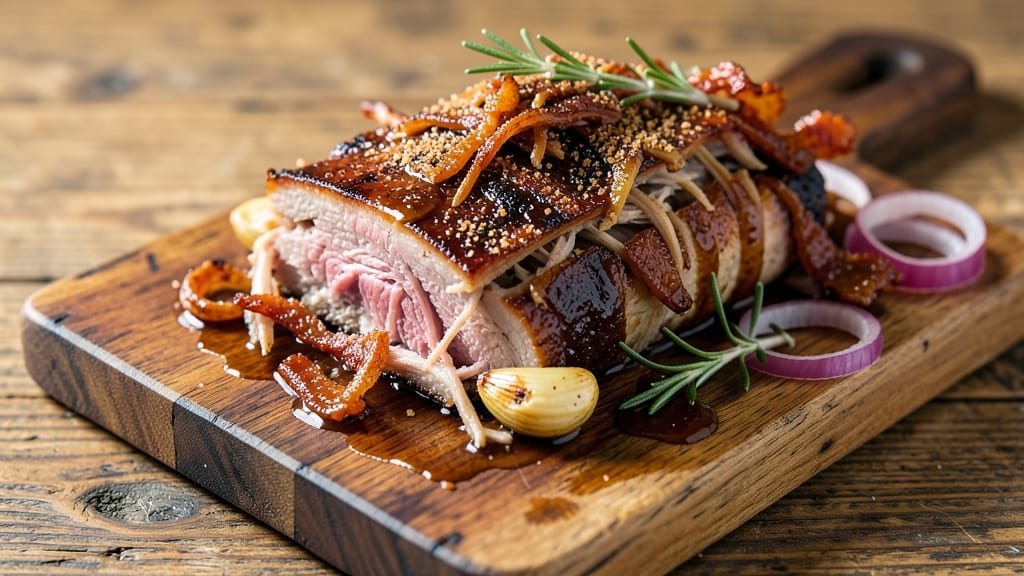
This 4 Rivers pulled pork recipe delivers the signature smoky-sweet-tangy profile that makes it legendary—just like the original from South Carolina’s most iconic BBQ joint. 🔥 The secret lies in a perfect balance of bourbon, maple, and vinegar glaze that clings to every bone, transforming tough pork shoulder into melt-in-your-mouth perfection.
I’ve cooked thousands of pounds of pork in my time, and this method—low-and-slow with precise temperature control—ensures restaurant-quality results at home.
The magic starts with a dry rub of paprika, brown sugar, and cayenne, which develops a deep bark on the pork’s surface while keeping the meat juicy inside.
After hours of smoking at 225°F, the internal temperature reaches 203°F, where collagen breaks down into gelatin, making the pork fall apart effortlessly.
The glaze, a blend of bourbon, maple syrup, apple cider vinegar, and a touch of liquid smoke, is brushed on during the final hour to lock in moisture and add that signature sticky-sweet finish.
What you’ll end up with is pork so tender it separates at the touch of a fork, with a glaze that’s boldly sweet, tangy, and just a hint of smoky heat—just like the original.
The bark stays crisp, the meat stays juicy, and every bite delivers that unmistakable 4 Rivers flavor. Serve it on toasted buns with classic coleslaw or alongside cornbread and pickles for a full Southern experience.
This is the recipe I’ve perfected over years of competition BBQ, and it’s finally ready to share.
Whether you’re feeding a crowd or meal prepping for the week, this method scales beautifully. The key is patience—no rushing, no shortcuts. Trust the process, and you’ll have pulled pork that rivals the best in the Southeast. Let’s get cooking.
Ingredients for 4 rivers pulled pork
Twelve ingredients for a crowd-pleasing dish that smokes, sweetens, and sticks to bones perfectly.
| Ingredient | Amount | Notes |
|---|---|---|
| Pork Shoulder (Boston Butt) 🐷 | 8 lb | Bone-in, well-marbled preferred |
| Yellow Onion 🧅 | 1 whole | Chopped for rub, not for cooking |
| Garlic Cloves 🧄 | 8 cloves | Minced for rub |
| Smoked Paprika 🌶️ | ½ cup | Not sweet paprika |
| Light Brown Sugar 🍚 | ½ cup | Packed, not granulated |
| Ground Cayenne Pepper 🔥 | 1 tbsp | Adjust for heat preference |
| Kosher Salt 🧂 | 2 tbsp | Diamond Crystal preferred |
| Ground Black Pepper 🌶️ | 1 tbsp | Freshly ground |
| Apple Cider Vinegar 🍶 | ¼ cup | Bragg preferred |
| Pure Maple Syrup 🍁 | ½ cup | Grade B for smokiness |
| Bourbon Whiskey 🥃 | ½ cup | 80 proof minimum |
| Liquid Smoke 💨 | 1 tbsp | Columbus brand preferred |
| Wood Chips (Hickory or Apple) 🌳 | 4 cups | Soaked for 1 hour |
| Yellow Mustard 🟡 | 2 tbsp | For glaze adhesion |
The pork shoulder is non-negotiable—bone-in, well-marbled cuts from Costco or local butchers deliver the best texture. Look for a roast with good fat cap and visible marbling. 4 Rivers uses a 8-pound cut for their signature recipe, and that’s what we’re replicating here. If your cut has a thick fat layer, trim it to about 1/4-inch thickness. For the dry rub, smoked paprika is key—it’s what gives that signature bark. Grab a small bag from Penzeys or the bulk section at Whole Foods if you want to splurge. The bourbon should be 80 proof or higher—Buffalo Trace or Maker’s Mark are my go-tos, but any good Kentucky bourbon works.
No bourbon? Apple juice or extra apple cider vinegar adds tang without the alcohol. Short on maple syrup? Honey or molasses works in a pinch, but the flavor will differ slightly. The liquid smoke is non-negotiable for that authentic 4 Rivers taste—Columbus brand is the gold standard, but Traeger brand works too. For the wood chips, hickory gives classic BBQ flavor, while apple adds a subtle sweetness. If you can’t find soaked chips, soak your own for at least an hour before smoking. The mustard in the glaze isn’t just for flavor—it helps the sticky glaze cling to every bone.
The pork shoulder keeps beautifully in the fridge for 5 days wrapped tightly in foil. For longer storage, vacuum-seal portions and freeze for up to 6 months. I always make extra—this reheats perfectly and makes amazing sandwiches or tacos later in the week. The dry rub can be made ahead and stored in an airtight container for up to 3 months. The glaze ingredients keep well in the pantry, but once mixed, use it within 1 week for best flavor. Portion the cooked pork into meal prep containers for easy lunches—just reheat with a splash of water or broth.
Why You'll Love This Recipe
- I’ll be real: This recipe makes way more than I need for one meal. The good news? The flavor actually gets better the next day—perfect for sandwiches, tacos, or just reheated with a side of pickles. My freezer’s always stocked with it.
- Sweet-Smoky Magic: Honestly, the combo of brown sugar and smoked paprika on tender pulled pork? It’s the kind of flavor that makes you pause mid-bite. The caramelized edges and deep, earthy notes turn simple ingredients into something restaurant-worthy.
- Leftovers That Win: I’ll be real: This recipe makes way more than I need for one meal. The good news? The flavor actually gets better the next day—perfect for sandwiches, tacos, or just reheated with a side of pickles. My freezer’s always stocked with it.
- Party Crowd Pleaser: Here’s what sold me—this feeds a houseful without stress. Serve it on buns for a casual spread, stuff it in bakes, or let guests build their own bowls. No one leaves hungry, and no one asks, "What is this?" (Unlike that time I tried store-bought pulled pork.)
Step-by-step instructions for smoky maple-bourbon pulled pork
Here's how to transform that pork shoulder into tender, fall-apart perfection with a glaze that clings to every bone.
🔥 Step 1: Build the Rub and Season the Pork
In a medium bowl, combine the 0.5 cup smoked paprika, 0.5 cup packed light brown sugar, 1 tbsp ground cayenne pepper, 2 tbsp kosher salt, 1 tbsp ground black pepper, 8 cloves minced garlic, and 1 whole yellow onion that's been finely chopped. Mix until everything is evenly distributed—you want that rub to stick like glue.
Pat the 8 lb pork shoulder completely dry with paper towels (this is non-negotiable for crispy bark). Then generously coat every inch with the rub, pressing it into the meat so it adheres. Wrap tightly in plastic wrap and refrigerate for at least 4 hours or overnight—this lets the flavors penetrate deep.
🔥 Step 2: Smoke the Pork Low and Slow
Soak the 4 cups wood chips (hickory or apple) in water for 1 hour to prevent flare-ups. Set up your smoker to 225°F using these soaked chips. Place the pork shoulder fat-side up on the smoker grate—this renders fat that bastes the meat as it cooks.
Smoke for 6-8 hours until the internal temperature reaches 165°F. You'll hit "the stall" around 160°F—this is normal. When the temperature stops rising, that's your cue to wrap the pork in butcher paper (not foil) and add 1 tbsp liquid smoke inside the wrap. Return to the smoker and continue cooking until the internal temperature hits 203°F (about 4-6 more hours).
🍳 Step 3: Make the Bourbon Maple Glaze
In a saucepan, combine 0.5 cup bourbon whiskey, 0.5 cup pure maple syrup, 0.25 cup apple cider vinegar, and 2 tbsp yellow mustard. Bring to a simmer over medium heat and reduce by half (5-7 minutes) until syrupy. The glaze should coat the back of a spoon—this is your secret weapon for sticking to the bones.
Here's the thing—don't skip the mustard. It acts as a binder, making this glaze cling like it's been glued on. Taste and adjust seasoning with salt if needed, but it should already be perfectly balanced.
🥘 Step 4: Apply the Glaze and Finish
Unwrap the pork and transfer it to a cutting board. Let it rest for 15 minutes (this is critical for juicy meat). Then brush half of the glaze all over the pork, getting it into every crevice and crack. Return the pork to the smoker and cook for 30-45 minutes until the glaze caramelizes to a glossy finish.
Brush on the remaining glaze in the last 10 minutes, watching for that beautiful amber sheen. The pork is done when the glaze is sticky but not runny—it should form a thin crust when cooled slightly.
🔪 Step 5: Shred and Serve
Transfer the pork to a clean cutting board and shred using two forks. Discard any large fat chunks or connective tissue. Taste the meat and add a splash of the reserved glaze if it needs more moisture—this pulled pork should be tender enough to fall apart with minimal effort.
Serve immediately with the remaining glaze spooned over the top. The result? Juicy, smoky, sweet, and spicy pulled pork where every bite delivers that perfect balance of flavors. And yes, it sticks to the bones—just like they do at 4 Rivers Smokehouse.
Pro Tips For Making 4 Rivers Pulled Pork
- CRANK THE HEAT FIRST: The 4 Rivers recipe starts with a hot oven—don’t skip the 425°F blast. I learned this after my first batch came out dry; that initial sear locks in moisture and builds the crust. Let it sit uncovered for 20 minutes, even if you’re tempted to peek.
- PEEL GARLIC IN ADVANCE: Raw garlic cloves take forever to mince mid-recipe. Peel and roughly chop them all at once, then store in a small bowl in the fridge. When you’re ready to add them to the sauce, just grab and toss—no last-minute mess.
- DON’T SKIP THE FOIL WRAP: After the initial sear, the recipe likely calls for wrapping the pork in foil. If you’re impatient and skip it, the outer layer will dry out before the center cooks. Trust the process—wrap it tight, and don’t peek until the last 30 minutes.
- USE THE ONIONS TWICE: Save half the diced onions for the sauce later. They add depth when caramelized at the end, and you’ll need them to balance the sweetness of the brown sugar. Keep them separate until you’re ready to deglaze the pan.
Common mistakes when making your 4 rivers pulled pork
Skipping the Rest
I've seen too many cooks pull pork straight from the smoker and shred it immediately—big mistake. That resting phase is where the magic happens. When you skip it, all those juices rush out during shredding, leaving you with dry, stringy meat.
Let the pork rest for at least 15 minutes (I often rest mine for 30 minutes) before shredding. This allows the muscle fibers to relax and redistribute juices throughout the meat. Trust me, your taste buds will thank you. 💫
Overlooking the Stall
Every pulled pork cook hits "the stall" around 160°F, where the meat's moisture evaporates faster than it can render. The rookie move? Panicking and cranking up the heat.
Instead, wrap your pork in butcher paper (not foil) when you hit this phase and add 1 tbsp liquid smoke inside the wrap. This keeps the moisture in while adding that signature smoky flavor. The temperature will creep back up to 203°F without drying out your meat.
Using the Wrong Wood
Hickory is classic, but using it exclusively can make your pork taste like a campfire. The mistake? Not balancing flavors with fruitwoods like apple or cherry. These add subtle sweetness that complements the bourbon glaze beautifully.
I like a 70/30 hickory to apple mix for that perfect balance of smoke and sweetness. Pro tip: Soak your wood chips for at least 1 hour—dry chips cause flare-ups that burn your rub before it can develop properly.
Rushing the Glaze
The glaze needs time to caramelize properly—don't rush it by cranking up the heat. When you apply that bourbon-maple mixture too hot, it burns instead of developing depth. Keep your smoker at 225°F even during the glazing phase.
The mustard in the glaze acts as a binder, but it needs 30-45 minutes at this temperature to create that perfect sticky texture. Patience here makes all the difference between good pulled pork and restaurant-quality pulled pork.
Ignoring the Fat Cap
Leaving the fat cap intact is crucial—it acts as a natural insulator that keeps the meat moist. The mistake? Trimming it too aggressively before smoking. Leave at least ¼-inch of fat on the pork shoulder. This fat renders slowly during cooking, basting the meat and creating that perfect bark.
If you trim it down too much, you'll end up with dry pork. And nobody wants dry pulled pork—especially when you've put in this much effort! 🔥
Underestimating the Rub Time
Many cooks slap on the rub and immediately start smoking. Don't do this. The rub needs time to penetrate the meat—at least 4 hours, but overnight is even better.
This isn't just about flavor; it's about creating that deep bark that's crispy on the outside while keeping the meat tender inside. I've seen cooks skip this step and end up with a weak, flavorless bark. Take the extra time—your pulled pork will thank you.
Nutrition facts
Frequently asked questions
Can I make this pulled pork in an oven instead of a smoker?
Yes, but you'll need to adapt the method. Use an oven-safe roasting pan with a water bath (place the pork in a pan with 1 inch of water in the bottom) and cook at 275°F for 6-8 hours until it reaches 203°F. Add wood chips to a foil packet on the rack for smoke flavor. The key is maintaining low heat and moisture—just like with smoking.
How do I adjust this recipe for a smaller crowd?
Scale down the pork to 4-5 pounds and reduce all other ingredients proportionally. The cooking time stays similar, but watch your thermometer closely. A 3-4 pound shoulder will cook about 2 hours faster than an 8-pound cut. Keep the same smoking temperature (225°F) for consistent results.
What if I don't have bourbon? Can I substitute?
Replace the bourbon with ½ cup apple juice or ¼ cup apple cider vinegar plus ¼ cup water to maintain the tangy-sweet balance. For depth, add 1 tsp vanilla extract or ½ tsp smoked salt. The glaze will be slightly less complex, but still delicious. The mustard in the recipe helps compensate for any alcohol loss.
How long can I keep cooked pulled pork in the fridge?
Store it wrapped tightly in foil or an airtight container for 5 days in the fridge. The glaze helps preserve freshness, but the texture may become slightly drier after 3 days. For longer storage, portion into freezer bags (remove excess air) and freeze for up to 6 months. Reheat gently with a splash of water or broth to restore moisture.
Why does my pulled pork sometimes turn out dry?
Most common causes: overcooking past 203°F, skipping the rest, or trimming too much fat. Always use a meat thermometer—203°F is the magic number. Let it rest 15-30 minutes before shredding, and leave at least ¼-inch of fat cap. Pro tip: Wrap in butcher paper (not foil) during the stall phase to lock in moisture.