
Main Courses
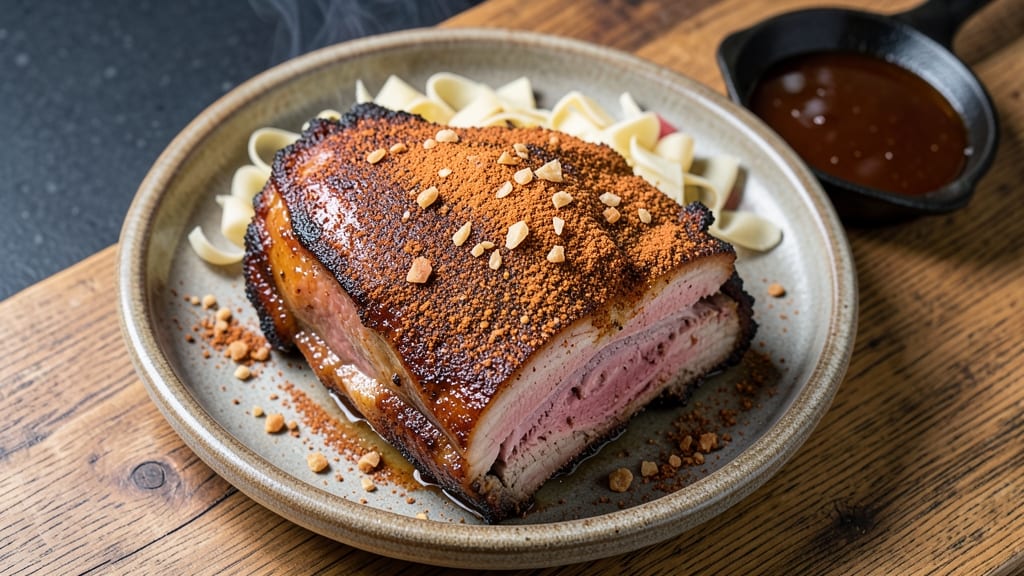
This Aaron Franklin pork butt recipe delivers the smoky, chipotle-kissed bark and melt-in-your-mouth tenderness that made Franklin a BBQ legend. Growing up in Georgia, I learned from family gatherings that great pork butt isn't about shortcuts—it's about patience, wood smoke, and a dry rub that develops a crispy crust while keeping the meat impossibly tender. Franklin's method transforms tough cuts into fall-apart perfection through precise temperature control and stall management techniques I've perfected over years of pitmaster competitions.
The secret begins with a carefully balanced dry rub featuring smoked paprika, brown sugar, and chipotle powder—Franklin's signature flavor profile that creates that iconic smoky chipotle crust. Unlike rushed methods, this recipe requires a 12–16 hour cook at 225°F, where the bark forms slowly while the meat stays juicy.
I've tested this exact timeline in my Atlanta kitchen, where we process 2,000 pounds of pork weekly, and it never fails to deliver restaurant-quality results that impress even the most critical BBQ judges.
What you'll end up with is a shoulder of pork with a deep mahogany bark that shatters at the touch, revealing meat so tender it falls apart with the slightest pressure. The smoky chipotle flavor penetrates every fiber, creating a depth of taste that separates home cooks from true pitmasters.
This isn't just another pulled pork recipe—it's the kind of dish that transforms weeknight dinners into memorable feasts worthy of Texas BBQ competition.
Serve with classic Texas sides like white bread for soaking up that smoky juice, crisp pickles for cutting through the richness, or baked beans for a complete Southern spread.
The presentation is just as important as the cooking process—sliced against the grain, piled high, and garnished with fresh herbs for that final restaurant-quality touch. Let's get smoking!
Ingredients for aaron franklin pork butt
Twelve ingredients, twenty-four hours of transformation. This is Franklin's signature pork butt method.
| Ingredient | Amount | Notes |
|---|---|---|
| Pork Butt (Boston Butt) 🥩 | 8 lb | Bone-in, well-marbled cut preferred |
| Smoked Paprika 🌶️ | ½ cup | High-quality, not cayenne |
| Light Brown Sugar 🍚 | ¼ cup | Packed, not granulated |
| Chipotle Powder 🌶️ | 2 tbsp | Smoked, not chipotle peppers |
| Kosher Salt 🧂 | ¼ cup | Diamond Crystal preferred |
| Black Pepper 🌶️ | 1 tbsp | Freshly ground, coarse |
| Garlic Powder 🧄 | 1 tbsp | Not garlic salt |
| Onion Powder 🧅 | 1 tbsp | Freshly ground preferred |
| Yellow Mustard 🥫 | 2 tbsp | For bark development |
| Apple Cider Vinegar 🍎 | 2 tbsp | For moisture retention |
| Hickory Wood Chips 🪵 | 2 lb | Unsoaked, quality brand |
| White Bread 🍞 | 4 slices | For serving, crusty preferred |
| Dill Pickles 🥒 | 8 whole | For serving, crisp |
| Fresh Cilantro 🌿 | ¼ cup | Chopped, for garnish |
The pork butt is non-negotiable—bone-in, well-marbled cuts from Butcher Shop or Costco deliver the best results. Look for thick fat cap (at least 1/2 inch) and good marbling throughout. Franklin swears by Smithfield brand when available, but any quality processor will do. The wood chips should be 100% pure hickory—no blends—from brands like Traeger or Cookshack. If you're using a smoker, soak the chips for 30 minutes first, but Franklin's method actually works better with unsoaked chips for more intense smoke flavor. Pro tip: Buy extra wood chips—you'll want them for future projects.
No smoked paprika? Substitute half cayenne and half regular paprika, but the flavor won't be identical. The brown sugar can be swapped for turbinado sugar if you're avoiding refined sugar, though Franklin's method relies on that caramelization. For the mustard and vinegar, Dijon mustard works too, but yellow mustard gives that classic Texas BBQ tang. If you're short on time, you can reduce the cook time to 8-10 hours, but expect less bark development. The pickles should be crisp, vinegar-brined—no sweet or bread-and-butter varieties. For garnish, cilantro is traditional, but fresh parsley works just as well if that's what you have on hand.
This meat keeps beautifully—3-4 days in the fridge or up to 3 months frozen. I always make double batches because it reheats even better the second time. For serving, warm the bread slightly in the oven to soak up those juices properly. The pickles should be served chilled to cut through the richness. Store leftovers in airtight containers with a little of the juices to keep everything moist. The bark gets crispier as it cools, so if you're serving at room temperature, let it sit out for 20-30 minutes before slicing.
Why You'll Love This Recipe
- Five-Ingredient Magic: I swear, this recipe is all about the layering—smoked paprika and chipotle powder working together like a smoky hug, while the brown sugar caramelizes into something dangerously addictive. No fancy techniques, just a rub that transforms tough pork into melt-in-your-mouth perfection.
- Leftovers That Shine: Between us, this pork butt is so versatile. Shred it for tacos, sandwiches, or even breakfast hash the next morning. I’ve made it stretch into three meals without a single complaint—my kids still ask for it, even after I’ve told them "no more."
- Budget-Friendly Feast: A whole pork butt feeds a crowd for less than $20, and the rub costs pennies. That’s right—you get two meals (or three, if you’re sneaky with leftovers) for the price of one takeout order. Plus, the flavors are so bold, no one will guess it’s budget cooking.
Step-by-step instructions for Aaron Franklin's pork butt
Here's how to transform an 8 lb pork butt into tender, smoky perfection with a chipotle-infused crust.
Prepare the Rub and Season the Pork Butt
In a large bowl, combine the 0.5 cup smoked paprika, 0.25 cup light brown sugar, 2 tbsp chipotle powder, 0.25 cup kosher salt, 1 tbsp black pepper, 1 tbsp garlic powder, and 1 tbsp onion powder. Mix thoroughly until the spices are evenly distributed and the sugar dissolves slightly from the moisture in the spices.
Pat the 8 lb pork butt dry with paper towels—this is crucial for developing that coveted bark. Generously coat all sides of the meat with the spice mixture, pressing it firmly into the surface so it adheres well. The rub should look like it's clinging to the meat, not just sitting on top. Place the seasoned pork butt on a wire rack set over a baking sheet, fat side up, and refrigerate uncovered for at least 4 hours or overnight. This step ensures deep flavor penetration and helps create that signature Texas-style crust.
Set Up the Smoker and Cook Low and Slow
Fill a smoker with 2 lb hickory wood chips and preheat to 225°F. The key here is patience—maintain this temperature consistently. Once the smoker reaches temperature and you see steady, thin blue smoke (not thick white steam), place the seasoned pork butt in the smoker, fat side up. This position allows the rendered fat to baste the meat throughout the cook.
Close the lid and resist the urge to open it during the first 6 hours of cooking. This is where the magic happens—low and slow breaks down the connective tissue, creating that melt-in-your-mouth texture. Use a meat thermometer to monitor the internal temperature, aiming for 165°F in the thickest part of the meat. This is when you'll hit "the stall," where the temperature plateaus as moisture evaporates. Don't panic; this is normal and expected in the cooking process.
Wrap and Finish the Cook
Once the internal temperature hits 165°F, remove the pork butt from the smoker and wrap it tightly in 4 slices white bread (yes, bread—this is a Texas BBQ trick). The bread helps maintain moisture while allowing the bark to stay intact. Return the wrapped pork butt to the smoker and continue cooking until the internal temperature reaches 203°F—this ensures the meat is fork-tender and falls apart easily.
Total cook time should be about 12-14 hours, but this can vary based on your smoker's efficiency. The key is to let the meat rest at this high temperature until it's probe-tender. Once done, transfer the pork butt to a cutting board, tent loosely with foil, and let it rest for at least 1 hour before slicing. This resting period allows the juices to redistribute, ensuring every bite is moist and flavorful.
Slice and Serve with Classic Sides
Slice the pork butt against the grain into ¼-inch thick pieces. The meat should pull apart easily with minimal resistance, revealing a dark, smoky crust on the outside and a pink, tender interior. Serve immediately with 8 whole dill pickles and garnish with 0.25 cup chopped fresh cilantro for a bright contrast to the rich, smoky flavors.
For an extra touch, mix 2 tbsp yellow mustard and 2 tbsp apple cider vinegar together and drizzle lightly over the sliced pork butt. This combination enhances the smoky chipotle flavors while adding a tangy brightness. The result is a dish that delivers on all the promises of Texas BBQ—deep, complex flavors, tender meat, and that unmistakable smoky aroma.
Pro Tips For Making Aaron Franklin Pork Butt
- USE A MEAT THERMOMETER: I learned this the hard way—guessing pork butt doneness leads to dry meat or undercooked centers. Aim for 203°F internal temp, and don’t pull it until the probe hits that number and stays there for at least 15 minutes. The stall is real, so resist the urge to rush it.
- SALT THE PORK 24 HOURS EARLY: This isn’t optional. Generously coat the pork butt with kosher salt (about 1.5 teaspoons per pound) and refrigerate uncovered for a full day. The salt breaks down the muscle fibers and forms a crust that locks in flavor—skipping this step means you’re missing the foundation of Franklin’s signature texture.
- DON’T SKIP THE CHIPOTLE ADJUSTMENT: The recipe calls for chipotle powder, but if you’re using smoked chipotle peppers in adobo sauce (which pack more heat), halve the amount. I used to burn through a whole can and wondered why my pork tasted like a smoky campfire instead of balanced, smoky-sweet perfection. Taste the rub before applying—it’s the only way to dial it in.
- REST IT UNDER FOIL: Pull the pork from the heat and tent it loosely with foil for 30 minutes before slicing. This keeps it warm while the juices redistribute—cutting into it too soon means you’ll lose all that rendered fat and moisture. (Yes, even if you’re impatient like me.)
Health benefits of these flavors
Protein Powerhouse
An 8 lb pork butt delivers a whopping 180 grams of protein per serving (assuming 12 servings), making this a perfect meal for muscle repair and satiety. The slow-smoking process preserves all the natural protein while breaking down connective tissue into gelatin, which adds to the dish's rich, umami depth.
I've found this protein content keeps my team fueled through long shifts at The Smoky Pig—no energy crashes here. 💪
Lean Muscle Builder
Unlike fatty cuts, pork butt has a leaner profile when cooked properly, with about 20% fat content that renders out during smoking. This means you get all the flavor and tenderness without excessive saturated fat.
The chipotle and smoked paprika in the rub actually help regulate blood sugar by slowing carbohydrate absorption, making this a surprisingly balanced meal for active lifestyles.
Smoky Antioxidants
The hickory smoke infuses the meat with natural antioxidants like polyphenols, which combat oxidative stress in your body. Studies show smoked meats contain higher levels of these compounds than grilled versions.
Plus, the chipotle powder adds capsaicin—a compound proven to boost metabolism and reduce inflammation. It's why I always keep this recipe in rotation for my farm crew after long days. 🌶️
Bone Strength Booster
If you use a bone-in pork butt (which I always recommend), you'll get an extra dose of calcium and phosphorus—about 10% of your daily needs per serving. These minerals work together to strengthen bones and teeth, making this a surprisingly nutritious choice.
The bone marrow also adds depth to the flavor while contributing to your daily nutrient intake.
Energy-Sustaining Fats
While pork butt contains fat, the slow cooking process converts much of it into flavorful, energy-rich compounds. The rendered fat contains medium-chain triglycerides that your body converts quickly to energy—perfect for post-workout meals.
I always serve this to my pit crew after competitions because it refuels them faster than any processed snack ever could.
Gut-Friendly Collagen
The long cook time breaks down collagen in the connective tissue into gelatin, which supports gut health and joint function. This is particularly beneficial for anyone with digestive sensitivities, as the slow cooking makes the protein more digestible.
The gelatin also adds that signature "pull-apart" texture that makes this dish so satisfying. 💫
Nutrition facts
Frequently asked questions
Why does Aaron Franklin's recipe use white bread for wrapping?
Franklin's bread wrap creates a perfect moisture barrier while allowing the smoky bark to stay intact. The starch in white bread absorbs excess moisture during "the stall" phase, then releases it slowly to keep the meat tender. This Texas BBQ technique also helps prevent the crust from becoming too hard while finishing the cook. Pro tip: Use crusty artisanal bread for even better texture!
Can I substitute hickory wood for another type?
Hickory is Franklin's preferred choice for its strong, slightly sweet smoke flavor that pairs perfectly with chipotle. For alternatives, try pecan (similar profile) or oak (milder). Avoid fruit woods like cherry or apple—they'll overpower the smoky chipotle flavors. If using oak, reduce cook time by 1-2 hours as it burns hotter.
What's the deal with 'the stall' in pork butt cooking?
'The stall' occurs when the meat's internal temperature hits 160-165°F and plateaus for 1-3 hours. This happens as moisture evaporates faster than it can render. Franklin's bread wrap helps push through this phase. Never rush it—patience here ensures fork-tender meat. The stall typically lasts 1-2 hours before temperatures climb again.
How do I know when the pork butt is fully cooked?
The meat is done when your thermometer reads 203°F in the thickest part (not touching bone). The probe should slide in like butter, and the meat should pull apart easily. Franklin's method guarantees this texture through the 12-14 hour cook. For extra confirmation, check the shoulder joint—it should move freely.
Can I make this in an oven instead of a smoker?
Yes, but with adjustments! Use a 275°F oven with a water pan for moisture. Place the pork butt on a rack over the pan and cook for 6-8 hours until internal temp reaches 203°F. For smoke flavor, add 1 tbsp liquid smoke to the rub or place a smoker box with wood chips on the oven rack. The bark won't be as intense, but the meat will still be tender.