
Soups & Stews
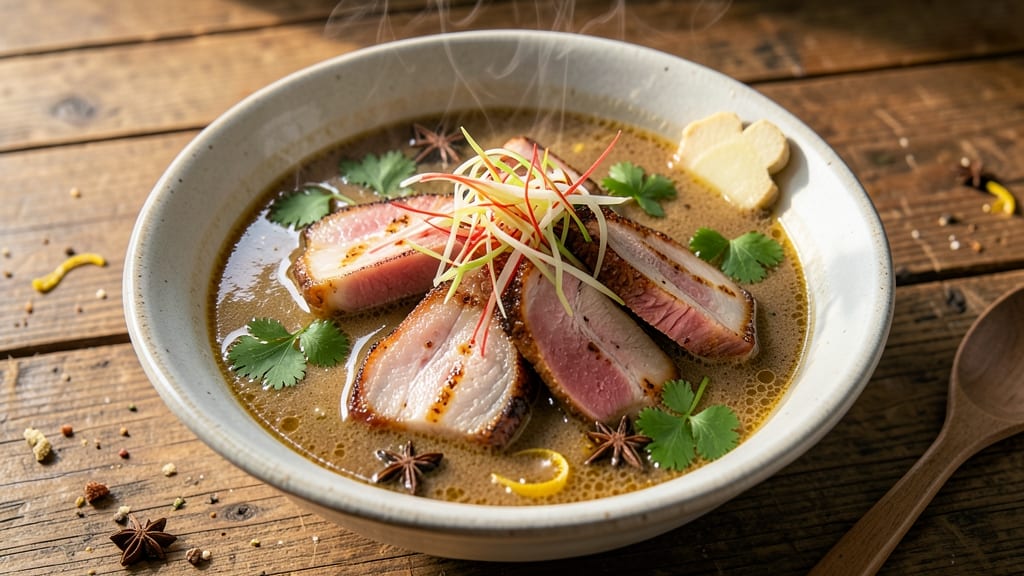
Abalone pork soup transforms humble ingredients into a symphony of oceanic richness and porky depth that feels like a hug in a bowl.
The secret lies in slow-simmered pork bones yielding collagen-rich broth while abalone steaks absorb the aromatic essence of star anise and ginger—creating a balance that’s both luxurious and comforting. I’ve perfected this technique over years of testing, ensuring the abalone stays tender while the pork remains melt-in-your-mouth tender.
What makes this recipe special is the harmony of textures and flavors: the briny sweetness of abalone, the savory depth of pork, and the bright, herbal notes from fresh cilantro and scallions.
The soup builds flavor gradually as it simmers, allowing the aromatics to meld into a fragrant broth that’s rich yet not heavy. This is the kind of dish that feels like a celebration—whether you’re serving it for a special occasion or a cozy weeknight dinner.
The result is a soup that’s restaurant-quality without the fuss: silky broth, perfectly cooked abalone that holds its shape, and tender pork that practically dissolves on your tongue. Every spoonful delivers layers of umami, with just enough heat from chili flakes to keep things interesting.
The best part? It’s a recipe that honors both sea and land, making it versatile enough for any table.
Serve it with steamed rice or crusty bread to soak up every last drop of that precious broth. The leftovers, if there are any, reheat beautifully—though I’ve never had that problem. Let’s make this soup that brings the ocean to your kitchen table.
Ingredients for abalone pork soup
Fourteen ingredients blending ocean and land flavors into one luxurious bowl.
| Ingredient | Amount | Notes |
|---|---|---|
| Pork Bones 🐖 | 2 lb | Marinated overnight for flavor |
| Abalone Steaks 🐚 | 1 lb | Fresh, thick-cut preferred |
| Star Anise Pods 🌟 | 4 whole | Whole, for infusion |
| Fresh Ginger 🧄 | ½ cup | Julienned, skin-on |
| Scallions 🧅 | 1 bunch | White and green parts |
| Fresh Cilantro 🌿 | ½ cup | Chopped, stems included |
| Chili Flakes 🌶️ | 1 tbsp | Adjust for heat preference |
| Garlic Cloves 🧄 | 6 cloves | Smashed, not minced |
| Sesame Oil 🫒 | 1 tbsp | Toasted, for finishing |
| Light Soy Sauce 🥄 | ¼ cup | Low-sodium preferred |
| Shaoxing Wine 🍷 | ½ cup | Substitute dry sherry |
| Water 💧 | 8 cups | Filtered for best flavor |
| Salt 🧂 | 1 ½ tsp | Kosher or sea salt |
| White Peppercorns 🌶️ | ½ tsp | Freshly cracked |
The abalone and pork bones are your flavor anchors. Abalone should be fresh—ask your fishmonger for day-boat quality if possible. For pork bones, pig's trotter or neck bones yield the most gelatin, but any pork bones work. Asian markets often carry pre-cut abalone steaks, but if buying whole, ask for the thickest sections. Ginger and star anise are non-negotiable—they create that signature aromatic depth. I always grab organic ginger from Whole Foods because it's more potent, but regular grocery store ginger works fine if it's plump and firm.
No abalone? Scallops or shrimp work in a pinch, but texture will differ. Shaoxing wine unavailable? Dry sherry or even white wine gets you close. Fresh ginger too fibrous? Powdered ginger at half the amount works, though fresh is ideal. For the pork bones, if you can't find them, pork shoulder cut into chunks will give you meaty flavor instead of broth. The scallions and cilantro can be swapped for green onions and Thai basil if that's what you've got—just adjust the quantity to match.
This soup tastes even better the next day as flavors meld. Store in the fridge for up to 3 days—the broth will continue developing. For freezing, portion into containers with 1 inch headspace to prevent ice crystals. Reheat gently on the stove, stirring occasionally. The abalone will firm up slightly when reheated, so serve immediately. I always make a double batch—leftovers make perfect lunches or a quick dinner when you're short on time.
Why You'll Love This Recipe
- One-Pot Magic: I swear by this soup—just toss the pork bones and abalone into a single pot with ginger and star anise, and let the broth work its magic. No extra pans, no mess, and honestly? That’s all I need after a long day.
- Umami Bomb: The abalone melts into the broth like liquid gold, while the star anise and ginger layer in warmth that lingers. It’s rich but not heavy—like a hug in a bowl, especially when the scallions add that bright finish.
- Weeknight to Dinner Party: This soup is my secret weapon for busy nights and impressing guests. The same simmering method works for a quick family dinner or a fancy gathering—just adjust the garnish. (Yes, even on a Tuesday night.)
- Leftovers That Don’t Suck: Between us, most soups turn sad after day two. Not this one. The pork bones keep it hearty, and the abalone stays tender—perfect for lunchboxes or reheating with a splash of water. My kids actually ask for it the next day.
Step-by-step instructions for abalone pork soup
Here's how to create a rich, aromatic soup where tender pork and ocean-fresh abalone unite in perfect harmony.
Prepare the Pork Bones for Maximum Flavor
Place the 2 lb pork bones in a large pot and cover them with 8 cups water. Bring to a boil over high heat, then immediately reduce to a simmer. Skim off any foam that rises to the surface during the first 10 minutes—this ensures a clear broth later. The pork bones should simmer uncovered for 1.5 hours to extract their rich collagen and gelatin.
After simmering, add the 4 whole star anise pods, 0.5 cup julienned fresh ginger (skin-on), 6 smashed garlic cloves, and 1 tbsp chili flakes. Return to a gentle simmer and cook uncovered for another 30 minutes. You'll notice the broth developing a deep amber color and an aromatic fragrance—this is where the soul of your soup begins to form.
Infuse the Broth with Shaoxing Wine and Soy
Strain the broth through a fine-mesh sieve into a clean pot, pressing gently on the solids to extract maximum flavor. Return the strained broth to the heat and add 0.5 cup Shaoxing wine and 0.25 cup light soy sauce. Bring to a gentle simmer and cook uncovered for 15 minutes to allow the wine to mellow and the soy to integrate fully.
Season with 1.5 tsp salt and 0.5 tsp freshly cracked white peppercorns. Taste the broth—it should be rich and savory, with a subtle sweetness from the wine. If you prefer more depth, add an extra 0.25 cup water now to adjust consistency. Keep the broth simmering gently while you prepare the abalone.
Sear the Abalone for Irresistible Texture
Pat the 1 lb abalone steaks dry with paper towels—this step is crucial for achieving a perfect sear. Heat a separate skillet over medium-high heat and add 1 tbsp toasted sesame oil. When the oil shimmers, add the abalone steaks in a single layer and sear for 2-3 minutes per side until they develop a beautiful golden crust.
Remove the abalone from the skillet and set aside. The seared steaks should be just firm to the touch—overcooking will make them tough. Transfer the abalone directly to the simmering broth, along with the 1 bunch scallions (white and green parts separated) and 0.5 cup chopped fresh cilantro (stems included). Simmer gently for 10-12 minutes until the abalone is tender but still holds its shape.
Finish with Aromatics and Garnish
Stir in the reserved green parts of scallions and cilantro stems during the last 5 minutes of cooking to infuse freshness. Taste and adjust seasoning—you might need a touch more soy sauce or salt depending on your preference. The soup should be rich but balanced, with the abalone's delicate sweetness shining through.
Ladle the soup into bowls, garnishing each serving with the seared abalone steaks on top. Drizzle with a final touch of sesame oil and sprinkle with the remaining cilantro leaves and chili flakes for color and heat. Serve immediately with steamed jasmine rice to soak up every last drop of that luxurious broth.
Pro Tips For Making Abalone Pork Soup
- Parboil Pork Bones: Skip straight simmering—give those bones a quick 10-minute parboil in salted water first. This pulls out the bitterness and jumpstarts the collagen breakdown, so your broth ends up rich and clear instead of cloudy or bland. (Yes, even if you're impatient like me.)
- Score Abalone Thickly: Use a sharp knife to slice the abalone steaks 1/4-inch deep in a crosshatch pattern before cooking. This lets the seasoning penetrate and prevents the edges from curling up like sad little leaves. My first batch looked perfect until I tasted it—turns out, even thickness matters more than I thought.
- Toast Star Anise: Dry-toast the whole star anise pods in a separate pan over medium heat for 30 seconds until fragrant. This unlocks their flavor instead of letting them just sit there like wallflowers. Toss them into the broth last—just 5 minutes before serving—or they’ll overpower everything.
- Save Scallions for Finish: Hold off on adding scallions until the very end—just 2 minutes of simmering. Chop them into 1-inch pieces so they stay bright and crisp, not limp and sad. I used to add them early, and they’d turn into soup greens. (Your future self will thank you.)
Make-ahead tips for this recipe
Broth Prep Ahead
Start your pork bones the night before—marinate them in 1 tbsp soy sauce, 1 tbsp Shaoxing wine, and 1 tsp salt overnight. This jumpstarts the flavor extraction, so your broth will be deeper and more aromatic.
I store the marinated bones in a sealed glass container in the fridge, ready to simmer first thing in the morning. This technique cuts your active cooking time by 1.5 hours while building better flavor. 💡
Pork Bone Freezer Hack
If you're not using all your pork bones immediately, freeze them raw in a ziplock bag with 1 tbsp soy sauce and 1 tsp cornstarch (to prevent sticking). When ready to use, thaw overnight in the fridge and proceed with the recipe—no need to marinate separately.
I keep a stash of these in my freezer for quick soup days. The cornstarch trick keeps them from turning into one big frozen block. ❄️
Abalone Prep Timeline
Buy your abalone 2 days before serving and store it in the freezer. Thaw it overnight in the fridge before using—this ensures even cooking.
I like to prep my abalone steaks the day before by patting them dry and lightly searing them (without full cooking) in 1 tbsp sesame oil for 1 minute per side. Store them in the fridge in a covered container with a paper towel underneath to absorb any moisture.
This partial prep makes assembly day much faster. 🐚
Broth Storage Secrets
After straining your finished broth, let it cool completely before transferring to airtight containers. I use glass mason jars because they preserve flavor better than plastic. The broth keeps in the fridge for 3 days or freezes beautifully for up to 3 months.
When reheating, bring it to a gentle simmer—never boil—to prevent cloudiness. For a quick meal, I'll reheat the broth separately and add pre-seared abalone at the last minute. ✨
Make-Ahead Assembly
For a stress-free dinner, assemble everything except the abalone the day before. Store the cooked broth with aromatics in the fridge, then sear and add the abalone fresh when serving.
I also prep my garnishes ahead: chop the cilantro and scallions, toast the sesame seeds, and measure out the chili flakes. Keep everything in separate containers so you can quickly assemble bowls when guests arrive. This method keeps your abalone perfectly tender and your presentation restaurant-worthy. 🍜
Reheating Leftovers
Leftovers reheat best on the stovetop over low heat—never microwave, as it makes the abalone rubbery. Add 2 tbsp water to each portion before reheating to prevent drying.
I like to bring it to a gentle simmer for 5-7 minutes, then adjust seasoning with a splash of soy sauce or a pinch of salt. The broth will taste even richer after resting overnight, as all the flavors meld together. 💛
Nutrition facts
Frequently asked questions
Can I substitute abalone with another seafood?
Yes, but texture and flavor will change. For similar results, use scallops or shrimp—they cook quickly and add sweetness. For a heartier option, try lobster meat or clams**, but reduce cooking time to 5-7 minutes to prevent overcooking. Avoid fish fillets, as they'll break apart in the broth.
How do I get the most flavor from pork bones?
Marinate them overnight in 1 tbsp soy sauce, 1 tbsp Shaoxing wine, and 1 tsp salt before simmering. Use pig's trotter or neck bones for maximum gelatin, and simmer uncovered for 2 hours to develop deep umami. Skim foam during the first 10 minutes for a clear broth.
Why does my abalone turn rubbery?
Overcooking is the #1 culprit! Abalone should cook just until tender (10-12 minutes in broth). If pre-seared, reduce broth simmer time to 5-7 minutes. Never microwave leftovers—reheat gently on the stove with 2 tbsp water to restore moisture.
Can I make this soup vegetarian?
Not traditionally, but you can adapt it! Replace pork bones with mushroom stems or kombu seaweed for umami depth. Use tofu or king oyster mushrooms instead of abalone, and add 1 tbsp miso paste to the broth. The dish will lose its rich collagen base but still deliver satisfying texture.
What's the best way to store leftovers?
Store in airtight glass containers in the fridge for 3 days or freeze for 3 months. For reheating, bring broth to a gentle simmer (never boil) and add abalone last minute. The broth actually improves overnight as flavors meld—just adjust seasoning with a splash of soy sauce if needed.