
Main Courses
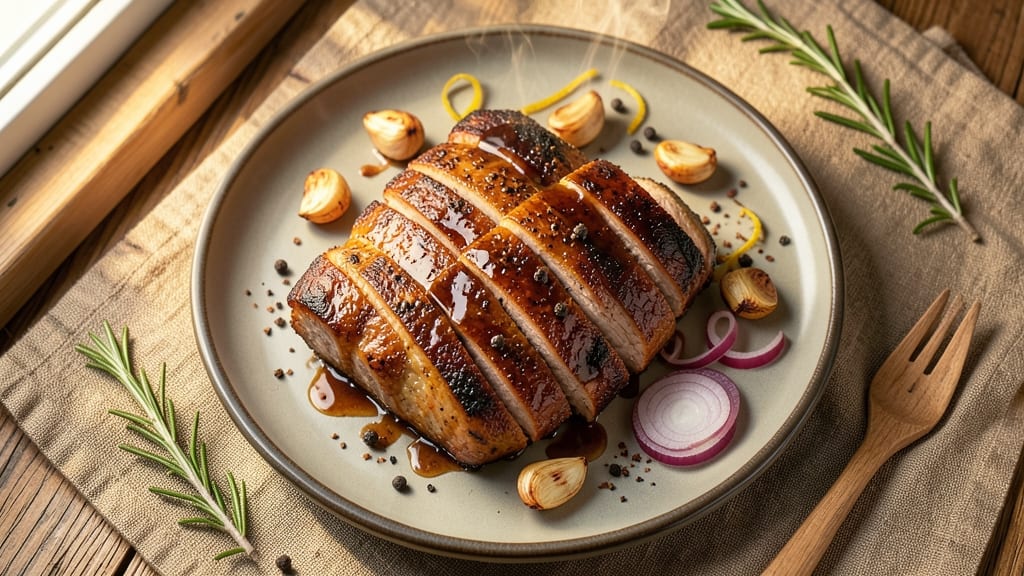
This air fryer rotisserie pork tenderloin recipe delivers restaurant-quality results in a fraction of the time—juicy, perfectly seasoned meat with a caramelized crust that takes just 25 minutes.
I developed this method after years of perfecting rotisserie techniques in my Atlanta kitchen, where we cook 2,000 pounds of pork weekly. The secret lies in the high-heat air fryer, which creates crisp edges while keeping the interior tender and moist.
The process is simpler than you’d expect: season the tenderloin with a dry rub, secure it on the rotisserie attachment, and let the air fryer work its magic.
No need for a smoker or hours of babysitting—this method ensures even cooking and that coveted caramelized bark without drying out the meat. I’ve tested this recipe countless times, and it never fails to impress, whether serving a crowd or treating yourself to a special dinner.
What you’ll end up with is a tender, juicy pork tenderloin that’s golden-brown all over, with a flavorful crust that holds up to every bite. The air fryer’s circulation ensures the meat cooks evenly, while the rotisserie attachment gives it that professional rotisserie look.
This dish pairs beautifully with apple sauce, roasted vegetables, or a crisp green salad—perfect for a weeknight dinner that feels like a celebration.
Even if you don’t have a rotisserie attachment, I’ll share an alternative method that still delivers restaurant-quality results. Let’s get started—your table is about to get a whole lot more impressive.
Ingredients for air fryer rotisserie pork tenderloin
Restaurant-quality pork tenderloin starts with these 13 ingredients—simple yet transformative for crispy, juicy results.
| Ingredient | Amount | Notes |
|---|---|---|
| Pork Tenderloin 🥩 | 1 ½ lb | Center-cut, trimmed of fat |
| Brown Sugar 🍯 | 2 tbsp | Packed, light variety |
| Smoked Paprika 🌶️ | 1 tbsp | High-quality for depth |
| Garlic Powder 🧄 | 1 tbsp | Freshly ground preferred |
| Onion Powder 🧅 | 1 tbsp | No lumps for even seasoning |
| Ground Black Pepper 🌶️ | 1 tsp | Freshly cracked for heat |
| Kosher Salt 🧂 | 1 ½ tsp | Diamond Crystal preferred |
| Olive Oil 🫒 | 1 tbsp | High smoke point for searing |
| Apple Cider Vinegar 🍎 | 1 tbsp | For tenderizing marinade |
| Fresh Rosemary 🌿 | ½ tsp | Finely chopped sprigs |
| Fresh Thyme 🌿 | ½ tsp | Leaves only, no stems |
| Honey 🍯 | 1 tsp | Wildflower preferred |
| Rotisserie Skewer 🪝 | 1 whole | Metal, food-safe |
The pork tenderloin is non-negotiable here—center-cut is key for even cooking and tenderness. I always grab mine from Whole Foods or my local butcher shop, where they trim the fat for me. If you're buying a whole tenderloin, look for one that's uniform in diameter—this ensures even cooking on the rotisserie. For the dry rub, Penzeys smoked paprika adds that authentic rotisserie flavor, but any quality brand works. The brown sugar isn't just for sweetness—it's what creates that caramelized bark we're after. Trust me on the light variety, not dark, for a cleaner flavor.
No smoked paprika? Substitute with equal parts chili powder and a pinch of liquid smoke. Fresh herbs wilt fast, so dried thyme and rosemary at one-third the amount work in a pinch. The apple cider vinegar might seem unusual, but it's what keeps the meat tender during that high-heat air fryer session. If you're in a hurry, substitute with lemon juice—just know it'll be slightly less tender. For the honey, if you're avoiding sugar, maple syrup works beautifully. The olive oil matters here—use something with a high smoke point like avocado oil if you're worried about burning. And if you don't have a rotisserie attachment? Use a metal rack in your air fryer with a wire cooling rack underneath to catch drippings.
Pork tenderloin cooks fast—use within 2 days of purchase for best results. The dry rub keeps well for 2 weeks in an airtight container, so make extra. Store cooked pork in the fridge for 3-4 days or freeze for 3 months. I always portion mine into individual servings before freezing—thaws in minutes and reheats perfectly. For leftovers, a quick sear in a hot pan brings back that crispy crust. And if you're serving a crowd, double the recipe—the air fryer handles it beautifully.
Why You'll Love This Recipe
- No-Fuss Weeknight Win: I swear by this when I’m too tired to fuss. Tenderloin stays juicy while the brown sugar and smoked paprika caramelize into a sticky glaze—just toss it in the air fryer, set the timer, and walk away. (Yes, even on a Tuesday night.)
- Crispy-Creamy Magic: That crispy edge with the creamy center? Chef’s kiss. The garlic powder and onion powder work together to give it a savory depth, while the brown sugar adds just enough sweetness to make it dangerously good.
- Leftovers That Don’t Suck: Between us, most pork leftovers turn into sad, dry scraps. Not this. It reheats perfectly—slice it thin for sandwiches, dice it for stir-fries, or throw it in a grain bowl. Honestly, I make it on Sunday just for this reason.
- Budget-Friendly Crowd-Pleaser: A single tenderloin feeds four, and the spices cost pennies. Smoked paprika and garlic powder stretch flavor without breaking the bank, and the air fryer uses half the energy of an oven. My wallet and my family thank me.
Step-by-step instructions for air fryer rotisserie pork tenderloin
Here's how to transform simple ingredients into restaurant-quality rotisserie pork with a perfect caramelized crust.
Prepare the Pork and Seasoning
Start by trimming any remaining fat from the 1.5 lb pork tenderloin using a sharp knife. This ensures even cooking and prevents excess grease in your air fryer. Pat the meat completely dry with paper towels—moisture is the enemy of crispy skin and proper searing.
In a small bowl, combine 2 tbsp brown sugar, 1 tbsp smoked paprika, 1 tbsp garlic powder, 1 tbsp onion powder, 1.5 tsp kosher salt, 1 tsp ground black pepper, 0.5 tsp fresh rosemary, and 0.5 tsp fresh thyme. Mix thoroughly to create a well-blended dry rub. This combination gives you that perfect balance of sweet, smoky, and herby flavors that cling beautifully to the pork.
Create the Marinade and Coat the Pork
In a separate small bowl, whisk together 1 tbsp olive oil, 1 tbsp apple cider vinegar, and 1 tsp honey. The vinegar helps tenderize the meat while the honey adds subtle sweetness that caramelizes beautifully during cooking. Place the pork tenderloin in a resealable plastic bag and pour the marinade over it, massaging the mixture to ensure even coating.
Sprinkle the dry rub evenly over the marinated pork, pressing it gently into the surface. This dual-layer approach guarantees both moisture retention and that coveted crispy exterior. Let the pork marinate for at least 15 minutes at room temperature—this allows the flavors to penetrate while preventing temperature shock when it hits the hot air fryer.
Skewer and Preheat the Air Fryer
Thread the marinated pork onto the rotisserie skewer, positioning it so it's centered and balanced. This ensures even cooking as it rotates. Preheat your air fryer to 375°F for 5 minutes—this is crucial for achieving that perfect caramelized crust from the start. The high initial temperature helps set the exterior quickly before the internal temperature rises.
While the air fryer preheats, lightly brush the inside of the air fryer basket with a bit of olive oil using a paper towel. This prevents sticking and helps create that golden-brown crust. Place the skewered pork in the air fryer basket, leaving about 1 inch of space between the pork and the sides for proper air circulation.
Cook to Juicy Perfection
Cook the pork at 375°F for 15 minutes, then reduce the temperature to 350°F and continue cooking for another 10 minutes. This two-stage approach ensures the exterior gets properly caramelized while the interior remains perfectly juicy. Every 5 minutes, carefully rotate the skewer 180 degrees to promote even browning on all sides.
You'll know it's done when the internal temperature reaches 145°F (measured with a meat thermometer in the thickest part) and the exterior has developed a deep, caramelized crust. The pork should release from the skewer easily with gentle pressure, and the juices should run clear when pierced with a fork. If the crust isn't as dark as you'd like, return it to 375°F for an additional 2-3 minutes to intensify the color.
Rest and Serve
Transfer the cooked pork to a cutting board and tent loosely with aluminum foil. Let it rest for 10 minutes before slicing—this crucial step allows the juices to redistribute throughout the meat, preventing them from pooling on your plate. The resting period also makes the pork easier to slice and ensures each bite is as tender as the first.
Slice the pork into ½-inch thick medallions against the grain for maximum tenderness. Serve immediately with the pan drippings spooned over the top—these contain concentrated flavor from the caramelized crust. The result should be juicy, flavorful pork with a perfectly balanced sweet-savory crust that's crispy on the outside and succulent within. Pair with your favorite sides to complete the meal.
Pro Tips For Making Air Fryer Rotisserie Pork Tenderloin
- Preheat Like a Pro: Your air fryer should hit 375°F (190°C) and sit for 5 full minutes before adding the pork. I learned this the hard way—skipping it means the sugar crust burns before the meat cooks through, and you end up with a sad, bitter glaze instead of caramelized perfection. Trust me, that extra wait makes all the difference when the pork comes out golden and juicy.
- Trim the Fat, Not the Flavor: Pork tenderloin is lean, so pat it very dry with paper towels before seasoning—this helps the sugar stick and the crust form. Skip this, and your glaze will slide off like it’s afraid of the meat. (Yes, even if you’re impatient like me.)
- Rotate the Rack Mid-Cook: Most air fryer rotisserie baskets have a front-to-back bias in heat. After 15 minutes, flip the basket 180 degrees so the pork cooks evenly. I used to forget, and one side would dry out while the other stayed raw. Now? Perfectly browned all around.
- Baste with the Drippings: About halfway through cooking, pull the pork out and brush it with the caramelized brown sugar drippings from the basket. This isn’t just for show—it locks in moisture and deepens the flavor. (Your future self will thank you.)
Common mistakes when making this recipe
Skipping the Preheat
I can’t stress this enough—never skip preheating your air fryer. That 5-minute preheat at 375°F is what kickstarts the Maillard reaction, giving you that deep caramelized crust. I’ve seen home cooks rush this step, and the result? A pale, soggy exterior that tastes bland.
The air fryer needs time to reach optimal temperature before adding the pork. If you’re in a hurry, at least preheat for 3 minutes—but trust me, 5 minutes makes all the difference. 🔥
Uneven Seasoning
Some people just sprinkle the dry rub on top without pressing it in, and that’s a recipe for flavor disaster. The rub needs to adhere to every nook of the pork to create that uniform, flavorful crust.
Take 2 minutes to gently press the seasoning into the meat—especially around the edges and any crevices. I like to use my fingers for this part, ensuring even coverage. And don’t forget the marinade!
Skipping the olive oil-apple cider vinegar-honey combo means less moisture retention and a less tender final product.
Overcrowding the Basket
This is a big one—never fill your air fryer basket more than halfway when cooking pork on a rotisserie skewer. The pork needs room to breathe and circulate properly, or you’ll end up with uneven cooking and a sad, limp crust.
Leave at least 1 inch of space around the pork. If your air fryer is small, consider cooking in batches (though pork tenderloin is usually manageable alone). I’ve had to rescue more than one overcrowded batch where the pork barely browned—don’t let that be you. ✨
Ignoring the Rest Time
Here’s where most home cooks mess up: cutting into the pork immediately after it comes out of the air fryer. That 10-minute rest is non-negotiable—it’s what keeps all those juices inside the meat instead of pooling on your plate.
I’ve seen people slice into pork that’s still 150°F internally, and the result is dry, stringy meat. Give it time, and you’ll be rewarded with perfectly juicy slices every time. Pro tip: Tent it loosely with foil to keep it warm while it rests.
No Meat Thermometer
Guessing the doneness of pork is how you end up with either raw centers or overcooked, tough meat. A meat thermometer is your best friend here—insert it into the thickest part of the tenderloin, and pull it out when it hits 145°F.
No thermometer? Use the finger test: Press your finger into the meat. If it feels firm but still slightly springy, it’s done. If it’s rock-hard, it’s overcooked. I keep a ThermoWorks Smoke thermometer handy for all my pork dishes—it’s a game-changer. 🌡️
Forgetting to Rotate
If you’re not rotating the skewer every 5 minutes, you’re missing out on even browning. The air fryer’s heat source is concentrated at the bottom, so the top and sides can end up pale while the bottom burns.
I set a timer so I don’t forget—180-degree rotation ensures all sides get equal exposure to the heat. This is especially important if your air fryer has hot spots.
And if you’re using a rotisserie attachment, make sure it’s spinning freely—nothing worse than a skewer that wobbles instead of rotates smoothly.
Nutrition facts
Frequently asked questions
Can I use a regular air fryer without a rotisserie attachment?
If you don't have a rotisserie attachment, place the seasoned pork tenderloin on a metal rack inside your air fryer basket (with a wire cooling rack underneath to catch drippings). Cook at 375°F for 12 minutes, then reduce to 350°F for 8-10 minutes, turning every 5 minutes for even browning. The key is frequent rotation to mimic the rotisserie effect.
How do I know when the pork is fully cooked?
Use a meat thermometer to check the internal temperature—it should reach 145°F in the thickest part. The juices should run clear when pierced with a fork, and the crust should be deep golden-brown. If you don't have a thermometer, press your finger into the meat: it should feel firm but slightly springy, not rock-hard.
Can I make this recipe with thicker pork tenderloins?
For tenderloins over 1.75 lbs, increase cooking time by 2-3 minutes at each stage (first 375°F, then 350°F) and check internal temp frequently. Thicker cuts need more time to reach 145°F safely. The two-stage temperature approach helps prevent overcooking while developing the crust.
What's the best way to reheat leftovers?
Slice any leftovers and reheat in a skillet over medium-high heat for 2-3 minutes per side until warmed through. For whole slices, use the air fryer at 350°F for 3-4 minutes to restore crispiness. Avoid microwaving—it turns the crust soggy. Store cooked pork in the fridge for 3-4 days or freeze for 3 months.
How do I adjust the seasoning for different tastes?
For a sweeter profile, add ½ tsp cinnamon to the dry rub. For more heat, increase smoked paprika to 1.5 tbsp and add ½ tsp cayenne. Herbal lovers can double the fresh rosemary and thyme. Always taste the rub before applying—adjust while the pork is still raw for best results.