
Main Courses
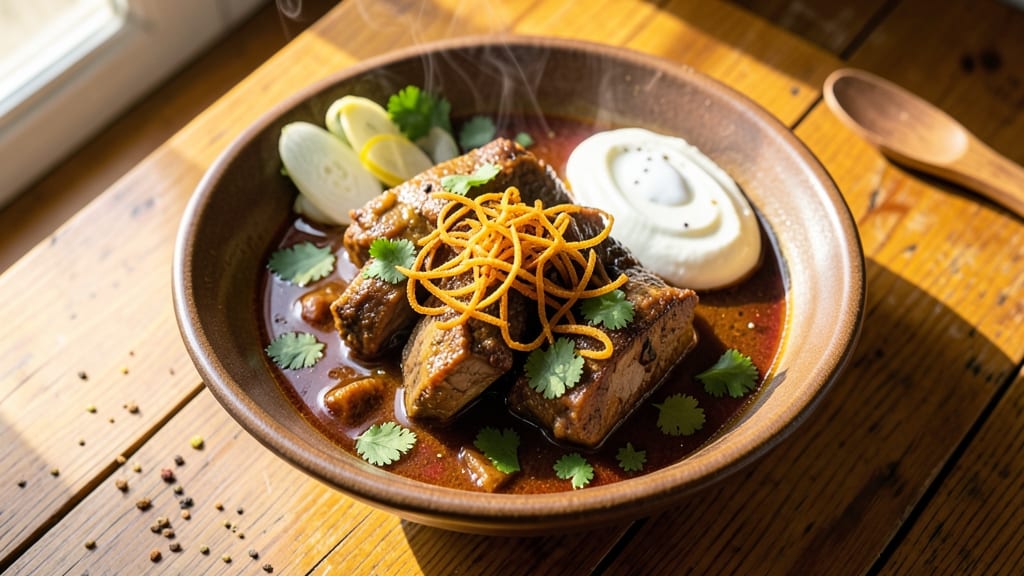
This Anglo-Indian pork curry recipe brings the bold, tangy flavors of colonial-era India to your kitchen table. 🌟 The marriage of vinegar's sharp bite with tamarind's fruity depth creates a sauce that's both complex and deeply satisfying—a signature of British-influenced Indian cuisine that still thrives in Goa today.
I first tasted this dish in a dimly lit restaurant in Mumbai, where the pork fell apart at the touch of a fork, swimming in a sauce that balanced heat, sweetness, and acidity with surgical precision.
The secret lies in the slow cooking process, which develops layers of flavor as the spices bloom and the pork tenderizes. We start with a proper marinade of yogurt and spices, then build the sauce with onions, ginger, garlic, and a blend of whole spices that sing when toasted.
The vinegar and tamarind work together to create that signature tang that cuts through the richness, while garam masala adds warmth in the final moments.
By the time you serve this curry, you'll have a dish that's restaurant-quality at home—tender pork that practically melts in your mouth, coated in a glossy sauce that's fragrant with cumin, cardamom, and a hint of black pepper.
The aroma alone will have everyone gathering around the table, and each bite delivers that perfect balance of sweet, sour, and spicy that defines Anglo-Indian cuisine.
Serve it with buttery naan or steamed basmati rice to soak up every last drop of that incredible sauce. The leftovers actually improve the next day as the flavors meld even more deeply.
This is the kind of curry that becomes a family staple—once you try it, you'll never go back to the bottled versions.
Ingredients for anglo indian pork curry
Pork shoulder, yogurt, and vinegar kick off this fragrant curry with bold flavors that sing together.
| Ingredient | Amount | Notes |
|---|---|---|
| Pork Shoulder 🥩 | 1 ½ lb | Bone-in, cut into 2-inch cubes |
| Plain Yogurt 🥛 | 1 cup | Full-fat, unsweetened |
| White Vinegar 💧 | ½ cup | Distilled preferred |
| Fresh Ginger Root 🧄 | ½ cup | Peeled, finely grated |
| Garlic Cloves 🧄 | 8 cloves | Peeled, minced |
| Yellow Onions 🧅 | 2 whole | Medium, thinly sliced |
| Tamarind Paste 🍈 | ¼ cup | Or 2 tbsp tamarind pulp |
| Cumin Seeds 🌿 | 1 tbsp | Toasted until fragrant |
| Cardamom Pods 🌿 | 6 whole | Lightly crushed |
| Black Cardamom Pods 🌿 | 2 whole | Lightly crushed |
| Green Cardamom Pods 🌿 | 4 whole | Lightly crushed |
| Black Peppercorns 🌶️ | ½ tsp | Crushed |
| Garam Masala 🌶️ | 1 tbsp | Store-bought or homemade |
| Tomato Paste 🍅 | ¼ cup | Squeeze tube preferred |
| Coconut Milk 🥥 | ½ cup | Full-fat canned |
| Fresh Cilantro 🌿 | ¼ cup | Chopped, for garnish |
| Salt 🧂 | 1 ½ tsp | Adjust to taste |
The pork shoulder is non-negotiable here—bone-in, cut into 2-inch cubes—it needs time to tenderize. Grab thin-cut pork shoulder from the butcher section or ask them to trim it for you. If you can't find bone-in, pork butt works too. For the yogurt, full-fat is essential—it adds creaminess to the marinade. I always buy Indian-style yogurt from the international aisle at Whole Foods or Trader Joe's if I'm feeling fancy, but regular plain yogurt works in a pinch. The vinegar? Distilled white vinegar is the gold standard—it's sharper and cuts through the richness better than apple cider vinegar.
No tamarind paste? Substitute 2 tbsp tamarind pulp or even 1 tbsp lemon juice plus 1 tsp sugar to mimic the tang. The cardamom pods are where the magic happens—mix green and black cardamom for that authentic Anglo-Indian depth. If you can't find black cardamom, double the green cardamom. For the ginger and garlic, fresh is non-negotiable—the paste just won't give you that bright, zesty punch. Toasting the cumin seeds until they're fragrant and golden (about 30 seconds in a dry pan) makes all the difference. The tomato paste can be from a squeeze tube—Trader Joe's has the best ones, and they keep forever.
Marinate the pork overnight for maximum tenderness, but even 2 hours makes a difference. The curry tastes even better the next day as the flavors meld—portion into containers so you can reheat single servings. Store leftovers in the fridge for 4-5 days or freeze for 3 months. For serving, warm the naan in a dry skillet to keep it crisp—it soaks up the sauce like a dream. The cilantro garnish is optional, but I always add it—fresh cilantro brightens everything up. If you're short on time, skip it and use a pinch of red chili powder instead.
Why You'll Love This Recipe
- One-Pot Magic: The pork shoulder and yogurt marinade do most of the work while you chop ginger and garlic—no fancy techniques, just a deep, tangy flavor that builds effortlessly. Honestly, I’ve made this while scrolling through emails; it’s that unfussy.
- Tangy Garlic Kiss: That white vinegar and yogurt combo? It’s the secret—bright, sharp, and just enough to cut through the richness of the pork. The garlic-to-ginger ratio gives it that signature Anglo-Indian punch without tasting like a textbook recipe.
- Leftover Hero: This curry only gets better the next day, especially if you let it sit overnight. The flavors meld into something deeper, and reheating it with a splash of water keeps it luscious—perfect for packed lunches or lazy Sundays.
- Budget-Friendly Feast: Pork shoulder stretches across meals, and you’re using pantry basics (vinegar, yogurt) that don’t break the bank. Between us, this is the kind of dish that makes grocery day feel like a win.
Step-by-step instructions for Anglo-Indian pork curry
Here's how to create a vibrant, tangy pork curry that balances sweet, sour, and spice in every bite.
🍳 Step 1: Marinate the Pork for Maximum Flavor
In a large bowl, combine the 1.5 lb pork shoulder with the 1 cup plain yogurt, 0.5 cup white vinegar, 0.5 cup finely grated fresh ginger root, 8 minced garlic cloves, and 1.5 tsp salt. Mix until the pork is fully coated in the marinade. Here's the thing—this marinade works double duty: tenderizing the meat while infusing it with that signature Anglo-Indian tang.
Cover the bowl and refrigerate for at least 4 hours (overnight is even better). You'll know it's ready when the pork absorbs the marinade completely and develops a pale, almost translucent appearance on the surface. This step transforms tough pork shoulder into melt-in-your-mouth perfection.
🔥 Step 2: Sear and Build the Spice Base
Heat a heavy pot or Dutch oven over medium-high heat. Remove the pork from the marinade (reserve the marinade) and pat it dry with paper towels—this ensures a good sear. Working in batches if needed, brown the pork cubes on all sides for 3-4 minutes per side until deeply golden. Don't crowd the pan or the pork will steam instead of sear.
Once browned, remove the pork and set aside. In the same pot, add 1 tbsp toasted cumin seeds and let them sizzle for 30 seconds until fragrant. Add the 2 thinly sliced yellow onions and cook for 5-6 minutes until soft and golden. This aromatic base is the flavor foundation of your curry—where all those warm, earthy spices come together.
🍳 Step 3: Develop the Tangy Sauce
Pour in the reserved pork marinade and bring to a simmer. Stir in the 0.25 cup tamarind paste, 0.25 cup tomato paste, and 0.5 tsp crushed black peppercorns. Let it cook for 8-10 minutes until the mixture thickens slightly and the raw tamarind flavor mellows into a bright, fruity tang. This is where the curry gets its signature balance—sweet from the pork, sour from the vinegar and tamarind, and a touch of heat from the spices.
Add the lightly crushed 6 cardamom pods, 2 black cardamom pods, and 4 green cardamom pods along with 1 tbsp garam masala. Give everything a good stir and let the spices bloom for 2 minutes. You'll notice the aroma become more complex—citrusy, floral, and slightly smoky. This is your signal that the spice profile is developing perfectly.
🥘 Step 4: Simmer the Curry to Perfection
Return the browned pork to the pot, nestling it into the sauce. Pour in 0.5 cup full-fat coconut milk and bring to a gentle simmer. Here's where patience pays off—cover the pot and let it cook for 45-50 minutes on low heat, stirring occasionally. The pork should become fork-tender with the sauce reducing to a rich, velvety consistency.
Check the seasoning and adjust with additional salt if needed. The curry should coat the back of a spoon with a glossy sheen. If it's too thick, add 2-3 tablespoons of water to reach your desired consistency. The sauce should cling to the pork beautifully, creating that signature Anglo-Indian richness.
🍽️ Step 5: Finish and Serve
Once the pork is tender and the sauce has thickened, remove from heat. Stir in the 0.25 cup chopped fresh cilantro just before serving—this adds a bright, herbaceous finish that cuts through the richness. Let the curry rest for 5 minutes to allow the flavors to meld completely.
Serve hot with steamed basmati rice or crusty naan bread. The contrast of the soft, pillowy bread with the tender pork and tangy sauce is what makes this dish so irresistible. Each bite should deliver that perfect balance of sweet pork, tangy tamarind, and aromatic spices—truly a celebration of Anglo-Indian flavors in one pot.
Pro Tips For Making Anglo Indian Pork Curry
- Marinate Pork Overnight: I learned this the hard way—skipping the overnight soak means the pork stays tough and soaks up less flavor. Use a mix of yogurt, vinegar, and ginger-garlic paste (about 1 cup total), then let it sit in the fridge. The acid breaks down the meat, and the yogurt keeps it tender.
- Brown the Meat First: High heat, cast iron pan, and don’t rush this. Cut the pork shoulder into chunks, then sear them until deep golden—this builds flavor that won’t dissolve later. If your pan’s too crowded, work in batches, even if it takes longer.
- Balance the Vinegar: Too much white vinegar and your curry tastes harsh; too little and the yogurt won’t cut through the pork’s richness. Start with 2 tablespoons, taste as you go, and adjust—you can always add more later, but you can’t take it out.
- Simmer Low and Slow: After adding the yogurt and spices, reduce heat to a bare simmer. Anglo-Indian curries need time—at least 45 minutes—to let the flavors meld. Walk away. If it’s bubbling hard, you’re cooking too fast, and the yogurt will split.
Wine and beer pairings for this dish
Tangy White Wine
An off-dry Vinho Verde from Portugal is my go-to pairing for this curry—its crisp acidity and subtle citrus notes mirror the tamarind's tang while the slight sweetness balances the heat. Look for a bottle labeled "Colheitas" which indicates a slightly richer style.
The wine's effervescence cuts through the richness of the coconut milk, cleansing your palate between bites. I always keep a bottle of Quinta da Pellada on hand for these occasions. 🍷
Spiced Beer Options
For beer lovers, a Belgian witbier like Hoegaarden or Stella Artois Wit works beautifully—the coriander and orange peel notes complement the cardamom and tamarind perfectly. The slight effervescence helps refresh your palate.
If you prefer darker options, try a German Dunkelweizen with its malty sweetness and clove-like spices that echo the garam masala. 🍺
Bold Red Alternatives
If you're serving this curry at a dinner party and want to impress, pour a Syrah from the Rhône Valley—its peppery notes and dark fruit character stand up to the pork beautifully. I particularly love Guigal Côtes du Rhône for its balance of power and elegance.
The wine's earthy undertones complement the toasted cumin and black cardamom in the spice blend. For something more exotic, try a Gewürztraminer from Alsace—its lychee and rose aromas add a floral dimension that pairs wonderfully with the curry's complex spice profile. 🍇
Non-Alcoholic Pairings
For those who prefer not to drink, a ginger beer with a kick—like Feather Ginger Beer—works surprisingly well. The ginger's sharpness enhances the curry's spice profile while the slight sweetness balances the tang.
Alternatively, serve a sparkling limeade made with fresh lime juice and a touch of agave syrup. The acidity in both drinks mirrors the tamarind's brightness, making each bite more vibrant. 🍋
Local Southern Twist
If you're serving this in the Southeast like I often do, swap the wine for a local Georgia peach wine—the sweet-tart profile complements the tamarind beautifully. I've had great luck with Chateau Elan's peach wines from their Cartersville vineyard.
For beer, a Southern-style IPA from Atlanta's Three Trees Brewing adds a hoppy contrast that works surprisingly well with the curry's richness. 🍑
Nutrition facts
Frequently asked questions
Can I substitute chicken or beef for the pork in this recipe?
You can absolutely try it with chicken or beef, but the cooking time and texture will change. For chicken thighs, reduce simmering time to 25-30 minutes—they cook faster than pork. Beef chuck works well but needs 1.5-2 hours of slow cooking to tenderize. The marinade will still work, but adjust seasoning slightly since beef absorbs flavors differently.
What makes this curry different from regular Indian pork curries?
The Anglo-Indian twist comes from the vinegar-tamarind tang and the specific spice blend. Regular Indian curries often use more yogurt and cream, while this version balances acidity (vinegar/tamarind) with coconut milk for richness. The cardamom mix (green + black) and garam masala add that signature colonial-era depth that sets it apart.
How do I adjust the heat level if I don't like spicy food?
Skip the black peppercorns entirely and reduce garam masala to ½ tbsp. For extra mildness, add 1 tsp sugar to the sauce at the end—it balances the tang without heat. The tamarind and vinegar provide plenty of flavor without needing spice. Taste the sauce before serving and adjust gradually.
Can I make this curry in a slow cooker?
Yes! Brown the pork first, then transfer everything (including marinade) to the slow cooker. Cook on LOW for 6-7 hours or HIGH for 3-4 hours. The slow cooker enhances tenderness but may make the sauce slightly thinner—reduce it on the stove for 10 minutes before serving to thicken.
Why does my curry taste too sour? How can I fix it?
Too much vinegar or tamarind creates sourness. Balance it by adding 1 tsp sugar or ½ tsp honey to mellow the acidity. If it's still too sharp, stir in 1 tbsp coconut milk and simmer for 5 minutes—the fat helps neutralize the tang. For future batches, reduce vinegar to ¼ cup if you prefer milder flavor.