
Main Courses
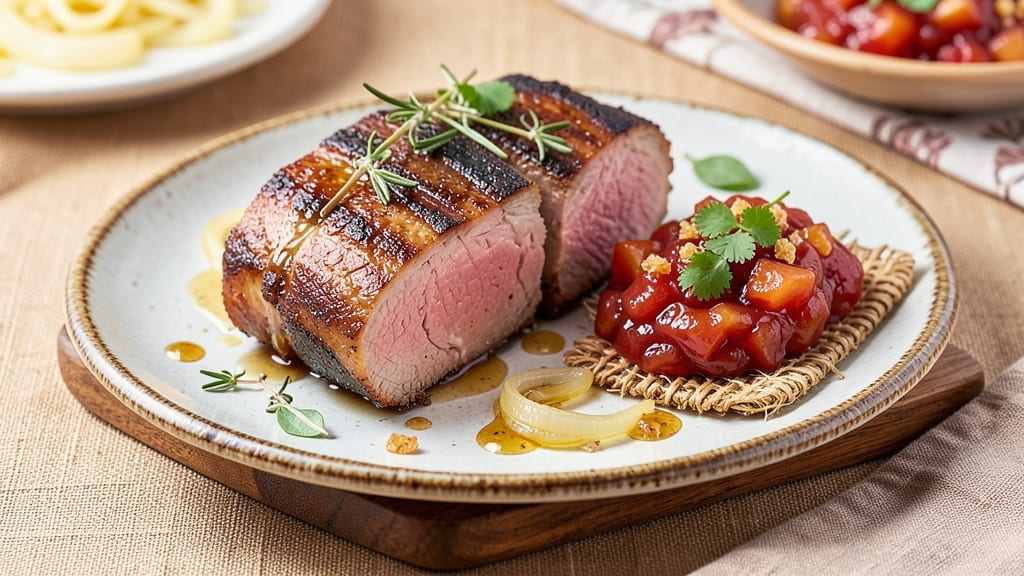
This apple chutney recipe for pork tenderloin transforms a simple weeknight dinner into a restaurant-worthy masterpiece—where caramelized edges meet sweet-tart complexity. 💛 As a pitmaster who's cooked thousands of pounds of pork, I know the secret to tender, juicy meat isn't just in the roasting but in the glaze.
That's where this chutney comes in, balancing apple's natural sweetness with tangy vinegar and warm spices to create a glaze that caramelizes beautifully while keeping the pork impossibly tender inside.
The magic happens in two phases: first, marinating the pork in a blend of spices and apple cider to tenderize and infuse flavor, then roasting it to medium-rare perfection before brushing on the finished chutney.
What makes this recipe work is the balance—just enough sweetness to complement the pork's richness without overpowering it, and enough acidity to cut through the fat. I developed this technique while perfecting my pork dishes for the Smoky Pig, where we serve similar glazes that become instant crowd-pleasers.
By the time you're done, you'll have a pork tenderloin with edges that are beautifully caramelized from the chutney glaze, while the inside remains juicy and perfectly pink. The chutney itself becomes a versatile condiment—drizzled over the pork, spooned alongside roasted vegetables, or even served with crusty bread.
It's the kind of dish that feels special enough for company but simple enough for any weeknight.
This recipe serves four and comes together in about 90 minutes—45 for prep and marinating, then 45 for roasting. The chutney can be made ahead, which means less stress when you're ready to cook.
Whether you're hosting a dinner party or just treating yourself to an elevated meal, this combination delivers restaurant-quality results with minimal fuss. Let's get to work!
Ingredients for apple chutney recipe for pork tenderloin
Sweet-tart balance starts with these 14 ingredients—where caramelized apples meet smoky spices for pork perfection.
| Ingredient | Amount | Notes |
|---|---|---|
| Pork Tenderloin 🥓 | 1 ½ lb | Center-cut, trimmed of fat |
| Apples 🍎 | 2 medium | Honeycrisp or Fuji, peeled |
| Yellow Onion 🧅 | 1 whole | Medium size, finely diced |
| Apple Cider Vinegar 🍶 | ½ cup | Raw, unfiltered preferred |
| Granulated Sugar 🍚 | ½ cup | Light brown preferred |
| Fresh Ginger 🌿 | 2 tbsp | Grated, peeled root |
| Garlic Cloves 🧄 | 4 cloves | Minced, fresh preferred |
| Cinnamon Sticks 🌿 | 2 whole | 2-inch pieces, for simmering |
| Allspice Berries 🌶️ | ½ tsp | Crushed lightly, whole preferred |
| Ground Black Pepper 🌶️ | ½ tsp | Freshly ground preferred |
| Salt 🧂 | 1 tsp | Kosher or sea salt |
| Olive Oil 🫒 | 2 tbsp | Extra-virgin for richness |
| Fresh Thyme Leaves 🌿 | ¼ cup | Chopped, stems removed |
| Honey 🍯 | 1 tbsp | Wildflower preferred |
The apples are non-negotiable here. Honeycrisp or Fuji break down beautifully for that perfect chutney texture—Granny Smith works too, but expect more tartness. Grab them at Whole Foods or your local farmers market for peak sweetness. The ginger and allspice are where the magic happens—fresh ginger from the produce section (not the jarred stuff) gives the best depth. For the pork, center-cut tenderloin is key—it stays juicy while the edges caramelize. If you can't find it pre-trimmed, take 10 minutes to remove the fat yourself—it's worth it for that clean finish.
No honey? Maple syrup works beautifully—just reduce the amount slightly since it's sweeter. Short on apples? Pear slices in place, but you'll lose some of that classic apple chutney flavor. The vinegar can be swapped for lemon juice at half the amount, though apple cider vinegar's tang is ideal. For the spices, ground allspice is fine if you can't find whole berries, but toasting them lightly in a dry pan first boosts flavor. The chutney thickens as it cooks, so if it's too thin, let it simmer uncovered for 5-10 minutes—just watch it like a hawk to prevent burning.
This chutney keeps for 2 weeks in the fridge, sealed tightly with a layer of olive oil on top. For the pork, marinate it overnight for maximum tenderness, but if you're short on time, 2 hours minimum works too. The chutney reheats beautifully—just warm it gently on the stove with a splash of water to loosen it up. Portion the pork into 1-inch thick slices before serving, and brush on that glorious chutney right before eating. Leftovers? Store the pork in its marinade for 3 days—it actually tastes better the next day as the flavors meld.
Why You'll Love This Recipe
- One-Pan Magic: I swear by this recipe because it’s done before the kids start asking, “Are we eating yet?” The pork and chutney simmer together—no flipping, no fuss—just 20 minutes of hands-off time while you stir in that sweet-tangy apple mix.
- Sweet-Tart Balance: That chutney? It’s the star. The vinegar cuts through the pork’s richness while the sugar caramelizes the onions and apples into a sticky, glossy glaze—like a cross between a fall picnic and a cozy Sunday dinner.
- Leftovers That Beg for More: Between us, this dish tastes better the next day. The pork stays juicy, the chutney thickens just enough to cling to every bite, and I’ve sent containers home with coworkers who now demand the recipe. (I’m not proud.)
- Budget-Friendly Feast: Pork tenderloin is lean and affordable, and apples-on-sale season turns this into a steal. Plus, the chutney’s bold flavor means you can stretch it over rice, toast, or even eggs—no waste, just flavor.
Step-by-step instructions for sweet-tangy apple chutney pork tenderloin
Here's how to create a perfectly balanced chutney that caramelizes the pork edges while keeping the meat juicy and tender.
👨🍳 Step 1: Prepare the Pork and Chutney Base
Pat the 1.5 lb pork tenderloin completely dry with paper towels—this is crucial for that perfect caramelized crust. While it comes to room temperature, peel and finely dice the 2 medium apples (I like to use Honeycrisp for their natural sweetness and slight crunch). Finely dice the 1 whole yellow onion and grate the 2 tbsp fresh ginger using a microplane for maximum surface area.
In a separate bowl, combine the diced apples, onion, and grated ginger with 0.5 cup apple cider vinegar, 0.5 cup granulated sugar, 1 tbsp honey, and 1 tsp salt. This mixture should look vibrant and slightly syrupy—it's the foundation of our flavor bomb. Let it sit while you prep the pork and get your pan ready.
🔥 Step 2: Sear the Pork for Maximum Flavor
Heat 2 tbsp olive oil in a large oven-safe skillet over medium-high heat until it shimmers. Season the pork generously with 0.5 tsp ground black pepper and 0.5 tsp allspice berries (lightly crushed between your palms). Sear the pork for 3-4 minutes per side until it develops a deep golden-brown crust—this is where all the magic happens.
Here's the thing—don't press down on the pork while searing. You'll know it's ready to flip when it releases easily from the pan. The crust should be deep golden brown with some caramelized spots. Remove the pork and set it aside on a plate, then reduce the heat to medium in the same skillet.
🍳 Step 3: Simmer the Chutney to Perfection
Add the prepared apple mixture to the skillet, stirring to scrape up all those delicious browned bits from the bottom. Add the 4 minced garlic cloves and 2 whole cinnamon sticks (broken into 2-inch pieces), then bring everything to a gentle simmer. Let it cook uncovered for 10-12 minutes until the mixture reduces by about half and thickens to a glossy consistency.
You'll know it's ready when the apples soften but still hold some texture, and the liquid reduces enough to coat the back of a spoon. The aroma should be intoxicating—sweet apples, warm spices, and tangy vinegar working together. Taste and adjust seasoning if needed, adding a pinch more salt or sugar if desired. Remove the cinnamon sticks before proceeding.
🥘 Step 4: Finish with Thyme and Glaze the Pork
Stir in the 0.25 cup chopped fresh thyme leaves and let the mixture steep for 2 minutes to infuse the thyme's aromatic oils. Return the pork to the skillet, spooning the chutney mixture all over it. Increase heat to medium-high and let it cook for 3-4 minutes until the pork reaches an internal temperature of 145°F (about 155°F for well-done).
Here's where the real magic happens: tilt the skillet and spoon the reduced chutney over the pork continuously for the last 2 minutes of cooking. This creates a beautiful caramelized glaze that sticks to every surface. The pork should be perfectly tender with a glossy, sticky coating of chutney.
⏰ Step 5: Rest and Serve with Glazed Perfection
Transfer the pork to a cutting board and let it rest for 5-10 minutes before slicing. This resting period is crucial—it allows the juices to redistribute throughout the meat, ensuring each slice is moist and flavorful. The chutney will continue to thicken slightly as it rests, creating an even more concentrated glaze.
Slice the pork against the grain into ½-inch thick pieces and serve immediately with any remaining chutney spooned over the top. The contrast of tender pork with the sweet-tangy chutney is what makes this dish truly special. Pair with roasted sweet potatoes or a simple green salad for a complete meal.
Pro Tips For Making Apple Chutney Recipe For Pork Tenderloin
- Sear the Pork First: Hit the pork with high, dry heat for 3-4 minutes per side before adding the chutney—this locks in juices and builds a crust that won’t dissolve when the apples get saucy. I learned this the hard way after serving dry pork that tasted like it had been steamed instead of seared.
- Dice Apples Small: Cut the apples into ¼-inch pieces so they soften evenly in the chutney without turning to mush or leaving large, undercooked chunks. A mandoline makes this faster, but a sharp knife works if you’re patient—no one likes chewy apple bits in their sauce.
- Sweat Onions Low: Cook the onions over medium-low heat until translucent, not browned—this prevents bitterness that’ll clash with the sweet-tart chutney. Too much heat, and you’ll end up with a flavor that tastes like you charred the onions by accident (been there).
- Simmer Chutney Long: Let the chutney reduce for at least 15 minutes after adding vinegar and sugar—this balances the acidity and deepens the caramelized flavor. Skipping this step leaves it tasting raw and thin, like a sad applesauce. Trust the process, even if it means waiting.
Regional styles of this dish
Southern Carolina Style
In Charleston, we take apple chutney and pork to another level by adding 1 tbsp hot honey to the chutney base—trust me, it's a game-changer. The honey from my own hives (or local Charleston markets) adds a subtle heat that cuts through the pork's richness.
We also swap the thyme for ½ cup chopped fresh rosemary and include 1 star anise pod during simmering for that Southern BBQ depth. The result? A glaze so complex it rivals any competition-winning brisket rub. 🔥
Georgia Farmhouse Twist
Back in my Georgia roots, we used to make this with peach slices instead of apples during summer months—just swap the apples for 2 cups ripe peaches, diced. The chutney gets a smoky note from ½ tsp smoked paprika added during the final simmer.
We'd serve it with cornbread and collard greens for a true Southern feast. The peach version keeps beautifully for 10 days in the fridge when stored under olive oil.
Atlantic Coast Fusion
On the Atlantic coast, we blend Caribbean influences by adding 1 tbsp rum to the chutney during the last 5 minutes of simmering. The rum evaporates slightly, leaving behind warm, boozy notes that pair perfectly with the pork.
I also include ½ tsp ground nutmeg for warmth. This version works especially well with grilled pork tenderloin instead of roasted—just brush the chutney on after searing for that smoky-charred contrast.
Southeast BBQ Pitmaster Style
At the Smoky Pig, we take this to competition level by adding 1 tbsp apple cider reduction (simmer ½ cup cider until syrupy) to the chutney. We also sear the pork with ½ cup chopped pecans in the final 2 minutes of cooking for crunch.
The chutney becomes a full-on sauce that we drizzle over the pork like a glaze. For extra drama, we finish with crumbled blue cheese on top—sounds weird, but it's a crowd-pleaser that balances the sweetness.
Modern Atlanta Adaptation
In Atlanta, we keep it clean but elevated by adding 1 tbsp balsamic glaze to the finished chutney. The balsamic adds depth without overpowering. We also serve the pork with roasted Brussels sprouts tossed in the same chutney after cooking—it becomes a sauce for everything.
The modern twist? We finish with microgreens on top for that restaurant-plating touch. This version is perfect for health-conscious diners who still want that indulgent flavor.
Heritage Pig Farm Favorite
Using my own Gloucestershire Old Spots pork changes everything—the meat stays juicier longer and has a natural sweetness that pairs perfectly with the chutney. We make the chutney with wild apple cider from local orchards and add 1 tsp juniper berries during simmering for an earthy note.
The result is a dish so good it's become a staple at our farm dinners. We serve it with scratch-made cornbread and apple butter for that true farm-to-table experience. 🌟
Nutrition facts
Frequently asked questions
Can I use this chutney with other proteins besides pork tenderloin?
This apple chutney works beautifully with chicken thighs (especially for roasting), duck breasts (the sweetness balances duck's richness), or even lamb chops. For poultry, reduce the cooking time by 2-3 minutes to avoid drying out. The key is to let the chutney glaze sit on the meat for the last 3-4 minutes of cooking to create that perfect caramelized crust.
How do I adjust the sweetness if I prefer less sugar?
Start by reducing the brown sugar to ¼ cup and increase the apple cider vinegar to ⅔ cup to maintain balance. For extra tang, add 1 tbsp lemon juice at the end. The chutney will still caramelize beautifully—just monitor it closely as it reduces. If it gets too thick, add 1-2 tbsp water to loosen it up while keeping the flavors concentrated.
What's the best way to reheat leftovers?
For the pork, reheat gently in a skillet with 1 tbsp olive oil over low heat for 3-4 minutes until warmed through. The chutney reheats best in a saucepan with 2 tbsp water on medium-low heat, stirring constantly until smooth. Never microwave—it destroys the chutney's texture. Pro tip: Add a splash of apple cider vinegar to restore brightness if the chutney tastes flat when reheated.
Can I make this chutney ahead of time?
Yes! The chutney actually improves overnight—make it 1 day ahead and store it in an airtight container in the fridge. The flavors meld beautifully, and it thickens further. Reheat gently before using. The pork marinade can be prepped 24 hours ahead too, but don't add the pork until 2 hours before cooking to prevent over-marinating. For make-ahead dinners, marinate the pork and prep the chutney base the night before, then finish cooking the next day.
What if my pork comes out dry?
Dry pork usually means it cooked too long or wasn't rested properly. The fix? Start checking internal temp at 140°F and remove immediately when it hits your target. Always rest for 5-10 minutes before slicing—this redistributes juices. For extra moisture, brush the pork with apple cider vinegar during the last 2 minutes of cooking. If it's already dry, slice thinly and serve with extra chutney to add moisture and flavor.