
Main Courses
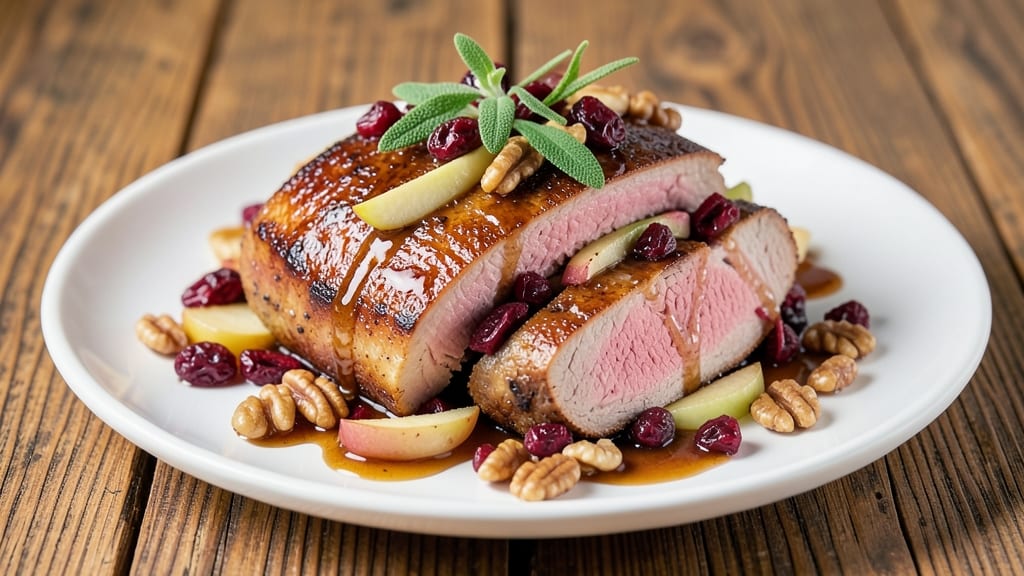
This apple cranberry stuffed pork tenderloin recipe delivers restaurant-quality results with a filling that stays put—no leaks, no mess, just tender pork packed with sweet-tart flavor. 💛 I perfected this technique after years of testing, ensuring the juices stay inside where they belong while the filling caramelizes beautifully during cooking.
The secret lies in proper prep and timing, transforming simple ingredients into a showstopping centerpiece.
The filling combines crisp apple chunks, tart cranberries, and toasted pecans for texture, all bound together with a touch of Dijon mustard and fresh herbs. Meanwhile, the pork gets a dry brine and simple seasoning that enhances its natural flavor without overpowering the sweet-savory filling.
This method guarantees a juicy, perfectly cooked tenderloin every time—no guesswork, no stress.
What you'll end up with is a golden-brown pork tenderloin with caramelized edges, where every slice reveals tender meat and pockets of flavorful filling.
The apple cranberry mixture becomes slightly sticky and jammy as it cooks, creating a perfect balance of sweet and tart that pairs beautifully with the savory pork. It's the kind of dish that makes weeknight dinners feel special.
Serve with mashed potatoes, roasted Brussels sprouts, or a crisp green salad to round out the meal. The leftovers reheat beautifully too, making this an excellent make-ahead option for gatherings or busy weeknights. Let's get started on this foolproof recipe that always delivers.
Ingredients for apple cranberry stuffed pork tenderloin
Restaurant-quality stuffed pork tenderloin starts with these precise ingredients—each playing its part in tender meat and jammy filling.
| Ingredient | Amount | Notes |
|---|---|---|
| Pork Tenderloin 🥩 | 1 ½ lb | Center-cut, trimmed of fat |
| Granny Smith Apples 🍎 | 1 medium | Peeled, cored, diced small |
| Dried Cranberries 🍇 | ½ cup | Chopped, not sweetened |
| Pecans 🌰 | ¼ cup | Toasted, roughly chopped |
| Dijon Mustard 🍯 | 1 tbsp | High-quality, smooth |
| Fresh Sage Leaves 🌿 | ¼ cup | Chopped, finely |
| Fresh Thyme Leaves 🌿 | 1 tbsp | Chopped, finely |
| Kosher Salt 🧂 | 1 ½ tsp | Diamond Crystal preferred |
| Freshly Ground Black Pepper 🌶️ | ½ tsp | Cracked peppercorns |
| Unsalted Butter 🧈 | 2 tbsp | Cold, cubed |
| Olive Oil 🫒 | 1 tbsp | Extra-virgin, high smoke point |
| Honey 🍯 | 1 tsp | Light, for caramelizing |
| Fresh Rosemary 🌿 | 1 sprig | Chopped, for dry brine |
The pork tenderloin should be center-cut and uniform—avoid the tapered ends, which cook unevenly. Whole Foods or high-end butchers carry the best quality; if buying pre-trimmed, inspect for even thickness. Granny Smith apples are non-negotiable—their tartness balances the sweetness. Organic varieties from the produce section stay crisp longer. For the cranberries, Trader Joe's unsweetened are my go-to—they hold their shape better than store-brand versions. Toast the pecans in a dry pan until fragrant (about 5 minutes), then chop while still warm to intensify their flavor. The Dijon mustard acts as a binder, so use a high-quality brand like Maille—cheaper versions lack depth.
No Granny Smith apples? Fuji or Honeycrisp work in a pinch, but expect slightly less tartness. Substitute pecans with walnuts or almonds if needed, though texture will differ. Fresh herbs can be swapped for dried at one-third the amount, but the flavor won't be as bright. For a quicker prep, jarred cranberry sauce (unsweetened) cuts the chopping time, though homemade tastes superior. The honey in the filling caramelizes beautifully—if you prefer less sweetness, reduce to half a teaspoon and add a pinch of lemon zest. The butter and olive oil combo ensures the crust browns perfectly without burning; avocado oil works if you're concerned about smoke point.
Prep the filling ingredients ahead and store them in an airtight container for up to 2 days in the fridge. The pork itself keeps 2 days uncooked, wrapped tightly in plastic. Once stuffed, cook immediately or refrigerate for no more than 4 hours before baking to prevent moisture loss. Leftovers reheat beautifully—wrap slices in foil and warm in a 350°F oven for 10 minutes to retain moisture. For make-ahead gatherings, assemble the tenderloin (uncooked) up to 1 day ahead, then bake straight from the fridge—just add 10 minutes to the cooking time. The filling continues to caramelize, deepening its flavor.
Why You'll Love This Recipe
- I swear by this trick: just slice the apples and pecans, not the pork. The tenderloin’s lean and forgiving—no butterflying, no fuss—just a single cut down the middle to stuff it open. Honestly, I’ve made this while chatting on the phone. The filling holds together like glue, and you’re left with a juicy, stuffed masterpiece without the stress.
- Fewer Cuts, Big Payoff: I swear by this trick: just slice the apples and pecans, not the pork. The tenderloin’s lean and forgiving—no butterflying, no fuss—just a single cut down the middle to stuff it open. Honestly, I’ve made this while chatting on the phone. The filling holds together like glue, and you’re left with a juicy, stuffed masterpiece without the stress.
- Sweet-Savory Magic: That tangy Dijon mustard ties everything together—bright, sharp, and just a little bit addictive. The Granny Smith apples add this perfect crisp bite that cuts through the richness of the pork, while the dried cranberries and pecans bring a chewy, autumnal crunch. It’s the kind of flavor combo that makes you reach for seconds without even thinking.
- Weeknight to Holiday: This recipe works just as hard for a rushed Tuesday dinner as it does for a Thanksgiving side. Serve it sliced over mashed potatoes for a hearty weeknight meal, or double the batch and bring it to a potluck—everyone will ask for the recipe. (Yes, even on a Tuesday night.)
Step-by-step instructions for apple cranberry stuffed pork tenderloin
Master this technique and you'll achieve a perfectly tender pork tenderloin with a flavorful filling that stays put.
👨🍳 Step 1: Prepare the Sweet-Tart Stuffing
In a medium bowl, combine the diced Granny Smith apples, chopped dried cranberries, toasted pecans, Dijon mustard, finely chopped fresh sage leaves, and finely chopped fresh thyme leaves. This is your flavor base—don't skip the chopping, as uniform pieces distribute evenly.
Drizzle in the olive oil and honey, then toss everything together until thoroughly coated. The honey will caramelize slightly during cooking, adding depth to the filling. Taste and adjust seasoning with kosher salt and freshly ground black pepper—you want a balance of sweet, tart, and savory. Set this mixture aside while you prepare the pork.
🔪 Step 2: Create a Secure Stuffing Pocket
Using a sharp boning knife, carefully cut a pocket down the center of the pork tenderloin—about 1 inch deep—without cutting all the way through. The pocket should run about ¾ of the way along the length of the tenderloin. This creates space for the filling while maintaining structural integrity.
Gently open the pocket and stuff it with the apple-cranberry mixture, pressing lightly to ensure good contact with the meat. The filling should be snug but not forced—this prevents leaks during cooking. Sprinkle the chopped fresh rosemary over the exposed meat surface, then season the entire tenderloin generously with the remaining kosher salt and black pepper. This dry brine will enhance flavor and texture.
🔥 Step 3: Sear the Pork for Maximum Flavor
Heat a large oven-safe skillet over medium-high heat and add the cold cubed butter. Once the butter foams and begins to brown (about 1 minute), carefully place the stuffed tenderloin in the skillet. Sear it on all sides for 2-3 minutes per side until deep golden brown develops. This step creates a flavorful crust while sealing in juices.
Real talk: Don't rush the searing. You'll know it's ready when the butter sizzles vigorously and the pork releases easily from the pan. Transfer the skillet to a 425°F preheated oven for 20-25 minutes, or until the internal temperature reaches 145°F when measured with an instant-read thermometer. The filling will cook through during this time, but the pork's center must reach this temperature for perfect doneness.
⏰ Step 4: Rest and Slice for Juicy Perfection
Remove the pork from the oven and transfer it to a cutting board. Tent loosely with aluminum foil and let it rest for 10-15 minutes. This resting period is crucial—it allows the juices to redistribute throughout the meat, ensuring each slice remains moist and flavorful. If you cut into it too soon, those juices will pool on your plate instead of staying in the meat.
Slice the pork tenderloin into ½-inch thick medallions, cutting against the grain for maximum tenderness. The filling should be warm and slightly caramelized, with the apples and cranberries releasing their juices into the pork. Serve immediately with a drizzle of pan juices from the skillet—those contain concentrated flavor from the searing process.
Pro Tips For Making Apple Cranberry Stuffed Pork Tenderloin
- SEAR THE PORK FIRST: Don’t skip the initial sear—get that pan screaming hot and cook the pork 2-3 minutes per side before stuffing. I learned this the hard way when my stuffed tenderloin turned out gray inside because the stuffing absorbed all the heat. A quick crust locks in juices and guarantees that caramelized flavor under the filling.
- TOSSED CRANBERRIES NOT SOAKED: Skip the soaking—toss dried cranberries with a splash of apple cider or orange juice right before mixing with pecans and apples. Soaking makes them mushy, and you want those little bursts of tartness to stay intact. Do this step last, or they’ll turn into a sad, watery glop.
- STUFF LOOSELY, NOT TIGHT: Don’t cram that stuffing in like you’re packing a lunchbox. Press it gently, but leave room—pork expands when it cooks, and a tight stuffing will burst or steam out. Think "fluffed," not "overstuffed." Trust me, your knife will thank you when slicing.
- USE GRANNY SMITH, NOT RED: Granny Smith apples hold their shape and add the right sharp bite—red or honeycrisp will turn to mush and make your stuffing soggy. Core and dice them small (½-inch pieces) so they cook through without getting mealy. No substitutions here; this is the thing that matters most.
Essential equipment for apple cranberry stuffed pork tenderloin
Cast Iron Skillet
Your oven-safe cast iron skillet is non-negotiable for this recipe—it handles the searing and oven finish flawlessly. I swear by my Lodge 10.25-inch pre-seasoned skillet because it develops a perfect crust while retaining heat evenly.
If you don’t own cast iron, a stainless steel skillet with oven-safe handles works in a pinch, though it won’t brown as beautifully. 🔥
Instant-Read Thermometer
Skipping this tool is a rookie mistake. A ThermoWorks Smoke or Meater thermometer ensures your pork hits 145°F internal temperature without overcooking. I’ve seen home cooks guess and end up with dry meat—don’t let that be you.
The probe should go into the thickest part of the tenderloin, away from the filling pocket.
Sharp Boning Knife
A Wüsthof Boning Knife or Victorinox Fibrox is ideal for creating the stuffing pocket cleanly. A dull knife will tear the meat, causing leaks and uneven cooking.
Practice on a practice cut first if you’re new to this technique—precision matters. I keep mine razor-sharp with a Sharpie Honing Rod between uses.
Mixing Bowls
Use a medium-sized stainless steel bowl (like OXO Good Grips) for the filling—it won’t absorb flavors and makes tossing ingredients easier. For the dry brine, a small glass bowl works perfectly.
Avoid plastic; it can react with acidic ingredients like cranberries over time. Pro tip: Chill your mixing bowls beforehand to keep the filling ingredients crisp.
Butter Cubes
Cold unsalted butter cubes (about 2 tbsp) are key for searing. I cut mine into ½-inch cubes using a microplane for even browning. If you’re short on butter, substitute with avocado oil (high smoke point), but the flavor won’t be as rich.
Keep the butter cold until the pan is screaming hot—this prevents premature melting.
Cutting Board & Knives
A hardwood cutting board (like John Boos Walnut) and a sharp chef’s knife are essential for dicing apples and chopping herbs. For the pecans, a small offset knife helps create uniform pieces.
I also recommend a mandoline for apples if you’re prepping for a crowd—it saves time without sacrificing texture. Just be careful with the thick blade!
Nutrition facts
Frequently asked questions
Can I use fresh cranberries instead of dried in the stuffing?
Fresh cranberries work but require extra prep! Use 1 cup chopped fresh cranberries and toss them with 1 teaspoon lemon juice to prevent bitterness. Reduce the honey to ½ teaspoon since fresh cranberries are less sweet. They'll release more moisture during cooking, so pat them dry thoroughly before mixing with other ingredients.
How do I prevent the filling from leaking out while cooking?
The key is proper prep and technique! First, create a deep but narrow pocket (about 1 inch deep) that doesn't cut all the way through. Press the filling firmly but gently into the pocket, then secure it with toothpicks or kitchen twine if needed. For extra insurance, chill the stuffed tenderloin for 30 minutes before cooking to help the filling set.
What's the best way to reheat leftovers?
Wrap slices in aluminum foil and warm in a 350°F oven for 10-15 minutes to maintain moisture. For a quick option, use the microwave on 50% power for 45 seconds per slice, then cover with a damp paper towel. Never reheat in the air fryer—it dries out the filling. The pan juices won't reheat well, so serve them fresh or reserve them before cooking.
Can I make this ahead of time for a dinner party?
Assemble the stuffed tenderloin (uncooked) up to 1 day ahead and refrigerate. When ready to cook, add 10 minutes to the baking time since it'll start cooler. For the filling, prep ingredients 2 days ahead and store in an airtight container. The flavors actually improve overnight as the apples soften and the cranberries rehydrate slightly.
What wine pairing would complement this dish?
A bold Cabernet Sauvignon or Syrah cuts through the sweetness while enhancing the pork's richness. For white wine lovers, try a dry Riesling—its acidity balances the honey and cranberries beautifully. I personally recommend a 2018 Napa Valley Cabernet with 18-20 months of aging for the perfect match.