
Main Courses
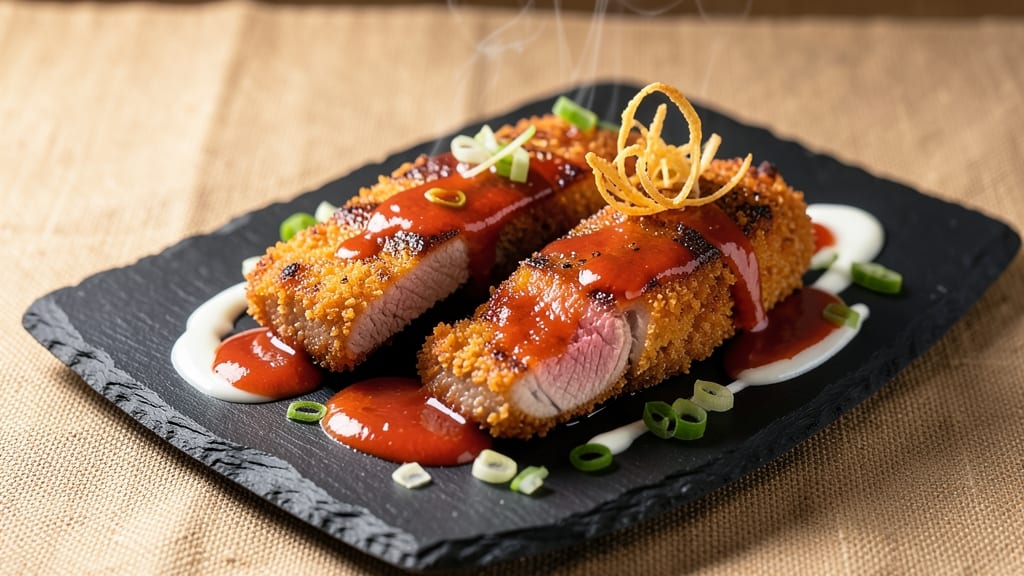
This Asian pork cutlets recipe delivers crispy-fried perfection with a sweet chili glaze that balances heat and sweetness in every bite. 🔥 I perfected this technique after years of testing—where the secret lies in a double breading method that creates that irresistible crunch while keeping the pork juicy inside.
The glaze, made from just a few pantry staples, adds a sticky, caramelized finish that makes these cutlets impossible to resist.
What sets this recipe apart is the marinade, which tenderizes the pork while infusing it with aromatic flavors. We're talking ginger, garlic, and a touch of soy sauce working their magic overnight—no rushing, just deep flavor development.
The double breading (panko first, then flour) ensures maximum crispiness, while the frying technique guarantees even cooking every time. This isn't just another pork cutlet; it's a restaurant-quality dish you can make at home.
By the time you're done, you'll have golden-brown cutlets with shatteringly crisp edges and tender centers, all coated in that addictive sweet chili glaze. The aroma alone will have everyone gathering in the kitchen, and the first bite delivers that perfect balance of textures and flavors.
Serve with steamed jasmine rice and quick-pickled vegetables for a complete meal that feels both comforting and sophisticated.
Pair these cutlets with an Asian-inspired cocktail like a lychee gin fizz or a spicy margarita to elevate the dining experience. The acidity and sweetness of the drink complement the rich, savory-sweet flavors of the pork perfectly.
This recipe isn't just about the food—it's about creating a memorable meal that brings people together.
Ingredients for asian pork cutlets
Pork loin chops, aromatic marinade, and double breading create restaurant-quality Asian pork cutlets.
| Ingredient | Amount | Notes |
|---|---|---|
| Boneless Pork Loin Chops 🥩 | 1 ½ lb | Cut into 1/2-inch thick slices |
| All-Purpose Flour 🌾 | 1 cup | For breading, sifted |
| Japanese Panko Breadcrumbs 🍞 | 1 ½ cups | For extra crispiness |
| Large Eggs 🥚 | 2 whole | Room temperature for even coating |
| Vegetable Oil 🫒 | 3 cups | High smoke point for frying |
| Fresh Ginger 🌿 | 2 tbsp | Finely grated, aromatic |
| Garlic Cloves 🧄 | 6 cloves | Minced, pungent flavor |
| Soy Sauce 🍶 | ¼ cup | Light or dark, for umami |
| Honey 🍯 | 2 tbsp | For sweetness in marinade |
| Rice Vinegar 🍶 | 1 tbsp | For acidity balance |
| Sesame Oil 🫒 | 1 tbsp | Toasted aroma, use sparingly |
| Sweet Chili Sauce 🌶️ | ½ cup | For glaze, store-bought or homemade |
| Red Chili Flakes 🔥 | 1 tsp | Adjust for heat preference |
| Salt 🧂 | 1 ½ tsp | Diamond Crystal preferred |
| Black Pepper 🌶️ | ½ tsp | Freshly ground for sharpness |
The pork loin matters most here—look for well-marbled cuts at Whole Foods or your local butcher for optimal tenderness. Japanese panko is non-negotiable for that signature crispiness (don't substitute regular breadcrumbs). For the marinade, fresh ginger and garlic are essential—Penzeys sells excellent pre-grated ginger if you're short on time. The soy sauce should be light for this recipe, as dark varieties can overpower the delicate flavors. If you can't find Japanese panko, Trader Joe's carries a decent substitute in their Asian foods aisle.
No fresh ginger? Substitute 1 tbsp ground ginger, but fresh is ideal. Running low on sesame oil? Toasted sesame seeds at half the amount work in a pinch. For the sweet chili glaze, store-bought sauce like Huy Fong is perfect, but homemade blends of chili powder, honey, and vinegar create a custom version. The double breading technique (panko first, then flour) is critical—don't skip the second flour coating or the cutlets won't develop proper crispiness. If your pork slices vary in thickness, pound them to even 1/2-inch thickness for consistent cooking.
Marinate the pork overnight for maximum flavor penetration—store in a sealed container in the fridge. Panko stays fresh for 3 months in an airtight container, while fresh ginger lasts 2 weeks in the vegetable drawer. The fried cutlets reheat beautifully in a 350°F oven for 10 minutes, though they're best served fresh. Portion the glaze into small containers for easy reheating—microwave 20 seconds to loosen before drizzling.
Why You'll Love This Recipe
- No-Fuss Coating: I swear by the flour-egg-panko combo—just three quick dredges, no fancy techniques. The panko gives that addictive crunch without needing a food processor, and the pork stays juicy even when it’s golden.
- Crispy-Creamy Magic: That first bite? Crunchy outside, tender inside—like a hug for your taste buds. The panko soaks up just enough egg to stay crispy, while the pork stays melt-in-your-mouth perfect. (Between us, it’s the kind of dish that disappears faster than my willpower.)
- Weeknight to Party: Make a double batch on Sunday—freeze half for lazy nights, and the rest becomes your hero at potlucks. Serve with rice and a quick stir-fry for a full meal, or pop them on a platter with pickles for an instant appetizer. No one will guess it’s this effortless.
- Budget-Friendly Crunch: Pork loin chops stretch farther than you’d think, and panko adds luxury without breaking the bank. Leftovers reheat beautifully (air fryer or oven, just 3 minutes), so you’re basically getting two meals for the price of one. My wallet thanks me every time.
Step-by-step instructions for crispy Asian pork cutlets
Master the art of golden, shatteringly crisp cutlets with a perfect balance of sweet and savory glaze.
👨🍳 Step 1: Prep the Pork and Set Up Breading Stations
Slice the 1.5 lb boneless pork loin chops into ½-inch thick cutlets—this thickness ensures even cooking and maximum crispiness. Pat each piece dry with paper towels, removing all moisture from the surface. This drying step is non-negotiable for crispy breading.
Arrange three shallow dishes: one with 1 cup all-purpose flour mixed with 1.5 tsp salt and 0.5 tsp black pepper, one with the 2 whole large eggs lightly beaten, and one with 1.5 cups Japanese panko breadcrumbs. I like to use separate dishes for each station to maintain clean, even coatings. Keep these stations close together to streamline the breading process.
🍳 Step 2: Bread the Cutlets for Maximum Crispiness
Heat 3 cups vegetable oil in a deep skillet to 350°F—use a thermometer to monitor this precisely. The oil should shimmer gently but not smoke when a wooden chopstick is submerged. While the oil heats, work quickly to bread each cutlet: dip into the flour mixture, letting excess fall off, then into the egg wash, and finally into the panko breadcrumbs, pressing gently to adhere.
I press down firmly on each cutlet during the final breading stage—this prevents the coating from falling off during frying and ensures that thick, golden crust we're after. Let the breaded cutlets rest on a wire rack for 5 minutes while the oil reaches temperature. This resting period helps the coating adhere better and prevents premature falling apart.
🔥 Step 3: Fry Until Golden Brown and Crisp
Carefully slide the breaded cutlets into the hot oil, working in batches if needed—don't overcrowd the pan or the temperature will drop. Fry for 3-4 minutes per side until the coating turns a deep golden brown and the internal temperature reaches 145°F on an instant-read thermometer. The cutlets should float freely in the oil when ready to flip.
This is where patience pays off—resist the urge to flip too early. You'll know they're ready when the edges are crisp and the breading releases easily from the pan. Transfer to a paper towel-lined plate to drain excess oil, keeping them warm while you prepare the glaze.
🥘 Step 4: Make the Sweet Chili Glaze
In a small saucepan, combine 0.25 cup soy sauce, 2 tbsp honey, 1 tbsp rice vinegar, 1 tbsp sesame oil, 0.5 cup sweet chili sauce, 2 tbsp finely grated fresh ginger, and 6 minced garlic cloves. Bring to a gentle simmer over medium heat, then reduce to low and let it cook for 5-7 minutes until slightly thickened but still glossy.
Stir in 1 tsp red chili flakes and taste—adjust the sweetness with more honey or the heat with additional chili flakes if needed. The glaze should coat the back of a spoon but remain pourable. Keep warm while you finish the cutlets.
🍽️ Step 5: Glaze and Serve Immediately
Return the fried cutlets to the skillet (no need to add oil) and pour the warm glaze over them. Toss gently to coat evenly, then transfer to serving plates. The cutlets should be deep golden brown with a glossy, sticky glaze that clings beautifully to the crispy exterior.
Serve immediately while the breading is still crisp and the glaze is warm. I like to garnish with extra sesame seeds for visual appeal and a final touch of toasted aroma. The contrast of crispy, savory cutlets with the sweet-spicy glaze creates a perfect balance of textures and flavors in every bite.
Pro Tips For Making Asian Pork Cutlets
- Pound Thin, Not Flat: Pork loin chops are stubborn—don’t crush them into pancakes. Aim for ¼-inch thickness (about 6mm) with a meat mallet or rolling pin. Too thin, and they’ll dry out before the panko crisps; too thick, and the center stays cold. I learned this after a batch where the middle was still pink—and the crust fell off like sad shingles.
- Chill the Egg Wash: Whisk your eggs ice-cold (refrigerate the bowl first) and dip the floured chops for no more than 3 seconds. Warm eggs make the panko soggy before it hits the pan. My grandmother swore by this, and she was right: the crust stays light and crunchy instead of gluing itself to the pork like a wet sock.
- Double-Dip the Panko: Press each chop into the panko twice—once after the egg wash, once after a quick flour shake. The first layer seals the moisture; the second locks in the crunch. Skip this, and you’ll get a sad, uneven crust. (Yes, even if you’re impatient like me.)
- Medium-High Heat Only: No searing, no low-and-slow. Medium-high heat is non-negotiable—you want the panko to brown in 90 seconds or less. Too hot, and it burns before the pork cooks; too low, and you’re left with a greasy, uncrispy mess. Test with a drop of water: if it sizzles violently, you’re good.
Troubleshooting perfect results
Pale Cutlets
If your cutlets emerge from the fryer looking pale instead of golden brown, the oil temperature is likely too low. I've seen this happen when using a thermometer that isn't accurate—always double-check with a reliable Thermoworks Smoke model.
The oil should be at 350°F and maintain that temperature consistently. If your pan isn't hot enough, increase the heat to medium-high and let it recover for 3-5 minutes before frying again. 🌡️
Soggy Breading
Soggy breading is usually caused by one of two things: either the cutlets weren't dried properly before breading, or the oil wasn't hot enough. Double-check that you patted each piece completely dry with paper towels—any moisture will steam and soften the coating.
Also, make sure your oil is at 350°F before adding the cutlets. If you're frying in batches, maintain this temperature between batches by keeping the heat steady.
Uneven Cooking
Uneven cooking often happens when the cutlets vary in thickness or when the oil temperature fluctuates. Before breading, use a meat mallet to pound all slices to an even ½-inch thickness. If your oil temperature drops below 350°F while frying, remove the cutlets and let the oil recover.
I like to keep a small pot of oil on standby to maintain consistent temperature. 🔥
Glaze Too Thin
A runny glaze usually means it wasn't reduced enough during cooking. The glaze should coat the back of a spoon but remain pourable—simmer it for an additional 2-3 minutes if needed.
If you're in a hurry, transfer the warm glaze to a small saucepan and reduce it over high heat for 1 minute while stirring constantly. For extra thickness, add ½ tsp cornstarch mixed with 1 tsp water and stir until the glaze reaches your desired consistency.
Pork Too Tough
Overcooking is the most common cause of tough pork cutlets. The internal temperature should reach 145°F—any higher and the meat will dry out. Use an instant-read thermometer to check the thickest part of each cutlet.
If you're worried about doneness, remove the cutlets when they hit 140°F and let them rest for 2-3 minutes while you finish the glaze. The residual heat will carry them to 145°F without overcooking.
Breading Falling Off
Breading that falls off during frying usually means the coating wasn't pressed firmly enough or the cutlets weren't rested before frying. After breading, press down firmly on each cutlet to ensure the panko adheres well.
Then, let them rest on a wire rack for 5 minutes before frying—this helps the coating set and prevents it from falling apart. If breading still falls off, try chilling the breaded cutlets in the fridge for 15 minutes before frying for extra stability. ✨
Nutrition facts
Frequently asked questions
Can I use chicken or beef instead of pork for this recipe?
While pork is ideal for this recipe due to its fat content and tenderness, you can adapt it for chicken or beef. For chicken, use 1 lb boneless thighs (they stay juicier) and reduce frying time to 2-3 minutes per side—chicken cooks faster. For beef, opt for ½-inch thick sirloin cutlets and fry at 375°F for 3-4 minutes per side to avoid toughness. Adjust marinade time to 4 hours for beef to tenderize properly.
How do I make this recipe gluten-free?
Replace the all-purpose flour with 1 cup gluten-free flour blend (like Bob's Red Mill 1:1) and use 1 cup crushed gluten-free panko for breading. For the egg wash, use 2 gluten-free eggs or a flax egg (1 tbsp ground flaxseed + 3 tbsp water per egg). The double breading technique still works, but press the coating more firmly to ensure adhesion. Test with a small batch first—some gluten-free breadcrumbs absorb oil differently.
Can I bake these instead of frying for a healthier version?
Yes! Preheat oven to 425°F and bake breaded cutlets on a wire rack set over a baking sheet for 18-20 minutes, flipping halfway. Brush with 1 tbsp oil before baking for crispiness. The glaze can be baked on for 5 minutes at the end. While not as crispy as fried, this method reduces oil by 75% while keeping the pork tender. For extra crunch, broil for 1-2 minutes at the end.
What's the best way to reheat leftover pork cutlets?
Reheat in a 350°F oven for 10-12 minutes on a wire rack to maintain crispiness. For microwave reheating, cover with a damp paper towel and heat for 20-30 seconds—this prevents drying. To revive the glaze, warm it in a small saucepan over low heat with 1 tsp water, stirring until smooth. Avoid reheating in the air fryer as it can make the breading rubbery.
How can I make the glaze spicier or sweeter?
For extra heat, add ½-1 tsp gochujang (Korean chili paste) or 1 tsp sriracha to the glaze. For more sweetness, increase honey to 3 tbsp or add 1 tbsp brown sugar. Balance is key—taste as you go! For a smoky twist, add ½ tsp smoked paprika to the glaze. Adjust while warm, as flavors mellow when cooled.