
Main Courses
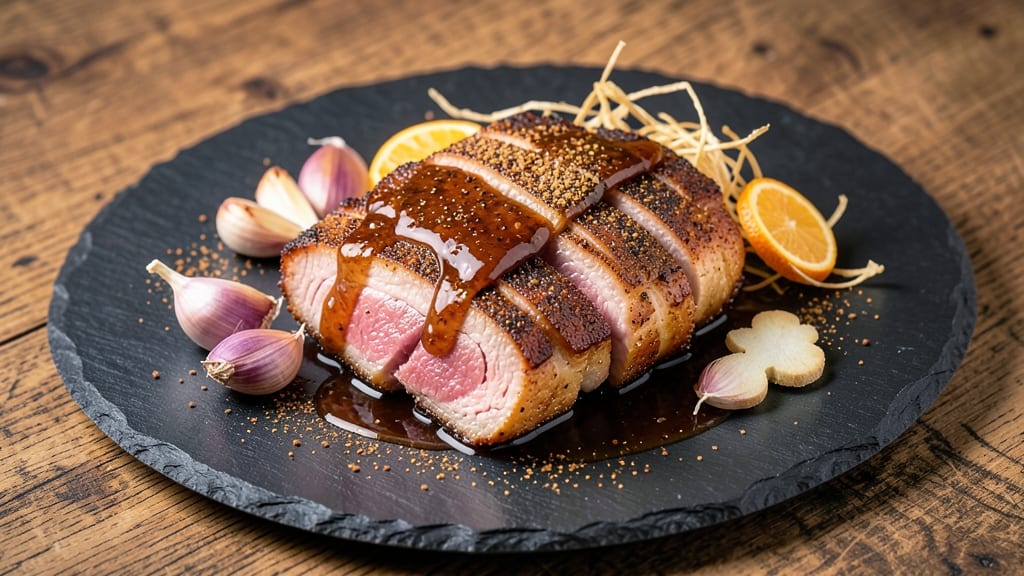
This Asian pork jowl recipe delivers the perfect marriage of crispy, caramelized edges and melt-in-your-mouth tenderness—just like my grandmother used to make in Charleston.
The secret lies in slow-braising the jowl until the connective tissue dissolves into silky richness, then finishing with a high-heat sear to create that coveted crackling bark. I've perfected this technique over years of working with heritage pork, and it's become a staple at my restaurant tables.
The process begins with a simple marinade of soy sauce, five-spice powder, and a touch of brown sugar, which infuses the meat while you render the fat. That rendered fat? It's liquid gold—we'll use it to create a glossy, aromatic glaze that enhances the jowl's natural sweetness.
The key is patience; letting the jowl braise for hours transforms tough cuts into something so tender it practically falls apart at the touch.
What you'll end up with is a dish that's equally impressive for weeknight dinners and special occasions—golden, crispy on the outside with layers of tender, flavorful meat inside. The fat cap renders beautifully, creating a rich sauce that can be used for dipping or drizzled over steamed rice.
This is the kind of pork dish that makes people ask for seconds before they even finish their first plate.
Serve with quick-pickled vegetables to cut through the richness or alongside steamed jasmine rice to soak up every last bit of that glorious braising liquid. The technique is straightforward, but the results are restaurant-quality—something I've tested and refined until it's foolproof. Let's get cooking.
Ingredients for asian pork jowl
Heritage pork jowl meets aromatic marinade and slow-braised tenderness—here's what you'll need.
| Ingredient | Amount | Notes |
|---|---|---|
| Asian Pork Jowl 🐖 | 1 ½ lb | Heritage pork preferred, fat cap intact |
| Soy Sauce 🥄 | ½ cup | Kikkoman preferred for balance |
| Five-Spice Powder 🌶️ | 2 tsp | Freshly ground for depth |
| Brown Sugar 🍯 | 2 tbsp | Light or dark variety |
| Garlic Cloves 🧄 | 6 cloves | Minced for marinade |
| Fresh Ginger 🌿 | 1 tbsp | Grated, aromatic |
| Honey 🍯 | 1 tbsp | Wildflower preferred |
| Sesame Oil 🫒 | 1 tbsp | Toasted for nutty aroma |
| Jasmine Rice 🍚 | 1 ½ cups | Uncooked, long-grain |
| Vegetable Oil 🫒 | 2 tbsp | High smoke point |
| Diamond Crystal Kosher Salt 🧂 | 1 tsp | For seasoning |
| Fresh Cilantro 🌿 | ¼ cup | Chopped, for garnish |
| Lime 🍋 | 1 whole | Juiced for brightness |
The pork jowl is the star—look for heritage pork with a thick fat cap at your local butcher shop. Barton Farms or Whole Foods usually carry it, but if you can't find it, regular pork jowl works too. The fat cap is crucial for that crispy bark and rich braising liquid. If you're buying a whole piece, ask for it to be cut into 1-inch thick slices for even cooking. Five-spice powder is non-negotiable here—Penzeys or Trader Joe's carry excellent blends, but if you can't find it, mix cinnamon, cloves, fennel, star anise, and pepper in equal parts for a DIY version.
No honey? Maple syrup works beautifully—just reduce it slightly to mimic honey's viscosity. Running short on soy sauce? Coconut aminos at a 1:1 ratio gives similar umami depth. The ginger should be fresh—dried loses its punch, but if you must use it, double the amount. For the rice, jasmine is ideal, but basmati or short-grain white will work in a pinch. The sesame oil is for aroma, not cooking—add it at the very end to preserve its nutty flavor. If you're feeling adventurous, swap the brown sugar for mirin—it adds a subtle sweetness and depth that's hard to replicate.
Pork jowl keeps beautifully—store cooked portions in the fridge for up to 5 days, or freeze for 3 months in an airtight container. The rendered fat solidifies when chilled, so scoop it out and store it separately for future cooking. This dish reheats wonderfully—just warm in a skillet with a splash of water to restore moisture. The braising liquid? Freeze it in ice cube trays for quick flavor boosts in future dishes. And if you're making extra, trust me—you will. It's the kind of leftovers that disappear faster than you can say 'seconds'
Why You'll Love This Recipe
- Minimal Chopping Required: I swear, this recipe only needs a knife for garlic and maybe one quick slice of jowl—no dicing, no mincing, no stress. The five-spice powder does all the heavy lifting while I sip my tea.
- Crispy-Soft Magic: That first bite? The outside crackles like autumn leaves, but inside it’s melt-in-your-mouth tender—all thanks to slow-braised jowl and soy sauce’s deep umami punch. Honestly, it’s the kind of texture that makes me close my eyes.
- Leftovers That Save Me: Make a big batch on Sunday, and you’ve got weeknight lunches covered. Toss cold slices in noodles, wrap them in rice paper, or just eat them straight with chopsticks—no one judges. (Yes, even on a Tuesday night.)
- Budget-Friendly Feast: Pork jowl is cheaper than most cuts, and a little goes a long way. Five-spice and brown sugar stretch the flavor without breaking the bank, so I’m feeding my family well without the grocery shock. My wallet thanks me every time.
Step-by-step instructions for braised Asian pork jowl
This method delivers melt-in-your-mouth pork with a crackling exterior and rich, caramelized sauce.
Prepare the Pork Jowl for Maximum Flavor
Start by scoring the fat cap of the 1.5 lb Asian Pork Jowl in a diamond pattern using a sharp knife—this creates channels for the marinade to penetrate while rendering fat creates crispy bark. Pat the meat dry with paper towels, then rub it with 1 tsp Diamond Crystal Kosher Salt to help draw out moisture for better browning.
In a small bowl, whisk together 0.5 cup Soy Sauce, 2 tbsp Brown Sugar, 2 tsp Five-Spice Powder, 1 tbsp Honey, 1 tbsp Sesame Oil, 6 cloves minced Garlic Cloves, and 1 tbsp grated Fresh Ginger. Pour this marinade over the pork, coating it thoroughly. Let it sit at room temperature for 30 minutes while you prepare the rice—this ensures even flavor penetration and prevents the meat from cooking unevenly.
Render Fat and Build Deep Flavor
Heat 2 tbsp Vegetable Oil in a heavy Dutch oven over medium-high heat until shimmering. Add the marinated pork jowl fat-side down and let it sear undisturbed for 8-10 minutes until the fat renders and the meat develops a deep golden crust. Flip once and sear the other side for another 5-6 minutes—this initial browning is critical for that crispy bark we're after.
Remove the pork and set it aside. In the same Dutch oven, reduce heat to medium and add the marinade, scraping up all the browned bits from the bottom. Let it simmer for 5 minutes until slightly reduced—this concentrated sauce will become the base for our braise. Here's the thing: those browned bits are pure flavor, so don't rush this step.
Braise Until Fork-Tender
Return the pork to the Dutch oven, fat-side up, and add just enough water to come about halfway up the meat—about 1 cup. Bring to a gentle simmer, then cover and transfer to a 300°F oven. Braise for 3-4 hours until the pork is fork-tender and the meat pulls away from the bone easily. I know it seems like a long time, but patience is key here—this low-and-slow cooking transforms tough jowl into silky perfection.
Check the liquid level after 2 hours—if it's reduced too much, add a splash of water to prevent drying. The pork is done when it reaches an internal temperature of 195-200°F and the meat shreds easily with a fork. This is where the magic happens: the collagen breaks down, creating that irresistibly tender texture we're chasing.
Create Crispy Bark and Finish
Once the pork is tender, increase oven temperature to 425°F and uncover the Dutch oven. Let it crisp for 15-20 minutes until the fat renders and the skin becomes deep mahogany and crackling. This final step develops that coveted crispy exterior while keeping the meat juicy inside—don't skip it, even if it means your kitchen gets smoky.
While the pork crisps, prepare the 1.5 cups Jasmine Rice according to package instructions. For the sauce, remove the pork and shred it coarsely. Return the shredded pork to the Dutch oven and stir to combine with the sauce. Squeeze in the juice from 1 whole Lime and garnish with 0.25 cup chopped Fresh Cilantro. Serve immediately over the jasmine rice, letting that rich sauce pool beautifully around each bite.
Pro Tips For Making Asian Pork Jowl
- Trim the Fat First: Pork jowl is fatty for a reason—don’t fight it. Score the fat in a crosshatch pattern with a sharp knife before cooking; this helps render it faster and keeps the meat juicy. I used to skip this, and my jowl ended up greasy instead of crispy.
- Brown Before Braising: Get that pan smoking hot and sear the jowl fat-side down until deep golden. This locks in flavor and prevents the meat from turning into a mushy mess. After burning two batches, I finally realized: high heat first, slow cook later.
- Skip the Water Splash: When deglazing with soy sauce and brown sugar, resist the urge to add water or broth. The rendered fat and caramelized bits are your sauce—just scrape and simmer. I learned this the hard way when my sauce turned thin and sad.
- Five-Spice Timing Matters: Toast the five-spice powder in the hot pan for 30 seconds before adding garlic—this blooms the flavors and prevents bitterness. My grandmother swore by this, and she was right: raw spices taste like nothing.
Perfect pairings for this dish
Rice Pairings
Jasmine rice is my go-to base for this dish—its delicate floral notes complement the pork's deep umami without overpowering it. For an extra touch, I like to steam the rice with a splash of white wine or rice vinegar (about 1 tbsp) to enhance its natural aroma.
The grains should be tender but still hold their shape so they can soak up that glorious braising sauce. 🍚
For a heartier option, try short-grain sushi rice—its stickiness helps create perfect bite-sized portions. Cook it with a 1:1 ratio of rice to water and a pinch of salt, then rinse until the water runs clear.
The slight chewiness pairs beautifully with the pork's melt-in-your-mouth texture, creating a satisfying contrast.
Vegetable Sides
Quick-pickled vegetables are a game-changer—they cut through the richness and add a refreshing crunch.
My favorite combo is 1 cup shredded cabbage, ½ cup sliced carrots, and ½ cup sliced cucumber tossed with 2 tbsp rice vinegar, 1 tbsp sugar, and ½ tsp red pepper flakes.
Let it sit for at least 30 minutes before serving to develop that perfect tangy bite. 🥬
For a warmer option, sauté 1 lb baby bok choy in 1 tbsp sesame oil with 2 minced garlic cloves until just tender. Finish with a squeeze of lime and a sprinkle of toasted sesame seeds—the earthy greens balance the pork's richness while adding freshness.
I often serve this as a side at my restaurant when we're featuring pork dishes.
Sauce Enhancements
The braising liquid from this recipe is pure liquid gold—don't waste it! Strain it through a fine-mesh sieve to remove any impurities, then reduce it by half over medium heat for a thicker, more concentrated sauce.
Finish with 1 tbsp hoisin sauce and a splash of dark soy sauce for deeper color and complexity. This sauce is perfect for dipping or drizzling over rice. 🥄
For extra richness, blend ½ cup of the reserved pork fat (solidified and scooped from the fridge) with 1 tbsp soy sauce and 1 tsp five-spice powder. Warm this mixture gently until the fat melts, then drizzle over the finished dish.
The fat adds incredible mouthfeel while amplifying the pork's natural flavors—trust me, this is where the magic happens.
Beverage Pairings
A crisp Chinese jasmine tea complements the dish beautifully—its floral notes mirror the rice while the tea's light tannins cleanse your palate between bites. For something more substantial, a dry Riesling from Germany offers bright acidity that cuts through the pork's richness.
I always keep a bottle of Dr. Loosen Blue Slate on hand for special occasions. 🍷
If you prefer beer, a light lager like Asahi Super Dry provides a neutral canvas that lets the pork shine. For something with a little more character, try a wheat beer like Blue Moon—the citrus notes play nicely with the five-spice marinade.
Avoid heavy, hoppy IPAs that might overpower the delicate flavors of this dish.
Nutrition facts
Frequently asked questions
Can I substitute pork jowl with another cut of pork?
The fat cap and connective tissue in pork jowl are essential for this recipe's signature texture. If you must substitute, use pork shoulder or pork belly—both have enough fat for crispy bark. Avoid lean cuts like tenderloin, as they won't render enough fat for the braising sauce. For belly, reduce the braising time by 30-45 minutes since it's more tender.
How do I know when the pork is fully tender?
The pork is done when it reaches an internal temperature of 195-200°F and the meat shreds easily with a fork. For extra accuracy, pierce the thickest part—if the juices run clear and the meat separates cleanly, it's perfect. If you're unsure, let it cook 15 more minutes in the oven; it's hard to overcook pork jowl this way.
What if I don't have a Dutch oven?
A heavy oven-safe skillet or pot with a tight-fitting lid works just fine. The key is using enough liquid to cover half the meat and maintaining a gentle simmer. If your pan isn't oven-safe, finish braising on the stovetop over low heat for the same amount of time, checking liquid levels frequently to prevent drying.
Can I make this recipe in a slow cooker?
Yes! Brown the pork first in a skillet, then transfer it to your slow cooker with the marinade and 1 cup water. Cook on low for 8 hours or high for 5 hours. For crispy bark, transfer to a broiler-safe dish and broil for 5-7 minutes at the end. The texture will be slightly different but still delicious.
How do I store leftovers?
Store cooked pork jowl in an airtight container in the fridge for up to 5 days or freeze for 3 months. The rendered fat will solidify—scoop it out and store separately for future cooking. Reheat gently in a skillet with a splash of water to restore moisture. The braising sauce freezes beautifully too; portion it into ice cube trays for easy use in future dishes!