
Main Courses
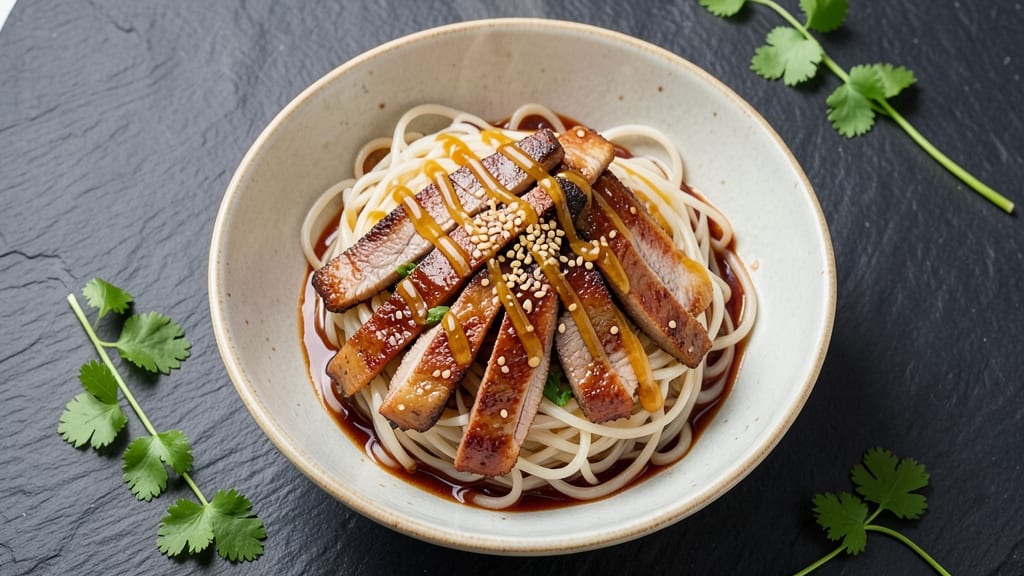
This Asian pork noodle bowl recipe delivers restaurant-quality crispy rice noodles smothered in smoky hoisin glaze—crispy edges that shatter with every bite. After years of perfecting this dish in my Atlanta kitchen, I've cracked the code for achieving that signature texture without deep-frying.
The secret lies in a quick sear and careful timing that transforms soft rice noodles into golden, shatteringly crisp strands.
What sets this recipe apart is the balance of textures and flavors: tender, marinated pork shoulder that falls apart at the touch, chewy yet crispy noodles, and a velvety hoisin glaze that's both sweet and smoky.
I use a blend of hoisin, soy sauce, and a touch of honey for that signature depth, then finish with a quick sear to develop the caramelized crust on the noodles. The pork marinates overnight in a simple soy-ginger-garlic mix, ensuring maximum flavor penetration.
By the time you assemble your bowl, you'll have perfectly crispy noodles that hold their shape, tender pork that practically melts in your mouth, and a sauce that ties everything together with its complex sweet-savory profile.
The garnishes—crisp green onions, toasted sesame seeds, and a drizzle of chili oil—add the final layer of texture and visual appeal that makes this dish truly special.
This recipe serves four generously and comes together in under 45 minutes of active time, with most of the work happening while you sleep. The pork can marinate overnight, and the noodles crisp up in just 5 minutes in the pan.
Perfect for weeknight dinners or meal prep—just store components separately and assemble when ready to eat for that fresh-out-of-the-restaurant experience at home.
Ingredients for asian pork noodle bowl
Crispy noodles, tender pork, and smoky hoisin—here's what you need for a restaurant-style bowl.
| Ingredient | Amount | Notes |
|---|---|---|
| Rice Noodles 🍜 | 8 oz | Fresh or dried, wide-cut preferred |
| Pork Shoulder 🥓 | 1 ½ lb | Boneless, cut into 1-inch cubes |
| Hoisin Sauce 🍶 | ½ cup | Store-bought or homemade blend |
| Soy Sauce 🥫 | ¼ cup | Light or dark, to taste |
| Honey 🍯 | 1 tbsp | For sauce sweetness |
| Sesame Oil 🫒 | 1 tbsp | Toasted, for aroma |
| Fresh Ginger 🧄 | 1 tbsp | Grated, for marinade |
| Garlic Cloves 🧄 | 4 cloves | Minced, for marinade |
| Vegetable Oil 🫒 | 2 tbsp | For searing pork |
| Green Onions 🧅 | ¼ cup | Thinly sliced, for garnish |
| Sesame Seeds 🌾 | 1 tbsp | Toasted, for garnish |
| Chili Oil 🌶️ | 1 tbsp | Optional, for heat |
| Salt 🧂 | 1 tsp | Kosher or sea salt |
| Black Pepper 🌶️ | ½ tsp | Freshly ground |
The pork shoulder is non-negotiable here—it's got the perfect fat-to-meat ratio for that tender, juicy result. Trader Joe's and Costco usually have good deals on pork shoulder, but any grocery store's butcher section will work. Look for pieces with good marbling—they'll stay juicier during cooking. If you can't find pork shoulder, pork butt works too, just ask your butcher to cut it into cubes. For the noodles, fresh rice noodles are ideal (they crisp up better), but dried ones in a package work in a pinch—just soak them according to package instructions before cooking.
No hoisin sauce? Mix soy sauce, honey, and a splash of vinegar for a quick substitute. The sesame oil adds depth, so don't skip it—Trader Joe's has a great toasted version that's perfect. If you're sensitive to heat, skip the chili oil or use just a few drops. The green onions can be swapped for regular onions if you're out, but they add a nice freshness. For the marinade, fresh ginger and garlic are best, but if you're in a hurry, paste or powdered versions work at double the amount. The key to crispy noodles is high heat and quick cooking—don't overcrowd the pan.
Marinate the pork overnight for maximum flavor, but if you're short on time, 30 minutes still works. Store the cooked pork and sauce separately in the fridge for up to 4 days. The noodles crisp best when cooked fresh, but you can prep them ahead and reheat in a dry pan for 2-3 minutes. For meal prep, assemble bowls just before eating to keep the noodles crispy. The sauce keeps for 1 week in the fridge, and the pork reheats beautifully—just add a splash of water to keep it moist.
Why You'll Love This Recipe
- No-Chop Night: I swear by this one—just slice the pork shoulder thin (or buy pre-sliced), toss it in a pan with hoisin and honey, and let it caramelize. Five minutes of active work, and the rest is hands-off magic.
- Sweet-Savory Magic: That combo of sticky hoisin and tangy soy sauce? It’s the kind of balance that makes you pause mid-bite. The pork gets this irresistible glaze—crispy edges, tender inside—while the noodles soak up every last drop.
- Lunchbox Hero: Between us, this is my go-to for meal prep. Cook a big batch of noodles, shred the pork, and store everything separately. Toss with veggies or quick-pickled onions when you’re ready—no reheating nightmares, just fresh flavor every time.
- Budget Stretch: Pork shoulder is cheap, hoisin lasts forever, and a bag of rice noodles feeds the whole family. Honestly, I’ve made this for under $10 per serving, and no one ever complains about the leftovers (or the seconds).
Step-by-step instructions for crispy rice noodle bowls
Here's how to create perfectly crispy rice noodles with a smoky hoisin glaze—every bite delivers that satisfying crunch.
Marinate and Sear the Pork Shoulder
In a large bowl, combine the 1.5 lb pork shoulder, 1 tbsp minced garlic, 1 tbsp grated ginger, 1 tsp salt, and 0.5 tsp black pepper. Toss until the pork is evenly coated with the marinade. Let it sit at room temperature for 15 minutes while you prepare the rest.
Heat 2 tbsp vegetable oil in a large skillet over medium-high heat. Add the marinated pork in a single layer and cook undisturbed for 3-4 minutes until the bottom develops a deep golden-brown crust. Flip and repeat on the second side. The pork should be 80% cooked through—it will finish in the sauce. Transfer to a plate and set aside.
Prepare the Smoky Hoisin Glaze
In the same skillet (no need to clean it—the browned bits add flavor), reduce heat to medium. Add 0.5 cup hoisin sauce, 0.25 cup soy sauce, and 1 tbsp honey. Stir and let it simmer for 3-4 minutes until the mixture thickens slightly and coats the back of a spoon.
Return the pork to the skillet and spoon the sauce over it. Cover and cook for 5-6 minutes on low heat, allowing the pork to absorb the smoky glaze. The pork should be fully tender and the sauce should cling beautifully. Remove the pork and set aside with the sauce.
Cook the Crispy Rice Noodles
Bring a large pot of water to a rolling boil. Add the 8 oz rice noodles and cook for 2-3 minutes—they should be just tender but still slightly firm. Drain immediately and rinse under cold water for 10 seconds to stop the cooking process. Shake off excess water and transfer to a large bowl.
While the noodles are still warm, drizzle with 1 tbsp sesame oil and toss gently with tongs. The oil will help create that crispy texture when they cool. Spread the noodles in a single layer on a baking sheet and let them sit at room temperature for 10 minutes. This step is crucial—the evaporation of moisture creates that satisfying crunch.
Assemble and Garnish the Bowls
Slice the pork into ¼-inch thick pieces and divide among four bowls. Arrange the crispy rice noodles around the pork, ensuring they're spread evenly. Drizzle each bowl with 1 tbsp of the reserved hoisin glaze from the pork, letting it coat the noodles.
Garnish each bowl with 1 tbsp toasted sesame seeds and 1 tbsp thinly sliced green onions. For a little heat, add a drizzle of 1 tbsp chili oil to each bowl. Serve immediately while the noodles are still crispy—this dish tastes best fresh out of the pan!
Pro Tips For Making Asian Pork Noodle Bowl
- CUT PORK IN STRIPS: Pork shoulder is tough—don’t fight it. Slice against the grain into ¼-inch strips, but not too thin or they’ll dry out before the sauce clings. I used to overcut, and the meat turned to rubber. Keep them uniform so they cook evenly.
- SOAK NOODLES JUST BEFORE SERVING: Rice noodles get mushy if soaked too early. Instead, rinse them cold, then cover with fresh hot water for exactly 2 minutes—no more—right before assembling the bowl. They’ll soften perfectly without turning to glue.
- REST PORK AFTER SEARING: After browning the pork, let it sit on the plate for 5 minutes. This keeps it juicy when it hits the sauce later. I learned this the hard way—skipping it made the meat turn out dry and stringy, no matter how much hoisin I added.
- STIR IN HONEY LAST: Honey burns fast. Add it after the pork is mostly cooked and the sauce has thickened, then toss everything together off the heat. This way, you get that glossy, caramelized finish without turning your bowl into a sticky mess.
Perfect pairings for these flavors
Sauce Elevations
Swap the hoisin glaze for a peanut sauce by blending ½ cup creamy peanut butter, ¼ cup soy sauce, 1 tbsp lime juice, 1 tbsp honey, and 1 tsp sriracha.
Thin with 2 tbsp water until pourable. This Thai-inspired variation adds nutty depth and a subtle kick—perfect for balancing the pork's richness. 🥜
For a spicy chili-lime twist, mix ¼ cup hoisin sauce, 2 tbsp lime juice, 1 tbsp chili paste, 1 tbsp honey, and 1 tsp toasted cumin.
The bright acidity cuts through the pork's richness while adding vibrant heat. I love this version with a sprinkle of cilantro for freshness.
Noodle Swaps
Replace rice noodles with udon for a Japanese-inspired bowl—soak 8 oz dried udon noodles for 5 minutes in warm water, then crisp them in a dry pan with 1 tbsp neutral oil until golden. The chewier texture holds up beautifully to the smoky pork. 🍜
For a gluten-free option, use 8 oz rice vermicelli noodles—they crisp up faster and add delicate strands to the bowl. Soak them for just 2 minutes in hot water, then toss with 1 tsp sesame oil before spreading on a tray to dry.
The lighter texture lets the pork shine.
Protein Variations
Swap pork for chicken thigh—marinate 1.5 lb bone-in, skin-on thighs in the same soy-ginger-garlic mix, then crisp the skin first before cooking through. The extra fat renders beautifully, creating a crispy exterior with juicy meat inside. 🍗
For a vegetarian version, use extra-firm tofu—press 1.5 lb tofu for 30 minutes, then cube and pan-fry until golden. Toss the cubes in the hoisin glaze for 5 minutes to absorb the flavors. The texture mimics pork perfectly when sliced thin.
Beverage Pairings
A jasmine green tea with honey cools the palate between bites—its floral notes complement the smoky hoisin without overpowering. Brew 2 tsp loose-leaf jasmine tea in 8 oz hot water for 3 minutes, then sweeten with 1 tsp honey.
The warmth of the tea contrasts beautifully with the crisp noodles. ☕
For an alcoholic option, try a Thai-inspired lychee martini—muddle 4 lychees with 2 oz vodka and 1 oz lychee liqueur**, then shake with ice and strain into a chilled glass. The sweet-tart lychee echoes the honey in the sauce while adding a sophisticated touch. 🍸
Nutrition facts
Frequently asked questions
Can I use ground pork instead of pork shoulder?
Ground pork works, but the texture will be very different—it'll be more finely textured and less tender. For the best results, stick with pork shoulder or pork butt, which stay juicy and develop that perfect pull-apart tenderness. If you must use ground pork, form it into small patties and cook them until 160°F internally for safety. The crispy noodle technique remains the same!
How do I keep the noodles crispy when reheating?
Reheat noodles in a dry skillet over medium-high heat for just 2-3 minutes, stirring constantly. The key is high heat and quick cooking—don't add any moisture. For extra crunch, toss them with ½ tsp sesame oil before reheating. Store components separately (pork, sauce, noodles) in the fridge for up to 4 days and assemble fresh when ready to eat.
What's the best way to make the hoisin glaze thicker?
Simmer the sauce uncovered for an extra 2-3 minutes to reduce it naturally. For instant thickening, mix ½ tsp cornstarch with 1 tsp water, stir into the sauce, and cook for 1 minute until it coats the back of a spoon. Avoid over-thickening—it should still be pourable enough to coat the noodles. The smoky depth comes from the caramelized pork bits in the pan!
Can I make this dish ahead of time?
Cook and cool all components separately, then store in airtight containers. The pork keeps for 4 days in the fridge, the sauce for 1 week, and the noodles (cooked and dried) for 2 days. Reheat noodles separately in a dry pan, then assemble bowls just before serving. The flavors actually improve overnight as they meld!
Why did my noodles turn mushy instead of crispy?
Overcooking is the most common mistake—rice noodles cook in seconds! They should be just tender (about 2-3 minutes in boiling water), then immediately rinsed in cold water to stop cooking. Spread them on a tray to dry completely before crisping. If they're still mushy, try dried rice noodles (like banh pho) which hold up better to reheating.