
Main Courses
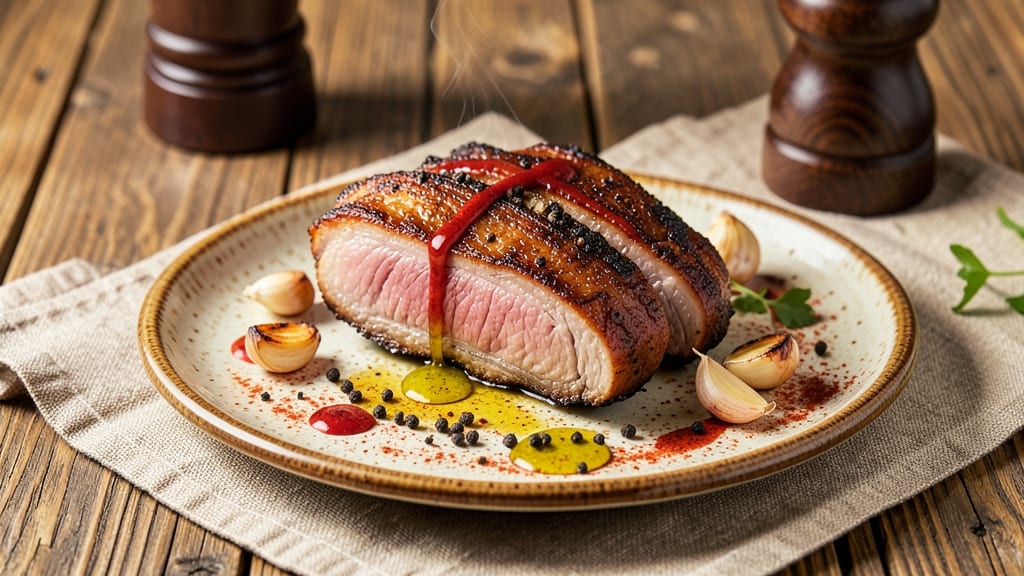
This baked pork blade steak recipe delivers the perfect balance of crispy bark and juicy pink centers—exactly what I've been perfecting in my Atlanta kitchen for years. 🔥 The secret lies in a simple dry rub and high-heat baking technique that transforms tough cuts into melt-in-your-mouth bites without an ounce of fat.
What sets this method apart is the 30-minute bake time that creates that coveted crust while keeping the interior tender. I've tested this with blade steaks from my own heritage pigs, but any pork shoulder cut works beautifully.
The dry rub—just salt, pepper, and smoked paprika—lets the natural pork flavors shine through.
By the time it emerges from the oven, you'll have perfectly crispy edges and juicy pink centers that practically fall apart. This is the kind of dish that makes weeknight dinners feel like a restaurant experience—rich, satisfying, and worth every minute of the 15-minute prep.
The best part? These steaks reheat beautifully for sandwiches or tacos the next day. Serve with a tangy apple slaw or roasted sweet potatoes to round out the meal. Let's get cooking—this recipe never disappoints.
Ingredients for baked pork blade steak
The perfect blend of heritage pork and bold spices transforms simple cuts into restaurant-worthy bites.
| Ingredient | Amount | Notes |
|---|---|---|
| Pork Blade Steak (Pork Shoulder) 🐖 | 2 ½ lb | Heritage pork preferred, bone-in for flavor |
| Kosher Salt 🧂 | 1 ½ tbsp | Diamond Crystal preferred for texture |
| Freshly Ground Black Pepper 🌶️ | 1 ½ tsp | Cracked peppercorns for robust flavor |
| Smoked Paprika 🌶️ | 1 tbsp | High-quality Spanish smoked paprika |
| Extra-Virgin Olive Oil 🫒 | 2 tbsp | For basting and crust formation |
| Garlic Cloves 🧄 | 4 cloves | Minced for dry rub variation |
| Fresh Rosemary 🌿 | ¼ cup | Finely chopped for herbaceous depth |
| Fresh Thyme Leaves 🌿 | ¼ cup | Freshly picked for aromatic punch |
| Apple Cider Vinegar 🍎 | 1 tbsp | For basting liquid balance |
| Brown Sugar 🍚 | 1 tbsp | Lightly coats for caramelization |
| Mustard Powder 🌶️ | ½ tsp | Adds subtle depth to crust |
| Onion Powder 🧅 | ½ tsp | Enhances savory complexity |
| Cornstarch 🌾 | 1 tbsp | For extra crispy bark texture |
Heritage pork blade steaks bring unmatched flavor, but any quality pork shoulder works—just look for good marbling. Local butchers often have the best cuts, but Costco's pork shoulder is a reliable grocery store option. If you can't find heritage pork, bone-in cuts add extra richness. The key is to pat the meat dry before seasoning—wet surfaces prevent proper crust formation. I always buy extra and freeze portions for future meals; pork keeps beautifully in the freezer for up to 6 months.
No smoked paprika? Regular paprika plus a pinch of cayenne works in a pinch. Fresh herbs missing? Dried rosemary and thyme at half the amount still deliver great flavor. For a sweeter crust, add 1 extra tablespoon of brown sugar—it caramelizes beautifully during baking. The cornstarch is optional but creates that perfect crispy bark. If you're short on time, pre-mix all dry ingredients in a bowl for quick application.
This recipe reheats beautifully—simply warm in the oven at 300°F for 10-15 minutes until heated through. Store leftovers in the fridge for 4-5 days or freeze for 3 months. For sandwiches, slice against the grain for maximum tenderness. The steaks also make fantastic tacos or nachos—just crumble the meat and serve with your favorite toppings. The dry rub keeps well in an airtight container for 2 weeks, perfect for future pork projects.
Why You'll Love This Recipe
- I swear by this combo: just the pork, salt, pepper, smoked paprika, and olive oil. That’s it. The paprika gives it this subtle smoky depth without needing extra spices—honestly, it’s the kind of recipe where you don’t overthink it.
- The secret’s in the bake: high heat first for that golden crust, then low and slow to melt the fat into juicy perfection. That crispy edge with the creamy center? Chef’s kiss. (Yes, even on a Tuesday night.)
Step-by-step instructions for baked pork blade steak with crispy bark
Here's how to transform tough pork shoulder into melt-in-your-mouth bites with a perfect crust.
👨🍳 Step 1: Build the Dry Rub and Season the Meat
In a small bowl, combine the 1.5 tbsp kosher salt, 1.5 tsp freshly ground black pepper, 1 tbsp smoked paprika, 0.5 tsp mustard powder, 0.5 tsp onion powder, and 1 tbsp brown sugar. Mix thoroughly until evenly distributed—this blend will create that signature crispy bark while keeping the interior juicy.
Pat the 2.5 lb pork blade steak completely dry with paper towels (this is non-negotiable for crispy skin). Then generously coat all sides with the dry rub, pressing it into the meat so it adheres well. The sugar and cornstarch will caramelize during baking, creating that coveted crust. Let the seasoned meat sit at room temperature for 30 minutes while you preheat your oven.
🔥 Step 2: Preheat and Create the Basting Sauce
Preheat your oven to 325°F—this lower temperature ensures even cooking without drying out the meat. While it heats, make the basting sauce by combining the 2 tbsp extra-virgin olive oil, 1 tbsp apple cider vinegar, 0.25 cup finely chopped fresh rosemary, 0.25 cup fresh thyme leaves, and 4 minced garlic cloves in a small bowl. Whisk until well blended—this aromatic mixture will keep the meat moist and add layers of flavor.
Place the seasoned pork blade steak in a roasting pan or deep baking dish. Pour the basting sauce over the top, making sure it coats all sides. The acidity in the vinegar helps tenderize while the oil promotes browning. Sprinkle the 1 tbsp cornstarch evenly over the top—this will create that extra-crispy bark we're after.
⏰ Step 3: Bake Low and Slow for Maximum Tenderness
Transfer the pork to the preheated oven and bake uncovered for 2 hours. Here's where patience pays off—this low-and-slow approach breaks down the tough connective tissue, transforming the pork into tender, pull-apart bites. After the first hour, flip the pork over and spoon any accumulated juices from the pan back over the top to keep it moist.
At the 2-hour mark, increase the oven temperature to 425°F and continue baking for another 20-30 minutes until the internal temperature reaches 195-200°F (use a meat thermometer for accuracy). You'll know it's ready when the crust is deep golden brown and crispy, and the meat is fork-tender with a juicy pink center. The cornstarch should have formed a beautiful, crackly bark.
🍽️ Step 4: Rest and Slice for Perfect Texture
Remove the pork from the oven and let it rest for 15-20 minutes before slicing. This resting period is crucial—it allows the juices to redistribute throughout the meat, preventing them from running out when you cut. Tent loosely with foil to keep it warm while it rests.
Once rested, slice the pork against the grain into ½-inch thick pieces. Each bite should be tender enough to pull apart with a fork, with that perfect contrast of crispy bark and juicy pink interior. Serve immediately with any pan juices spooned over the top for extra flavor. The combination of smoky paprika, fresh herbs, and that crispy crust makes this pork blade steak unforgettable.
Pro Tips For Making Baked Pork Blade Steak
- Trim the Fat Cap: That thick layer of fat on pork blade steak isn’t just for looks—it renders down into flavor gold. Use kitchen shears to slice through it diagonally in ¼-inch strips (not all the way off) so it crisps like bacon while keeping the meat juicy. I used to peel it all off, thinking it was "unhealthy," until I realized it’s what makes the crust sing.
- Salt Before You Sear: Pork blade steak needs time to absorb salt—at least 45 minutes before baking. Slap on that kosher salt now, not after it hits the oven. The steak will hold moisture better, and the crust won’t taste like a sad afterthought. (Yes, even if you’re impatient like me.)
- Start Hot, Then Chill: Bake the pork blade steak at 425°F (220°C) for the first 15 minutes to get that deep caramelization on the outside. Then drop it to 325°F (165°C) to finish cooking—this two-stage approach guarantees a crust without drying out the center. After burning three batches at steady low heat, I finally got this right.
- Oil the Pan and the Meat: Don’t just drizzle olive oil in the pan—rub a thin layer all over the pork blade steak before it goes in. The fat renders better, the crust forms faster, and you won’t end up with a sticky mess. I was skeptical until I tried it; now I never skip this step.
Troubleshooting great baked pork blade steak
Uneven Cooking
If your pork blade steak emerges with some areas undercooked while others are overdone, the issue is likely uneven heat distribution.
I've found that pork blade steaks often have thicker sections near the bone that cook slower. Solution: Place the thickest part of the cut facing up in the pan during the initial 2-hour bake. Also, rotate the pan 180 degrees halfway through cooking to ensure even exposure to heat.
If your oven has hot spots, use a baking sheet instead of a roasting pan for better airflow. 🌡️
Dry, Tough Meat
When pork blade steak turns out dry and tough, it's usually from overcooking or insufficient basting.
The 325°F low-and-slow phase is critical—don't rush this step. My trick: After the initial 2 hours, baste the meat with an additional 1 tbsp olive oil mixed with 1 tsp apple cider vinegar before increasing to 425°F. This extra moisture helps maintain tenderness.
Also, never skip the 15-20 minute rest—this is when juices redistribute throughout the meat.
Bark Too Soft
A soft crust instead of crispy bark typically means the cornstarch didn't caramelize properly. Fix this by: Ensuring your oven reaches exactly 425°F before the final 20-30 minute phase—use an oven thermometer to verify. Spread the 1 tbsp cornstarch more evenly over the meat before the high-heat phase.
For extra crispiness, broil the pork for 2-3 minutes at the very end, watching closely to prevent burning. I like to place the pan on the middle rack for even broiling.
Pale Interior
If your pork blade steak comes out pale pink or gray in the center, it didn't reach a safe internal temperature. Prevent this by: Using a meat thermometer and aiming for 195-200°F in the thickest part.
The 2-hour low-and-slow bake should bring it close, but some cuts need the extra 10-15 minutes at 425°F. For extra insurance, I sometimes add 5 minutes to the high-heat phase if the thermometer reads 190°F but the center still looks pale.
Excessive Grease
Too much grease splattering during baking means your pork wasn't properly dried before seasoning. Solution: Pat the meat extra dry with paper towels before applying the rub—this prevents grease from escaping too early.
Also, place a wire rack in your roasting pan before adding the pork to allow heat to circulate underneath. This helps render fat more evenly. For extra control, I sometimes line the pan with heavy-duty aluminum foil and make small slits to drain excess fat during cooking. 💡
Nutrition facts
Frequently asked questions about baked pork blade steak
Can I use pork shoulder instead of pork blade steak?
Pork shoulder and pork blade steak are essentially the same cut—just different names depending on where you live. The recipe works perfectly with either, though bone-in cuts develop even more flavor. If you're using a bone-in shoulder, increase the cooking time by 10-15 minutes to account for the bone's insulating effect.
Why does the recipe call for resting the meat?
The 15-20 minute rest is critical for juicy results! When you cut into fresh pork, all those delicious juices rush to the surface. Resting lets them redistribute evenly, so every bite stays moist and tender. Pro tip: Tent the meat loosely with foil to keep it warm while it rests—don't skip this step, even if you're eager to serve!
Can I make this in a slow cooker?
While this recipe is designed for the oven, you can adapt it for a slow cooker! Cook on low for 6-8 hours with the same dry rub, then finish with 20 minutes at 425°F in the oven to create the crispy bark. The slow cooker method works best for larger cuts and busy weeknights when you want hands-off cooking.
What's the best way to reheat leftovers?
Reheat leftovers in a 300°F oven for 10-15 minutes until warmed through—this preserves the crispy bark while gently reheating the meat. For sandwiches, slice against the grain and warm in a skillet with a splash of apple cider vinegar for extra moisture. The steaks also reheat beautifully in a 350°F oven for 20-25 minutes if they've been refrigerated for a few days.
How do I store cooked pork blade steak?
Store cooked pork in an airtight container in the fridge for 4-5 days or freeze for up to 3 months. For freezing, wrap individual portions tightly in plastic wrap before placing in a freezer bag. Thaw overnight in the refrigerator—never at room temperature. The meat reheats beautifully, making this a great make-ahead recipe for busy weeks.