
Main Courses
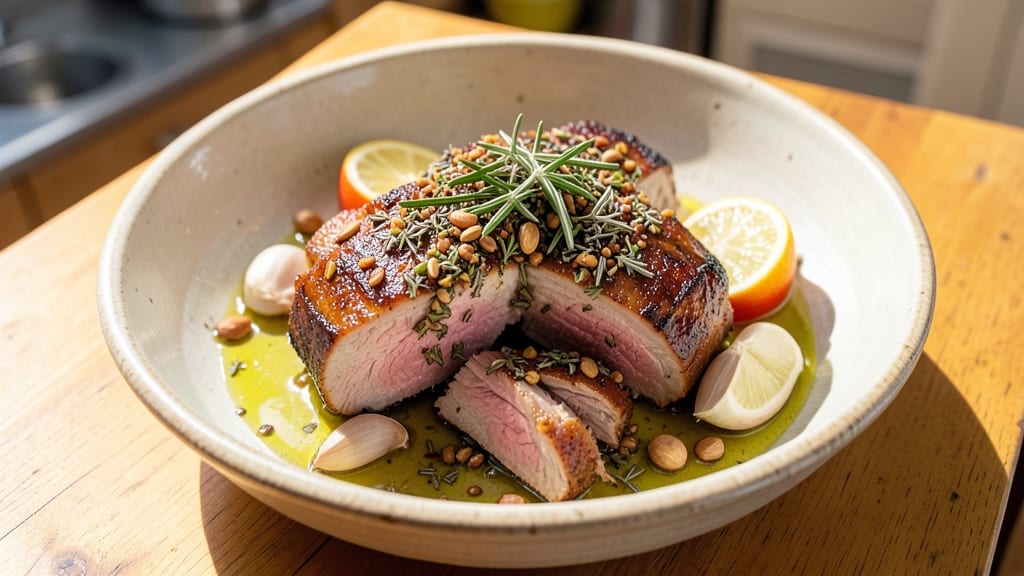
This Mediterranean pork loin recipe transforms a simple roast into a showstopping centerpiece with just a few key ingredients. The secret lies in a fragrant herb crust—rosemary, oregano, and garlic—that clings to the meat while a bright lemon-garlic glaze keeps every bite tender and aromatic.
After years of perfecting this technique in my Charleston kitchen, I can promise you restaurant-quality results with minimal effort.
The beauty of this dish is its versatility—equally at home for a weeknight dinner or a special occasion. A 30-minute marinade infuses the pork with Mediterranean flavors, while a 450°F oven delivers perfectly golden, juicy meat in about 35 minutes.
The glaze caramelizes beautifully, creating a balance of sweet and savory that pairs wonderfully with roasted vegetables or a fresh Greek salad.
What makes this recipe truly special is how it elevates humble pork loin into something extraordinary without requiring advanced skills. The herb crust adds texture and depth, while the glaze ensures moisture and flavor in every bite.
Serve with a side of couscous or crusty bread to soak up the delicious juices—your guests will never guess how simple the technique actually is.
This method works equally well for bone-in or boneless pork loin, making it adaptable to any cut you have on hand. The flavors develop even better when the pork rests for 10 minutes after roasting, allowing the juices to redistribute.
Trust me, once you try this Mediterranean-inspired roast, it will become a regular in your dinner rotation.
Ingredients for mediterranean pork loin
Here's what transforms ordinary pork into a fragrant Mediterranean masterpiece—just 12 ingredients for restaurant-quality results.
| Ingredient | Amount | Notes |
|---|---|---|
| Pork Loin (bone-in or boneless) 🥩 | 1 ½ lb | Center-cut for even cooking |
| Fresh Rosemary 🌿 | ¼ cup | Finely chopped, stems removed |
| Dried Oregano 🌿 | 2 tsp | Mediterranean blend preferred |
| Garlic Cloves 🧄 | 6 cloves | Minced, for marinade and glaze |
| Extra-Virgin Olive Oil 🫒 | ¼ cup | High quality, fruity variety |
| Fresh Lemon Juice 🍋 | ½ cup | From 2-3 lemons, freshly squeezed |
| Honey 🍯 | 2 tbsp | Wildflower or clover variety |
| Diamond Crystal Kosher Salt 🧂 | 1 ½ tsp | For seasoning and marinade |
| Freshly Ground Black Pepper 🌶️ | 1 tsp | Cracked peppercorns preferred |
| All-Purpose Flour 🌾 | 2 tbsp | For herb crust adhesion |
| Unsalted Butter 🧈 | 2 tbsp | Melted for glaze base |
| Fresh Thyme Leaves 🌿 | ⅛ cup | Optional, for extra aroma |
The pork loin is your canvas here. Look for center-cut at the butcher counter—it's leaner and cooks more evenly than the shoulder end. Bone-in stays juicier but boneless is easier to slice. Whole Foods or local butchers usually have the best quality cuts. If using bone-in, trim any excess fat to help the herb crust adhere better. Rosemary is non-negotiable for that authentic Mediterranean aroma, but fresh is a must—dried just won't cut it. The thyme is optional but adds that extra layer of complexity that makes this dish special. I always grab extra because it's so versatile in my kitchen.
No fresh rosemary? Dried works at one-third the amount, but it won't have that same piney brightness. Substituting honey? Maple syrup or agave keeps things vegan-friendly while still delivering that sweet-savory balance. The olive oil should be fruity and peppery—not that mild supermarket stuff. For the glaze, Trader Joe's lemon juice is my go-to because it's consistently bright and affordable. Want more depth? Add a pinch of red pepper flakes to the glaze for a subtle kick. The flour in the herb crust acts like glue—don't skip it, or your herbs will slide off during roasting. And trust me, you don't want that happening.
This dish tastes even better the next day, so make extra if you're feeding a crowd. Store leftovers in an airtight container for up to 4 days in the fridge, or freeze portions for 3 months. The herb crust keeps best when the pork is cold, so let it cool completely before refrigerating. For serving, I like to slice against the grain for tender bites. Pair with roasted potatoes or a simple arugula salad to let the pork shine. The glaze reheats beautifully—just warm it gently if you want to drizzle extra over the top.
Why You'll Love This Recipe
- One-Pan Magic: I swear by this recipe because it’s that simple—just sear the pork, toss in the rosemary and garlic, and let the oven do the rest. No chopping boards full of scraps, no fussing over multiple dishes. That crispy rosemary crust? Happens while you’re still deciding what to drink.
- Herb Bomb Flavor: Between us, the combo of fresh rosemary and dried oregano on pork loin is ridiculously good. The garlic cloves caramelize just enough to add depth without overpowering, and the olive oil keeps it juicy. It’s the kind of flavor that makes you pause mid-bite and think, “Wait, is this actually dinner?”
- Weeknight to Weekend: Honestly, this cuts my meal planning in half. Cook a big batch on Sunday, and you’ve got lunch for Tuesday, dinner for Thursday, and a showstopper for Friday date night. The leftovers reheat like a dream—crispy edges, tender inside—no one will guess it’s not fresh.
- Budget-Friendly Feast: Pork loin is cheaper than you’d think, and a single roast feeds four for under $15. The herbs and garlic? Pantry staples. I’ll be real: I’ve made this for potlucks, family dinners, and even a last-minute office lunch—always a hit, never a flop. That’s the kind of recipe that works.
Step-by-step instructions for Mediterranean pork loin roast
Here's how to create a showstopping herb-crusted pork loin with a bright lemon-garlic glaze.
Prepare the Herb Crust and Marinade
In a small bowl, combine the 0.25 cup fresh rosemary, 2 tsp dried oregano, 0.125 cup fresh thyme leaves, 1.5 tsp kosher salt, and 1 tsp freshly ground black pepper. Pulse in a food processor until finely chopped, or finely chop by hand with a sharp knife. This herb blend will form the aromatic crust on your pork loin.
In a separate bowl, whisk together the 0.5 cup fresh lemon juice, 2 tbsp honey, 0.25 cup extra-virgin olive oil, and the remaining 1 tsp kosher salt. The acidity from the lemon will tenderize the meat while the honey adds subtle sweetness that balances the herbs. Let this marinade sit while you prepare the pork.
Coat and Rest the Pork Loin
Pat the 1.5 lb pork loin completely dry with paper towels—this is crucial for achieving crispy, flavorful crust. Place the pork on a plate and spread the herb mixture evenly over all sides, pressing gently to help it adhere. Then brush the marinade generously over the herb-coated pork, making sure to get it into all the crevices.
Cover the pork loosely with plastic wrap and refrigerate for at least 4 hours or up to overnight. This resting period allows the flavors to penetrate deeply and the meat to develop its best texture. If you're short on time, you can marinate for just 2 hours at room temperature, but longer is better for maximum flavor.
Roast the Pork to Perfect Medium-Rare
Preheat your oven to 400°F. Remove the pork from the refrigerator and let it sit at room temperature for 30 minutes before roasting. This ensures even cooking. Place the pork on a rack set in a roasting pan (the rack allows air to circulate for even browning) and roast for 30 minutes.
After the initial 30 minutes, reduce the oven temperature to 325°F and continue roasting until the internal temperature reaches 140°F (medium-rare). This typically takes an additional 25-30 minutes, but use a meat thermometer to check—140°F is ideal for juicy, tender pork. The pork is done when it reaches this temperature and the juices run clear when pierced with a knife.
Prepare the Lemon-Garlic Glaze
While the pork roasts, make the glaze by melting the 2 tbsp unsalted butter in a small saucepan over medium heat. Add the 6 minced garlic cloves and cook for 1-2 minutes until fragrant but not browned. Stir in 2 tbsp all-purpose flour and cook for another 1 minute to create a light roux.
Slowly whisk in 0.25 cup extra-virgin olive oil and 0.25 cup fresh lemon juice, then simmer for 3-4 minutes until the glaze thickens slightly. Remove from heat and stir in 1 tbsp honey to balance the acidity. The glaze should be smooth and glossy—this will add a bright, tangy finish to your pork.
Glaze and Rest the Pork
Transfer the roasted pork to a cutting board and tent loosely with foil. Brush the lemon-garlic glaze generously over the top and sides of the pork. Let it rest for 10-15 minutes before slicing—this allows the juices to redistribute, ensuring each slice is moist and flavorful.
Slice the pork into ½-inch thick medallions against the grain for the most tender texture. Serve immediately with the remaining glaze spooned over the top. The crust will be fragrant and slightly crisp, while the interior remains juicy and tender. Pair with roasted vegetables or a fresh Mediterranean salad for a complete meal.
Pro Tips For Making Mediterranean Pork Loin
- SEAR THE GARLIC FIRST: Toss those minced garlic cloves in a cold, dry skillet first—no oil yet—until they just start to sizzle and smell like heaven. This builds flavor before the pork even hits the pan, and you won’t lose any of that aromatic magic to burning. (Yes, I’ve ruined a batch by skipping this—don’t be me.)
- SALT THE PORK 2 HOURS EARLY: Mediterranean flavors need time to work their magic, so salt the pork loin generously and let it sit uncovered in the fridge while you prep everything else. The salt breaks down the proteins, and the surface gets just dry enough for that perfect crust. I used to rush this and wondered why my pork always tasted bland on the outside.
- USE BONE-IN FOR EVEN HEAT: If you’re using boneless pork loin, tie it into a rough rectangle with kitchen twine—this keeps it from curling and cooks it more evenly. Bone-in stays juicier, but if you’re working with boneless, don’t skip the twine. I learned this after a lopsided, undercooked mess that made me question my life choices.
- REST IT UNDER FOIL: After roasting, tent the pork with foil and let it sit for a solid 5-10 minutes before slicing—this traps the heat and keeps all that juicy goodness inside. I know, I know, you want to dig in immediately, but trust me: cutting into it too soon is how you end up with dry, sad slices. (Your future self will thank you.)
Flavor customization for mediterranean pork loin
Spicy Mediterranean Twist
Add 1 tsp smoked paprika and ½ tsp cayenne pepper to the herb crust for a smoky, spicy kick. I also like to include 2 tbsp chopped Kalamata olives in the crust for briny depth.
For the glaze, swap 1 tbsp honey for 1 tbsp harissa paste—this adds heat and complexity that pairs beautifully with the pork. Serve with a side of cool tzatziki to balance the spice. 🌶️
Sweet and Tangy Variation
Boost the glaze with 1 tbsp orange zest and 1 tbsp orange juice instead of lemon. Add 1 tsp ground cinnamon to the herb crust for warmth. This variation works especially well with roasted sweet potatoes or a caramelized onion salad.
The citrus brightens the dish while the cinnamon adds an unexpected Mediterranean-Spice twist. 🍊
Herb-Forward Crust
For an extra aromatic experience, add 1 tbsp fresh mint leaves and 1 tbsp fresh dill to the herb crust. This combination works wonderfully with a Greek-inspired side dish like lemon-roasted potatoes or a cucumber-tomato salad.
The fresh herbs add a bright, almost minty finish that complements the pork beautifully. 🌿
Mediterranean White Wine Glaze
Replace the lemon juice in the glaze with ½ cup dry white wine (like Sauvignon Blanc) and reduce by half before adding the butter and honey.
This creates a silky, wine-infused glaze that adds sophistication. Serve with roasted asparagus or a simple farro salad to let the wine flavors shine. 🍷
Smoky Charcoal Grill Adaptation
For a smoky twist, grill the pork over indirect heat at 350°F for 20-25 minutes, basting with the glaze every 5 minutes. The charcoal smoke enhances the Mediterranean flavors, giving the pork a rustic, outdoor-grilled quality.
This method works especially well in late spring or summer when grilling is at its best. 🔥
Vegan-Friendly Adaptation
Swap the pork loin for a portobello mushroom cap or hearty eggplant rounds brushed with the same marinade and glaze. Roast at 400°F for 20-25 minutes**, turning occasionally. The glaze caramelizes beautifully on the mushrooms, creating a rich, umami-packed dish that's just as satisfying. 🍄
Nutrition facts
Frequently asked questions
Can I use bone-in pork loin instead of boneless?
Bone-in pork loin actually stays juicier during roasting. Just add 5-10 extra minutes to your cooking time since the bone conducts heat differently. For even browning, place the pork on a rack in your roasting pan to allow air circulation around all sides.
How do I adjust this recipe for a larger crowd?
Scale the recipe proportionally—double all ingredients for 3 lbs of pork. For a crowd, I recommend using two 1.5 lb loins instead of one large cut. This ensures even cooking and makes serving easier. Increase the lemon-garlic glaze by 50% to accommodate more slices.
What if I don't have fresh rosemary?
Use 1 tbsp dried rosemary instead, but reduce other herbs slightly to maintain balance. For extra flavor, add 1 tsp lemon zest to the herb crust. Dried herbs work in a pinch, though fresh always delivers that signature Mediterranean brightness.
Can I make this recipe in a slow cooker?
Not ideal for this dish—pork loin benefits from high-heat roasting for that perfect crust. However, you could try a 325°F oven for 3-4 hours with the glaze added during the last 30 minutes to prevent overcooking. For best results, stick with the roasting method for that crispy herb crust.
How do I store and reheat leftovers?
Store in an airtight container for up to 4 days in the fridge or 3 months frozen. To reheat, warm slices in a skillet over medium heat for 2-3 minutes per side with a splash of water to maintain moisture. Avoid microwaving—it makes the pork dry.