
Main Courses
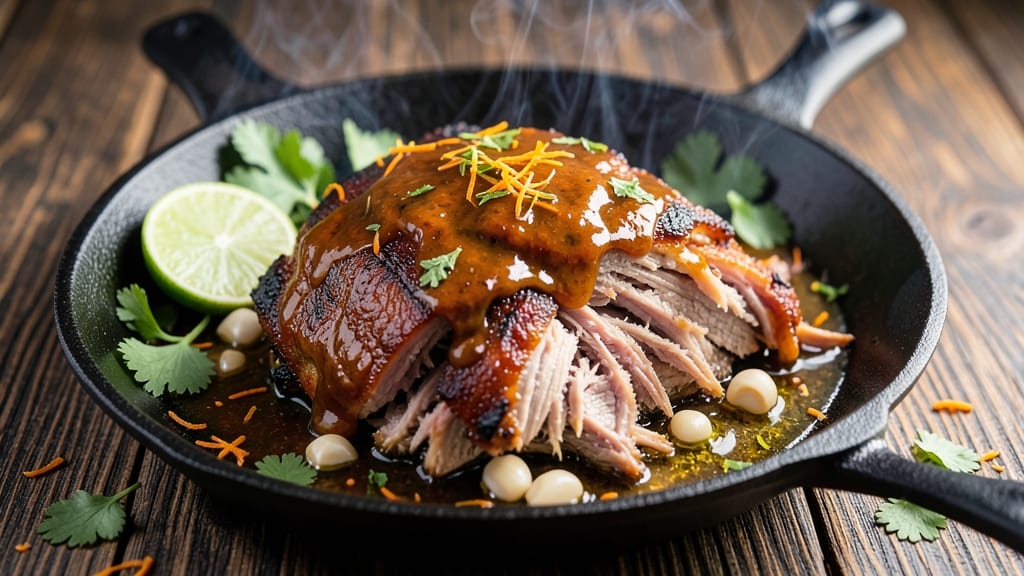
This Mexican smoked pulled pork recipe transforms tough pork shoulder into tender, smoky perfection with chipotle and citrus notes that dance on your tongue. 🔥 I developed this after years of perfecting adobo marinades and wood-fired techniques—now you can achieve restaurant-quality results at home, whether using a pellet smoker or oven.
The secret lies in the marinade: adobo paste, lime juice, and orange zest create a bold, balanced flavor that infuses the meat while smoking. A 3-1-1 wood blend (mesquite, hickory, apple) ensures that authentic Mexican smokiness without overpowering the citrus.
The low-and-slow cook transforms tough cuts into melt-in-your-mouth strands that practically fall apart.
By the time you're done, you'll have restaurant-quality pulled pork ready for tacos al pastor, loaded nachos, or burritos. The smoky aroma alone will have everyone asking for seconds, and the tender texture makes this dish a crowd-pleaser for any occasion.
This is the kind of pork that turns casual meals into memorable feasts.
Whether you're feeding a crowd or meal prepping for the week, this recipe scales beautifully. The marinade can be prepped ahead, and the cooking process is hands-off—just set it and let the smoker (or oven) do the work. Here's how to make it happen.
Ingredients for mexican smoked pulled pork
Eight pounds of pork shoulder plus bold flavors that transform tough meat into smoky, citrus-kissed perfection.
| Ingredient | Amount | Notes |
|---|---|---|
| Pork Shoulder (Boston Butt) 🍖 | 8 lb | Bone-in for best flavor, trimmed of excess fat |
| Adobo Paste 🌶️ | ½ cup | From canned chipotle peppers in adobo sauce |
| Fresh Lime Juice 🍋 | ½ cup | From 4-6 limes, freshly squeezed |
| Orange Zest 🍊 | 1 tbsp | From 1 large orange, finely grated |
| Fresh Garlic Cloves 🧄 | 6 cloves | Minced for marinade |
| Olive Oil 🫒 | ¼ cup | Extra-virgin for richness |
| Brown Sugar 🍯 | ¼ cup | Light or dark, packed |
| Ground Cumin 🌿 | 1 tbsp | Toasted for deeper flavor |
| Smoked Paprika 🌶️ | 1 tbsp | For authentic smoky depth |
| Salt 🧂 | 1 ½ tbsp | Diamond Crystal kosher salt |
| Black Pepper 🌶️ | 1 tsp | Freshly ground for heat |
| Wood Chips (Mesquite/Hickory/Apple) 🌳 | 2 cups | 3-1-1 blend for authentic smoke |
| Beer (Optional) 🍺 | ½ cup | Mexican lager or dark beer |
The pork shoulder is the star here—bone-in cuts stay juicier, and Costco or local butchers often have the best deals on whole roasts. Look for good marbling but trim any thick fat caps before cooking. If you're buying pre-cut, check for even thickness so it cooks uniformly. For the adobo paste, La Costeña or Goya are my go-tos—they've got that perfect smoky-chipotle balance. Fresh limes? Mexican limes (like Key limes) add extra tang, but regular limes work too. Toast your cumin seeds in a dry pan for 30 seconds before grinding—trust me, it makes all the difference.
No adobo paste? Mix 1 tbsp smoked paprika + 1 tbsp brown sugar + 1 tsp cayenne for a quick substitute. Swap the beer for extra broth or even apple cider if you're avoiding alcohol. The wood chips are non-negotiable for authentic flavor—Traeger or Cookshack sell pre-mixed blends, but you can DIY with separate bags. For the orange zest, use a microplane to get fine shreds without the bitter pith. If you're short on time, pre-make the marinade and store it in the fridge for up to 3 days. The pork can even marinate overnight, but no longer than 24 hours to avoid over-tenderizing.
This pork is best made ahead—it gets more tender as it rests. Store cooked pork in the fridge for 4-5 days or freeze for up to 3 months. For meal prep, portion into containers with a little marinade drizzle to keep it moist. The smoky aroma alone will have your house smelling amazing, so save some for tacos or nachos. Leftovers reheat beautifully—just add a splash of broth or water and warm through gently. The longer it sits, the more flavor develops, so don't rush the process.
Why You'll Love This Recipe
- Smoky-Citrus Magic: That first bite? The adobo’s deep, smoky heat meets the bright zing of lime and orange—like a fiesta in your mouth. The garlic cloves caramelizing into the mix? Pure satisfaction.
- Leftovers I Actually Love: This recipe makes way more than I need for one meal, and I don’t even mind. Shred it for tacos, stuff it in burritos, or pile it on toast—it’s always a win.
- Budget-Friendly Feast: A single pork shoulder feeds my whole family for days, and the adobo paste stretches the flavor further than store-bought rubs ever could. (Yes, even on a Tuesday night.)
Step-by-step instructions for Mexican smoked pulled pork
Here's how to transform a simple pork shoulder into tender, smoky perfection with bold citrus and chipotle notes.
🔥 Step 1: Prepare the Pork Shoulder for Smoking
Start by trimming any excess fat from the pork shoulder, leaving about ¼ inch of fat cap for moisture during smoking. Pat the meat dry with paper towels—this helps the rub adhere better and promotes crispier bark formation. Place the pork in a large bowl and set aside.
In a separate bowl, combine the 0.5 cup adobo paste, 0.5 cup fresh lime juice, 1 tbsp orange zest, 6 cloves minced fresh garlic cloves, 0.25 cup olive oil, 0.25 cup brown sugar, 1 tbsp ground cumin, 1 tbsp smoked paprika, 1.5 tbsp salt, and 1 tsp black pepper. Mix thoroughly until the paste is smooth and evenly distributed.
Spread the marinade all over the pork shoulder, pressing it into the meat so it penetrates deeply. For best results, let it marinate uncovered in the refrigerator for 12-24 hours. This step ensures maximum flavor infusion and tenderness. If using the optional 0.5 cup beer, add it to the marinade just before applying to the meat.
🔥 Step 2: Set Up Your Smoker for Authentic Flavor
Fill your smoker with the 2 cups wood chips (mesquite/hickory/apple blend) according to manufacturer instructions. Light the chips and let the smoker preheat to 225°F. You'll know it's ready when you see steady, thin blue smoke (not thick white smoke) wafting from the smoker.
Place the marinated pork shoulder fat-side up on the smoker grates. The fat cap will render slowly, basting the meat with flavorful drippings. Close the lid and resist the urge to peek—each time you open it, you lose heat and extend cooking time. Let the pork smoke undisturbed for 4-5 hours, until the internal temperature reaches 165°F.
Here's the thing—this is where the magic happens. The low-and-slow method breaks down the connective tissue, transforming tough pork into melt-in-your-mouth perfection. The citrus and chipotle flavors will meld beautifully with the smoky aroma from the wood chips.
🥘 Step 3: Wrap and Finish the Cook
When the pork reaches 165°F, you'll notice the temperature stall—a point where the meat stops rising despite continued cooking. This is normal and expected. Remove the pork from the smoker and wrap it tightly in butcher paper (not aluminum foil). The paper allows the meat to breathe slightly while retaining moisture.
Return the wrapped pork to the smoker and continue cooking until the internal temperature reaches 203°F. This final stage, often called the "Texas crutch," helps the pork reach its ideal tenderness. The cooking time for this stage typically takes 2-3 hours, but don't rush it—patience is key for that perfect texture.
You'll know it's done when the meat is fork-tender and pulls apart easily with minimal resistance. The bark should be dark and crispy, with a beautiful smoke ring visible just beneath the surface.
⏰ Step 4: Rest and Shred for Serving
Once the pork reaches 203°F, remove it from the smoker and let it rest in the butcher paper for 1-2 hours. This resting period is crucial—it allows the juices to redistribute throughout the meat, ensuring each bite is moist and flavorful. Don't skip this step, even though it's tempting to dig in immediately.
After resting, unwrap the pork and transfer it to a cutting board. Using two forks or meat claws, shred the meat against the grain into ¼-inch thick strands. Discard any large fat chunks or connective tissue. The pork should pull apart easily, with no resistance from tough fibers.
Return the shredded pork to the butcher paper and keep it warm in a slow cooker or insulated container. This keeps it tender and ready to serve. The final result should be a rich, smoky pulled pork with bright citrus notes and a perfect balance of sweet and spicy flavors.
Pro Tips For Making Mexican Smoked Pulled Pork
- Trim the Fat First: Slice off the thick layer of fat on the pork shoulder before smoking—it’s the fast track to crispy edges and even cooking. I used to skip this, and my bark would turn greasy instead of golden. A sharp knife and 10 minutes upfront save you hours of fuss later.
- Mix Adobo with Oil: Thin your adobo paste with a splash of oil (about 2 tablespoons) before brushing it on. Pure adobo sticks like glue and burns easily, while the oil carries the flavor deep into the meat. Sounds weird, but it works: your pork won’t taste like charred paste.
- Zest, Don’t Juice: Grate fresh orange zest directly into the rub—it’s the citrusy punch that separates good from amazing. Juice adds moisture, but zest clings to the meat like a flavor bomb. (Yes, even if you’re impatient like me, the zest is worth the extra 30 seconds.)
- Wrap at 160°F: Foil-wrap the pork when it hits 160°F internal temp—this is where the meat starts to pull but still holds together. Wrapping too early makes it mushy; too late and you’re fighting shredding. A meat thermometer is non-negotiable here.
Pro cooking tips for great mexican smoked pulled pork
Low-and-Slow Secrets
Your smoker's temperature is non-negotiable—maintain a steady 225°F throughout the entire cook. I use a ThermoWorks Smoke thermometer to monitor both the smoker and internal pork temp simultaneously. The key is patience: 4-5 hours at this temperature breaks down collagen without drying the meat. 🌡️
Here's my pro tip: Place a small water pan in your smoker to maintain humidity. This creates a more tender bark and prevents the surface from drying out.
I add 1 cup of water to a shallow pan and place it near the heat source—just enough to create a light steam environment without overdoing it.
Wood Blend Mastery
The 3-1-1 mesquite-hickory-apple blend is my signature for authentic Mexican flavor. Mesquite provides that signature smoky punch, hickory adds depth, and apple keeps things balanced with subtle sweetness. I pre-soak the chips for 30 minutes in water before using them to ensure consistent smoke production. 🌳
Never use 100% mesquite—it can overpower the dish. For a milder option, swap apple for cherry wood chips, which adds a fruity note that pairs beautifully with the citrus marinade. I keep a stash of Traeger Pellet Wood Chips in my pantry for quick access.
The Wrap Technique
When your pork hits 165°F, the stall begins. This is where the butcher paper wrap saves the day. Unlike foil, butcher paper allows the meat to breathe slightly while retaining moisture—think of it as a controlled environment for final tenderness.
I use 100% cotton butcher paper from Carnivore Style because it's food-safe and handles high heat beautifully.
Wrap the pork tightly but not so tight that it squeezes out moisture. The goal is to create an airtight seal that traps steam while allowing the meat to continue cooking gently. This final 2-3 hour phase at 203°F is what transforms good pork into extraordinary pulled pork.
Shredding Like a Pro
After resting, I always shred against the grain using two forks. The grain direction varies between the flat and point sections, so rotate your cutting board mid-slice.
Aim for ¼-inch thick strands—thinner than most recipes suggest. I use a Dexter-Russell 12-inch slicing knife for precision, but forks work perfectly at home.
Discard any large fat chunks or chewy connective tissue. The best pulled pork should be 80% meat to 20% fat ratio. If your pork feels dry after shredding, add a splash of the original marinade or a little Mexican lager to keep it moist.
This is where the magic happens—proper shredding ensures every bite is tender and flavorful.
Nutrition facts
Frequently asked questions
Can I make this recipe without a smoker?
Use an oven set to 275°F for the same low-and-slow effect. Place the pork on a rack over a baking sheet with 1 cup water in the bottom to create steam. Cook for 6-7 hours until it reaches 203°F, then wrap in butcher paper for the final 2-3 hours. For extra smokiness, add 1 tbsp smoked paprika to the marinade and sprinkle ½ cup wood chips (pre-soaked) on the baking sheet halfway through.
How do I know when the pork is fully cooked?
Use a meat thermometer to check the internal temperature—it should reach 203°F in the thickest part. The pork will pull apart easily with minimal resistance, and the juices should run clear. If it's not quite there, wrap it in butcher paper and return it to the smoker/oven for another 30-60 minutes. Never rely on time alone, as pork size and smoker efficiency vary.
What's the best way to serve this Mexican smoked pork?
This recipe shines in tacos al pastor (with pineapple and cilantro), loaded nachos with queso and jalapeños, or burrito bowls with black beans and avocado. For extra authenticity, serve with corn tortillas, pickled red onions, and a squeeze of lime. The pork also reheats beautifully—just add a splash of broth or marinade to keep it moist. Leftovers make amazing breakfast burritos or sandwiches!
Why did my pork turn out dry?
Dry pork usually means it cooked too fast or lost moisture. Keep your smoker at 225°F consistently, and use butcher paper (not foil) for the final wrap. Add a water pan to your smoker to maintain humidity, and never skip the 1-2 hour rest before shredding. If using an oven, cover the pork loosely with foil after the first 3 hours to retain moisture. The key is patience—rushing the process leads to dry results.
Can I use a different cut of pork?
Pork shoulder (Boston butt) is ideal, but you can also use pork butt or even a 6-7 lb pork butt roast for smaller batches. Avoid lean cuts like tenderloin—they lack the connective tissue needed for pulled pork. If using a different cut, adjust cooking time: bone-in pork takes 1-2 hours longer than boneless. For the best results, stick with 8 lbs of bone-in pork shoulder for maximum tenderness.