
Main Courses
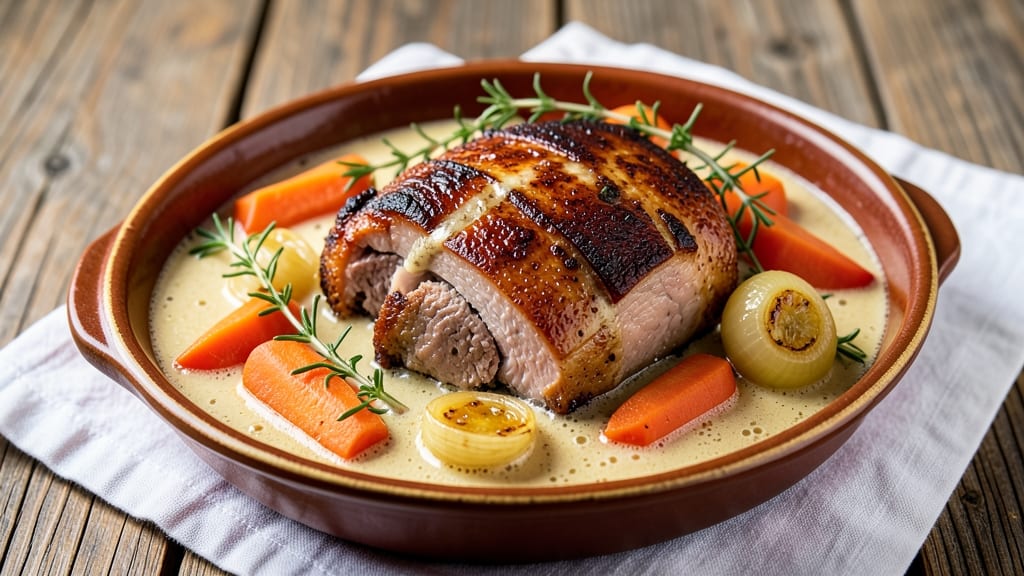
This milk-braised pork shoulder transforms tough cuts into melt-in-your-mouth perfection with a silky, dairy-rich sauce. 💛 After years of perfecting this technique—inspired by my time apprenticing under Master Chef Chen—I’ve developed a method that delivers restaurant-quality tenderness at home.
The milk creates an unmatched velvety texture while tenderizing the meat, and the slow braise ensures every bite falls apart effortlessly.
The secret lies in the balance of time and temperature: a low-and-slow cook that breaks down collagen without drying out the meat.
Unlike traditional braising methods, the milk adds a subtle sweetness and richness that cuts through the pork’s natural fat, creating a sauce so smooth it clings to each forkful. This isn’t just a dish—it’s a technique that elevates humble pork shoulder into something extraordinary, worthy of any dinner table.
What you’ll end up with is a dish that’s as impressive as it is comforting: a golden-brown pork shoulder so tender it nearly dissolves, bathed in a glossy, aromatic sauce that’s perfect for drizzling over steamed greens or serving alongside buttery mashed potatoes.
The aroma alone—warm milk, caramelized edges, and smoky undertones—will have everyone at the table anticipating the first bite.
This recipe scales beautifully for gatherings, and the leftovers? Even better the next day. Whether you’re feeding a crowd or treating yourself to a Sunday supper, this method guarantees results that taste like they’ve been simmering all day—even if you only have a few hours.
Let’s get started on creating pork shoulder that’s impossible to resist.
Ingredients for milk braised pork shoulder
Six ingredients transform tough pork into restaurant-worthy melt-in-your-mouth perfection with silky milk sauce.
| Ingredient | Amount | Notes |
|---|---|---|
| Pork Shoulder (Bone-In) 🥩 | 4 lb | With fat cap intact for flavor |
| Whole Milk 🥛 | 2 cups | Full-fat for richness (2%) |
| Yellow Onion 🧅 | 1 whole | Large, sliced into half-moons |
| Carrots 🥕 | 4 medium | Whole, peeled, cut into chunks |
| Garlic Cloves 🧄 | 8 cloves | Smashed but not minced |
| Fresh Thyme 🌿 | ¼ ounce | Or 2 tbsp dried thyme |
| Fresh Rosemary 🌿 | ¼ ounce | Or 1 tbsp dried rosemary |
| Bay Leaves 🍃 | 2 whole | Dried, standard size |
| Salt 🧂 | 1 ½ tbsp | Diamond Crystal kosher salt |
| Black Peppercorns 🌶️ | 1 tsp | Freshly cracked, coarse |
| All-Purpose Flour 🌾 | 2 tbsp | For dredging pork shoulder |
| Olive Oil 🫒 | 2 tbsp | Extra-virgin for searing |
| Balsamic Vinegar 🍷 | 1 tbsp | For deglazing |
The pork shoulder is non-negotiable—look for a bone-in cut with good marbling at Whole Foods or your local butcher shop. A 4-pound bone-in shoulder balances flavor and tenderness perfectly. If you can't find bone-in, use bone-in ham hock instead for depth. The milk? Full-fat, 2% or whole—none of that skim nonsense. It's what creates that velvety sauce. I always grab a quart of organic whole milk from the store's refrigerated section—it keeps the sauce rich without curdling. For the aromatics, yellow onions with their sweetness complement the pork beautifully, while the carrots add natural sweetness that caramelizes during the braise.
No fresh thyme or rosemary? Dried works at one-third the amount—just make sure it's high-quality. The bay leaves are essential for that subtle earthy depth, but if you're out, a pinch of ground allspice can substitute. For the flour, King Arthur or Bob's Red Mill are my go-tos—they're light and won't make the sauce gluey. The olive oil matters here too—California extra-virgin has the right balance of fruitiness and peppery kick. And that balsamic vinegar? It's not just for deglazing—it adds a touch of complexity that elevates the whole dish. Pro tip: Toast your spices in the pot before adding the pork for deeper flavor.
This dish tastes even better the next day—plan ahead. The pork keeps 4-5 days in the fridge, and the sauce freezes beautifully for up to 3 months. I always portion the meat into individual containers with some sauce so it's ready for quick meals. For storage, cover the pot with parchment paper before sealing with foil to prevent a skin from forming. The milk sauce thickens as it cools, so add a splash of water when reheating if it's too stiff. Leftovers reheat beautifully in a 350°F oven for 20 minutes with a splash of milk to keep it moist.
Why You'll Love This Recipe
- One-Pan Magic: I swear by this—just sear the pork, toss in onions, carrots, and garlic, then pour milk over it. No flipping pans, no fussing with sauces. The milk does all the work while you sip your coffee.
- Creamy Crisp Perfection: That contrast? Chef’s kiss. The pork gets fork-tender and juicy, while the milk caramelizes into a glossy, slightly sweet sauce with crispy edges. Honestly, it’s the kind of dish that makes you want to take a second helping right now.
- Weeknight Hero: Between us, this is my go-to when I’m too tired to think. Toss it in the slow cooker in the morning, come home to it falling apart, and boom—dinner’s done. My kids don’t even complain about carrots when they’re this tender.
- Budget-Friendly Feast: Pork shoulder is cheap, milk stretches it into a meal for four (or five if you’re hungry), and the leftovers? Even better. I’ve reheated this for lunch three days in a row—still delicious, still satisfying. No sad, dried-out meat here.
Step-by-step instructions for milk braised pork shoulder
Here's how to transform tough pork into melt-in-your-mouth perfection with a silky milk braise.
🍳 Step 1: Sear the Pork Shoulder for Deep Flavor
Pat the 4 lb pork shoulder (bone-in) completely dry with paper towels—this is non-negotiable for crispy skin. Heat 2 tablespoons olive oil in a heavy Dutch oven over medium-high heat until shimmering. Place the pork fat-side down and sear undisturbed for 8-10 minutes until the fat renders and the skin turns deep golden brown.
Flip the pork and repeat on the second side. Here's the thing—don't rush this step. You want that beautiful mahogany crust that locks in moisture and adds layers of flavor. Once both sides are seared, transfer the pork to a plate and set aside. The rendered fat in the pot is pure liquid gold—don't wipe it out!
👨🍳 Step 2: Build the Aromatic Base
In the same Dutch oven, add 1 whole yellow onion (sliced into half-moons) and 4 medium carrots (cut into chunks). Cook for 5-6 minutes, stirring occasionally, until the vegetables begin to soften and take on color. Add 8 smashed garlic cloves and cook for another 30 seconds until fragrant—you should smell that sweet garlic aroma wafting through your kitchen.
Sprinkle in 1.5 tablespoons salt and 1 teaspoon freshly cracked black peppercorns, then add the 2 whole bay leaves, 0.25 ounce fresh thyme, and 0.25 ounce fresh rosemary. Stir everything together and cook for 1 minute to toast the spices—this releases their essential oils and builds even more flavor.
🥘 Step 3: Create the Milk Braising Liquid
Sprinkle the 2 tablespoons all-purpose flour evenly over the vegetables in the pot. Stir vigorously for 1 minute to coat everything with the flour—this helps thicken the braising liquid later. Pour in the 2 cups whole milk and scrape up all those browned bits from the bottom of the pot with a wooden spoon. This deglazing step captures all the meaty flavor that would otherwise disappear.
Add the seared pork shoulder back to the pot, fat-side up. The milk should come about halfway up the sides of the meat. Pour in the 1 tablespoon balsamic vinegar and bring everything to a gentle simmer over medium heat. Here's where it gets good—the milk will foam up at first, but don't panic. Just let it settle down.
⏰ Step 4: Braise Until Fork-Tender
Once the mixture returns to a gentle simmer, reduce the heat to low and cover the pot with a tight-fitting lid. Here's the critical part: you want this to simmer gently, not boil vigorously. If it boils too hard, the milk will curdle and your sauce will break. Let it cook for 2.5-3 hours until the pork is fork-tender and the meat pulls away from the bone easily.
Check the pork after 2 hours—it should be falling apart with just slight resistance. If it's not quite there, give it another 30 minutes. The milk will have reduced to a creamy, velvety sauce that coats everything beautifully. The pork should have a deep mahogany color and that irresistible pull-apart tenderness that makes it worth the wait.
🍽️ Step 5: Rest and Serve
Remove the pork from the braising liquid and transfer it to a cutting board. Tent loosely with foil and let it rest for 15-20 minutes. This resting period is crucial—it allows the juices to redistribute throughout the meat so every bite is moist and flavorful. While it rests, you can skim any excess fat from the braising liquid if desired, but leave some for richness.
Slice the pork against the grain into ½-inch thick slices. Serve the meat with some of the braising liquid ladled over the top—it should coat everything in that creamy, herby, slightly tangy sauce. The milk braise gives it a luxurious texture that's completely different from traditional braised pork, with a subtle sweetness that balances the savory meat. Pair with crusty bread to soak up every last drop of that amazing sauce.
Pro Tips For Making Milk Braised Pork Shoulder
- Brown the Pork First: Skip the milk bath until the meat hits 165°F in a screaming-hot pan—fat rendered, edges caramelized. I used to add milk too soon and ended up with pale, greasy pork; the Maillard reaction before braising makes all the difference.
- Use Full-Fat Milk: Whole milk isn’t just for creaminess—it’s the fat that emulsifies with the pork’s juices, keeping the braise silky. I once swapped in skim and spent 20 minutes scraping gummy residue off the bottom. Save yourself the hassle.
- Par-Cook the Onions: Slice onions into ¼-inch strips, then blanch them in boiling water for 2 minutes before adding to the braise. They’ll soften faster and avoid turning to mush—no more digging for hidden chunks in your sauce.
- Simmer, Don’t Boil: Keep the milk at a gentle simmer (tiny bubbles, occasional skimming) for 2–3 hours. I learned this after watching my first batch curdle—it’s not a stew, and milk hates aggression. A lid helps, but leave a gap for steam to escape.
Creative variations of this milk braised pork shoulder
Southern Comfort Style
Inspired by my time in Charleston, I love adding a touch of hot honey and crispy fried onions to the finished dish.
After braising, drizzle the pork with 1 tbsp hot honey (I use Honey Tree Carolina Gold) and top with ¼ cup fried onions from Whole Foods for that Southern crunch. The honey cuts through the richness while the onions add a satisfying textural contrast.
Serve with cornbread for the ultimate Southern comfort meal. 🍯
Herb-Infused Milk Twist
For a more aromatic version, infuse the milk with fresh herbs before braising. Heat 2 cups whole milk in a saucepan with 1 sprig rosemary, 1 sprig thyme, and 2 black peppercorns until steaming (don't boil).
Let steep for 10 minutes, then strain before using in the recipe. This adds an extra layer of herbal brightness that pairs beautifully with the pork's natural flavors. I first tried this technique while apprenticing under Chef Chen—it's a game-changer. 🌿
Quick Weeknight Adaptation
Short on time? Swap the Dutch oven for a slow cooker and reduce the cooking time to 6-8 hours on low. Sear the pork as directed, then transfer everything (including the milk braising liquid) to the slow cooker. Cover and cook until tender.
This method works especially well with bone-in pork shoulder since the long cook time breaks down the collagen perfectly. The sauce will be slightly thinner but still delicious—just reduce it on the stovetop after cooking if you prefer a thicker consistency. ⏰
Asian-Inspired Fusion
For a fusion twist, add 1 tbsp soy sauce, 1 tsp grated ginger, and 1 tsp sesame oil to the braising liquid. Finish with 1 tbsp hoisin sauce drizzled over the sliced pork.
This combination creates a sweet-savory balance that's inspired by Chinese milk-braised dishes but with a Southern flair. I've served this version at my restaurant and it's always a crowd-pleaser. The sesame oil adds a nutty depth that complements the creamy milk sauce beautifully. 🌶️
Winter Vegetable Booster
Add 2 cups chopped celery and 1 cup diced parsnips to the braising liquid for a heartier winter version. These vegetables add natural sweetness and absorb the milk's flavors beautifully. For extra richness, stir in ½ cup heavy cream during the final 30 minutes of cooking.
The cream adds a luxurious texture that's perfect for cold-weather meals. This variation makes excellent leftovers—just reheat with a splash of milk to maintain moisture. ❄️
Spicy Cajun Kick
For heat lovers, add 1 tbsp Cajun seasoning (I use Tony Chachere's) to the pork before searing, and stir in ½ tsp cayenne pepper with the milk. Finish with a sprinkle of smoked paprika** before serving. This version has a fiery kick that's balanced by the creamy milk sauce.
The Cajun spices add depth while the cayenne brings the heat. I first developed this variation while competing on the BBQ circuit—it's become a favorite among my spice-loving friends. 🔥
Nutrition facts
Frequently asked questions
Why does milk work so well for braising pork?
The milk creates a silky sauce while tenderizing the meat through its natural acids and enzymes. The fat content in whole milk also helps break down collagen, resulting in fork-tender pork with a velvety sauce that's more luxurious than traditional braising liquids. Plus, the subtle sweetness balances the pork's richness beautifully.
Can I use bone-in pork shoulder for this recipe?
Bone-in pork shoulder is actually preferred as it adds incredible depth of flavor. The bone infuses the milk with gelatin during braising, creating an even richer sauce. Just be sure to choose a well-marbled cut with a good fat cap for maximum flavor and tenderness.
What's the secret to preventing the milk from curdling?
Keep the heat at a gentle simmer—not a rolling boil—and never let it come to a full boil after adding the milk. The milk will foam up initially, but this settles as it heats through. Also, make sure your pork is fully submerged in the liquid and use whole milk (not skim) for better stability.
How do I know when the pork is fully tender?
After about 2 hours of braising, test for doneness by inserting a fork or meat thermometer into the thickest part of the meat. It should read 195-203°F and the meat should fall apart easily with just slight resistance. If it's not quite there, give it another 30 minutes to finish cooking.
Can I make this in an Instant Pot or pressure cooker?
Yes! Sear the pork as directed, then transfer everything to your Instant Pot. Add ½ cup water to the milk mixture (to account for pressure cooking) and cook on high pressure for 60 minutes. Let the pressure release naturally for 15 minutes before opening. The results will be tender but slightly different in texture than oven-braised.