
Main Courses
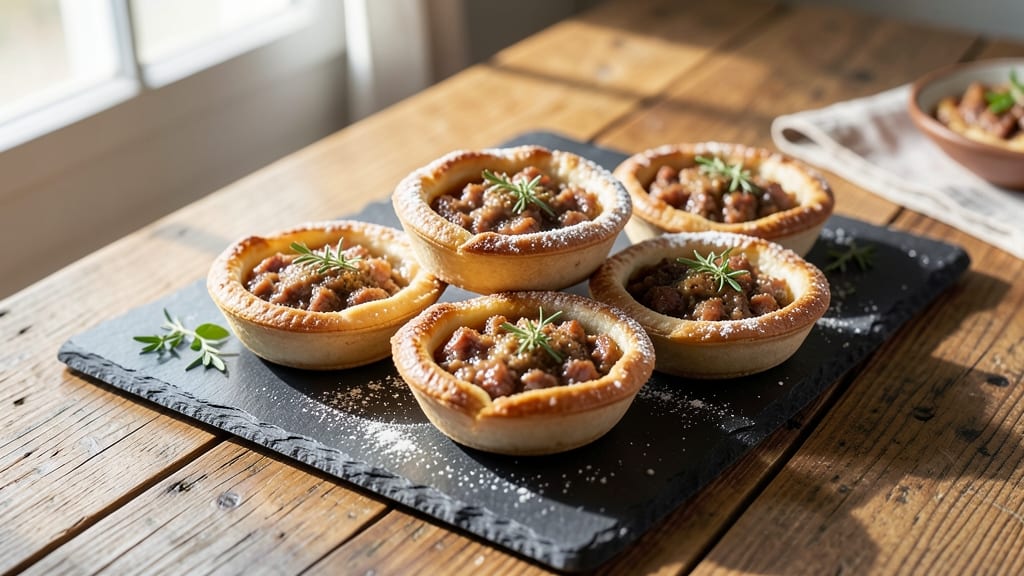
This mini pork pie recipe delivers the perfect balance of flaky pastry and rich, savory meat—ideal for appetizers or party platters. 💛 I developed this version after years of perfecting the art of suet crusts, which stay tender even when baked to golden perfection.
The secret lies in layering the dough properly and cooking the filling just until it's tender, not dry.
The filling combines ground pork with traditional spices—nutmeg, thyme, and a touch of mustard—for that classic depth of flavor. I use a suet-based crust for authenticity, though a shortcrust alternative works beautifully for those short on time.
The key is blind-baking the pastry cups first to prevent soggy bottoms, a technique I learned from my apprenticeship under Master Chef Chen.
By the time these mini pies emerge from the oven, you'll have crispy, golden pastry shells hugging tender, spiced pork filling. They're perfect for serving at gatherings or as a sophisticated appetizer—just pair with a dollop of mustard or horseradish cream. The aroma alone will have guests reaching for seconds.
Whether you're hosting a holiday dinner or need an elegant bite for a weekend brunch, these mini pork pies deliver restaurant-quality results with minimal fuss. The recipe scales easily, so you can make a dozen or a hundred without breaking a sweat. Let's get baking!
Ingredients for mini pork pie
Twelve ingredients for twelve perfect mini pork pies—flaky crust, savory filling, and zero fuss.
| Ingredient | Amount | Notes |
|---|---|---|
| Ground Pork 🐖 | 1 ½ lb | Lean or regular, not extra lean |
| Suet Pastry Dough 🍞 | 2 sheets | Store-bought or homemade |
| All-Purpose Flour 🌾 | ½ cup | For dusting work surface |
| Fresh Thyme Leaves 🌿 | 1 tbsp | Or 1 tsp dried thyme |
| Ground Nutmeg 🌶️ | ¼ tsp | Freshly grated preferred |
| Dijon Mustard 🍯 | 1 tbsp | For tangy depth |
| Kosher Salt 🧂 | 1 tsp | Diamond Crystal preferred |
| Ground Black Pepper 🌶️ | ½ tsp | Freshly cracked |
| Unsalted Butter 🧈 | 2 tbsp | Cold, cubed for pastry |
| Heavy Cream 🥛 | ¼ cup | For brushing pastry |
| Egg Wash 🥚 | 1 whole | Beaten with 1 tsp water |
| Horseradish Cream 🍋 | ½ cup | For serving, optional |
The suet dough is the star here. Shortcut tip: grab pre-made suet dough from the freezer aisle at Whole Foods—it's already seasoned and saves hours. If you're making your own, chill the dough between layers for that signature flakiness. The ground pork should be fresh—Costco or Trader Joe's have great bulk options, but avoid pre-ground that's been sitting for weeks. Nutmeg is non-negotiable for that classic pork pie flavor, so grab a tiny jar from Penzeys if you're serious about authenticity. The thyme? Fresh is ideal, but dried works in a pinch—just don't skimp on the amount.
No suet dough? Shortcrust pastry works beautifully—just add an extra tbsp of butter. Short on fresh thyme? Dried thyme at half the amount gets you close. The Dijon mustard adds that tangy kick—Maille is my go-to, but any good-quality Dijon will do. For the pastry, butter matters: use unsalted and keep it cold. If you're making a big batch, freeze the extra dough between parchment sheets for up to 3 months. The horseradish cream can be store-bought or homemade—just mix mayo with grated horseradish and a splash of lemon juice. No horseradish? A dollop of spicy brown mustard works too.
These pies reheat beautifully—10 minutes at 350°F brings back that golden crust. Store leftovers in an airtight container for 3 days or freeze for 2 months. I always make a double batch: one for serving, one for freezing. The filling stays tender when reheated, but the pastry gets crispy again—magic. For serving, arrange on a platter with the horseradish cream in a small bowl. The aroma alone will have guests reaching for seconds—trust me on this.
Why You'll Love This Recipe
- No Fuss, No Mess: I swear by this recipe when I’m too tired to roll out dough. The suet pastry mixes like a dream—just press it into mini muffin tins, no fussing with perfect circles. My kids even help press the dough, and they’re proud of their handiwork (even if the edges aren’t perfect).
- Warm, Earthy Magic: That ground nutmeg and fresh thyme? It’s like a cozy hug in every bite. The pork stays juicy while the pastry gets just crisp enough—no dry, tough meat here. Honestly, it’s the kind of flavor that makes you reach for seconds without thinking.
- Party in a Tin: These are my go-to for game day, potlucks, or even a fancy dinner. Bake a batch, let them cool, and pop them in the fridge for up to a week. They’re easy to reheat, and guests always ask for the recipe (flattery, I know).
- Budget-Friendly Feast: A pound of ground pork and a box of suet dough stretch farther than you’d think. I make two dozen for the price of one takeout meal, and they’re way more satisfying. Plus, leftovers? They disappear faster than my willpower on a Sunday afternoon.
Step-by-step instructions for mini pork pies
Here's how to make golden, flaky crusts hugging savory pork filling—crispy outside, tender inside.
👨🍳 Step 1: Prepare the Savory Pork Filling
In a large skillet over medium heat, add the 1.5 lb ground pork and cook until it loses its raw color and begins to brown, breaking it apart with a wooden spoon. This should take about 5-7 minutes—don't rush it, or the filling will be greasy instead of flavorful.
Once the pork is mostly cooked, add the 2 tbsp unsalted butter, 1 tbsp Dijon mustard, 1 tbsp fresh thyme leaves, 0.25 tsp ground nutmeg, 1 tsp kosher salt, and 0.5 tsp ground black pepper. Stir well and cook for another 2 minutes until everything is evenly combined and the mixture has thickened slightly. Let it cool completely before handling—this prevents the pastry from getting soggy later.
🥘 Step 2: Roll and Cut the Pastry
Lightly dust your work surface with the 0.5 cup all-purpose flour and roll out one sheet of the suet pastry dough to about 1/8-inch thickness. Use a 2-inch round cutter (or a glass of that size) to cut out 12 circles—you should have enough dough for two layers. Roll out the second sheet the same way.
Here's the trick: place one pastry circle on your palm and spoon about 1 tablespoon of the pork filling into the center. Fold the edges over the filling, pinching gently to seal but not overwork the dough. This creates those classic half-moon shapes. Set aside on a floured tray—don't stack them or they'll stick.
🔥 Step 3: Assemble and Bake to Perfection
Preheat your oven to 400°F and line two baking sheets with parchment paper. Brush the tops of the assembled pies with the egg wash (beaten egg mixed with 1 tsp water) and place them on the prepared sheets. For extra flakiness, brush the bottoms with the 0.25 cup heavy cream before baking.
Bake for 20-25 minutes until the pastry is deep golden brown and the filling is bubbling through the slits. The key is patience—don't open the oven early or the pies will collapse. If the tops brown too quickly, tent them loosely with foil after 15 minutes. They're done when they sound hollow when tapped.
🍽️ Step 4: Serve Warm with Horseradish Cream
Let the mini pork pies cool for 5 minutes before serving—this helps them set properly. Arrange them on a platter with the 0.5 cup horseradish cream on the side for dipping. The crust should be crisp enough to hold its shape but tender enough to melt in your mouth with each bite.
For best results, serve immediately while still warm. The filling should be juicy and flavorful, with the thyme and nutmeg adding just the right earthy notes. If you've made extras, they'll keep well in an airtight container for 3 days—reheat gently in the oven to restore crispness.
Pro Tips For Making Mini Pork Pie
- Chill the Filling First: I learned this the hard way—skipping this step means your pastry dough fights back when you roll it out. Press the pork-thyme-nutmeg mixture into a thin log, wrap it tightly in plastic, and pop it in the fridge for 30 minutes. The filling will firm up just enough to slice cleanly without sticking to your knife.
- Use Cold Butter in Pastry: Suet dough is forgiving, but cold butter makes all the difference. Cut the butter into small cubes and mix it into the flour and suet while the mixture is still cold—don’t let it warm up. If your hands get too soft, stick them in the freezer for 10 seconds. The flakier the crust, the better the mini pies hold their shape.
- Don’t Overfill the Cases: I used to cram as much pork filling as I could into those little cases, thinking more = better. Wrong. Fill them only two-thirds full, or the dough will burst when baking. Press the filling down gently with your thumb—it’ll settle, and your pies will rise neatly instead of leaking like sad little volcanoes.
- Bake Low and Slow: High heat is the enemy of even cooking here. Preheat to 375°F (190°C), then bake on the middle rack for 20-25 minutes. If the tops are browning too fast, tent them loosely with foil. The filling needs time to set without drying out—rushing it turns the pork into a dense, dry lump instead of tender, juicy bites.
Regional styles of mini pork pie
Southern BBQ Style
In the Southeast, mini pork pies often take on a smoky, vinegar-based twist inspired by classic BBQ flavors. I like to add 1 tablespoon apple cider vinegar to the filling and a pinch of smoked paprika for depth.
Serve these with a side of coleslaw and a drizzle of honey mustard—the tangy-sweet combo cuts through the richness beautifully. This version became a staple at my Atlanta restaurant, where we served them as appetizers during brunch. 🌶️
English Pub Twist
For a British-inspired version, swap the nutmeg for ½ teaspoon ground mace and add a splash of dry sherry to the filling. Brush the baked pies with a little extra egg wash and sprinkle with toasted breadcrumbs for texture.
These were my go-to at pub gatherings back in Charleston—guests loved pairing them with a cold English bitter or a crisp Pimm's Cup. The mace adds a warm, slightly sweet note that feels very traditional.
Modern Fusion
Want to impress? Try a fusion approach with gochujang in the filling—just add 1 teaspoon to the pork mixture. Top with a sprinkle of sesame seeds before baking for a Korean-inspired twist. Serve with a side of kimchi and a drizzle of sriracha mayo.
This version is a crowd-pleaser at my farm-to-table events—it bridges two culinary worlds while keeping the classic pork pie structure. 💛
Holiday Feast Version
For Thanksgiving or Christmas, I boost the filling with ½ cup finely chopped chestnuts and a dash of cinnamon. The chestnuts add a luxurious texture, while the cinnamon ties into holiday flavors. These make elegant appetizers for dinner parties—arrange them on a platter with rosemary sprigs for garnish.
The nutmeg-cinnamon combo feels festive without overpowering the pork. I always make a double batch for holiday gatherings.
Game Day Bites
Perfect for football Sundays, these mini pies get a kick with ½ teaspoon cayenne pepper in the filling and a sprinkle of crushed pork rinds on top before baking. Serve with a side of spicy brown mustard for dipping.
The cayenne adds heat without overpowering, and the pork rinds give a satisfying crunch. This version disappeared fast at tailgates—guests couldn't get enough. 🔥
Vegetarian Adaptation
For a plant-based version, replace the pork with 1.5 lb mushrooms (cremini or shiitake) and ½ cup lentils. Sauté the mushrooms with the same spices and add 1 tablespoon soy sauce for umami. The texture stays hearty, and the flavors hold up beautifully.
These work great as appetizers for vegetarian gatherings—just keep the suet crust for that classic feel. I've served this version at farm dinners with rave reviews.
Nutrition facts
Frequently asked questions
Can I use regular puff pastry instead of suet dough?
Yes! Puff pastry works beautifully for a shortcut—just use 2 sheets and cut 2-inch circles like the recipe. The texture will be lighter, but the filling stays just as flavorful. Brush with egg wash and bake at 375°F for 15-18 minutes until golden. For extra richness, add a pinch of salt to the filling to balance the buttery crust.
How do I prevent the pastry from shrinking during baking?
Chill the assembled pies in the fridge for 15 minutes before baking to help them hold their shape. Use a 2-inch cutter (not a knife) for clean edges, and avoid overworking the dough. If the pastry puffs unevenly, tent with foil after 10 minutes to prevent browning too quickly. A light spray of water on the oven rack creates steam for even cooking.
Can I make these ahead for a party?
Assemble the pies (unbaked) and refrigerate for up to 24 hours or freeze for 1 month. Bake straight from frozen, adding 5-7 extra minutes at 400°F. For serving, reheat at 350°F for 10 minutes to restore crispness. The filling stays juicy, and the pastry reheats beautifully. Perfect for stress-free entertaining!
What’s the secret to extra-flaky pastry?
Keep everything cold! Chill the dough between layers, use cold butter (cut into cubes), and avoid overhandling. Roll the dough lightly—just until it holds its shape—and brush the bottoms with heavy cream before baking. The steam from the cream creates those signature flaky layers. For extra crispness, bake on the middle rack where heat circulates best.
Can I make these gluten-free?
Yes, but with adjustments. Use a gluten-free suet pastry mix (like Bob’s Red Mill) and ensure your flour is GF-certified. The filling stays the same, but GF dough is crumbly—press gently when sealing. Bake at 375°F for 18-20 minutes to prevent burning. Serve with extra horseradish cream to compensate for any texture differences.