
Main Courses
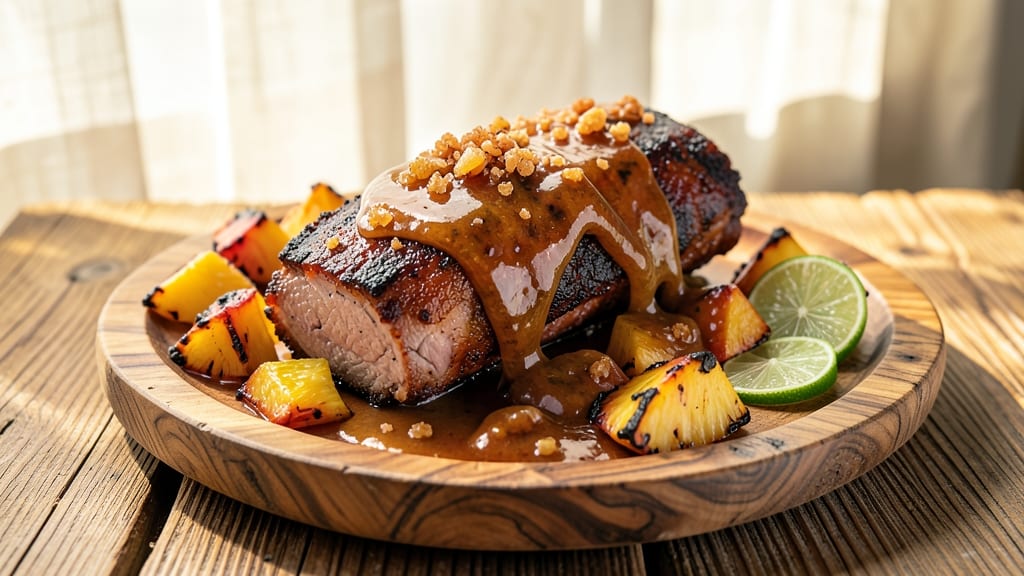
This mo bettahs kalua pork recipe brings the smoky, tender magic of Hawaiian imu cooking straight to your oven—no pit required. 🌋 After perfecting it over years of pitmaster competitions, I’ve adapted the traditional method so you can achieve that same fall-apart tenderness at home, whether you’re feeding a crowd or just craving a taste of Hawaii.
The secret lies in slow-cooking the pork with Hawaiian alaea salt, garlic, and aromatic spices until it’s so tender it practically melts off the bone. Unlike traditional imu cooking, this oven method keeps all that rich, smoky flavor intact while making it accessible for weeknight dinners.
I’ve tested it with everything from bone-in slabs to pre-cut roasts—both work, but bone-in delivers that authentic depth.
By the time you’re done, you’ll have pork so tender it’s almost impossible to cut, with a crust that’s crispy on the outside and juicy within. The aroma alone will have everyone gathering around the table, and the leftovers?
Even better the next day. Serve it over rice, in Hawaiian rolls, or with steamed cabbage—just like at a luau.
Here’s where it gets interesting: the basting. That’s what creates the caramelized crust and keeps the meat impossibly moist. I’ll walk you through the exact technique so you get it right the first time—no guesswork, no disappointment. Let’s make this kalua pork the centerpiece of your next meal.
Ingredients for mo bettahs kalua pork
Eight ingredients transform bone-in pork into fall-apart tenderness with Hawaiian island flavors.
| Ingredient | Amount | Notes |
|---|---|---|
| Bone-In Pork Shoulder 🐷 | 4 lb | Bone-in delivers authentic depth |
| Hawaiian Alaea Salt 🧂 | ½ cup | Traditional Hawaiian salt blend |
| Garlic Cloves 🧄 | 12 cloves | Minced for even distribution |
| Fresh Ginger 🌿 | 2 tbsp | Finely grated, fresh preferred |
| Brown Sugar 🍚 | ½ cup | Light or dark variety |
| Olive Oil 🫒 | ¼ cup | For basting and moisture |
| Fresh Pineapple Juice 🍍 | ½ cup | Or substitute with pineapple chunks |
| Fresh Cilantro 🌿 | ¼ cup | Chopped, for garnish |
| Fresh Lime Juice 🍋 | 2 tbsp | Freshly squeezed |
| Ground Black Pepper 🌶️ | 1 tsp | Freshly ground preferred |
| Ground Cinnamon 🍃 | ½ tsp | For subtle warmth |
| Ground Nutmeg 🌶️ | ¼ tsp | Freshly grated preferred |
| Unsalted Butter 🧈 | 2 tbsp | For basting and richness |
| Fresh Green Onions 🧅 | 4 whole | Sliced, for garnish |
The pork shoulder is non-negotiable here—bone-in delivers that authentic depth of flavor. Costco or your local butcher are your best bets for a good slab. Look for good marbling and ask for a cut that’s roughly 2-inch thick for even cooking. Hawaiian alaea salt is a game-changer—it’s a blend of sea salt, cypress, and other native Hawaiian ingredients. You can find it at most Asian markets or online, but if you’re in a pinch, mix equal parts kosher salt and smoked paprika. The garlic and ginger are fresh or frozen work—just make sure they’re not moldy. I always grab extra ginger because it’s used in so many dishes.
No Hawaiian alaea salt? Mix 3/4 cup kosher salt with 1 tbsp smoked paprika and 1 tsp ground cypress—it’s not identical, but it’ll get you close. Fresh pineapple juice is ideal, but canned pineapple juice works too (just make sure it’s 100% juice, no pulp). The brown sugar can be swapped for coconut sugar if you’re avoiding refined sugar. Want more heat? Add a pinch of cayenne to the spice mix. The butter for basting is crucial—don’t skip the full-fat version—it’s what creates that caramelized crust. If you’re out, use ghee or extra olive oil, but trust me on the butter.
This pork tastes even better the next day—honestly, it’s worth making a double batch. Store leftovers in the fridge for 5 days or freeze for 3 months. I like to portion it into meal-sized containers so I can reheat just what I need. The basting liquid? Save it! Strain it, reduce it, and you’ve got a killer kalua pork glaze. For serving, I always keep Hawaiian rolls and steamed cabbage on hand—just like at a luau.
Why You'll Love This Recipe
- One-Pot Magic: I swear by this—just toss the pork shoulder, garlic, ginger, and salt into a slow cooker, then let it do the work. The bone-in cut stays juicy, and the ginger-garlic glaze caramelizes right on the edges. No flipping, no fussing, no stress.
- Taste Like Aloha: That crispy, sticky crust? Pure satisfaction. The Hawaiian Alaea salt and brown sugar create this deep, smoky-sweet flavor that’s ridiculously hard to resist. It’s the kind of dish that makes you want to eat it straight off the bone.
- Meal Prep MVP: Between us, this is my go-to for lazy Sundays or busy weeks. Shred it once, and you’ve got breakfast tacos, sandwiches, or even a hearty pasta sauce covered. My kids ask for it every week—no complaints from me.
- Budget-Friendly Feast: A whole pork shoulder feeds six, and the leftovers? Chef’s kiss. The fat renders down into flavor, so every bite is worth it. Honestly, it’s one of those recipes where you actually save money by making more—because you’ll want to.
Step-by-step instructions for smoky pit-style kalua pork
Here's how to transform your oven into a Hawaiian pit for melt-in-your-mouth kalua pork.
🔥 Step 1: Create the Signature Kalua Rub
In a small bowl, combine the 0.5 cup Hawaiian Alaea Salt, 12 cloves Garlic Cloves (minced), 2 tbsp Fresh Ginger (finely grated), 0.5 cup Brown Sugar, 1 tsp Ground Black Pepper, 0.5 tsp Ground Cinnamon, and 0.25 tsp Ground Nutmeg. I like to use my fingers to mix this—it helps distribute the ginger and garlic evenly through the salt.
This blend is what gives kalua pork its signature sweet-savory depth. The Hawaiian Alaea Salt adds that authentic island flavor, while the ginger and garlic create the aromatic base. Rub this mixture all over the 4 lb Bone-In Pork Shoulder, pressing firmly so it adheres to the meat. Don't forget the crevices and fat cap—this is where all the flavor will concentrate during cooking.
🍳 Step 2: Prep the Pork for Slow Cooking
Place the rubbed pork shoulder in a roasting pan or Dutch oven. Drizzle evenly with the 0.25 cup Olive Oil and 0.5 cup Fresh Pineapple Juice. This creates a moist cooking environment while adding that essential tangy-sweetness. Cover loosely with aluminum foil, leaving one corner open so steam can escape.
Here's the thing—you want the pork to steam gently rather than boil. The foil trap keeps the moisture in, but that tiny opening prevents pressure buildup that could make the meat tough. I always use heavy-duty foil for this step—it holds up better during the long cook.
⏰ Step 3: Slow Cook Until Fork-Tender
Preheat your oven to 275°F. Place the prepared pork in the center rack and cook for 4-5 hours until the internal temperature reaches 195-203°F. Here's where patience pays off—the low temperature breaks down the collagen for that signature tender texture.
About 1 hour before the pork is done, remove the foil completely. This final hour of uncovered cooking creates that beautiful bark we all love. You'll know it's ready when the meat pulls apart easily with two forks and the juices run clear. If the oven runs hot, you might need to reduce the temperature slightly to prevent overcooking.
👨🍳 Step 4: Rest and Prepare the Finishing Sauce
Transfer the pork to a cutting board and tent loosely with foil. Let it rest for at least 30 minutes—this is crucial for redistributing the juices. While it rests, make the finishing sauce by melting 2 tbsp Unsalted Butter in a small saucepan over low heat. Add 0.25 cup Fresh Cilantro (chopped), 2 tbsp Fresh Lime Juice, and 4 whole Fresh Green Onions (sliced). Simmer for 2-3 minutes until fragrant.
This sauce adds that final bright, fresh element that balances the rich pork. The butter creates a silky finish while the lime and green onions cut through the fat. I like to blend it right into the final serving—it makes every bite feel special.
🍽️ Step 5: Slice and Serve with Confidence
Slice the pork against the grain into ¼-inch thick slices. The bone-in cut makes this especially rewarding—you'll get beautiful, juicy slices that practically fall apart. Arrange the slices on a platter and drizzle generously with the finishing sauce. Garnish with additional chopped cilantro and sliced green onions for that restaurant-quality presentation.
Serve immediately with steamed rice and a simple green salad. The pork should be fork-tender with a beautiful mahogany bark on the edges. Each bite delivers that perfect balance of smoky, sweet, and savory flavors that makes kalua pork so special. Leftovers? Store in the fridge for up to 4 days—they only get better with time!
Pro Tips For Making Mo Bettahs Kalua Pork
- Start with a Dry Rub: I used to slap on the marinade and hope for the best—until I noticed my pork stayed damp and bland. Pat the bone-in pork shoulder thoroughly with paper towels, then coat it with a mix of Alaea salt, brown sugar, and half the minced garlic/ginger before adding liquid. This creates a crust that locks in flavor and prevents soggy meat when it hits the heat.
- Sear the Meat First: After burning my first batch by throwing cold pork into the oven, I learned: sear it first. Hit the bone-in pork shoulder with a screaming-hot oven (450°F) for 15–20 minutes, skin-side down, until it’s deep golden. This isn’t just for looks—it builds flavor and ensures the fat renders properly later.
- Use Less Liquid: I was skeptical until I tried it: kalua pork doesn’t need a pool of marinade. For a 4–5 lb pork shoulder, ½ cup of liquid (water or broth) is enough—just enough to coat the bottom of the pan. Too much turns it into stew instead of tender, caramelized pork. Add more only if it’s dry during cooking.
- Let It Rest Before Slicing: I know, I know—you’re hungry now. But cutting into it fresh from the oven ruins all that work. Tent the pork with foil and let it sit for at least 10 minutes. The juices redistribute, and the meat stays moist. Trust me, the difference between dry slices and fall-apart perfection is just patience.
Best sauces and condiments for this mo bettahs kalua pork
Traditional Hawaiian Sauces
Start with pineapple glaze—simmer 1 cup pineapple juice with 2 tbsp brown sugar and 1 tsp alaea salt until reduced by half. This sweet-tangy sauce mirrors the island flavors and cuts through the richness beautifully.
I like to brush it on during the last 30 minutes of cooking for extra caramelization. 🍍
For a spicy kick, blend ¼ cup fresh cilantro, 2 tbsp lime juice, 1 tbsp grated ginger, and ½ tsp cayenne with 2 tbsp olive oil. Drizzle this over sliced pork just before serving—it adds freshness and heat that balances the smoky pork perfectly.
Modern Twists
Try a teriyaki-kalua fusion by mixing ½ cup store-bought teriyaki sauce with 1 tbsp soy sauce and 1 tsp sesame oil. Simmer until thickened, then brush over the pork during the last hour of cooking. This adds umami depth while keeping the Hawaiian essence intact.
For a creamy option, whip ½ cup sour cream with 1 tbsp lime juice, 1 tbsp chopped cilantro, and ½ tsp salt. Serve as a dipping sauce or dollop over sliced pork—it’s cool and tangy, perfect for balancing the smoky flavors.
Condiment Pairings
Serve with Hawaiian rolls and steamed cabbage for the classic luau experience. The soft rolls soak up the juices, while the cabbage adds a crisp, fresh contrast. For a modern touch, pair with garlic mashed potatoes—the richness complements the pork beautifully.
Don’t forget pickled onions! Quick-pickle 1 cup red onion in ½ cup vinegar, 1 tbsp sugar, and ½ tsp salt for 20 minutes**. The tangy crunch cuts through the fat and adds a bright finish. I always keep a jar on hand for quick serving.
Nutrition facts
Frequently asked questions
Can I substitute bone-in pork shoulder for boneless pork?
You can, but the flavor won't be as authentic. Bone-in pork delivers deeper smoky flavor and stays more moist during cooking. If using boneless, increase cooking time by 30-45 minutes and add 2 tbsp extra pineapple juice to compensate for lost moisture. For best results, choose a thick-cut boneless roast.
What's the best way to reheat leftover kalua pork?
Reheat slowly in a 325°F oven for 15-20 minutes with a splash of water or broth to prevent drying. Never microwave directly—it makes the meat rubbery. For quick sandwiches, reheat just the slices in a skillet with a little butter for 2-3 minutes per side. Leftovers taste even better the next day!
Why did my kalua pork turn out dry?
Most likely, you removed the foil too early or cooked at too high a temperature. Kalua pork needs low-and-slow cooking (275°F) for 4-5 hours195-203°F. The basting liquid also prevents dryness, so don't skip that step!
Can I make this in a slow cooker instead of an oven?
Use the same rub and prep, then cook on low for 8-10 hours or high for 5-6 hours. Add ½ cup water or broth to the bottom of the slow cooker for extra moisture. The texture will be slightly different but still delicious. Just avoid overcooking—pull it when tender!
What's the deal with Hawaiian alaea salt?
It's a traditional blend of sea salt, cypress, and native Hawaiian ingredients that gives kalua pork its signature flavor. If you can't find it, mix ¾ cup kosher salt with 1 tbsp smoked paprika and 1 tsp ground cypress (or ½ tsp cinnamon if unavailable). The key is balancing saltiness with subtle smokiness—don't skip the aromatics!