
Main Courses
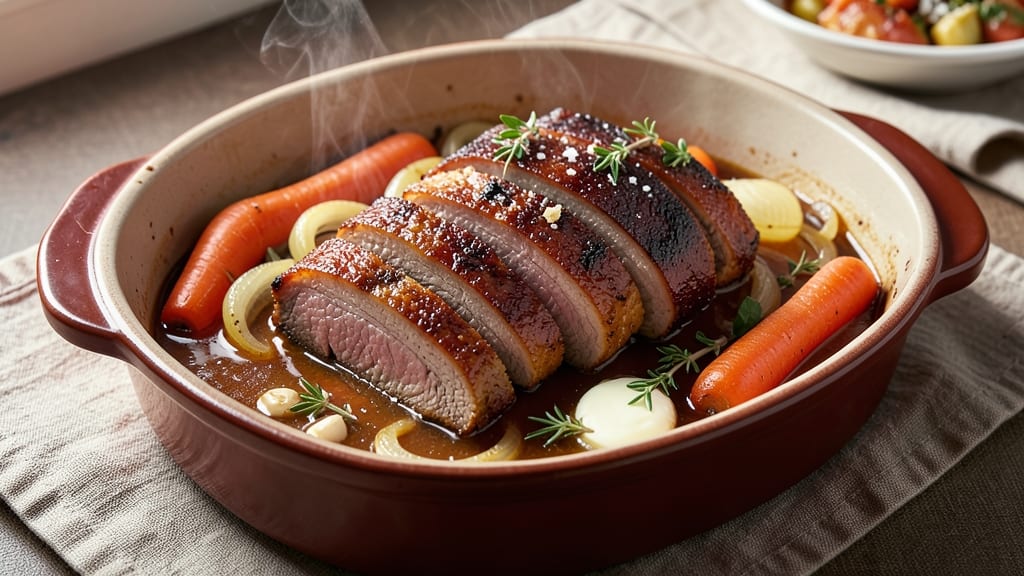
This apple cider braised pork recipe transforms tough cuts into melt-in-your-mouth perfection through a slow-cooked spice-infused apple cider bath. After years of perfecting this technique in my kitchen and on the pit, I've developed a method that delivers restaurant-quality results at home with just a Dutch oven and patience.
The key lies in searing the pork first to build deep flavor, then braising it low and slow until the meat practically falls apart at the touch of a fork.
What makes this recipe special is the balance between traditional techniques and modern convenience. We start with a proper sear to develop a rich, caramelized crust on the pork, then deglaze the pan to capture every precious bit of flavor.
The apple cider—seasoned with cinnamon, cloves, and a touch of thyme—becomes the tenderizing liquid that transforms tough pork shoulder into succulent, fork-tender meat. This isn't just braised pork; it's a complete meal with aromatic vegetables and a sauce that's rich enough to spoon.
The result is pork that's so tender it practically dissolves on your tongue, infused with warm apple cider flavors that bring comfort to every bite. The sauce reduces to a perfect consistency, coating each piece of pork in a glossy, spiced glaze.
This is the kind of dish that transforms an ordinary weeknight into a special occasion—without requiring hours in the kitchen or expensive ingredients. The technique is straightforward, but the results are extraordinary, making it perfect for both weeknight dinners and holiday gatherings.
Whether you're cooking for family or treating yourself to a special meal, this apple cider braised pork delivers satisfaction in every bite. The method is designed to be approachable for home cooks while still delivering professional-level results.
Let's get started on creating this showstopping centerpiece that will have everyone asking for seconds.
Ingredients for apple cider braised pork
Six pounds of pork shoulder transforms into melt-in-your-mouth perfection with these 15 ingredients.
| Ingredient | Amount | Notes |
|---|---|---|
| Pork Shoulder (Boston Butt) 🥩 | 4 lb | Bone-in for best flavor |
| Unsalted Butter 🧈 | ½ cup | Cold, cut into 1-inch pieces |
| Yellow Onion 🧅 | 1 whole | Cut into 1-inch chunks |
| Carrots 🥕 | 1 lb | Cut into 2-inch chunks |
| Garlic Cloves 🧄 | 6 cloves | Smashed with side of knife |
| Apple Cider 🍎 | 3 cups | Unfiltered, spiced variety preferred |
| Dry Red Wine 🍷 | 1 cup | Bold, like Cabernet Sauvignon |
| Beef Broth 🥄 | 1 cup | Low-sodium preferred |
| Ground Black Pepper 🌶️ | 1 tbsp | Freshly cracked |
| Diamond Crystal Kosher Salt 🧂 | 1 ½ tbsp | For seasoning and braising |
| Ground Cinnamon 🌿 | 1 tsp | Freshly toasted for depth |
| Ground Cloves 🌶️ | ½ tsp | Whole cloves crushed lightly |
| Fresh Thyme Sprigs 🌿 | 4 whole | Stems intact for easy removal |
| Fresh Rosemary Sprigs 🌿 | 2 whole | Woody stems for aroma |
| All-Purpose Flour 🌾 | 2 tbsp | For dredging pork |
The pork shoulder is the foundation—look for bone-in cuts with good marbling at Whole Foods or your local butcher. A 4-pound bone-in shoulder gives you generous servings, while pre-cut chuck roast works in a pinch. The butter matters too: European-style unsalted butter from Plugrá or Land O'Lakes adds richness. Fresh herbs should be vibrant and fragrant—rosemary with needle-like leaves and thyme with fuzzy stems are non-negotiable. For the apple cider, Woodchuck Hard Cider or Angry Orchard deliver that perfect balance of sweetness and acidity that tenderizes the meat beautifully.
No red wine? Dry white wine or extra beef broth works in a bind, though the depth of red is ideal. Substituting dried herbs? Use one-third the amount of fresh—so 1 teaspoon dried thyme for 3 sprigs fresh. The flour is just for dredging, but if you're avoiding gluten, arrowroot powder works perfectly. For the carrots, orange or purple varieties add visual interest, though regular carrots work fine. The cinnamon and cloves should be whole and aromatic—grinding them yourself right before adding releases their essential oils. If you can't find fresh rosemary, dried rosemary at half the amount is acceptable, though it lacks the same depth of flavor.
Pork shoulder keeps 3-4 days in the fridge once cut, so plan ahead. The fresh herbs? Wrap them in damp paper towels and store in a sealed container for up to 5 days. The braising liquid reduces significantly, but you'll have enough for leftovers that reheat beautifully—simply warm in the same Dutch oven with a splash of water. For meal prep, portion the pork and sauce into glass containers and freeze for up to 3 months. The flavors only deepen with time, making this an ideal make-ahead dish for holiday gatherings or busy weeknights.
Why You'll Love This Recipe
- One-Pot Magic: I swear by this—just sear the pork, toss in onions, carrots, and garlic, then let the cider do the work. No flipping pans, no stress, and the house smells like autumn in 10 minutes.
- Sweet-Savory Crunch: That caramelized pork with tender onions and the bright tang of apple cider? It’s the kind of dish where every bite has texture—crispy edges, juicy meat, and just enough sweetness to make you linger.
- Leftovers That Shine: Between us, this is my lazy Sunday secret. Braise a big batch, and you’ve got sandwiches, tacos, or even a hearty salad topper for days. (Yes, even on a Tuesday night.)
- Budget Hero: Pork shoulder stretches for miles, and apple cider’s cheap at the store. Here’s what sold me—it’s a fancy-tasting meal for half the price of takeout, and my wallet thanks me every time.
Step-by-step instructions for apple cider braised pork
This method transforms tough pork shoulder into melt-in-your-mouth perfection using apple cider's natural sweetness and acidity.
Prepare the Pork for Maximum Flavor and Tenderization
Pat the 4 lb pork shoulder (Boston Butt) completely dry with paper towels—this ensures a proper sear and prevents steam from forming, which would dilute your flavors. Place the meat on a cutting board and make a pocket by inserting your fingers about 2 inches deep into the thickest part. Slide in the 0.5 cup unsalted butter, then sprinkle inside with 1 tbsp ground black pepper, 1.5 tbsp Diamond Crystal kosher salt, 1 tsp ground cinnamon, and 0.5 tsp ground cloves. This spiced butter infusion works its magic during the long cook, creating deep flavor from within.
Next, dredge the pork in 2 tbsp all-purpose flour, pressing the flour into every crevice. This creates a golden crust that locks in moisture and adds body to the braising liquid. Place the seasoned pork on a rack set over a rimmed baking sheet—this allows air to circulate underneath, promoting even browning.
Sear the Pork to Build Deep Flavor
Heat a Dutch oven or heavy pot over medium-high heat until it's smoking hot. Add the pork and sear for 8-10 minutes per side until it develops a deep, mahogany crust. Don't rush this step—you want the exterior to reach 160°F internally before moving to the next phase. The crust you create here will become the foundation of your braised dish, adding richness and texture.
Once browned, remove the pork and set it aside. Reduce the heat to medium and add the 1 whole yellow onion and 1 lb carrots (cut into 2-inch chunks). Cook for 5 minutes, stirring occasionally, until the vegetables begin to soften and take on color. Add the 6 smashed garlic cloves and cook for another 30 seconds until fragrant—this ensures their flavors meld into the base of your braise.
Deglaze and Build the Braising Liquid
Pour in the 1 cup dry red wine, scraping up all the browned bits from the bottom of the pot with a wooden spoon. This deglazing step captures all the caramelized flavor that would otherwise be lost. Let the wine simmer for 3-4 minutes until reduced by half, then add the 3 cups apple cider and 1 cup beef broth. The liquid should come up about halfway to the top of the pork—this ensures even cooking without steaming.
Return the pork to the pot, fat-side up, then add the 4 whole fresh thyme sprigs and 2 whole fresh rosemary sprigs. The herbs should float freely in the liquid, infusing their aromatic oils without overpowering the dish. Bring the mixture to a gentle simmer, then cover the pot and transfer it to a 325°F oven.
Braise Until Fork-Tender
Braise the pork for 3-3.5 hours, checking occasionally to ensure there's always liquid in the pot. If it reduces too much, add ½ cup hot water to maintain moisture. The pork is ready when it reaches an internal temperature of 203°F and a fork slides in like butter with no resistance. This long, slow cook transforms the tough connective tissue into silky strands that practically melt at the touch.
Real talk: Your kitchen will smell incredible during this process. The apple cider and spices create a fragrance that's equal parts comforting and festive. The pork should be so tender that it falls apart easily when pulled with two forks, and the braising liquid should have thickened into a rich, glossy sauce.
Rest and Serve with Pan Sauce
Remove the pork from the pot and transfer it to a cutting board. Tent loosely with foil and let it rest for 20-30 minutes—this crucial step allows the juices to redistribute throughout the meat. Skim any excess fat from the braising liquid, then strain it through a fine-mesh sieve into a clean saucepan. Return the sauce to medium heat and simmer for 5-7 minutes until slightly thickened.
Slice the pork against the grain into ½-inch thick pieces, then arrange on a platter. Spoon the reduced sauce over the top and serve immediately with the pan-seared vegetables. Each bite should deliver tender, flavorful pork with a sauce that's rich, slightly sweet, and infused with warm spices. The contrast between the melt-in-your-mouth texture and the crisp edges of the vegetables makes this dish truly special.
Pro Tips For Making Apple Cider Braised Pork
- Sear the Pork Hard: The butter will brown the pork beautifully, but only if you push the pan—high heat, no rushing. I used to pull back when it started smoking, but now I let it go until the edges of the pork turn deep golden. That crust locks in flavor when the cider braises later.
- Cut Carrots in Chunks: Thin slices turn to mush; big chunks hold their shape. Aim for 1-inch pieces—they’ll soften perfectly by the end but still have bite. (Yes, even if you’re impatient like me, resist the urge to dice them smaller.)
- Deglaze Aggressively: After searing, don’t just splash in the cider—scrape every last bit of fond from the pan with a wooden spoon. That browned butter and meat bits dissolve into the cider, making the sauce richer. I learned this the hard way when my first batch tasted bland.
- Salt the Pork Twice: Season the pork shoulder before searing, then add another pinch of salt when you return it to the pot with the cider. The first layer gets absorbed during the initial cook, and the second layer ensures it’s properly seasoned by the end. (Your future self will thank you.)
Storing and reheating this apple cider braised pork
Fridge Storage Essentials
Once your braised pork has rested, transfer it to an airtight glass container—I swear by Pyrex with snap-on lids—and store it in the fridge for up to 4 days. The sauce and pork stay perfectly harmonized, with flavors deepening overnight.
For the veggies, keep them in the same braising liquid or store separately in a sealed container. Pro tip: Add a splash of apple cider when reheating to maintain that signature richness. 🥄
Freezer Magic
This dish freezes like a dream for up to 3 months—ideal for holiday prep or lazy weeknights. Portion into quart-sized freezer bags (leave 1-inch headspace for expansion) or glass containers.
When ready to eat, thaw overnight in the fridge, then reheat gently. The texture remains tender, though the sauce may thicken slightly—just add 2-3 tablespoons of water while reheating. 🧊
Reheating Perfection
For fridge-to-table reheating, transfer pork and sauce to a Dutch oven over medium-low heat. Warm gently for 10-12 minutes, stirring occasionally, until reaching 165°F internal temperature. Never microwave—it turns the sauce rubbery.
For freezer-to-table, add ½ cup water or apple cider to prevent drying. The slow reheat preserves that melt-in-your-mouth texture you worked so hard to achieve. ⏰
Sauce Rescue Tips
If your sauce looks too thick after reheating, thin it with warm apple cider or beef broth—just 1 tablespoon at a time. For extra richness, whisk in 1 tablespoon cold butter at the end.
I also keep a small jar of spiced apple cider reduction (simmer ½ cup cider with ½ tsp cinnamon) on hand to drizzle over reheated pork for that restaurant-quality finish. 💛
Make-Ahead Secrets
Prep the pork up to 24 hours ahead and refrigerate uncovered for 12 hours before braising—this enhances flavor development. For freezer prep, assemble the dish (including sauce) in a heavy-duty freezer bag, then freeze.
When ready to cook, transfer straight to the oven from frozen, adding 30-45 minutes to the braising time. This is my go-to for Thanksgiving leftovers—just reheat and serve! 📅
Portion Control
For individual servings, divide pork into ½-inch slices and store in small glass containers with 2 tablespoons of sauce. Reheat each portion separately in a small skillet with 1 teaspoon apple cider for 3-4 minutes on medium heat.
This keeps the sauce vibrant and prevents drying. Perfect for lunchboxes or quick dinners when you're short on time. ✨
Nutrition facts
Frequently asked questions
Can I substitute apple cider vinegar for apple cider in this recipe?
While apple cider vinegar adds acidity, it lacks the natural sugars and depth of flavor that make apple cider perfect for braising. The sweetness in cider helps tenderize the pork and balances the spices. If you must substitute, use ½ cup apple cider vinegar plus ½ cup water and add 1 tablespoon honey or brown sugar to mimic the sweetness.
What's the best cut of pork for this recipe?
The ideal cut is a 4-pound bone-in pork shoulder (Boston Butt)—it has the right amount of fat and connective tissue for braising. For quicker results, use a 2-3 pound pork chuck roast, but expect slightly less tender meat. Avoid lean cuts like tenderloin, as they won't become fork-tender through braising.
How do I know when the pork is done?
Use a meat thermometer to check for doneness—pork is perfect at 203°F internal temperature. The meat should also pull apart easily with two forks. If you don't have a thermometer, cut into a small section: if the juices run clear and the meat shreds easily, it's done. Never rely on time alone, as oven temperatures vary.
Can I make this recipe in a slow cooker?
Brown the pork and vegetables in a skillet first, then transfer everything to a 6-quart slow cooker. Cook on low for 8 hours or high for 5-6 hours. The texture will be slightly different but still delicious. For best results, use a Dutch oven insert in your slow cooker to maintain even heat distribution.
What if my braising liquid reduces too quickly?
This happens when the oven runs hot or the pot isn't covered properly. To fix it, add ½ cup hot water or apple cider during cooking. For prevention, use a tight-fitting lid and consider placing a baking sheet on the rack below your Dutch oven to catch drips. The liquid should always cover about half the pork to prevent drying.