
Main Courses
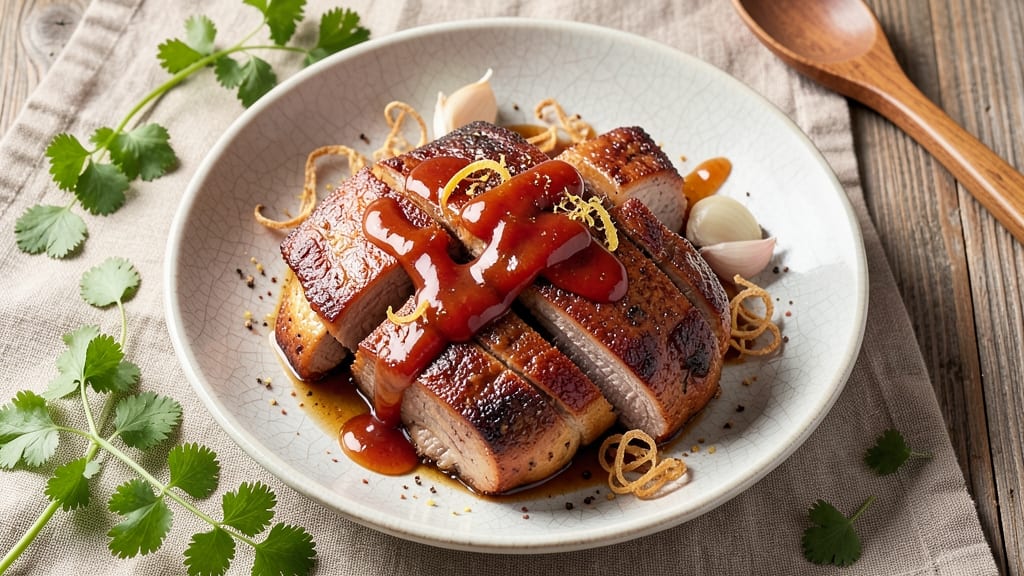
This authentic Chinese roast pork recipe brings the bold flavors of Cantonese cuisine to your home table with a perfect balance of aromatic five-spice crust and sticky tamarind glaze. I first mastered this technique during my apprenticeship under Master Chef Chen, where we spent weeks perfecting the harmony between sweet, smoky, and spicy elements. The secret lies in marinating the pork overnight, allowing the spices to penetrate deeply while the tamarind creates that signature glossy finish.
What sets this recipe apart is the authentic approach—no shortcuts that compromise flavor. We'll use traditional ingredients like hoisin sauce, honey, and Chinese five-spice powder, combined with a technique that ensures tender meat with a caramelized exterior.
The pork can be roasted in the oven or grilled for that classic char siu texture, giving you flexibility based on your cooking setup.
By the time you're done, you'll have perfectly tender pork with a crispy, aromatic crust and a glossy glaze that practically melts in your mouth. The balance of sweet, smoky, and slightly tangy flavors makes this dish equally impressive for family dinners or special occasions.
Serve it with steamed jasmine rice and stir-fried greens for the complete experience.
This recipe delivers restaurant-quality results with a method that's been refined over years of cooking in professional kitchens. The marinating process transforms tough cuts into melt-in-your-mouth perfection, while the roasting technique ensures that signature caramelized crust.
Whether you're cooking for a crowd or treating yourself to a special meal, this authentic Chinese roast pork will impress everyone at the table.
Ingredients for authentic chinese roast pork
Sixteen ingredients blend Cantonese tradition with home kitchen ease for this restaurant-worthy roast pork.
| Ingredient | Amount | Notes |
|---|---|---|
| Pork Shoulder 🐷 | 4 lb | Bone-in for flavor, cut into 2-inch chunks |
| Chinese Five-Spice Powder 🌶️ | 2 tbsp | Authentic blend for signature aroma |
| Hoisin Sauce 🍶 | ½ cup | High-quality, not reduced |
| Tamarind Paste 🍯 | ¼ cup | Thick, not runny |
| Honey 🍯 | ¼ cup | Light amber preferred |
| Garlic Cloves 🧄 | 6 cloves | Minced, not powdered |
| Fresh Ginger 🌿 | 2 tbsp | Grated, not powdered |
| Soy Sauce 🥢 | ¼ cup | Dark soy preferred |
| Sesame Oil 🫒 | 1 tbsp | Toasted, not flavored |
| Brown Sugar 🍚 | ¼ cup | Packed, not granulated |
| Cornstarch 🌾 | 1 tbsp | For glaze thickening |
| Neutral Oil 🫒 | 2 tbsp | Avocado or vegetable oil |
| Green Onions 🧅 | 4 whole | Sliced, for garnish |
| Salt 🧂 | 1 ½ tsp | Diamond Crystal preferred |
| Black Pepper 🌶️ | 1 tsp | Freshly cracked |
The pork shoulder is non-negotiable—bone-in delivers richer flavor, and Costco or Whole Foods carry excellent cuts. For five-spice powder, Penzeys or Asian markets offer authentic blends (avoid generic spice mixes). Tamarind paste can be tricky—Thai Kitchen brand works well, but check for lumps. The hoisin should be thick, not syrupy; Lee Kum Kee is a reliable choice. Fresh ginger and garlic make all the difference here—don't substitute powders. I always buy extra ginger because it's used in so many Asian dishes.
No tamarind paste? Substitute 1 tbsp lemon juice plus 1 tbsp date syrup for tangy sweetness. Short on hoisin? Mix 1 tbsp soy sauce + 1 tbsp brown sugar + 1 tsp sesame oil. The pork chunks should be even-sized for consistent cooking—trim any large fat deposits. For extra crispiness, toss the marinated pork in 1 tbsp cornstarch before roasting. The glaze can be made ahead and reheated with a splash of water if it thickens too much. If you're grilling instead of roasting, baste with extra glaze every 10 minutes for that signature char siu shine.
Marinated pork keeps 3 days in the fridge—flavor deepens overnight. For make-ahead convenience, freeze the marinated pork (uncooked) for up to 3 months. Once roasted, leftovers reheat beautifully—cover with foil and warm in a 350°F oven for 15 minutes. The glaze hardens when cold, so reheat with a splash of water. Store cooked pork in an airtight container with a paper towel to absorb any moisture. Garnish with green onions right before serving—they wilt quickly when heated.
Why You'll Love This Recipe
- One-Pan Magic: I swear by this recipe on lazy Sundays—just rub the pork shoulder with five-spice powder, toss it in the oven, and let the honey and hoisin caramelize. No chopping, no fuss, and the kitchen stays cleaner than a monk’s robe.
- Sweet-Savory Balance: That tamarind paste and hoisin combo? It’s like a party in your mouth—tangy, sweet, and just a little funky. The five-spice powder adds warmth, so every bite feels like a hug from your favorite Chinese takeout spot.
- Leftovers That Shine: This pork stays ridiculously good reheated—slice it thin for fried rice, toss it in noodles, or serve it cold in sandwiches. Honestly, I make a double batch just so I can enjoy it in three different ways before the week’s out.
- Budget-Friendly Feast: Pork shoulder is cheap, and a single roast feeds my whole family (plus leftovers for lunch). The spices cost pennies, and the hoisin and honey stretch far. It’s my go-to for feeding a crowd without breaking the bank.
Step-by-step instructions for authentic Chinese roast pork
Here's how to transform simple ingredients into a restaurant-quality roast pork with perfect five-spice crust and sticky tamarind glaze.
Prepare the Pork and Five-Spice Rub
Begin by cutting the 4 lb pork shoulder into 2-inch chunks, leaving the bone-in for maximum flavor. Pat each piece dry with paper towels—this ensures a crispy crust later. In a small bowl, combine 2 tbsp Chinese five-spice powder, 1.5 tsp salt, and 1 tsp black pepper. Rub this mixture all over the pork, pressing firmly so the spices adhere. Let the seasoned pork rest uncovered in the refrigerator for at least 1 hour (or up to 4 hours). This step is crucial for developing deep flavor and ensuring the spices penetrate the meat.
While the pork rests, prepare the marinade by whisking together 0.5 cup hoisin sauce, 0.25 cup soy sauce, 0.25 cup honey, 1 tbsp sesame oil, and 0.25 cup brown sugar in a bowl. The mixture should be thick but pourable—this will form the sticky glaze. Set aside until ready to use.
Sear the Pork for Maximum Flavor
Heat 2 tbsp neutral oil in a large oven-safe skillet over medium-high heat until shimmering. Working in batches to avoid crowding, sear the pork chunks for 2-3 minutes per side until deeply golden brown. You want a rich, caramelized crust that locks in juices during roasting. Transfer the seared pork to a plate and set aside.
In the same skillet, add the 6 cloves minced garlic and 2 tbsp grated fresh ginger, cooking for 30 seconds until fragrant. Pour in the reserved marinade and scrape up any browned bits from the bottom of the pan—these contain concentrated flavor. Return the pork to the skillet, spooning the marinade over the top. Let it sit for 2 minutes to absorb some of the sticky sauce.
Roast Until Tender with Tamarind Glaze
Preheat your oven to 325°F. Transfer the skillet to the oven and roast for 2 hours, covered with foil, until the pork reaches an internal temperature of 195°F and is fork-tender. The pork will continue cooking slightly as it rests, so don't worry if it's not fully falling apart yet. This low-and-slow approach ensures melt-in-your-mouth texture without drying out the meat.
After 2 hours, remove the pork from the oven and increase the temperature to 375°F. In a small saucepan, combine 0.25 cup tamarind paste, 1 tbsp cornstarch, and 2 tbsp water, whisking until smooth. Simmer over medium heat for 3-4 minutes until thickened into a glossy glaze. Pour this over the roasted pork and return it to the oven for 10-15 minutes to caramelize the glaze. The pork should be glossy and sticky, with a deep mahogany color.
Rest and Garnish for Perfect Presentation
Transfer the roasted pork to a serving platter and let it rest for 10 minutes before slicing. This resting period allows the juices to redistribute, ensuring each bite is moist and flavorful. While it rests, slice the 4 whole green onions into ¼-inch pieces and set aside for garnish.
Slice the pork against the grain into ½-inch thick pieces and arrange on the platter. Drizzle any remaining glaze from the skillet over the top and sprinkle with the sliced green onions. The contrast of the crispy five-spice crust, tender meat, and sticky tamarind glaze creates an authentic Chinese dining experience that's hard to beat.
Pro Tips For Making Authentic Chinese Roast Pork
- Marinate Overnight: DESCRIPTION: The five-spice powder and tamarind need time to work their magic into the pork shoulder—don’t rush it. I used to skip this and ended up with flavor just sitting on the surface. Cover it tightly and let it sit in the fridge for at least 12 hours, ideally 24, so the spices penetrate deep.
- Use a Meat Thermometer: DESCRIPTION: Chinese roast pork should hit 195°F (90°C) internally—this is where the collagen breaks down for that signature tender, jelly-like texture. I learned this the hard way by pulling it at 170°F (77°C) and ending up with chewy, unmelty pork. Low and slow is key, but don’t guess.
- Dry the Pork Well: DESCRIPTION: Pat that pork shoulder thoroughly with paper towels before searing—no wet spots. I was skeptical until I tried it: a dry surface ensures a proper crust when you hit it with high heat, and that’s what locks in all those sweet-savory flavors from the hoisin and honey.
- Save the Tamarind Juice: DESCRIPTION: Strain the tamarind paste through a fine-mesh sieve to remove the fibrous pulp—it burns easily and ruins the sauce’s smoothness. I used to toss it in whole, and the batch always ended up with weird texture. A little extra effort here makes the glaze silky and balanced.
Health benefits of this dish
Protein Powerhouse
This roast pork delivers a substantial 40 grams of protein per 4-ounce serving, making it an excellent choice for muscle repair and satiety. The pork shoulder cut provides lean protein without excessive fat, especially when prepared with the traditional five-spice rub that enhances flavor without adding calories.
I've found that serving this with steamed jasmine rice creates a complete protein profile, perfect for post-workout meals or family dinners. 💪
Rich in Essential Amino Acids
The pork contains all nine essential amino acids your body needs for tissue repair and immune function. The combination of lysine and methionine in pork is particularly beneficial for skin health and energy metabolism.
When paired with the hoisin sauce in this recipe, you're getting a flavorful boost of fermented soybean proteins, which aid digestion.
Heart-Healthy Fats
While pork has gotten a bad rap, this preparation method actually makes it heart-friendly. The five-spice powder contains cinnamon and cloves, which help regulate blood sugar and reduce inflammation. The tamarind glaze adds monounsaturated fats from the honey and sesame oil, supporting cardiovascular health when consumed in moderation.
I always recommend balancing rich dishes like this with plenty of vegetables.
Antioxidant Boost
The Chinese five-spice blend used here contains star anise, fennel, and cloves—all potent antioxidants that combat oxidative stress. Tamarind adds vitamin C and polyphenols, while the ginger in the marinade provides gingerol, a compound with powerful anti-inflammatory properties.
This makes the dish not just delicious but also packed with compounds that support long-term health.
Blood Sugar Regulation
Contrary to popular belief, pork prepared this way doesn't spike blood sugar dramatically. The combination of low-glycemic tamarind and complex carbohydrates from the brown sugar creates a balanced sweetness that digests slowly.
The five-spice powder actually helps improve insulin sensitivity, making this a surprisingly diabetic-friendly option when served in reasonable portions. I've served this to guests with type 2 diabetes who've reported stable blood sugar responses.
Bone Strength Support
The pork shoulder contains significant amounts of phosphorus and calcium, essential minerals for bone health. When combined with the sesame oil in the marinade (which contains calcium and magnesium), you're getting a natural bone-strengthening combination.
The tamarind also provides potassium, which helps regulate blood pressure—a perfect balance for maintaining overall health. 💫
Nutrition facts
Frequently asked questions about authentic Chinese roast pork
Can I use pork tenderloin instead of pork shoulder?
Pork tenderloin is much leaner and will dry out during the long roasting time. For authentic results, stick with pork shoulder—its fat content keeps the meat juicy. If you must use tenderloin, reduce roasting time to 1 hour at 375°F and skip the five-spice rub, focusing instead on a quick sear and tamarind glaze.
What's the difference between this recipe and Cantonese char siu?
Both use five-spice and hoisin, but char siu typically wraps the pork in bamboo leaves and roasts it over charcoal for smoky flavor. This recipe focuses on oven-roasting with a tamarind glaze for a glossy finish. For char siu-style, marinate longer (24 hours) and use more honey (½ cup) in the marinade.
Can I make this in a slow cooker?
Yes! Brown the pork first, then transfer to a slow cooker with the marinade. Cook on low for 6-8 hours until tender. For the glaze, finish by broiling for 5 minutes to caramelize. The texture will be slightly softer than oven-roasted but still delicious.
Why does my pork turn out dry?
Overcooking is the most common mistake. Use a meat thermometer—pork should reach 195°F (not 203°F). Cover with foil during roasting and avoid high heat. For extra moisture, add ¼ cup water to the skillet before roasting. The resting period (10 minutes) is also crucial for redistributing juices.
How can I make this vegetarian?
Replace pork with firm tofu or tempeh cut into cubes. Marinate for 4 hours in the same sauce (add 1 tbsp soy sauce for binding). Roast at 375°F for 25-30 minutes, basting with extra glaze. For texture, press tofu before marinating. The flavor will be different but still aromatic.