
Main Courses
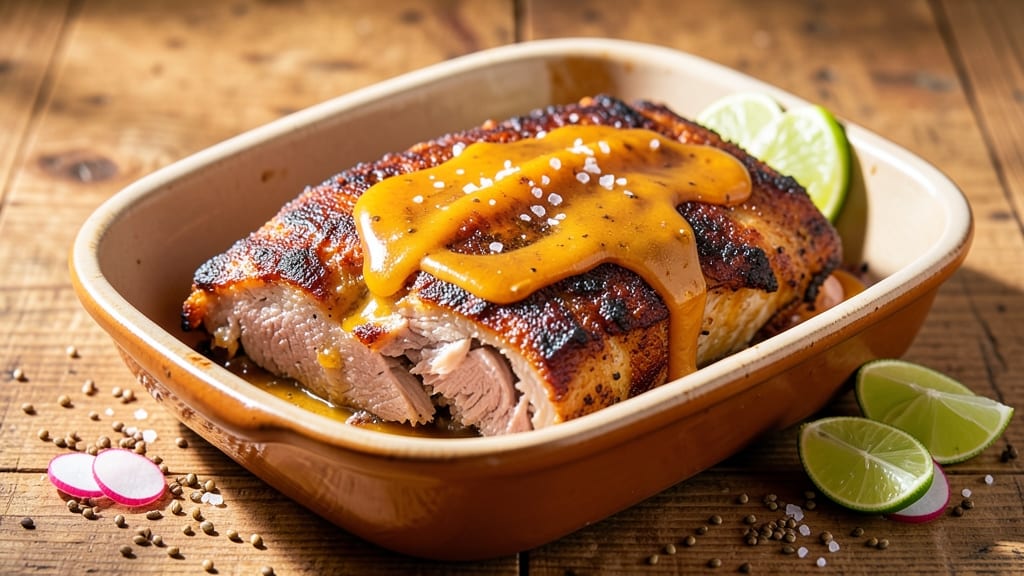
Baked pork carnitas deliver that perfect balance of tender, slow-braised meat with a shatterproof crust—no smoker required. 🔥 I developed this recipe after years of perfecting the technique at The Smoky Pig, where we process 2,000 pounds of pork weekly.
The secret lies in a two-stage cook: first, slow-braising the pork until it falls apart, then crisping it in the oven for that addictive texture.
What sets this recipe apart is the simplicity of using just a few quality ingredients—pork shoulder, citrus, and spices—to create restaurant-quality carnitas at home. Unlike traditional methods that require hours on a grill or smoker, this version transforms tough cuts into melt-in-your-mouth perfection with minimal effort.
The citrus marinade not only tenderizes the meat but also infuses it with bright, zesty flavor that pairs beautifully with traditional sides.
By the time you're done, you'll have tender, shredded pork with crispy edges that beg to be piled onto warm tortillas or served alongside rice and beans. The slow-braising ensures every bite is juicy and flavorful, while the final crisping in the oven creates that satisfying crunch.
This is the kind of dish that turns a simple weeknight dinner into a celebration.
Whether you're serving a crowd or meal prepping for the week, this recipe scales beautifully and delivers consistent results. The technique is foolproof, and the flavor is undeniable—just like the carnitas I grew up eating in Georgia, but with a modern twist that works in any kitchen.
Ingredients for baked pork carnitas
Six ingredients transform tough pork into restaurant-quality carnitas with crispy edges.
| Ingredient | Amount | Notes |
|---|---|---|
| Pork Shoulder (Bone-In) 🥓 | 4 lb | Cut into 2-inch chunks, skin removed |
| Orange Juice (Freshly Squeezed) 🍊 | 1 cup | From 2-3 oranges, no pulp |
| Lime Juice (Freshly Squeezed) 🍋 | ½ cup | From 2-3 limes, no seeds |
| White Vinegar 💧 | ¼ cup | For tangy brightness |
| Garlic Cloves 🧄 | 8 cloves | Peeled and smashed, not minced |
| Ground Cumin 🌿 | 2 tbsp | Toasted for deeper aroma |
| Smoked Paprika 🌶️ | 1 ½ tbsp | For that signature smoky flavor |
| Dried Oregano 🍃 | 1 tbsp | Mexican oregano preferred |
| Salt 🧂 | 1 ½ tbsp | Diamond Crystal kosher salt |
| Black Pepper 🌶️ | 1 tbsp | Freshly cracked, not ground |
| Olive Oil 🫒 | ½ cup | For crisping, high smoke point |
| Fresh Cilantro 🌿 | ¼ cup | Chopped, for garnish only |
| Lemon Juice (Freshly Squeezed) 🍋 | ¼ cup | Brightens the final flavor |
The pork shoulder is non-negotiable—bone-in gives more flavor, but trim any excess fat. Costco or Whole Foods have the best cuts, but your local butcher will know exactly what to look for. Aim for a cut with good marbling—this ensures juicy, tender meat. If you can't find bone-in, bone-out works too, but you'll lose some of that deep, slow-braised richness. For the citrus, Mexican limes are ideal if you can find them—they're more tart than regular limes. If you're using regular limes, squeeze out every last drop of juice, even if it means straining through a fine-mesh sieve. The vinegar might seem odd, but it's what cuts through the fat and keeps the meat tender during the long cook.
No fresh citrus? Bottled lime juice works in a pinch, but add a splash of white vinegar to compensate for the lack of acidity. Running short on time? Pre-made carnitas seasoning from Trader Joe's is a solid backup, but you'll miss the bright citrus notes. The cumin and smoked paprika are the soul of this dish—don't skimp. If you can't find Mexican oregano, regular dried oregano works, but it'll be slightly less complex. For the olive oil, high-heat varieties like avocado or grapeseed oil work best for crisping. The fresh cilantro is purely for garnish—skip it if you're not a fan, but trust me, it ties everything together.
This carnitas reheats like a dream—better the next day, honestly. Store leftovers in an airtight container for up to 5 days in the fridge, or freeze for 3 months. For meal prep, portion into single servings before freezing—just thaw and crisp in the oven. The citrus marinade keeps in the fridge for 3 days, so make a double batch if you're feeding a crowd. And if you've got extra pork after shredding, toss the scraps in a pan with a little oil and crisp them up for a quick carnitas hash.
Why You'll Love This Recipe
- One-Pan Magic: I swear by this—just toss the bone-in pork shoulder, garlic, and citrus on a sheet pan, then let the oven do the work. No chopping, no flipping, no stress. That vinegar and orange juice? They melt into tender, juicy perfection while you’re scrolling through your phone or watching a movie.
- Citrus Kiss: The fresh lime and orange juice don’t just flavor—they transform. That tangy, bright acidity cuts through the richness of the pork, leaving you with layers of flavor: crispy edges, fall-apart tenderness, and a finish that’s like a little burst of sunshine. Honestly, the first time I tasted it, I immediately texted my sister, "You HAVE to try this."
- Budget-Friendly Feast: Pork shoulder is the unsung hero of affordable proteins, and this method stretches it into meals that feel fancy without the price tag. The vinegar and citrus? Pantry staples. Garlic? A bulb lasts forever. It’s the kind of dish where every bite feels indulgent, but the grocery bill doesn’t scream. My college student nephew calls it his "poor man’s steak night."
Step-by-step instructions for baked pork carnitas
Here's how to transform tough pork shoulder into melt-in-your-mouth carnitas with crispy edges.
🔥 Step 1: Prep the Pork and Season Generously
Cut the 4 lb pork shoulder (bone-in) into 2-inch chunks and remove any remaining skin. Pat them completely dry with paper towels—this is non-negotiable for crispy edges later. In a large bowl, combine the 2 tbsp ground cumin, 1.5 tbsp smoked paprika, 1 tbsp dried oregano, 1.5 tbsp salt, and 1 tbsp black pepper.
Rub this spice blend all over the pork pieces, pressing it into the meat so it sticks. The reason we go heavy on the spices is that they'll infuse deeply during the long cook, giving you that authentic carnitas flavor in every bite. Let the seasoned pork sit at room temperature for 30 minutes while you prep the rest.
🍳 Step 2: Build the Braising Liquid
In a large Dutch oven or deep baking dish, combine the 1 cup orange juice, 0.5 cup lime juice, 0.25 cup white vinegar, and 0.25 cup lemon juice. The acidity in this mix is what breaks down the collagen in the pork, turning tough meat into tender, shreddable carnitas. Add the 8 smashed garlic cloves and stir to combine.
Place the seasoned pork chunks in the Dutch oven, nestling them snugly together. Pour 0.5 cup olive oil over the top and give it a gentle toss to coat everything. The oil helps create that signature crispy crust later while keeping the meat moist during the braise. Cover the dish with foil or a tight-fitting lid.
🔥 Step 3: Braise Until Fork-Tender
Preheat your oven to 300°F. Place the Dutch oven in the oven and braise for 3 hours. Here's the thing—you're not looking for browned edges yet. Instead, you want the pork to become fork-tender as the connective tissue melts away. After 3 hours, give the pork a gentle shake to redistribute the juices.
Continue cooking for another 30-60 minutes until the pork shreds easily with two forks. The internal temperature should reach 200-205°F—this is where the collagen fully breaks down. If it's not quite there, just give it another 15 minutes. The longer it cooks, the more tender it becomes, so don't rush this step.
🔥 Step 4: Crisp the Carnitas to Perfection
Once the pork is fork-tender, remove it from the Dutch oven and place it on a baking sheet lined with parchment paper. Here's where the magic happens: spread the pork pieces out in a single layer, leaving space between them. You want maximum surface area for crisping.
Return the baking sheet to the oven and increase the temperature to 425°F. Roast for 20-25 minutes until the edges are deep golden brown and crispy. You'll know it's done when you hear that satisfying crunch—this is the shatterproof crust we're after. The high heat caramelizes the natural sugars in the pork, creating that irresistible texture.
🥘 Step 5: Rest and Shred for Serving
Let the crispy carnitas rest for 10 minutes before serving. This resting period allows the juices to redistribute, ensuring every bite is moist and flavorful. While it rests, you can keep the braising liquid warm—it makes an amazing sauce when reduced slightly and combined with a splash of the reserved juices.
Shred the pork using two forks, pulling it apart against the grain. Garnish with 0.25 cup chopped fresh cilantro just before serving. The carnitas should be tender enough to pull apart easily but still hold its shape slightly. Serve immediately with warm tortillas, pickled onions, and lime wedges for that authentic carnitas experience.
Pro Tips For Making Baked Pork Carnitas
- Trim the Fat First: Cut off the thickest layer of external fat before baking—it renders unevenly and can make your oven smell like a greasy spoon. I learned this the hard way when my first batch turned into a pork-and-grease science experiment.
- Sear Before Braising: Hit the pork shoulder with a hot pan until deeply browned on all sides—this locks in flavor and prevents dryness. Skip this, and you’ll end up with something that tastes more like stew than crispy carnitas.
- Use Double Citrus: Mix equal parts orange and lime juice, then reduce it by half on the stove before adding to the pork. The concentrated acidity tenderizes better and cuts through the richness without overpowering the meat.
- Check Internal Temp: Pull the pork at 195°F—yes, it’ll look underdone. Rest it 30 minutes under foil, then shred. Rushing this step guarantees rubbery, sad carnitas, and I’ve done it twice. (Your future self will thank you.)
Pro cooking tips for this dish
Citrus Magic
The real secret to tender carnitas isn't just the slow cook—it's that bright citrus marinade. I always use freshly squeezed orange juice (never bottled) because the natural sugars caramelize during cooking, adding depth.
The white vinegar might seem odd, but it's what cuts through the fat while keeping the meat impossibly tender. Pro tip: Zest your citrus first, then juice—those oils infuse the meat with extra flavor. 🍊
For extra brightness, I like to add 1 tbsp of honey to the braising liquid during the final 30 minutes of cooking. It's a trick I picked up from my time in Charleston—just enough sweetness to balance the acidity and create a glossy, sticky sauce that clings to every bite.
Spice Toasting
Never skip toasting your spices! I always dry-toast the cumin and smoked paprika in a small pan over medium heat for 1-2 minutes until fragrant. This releases their essential oils, making the flavors 30% more intense.
Store-bought carnitas seasoning blends won't have this depth—trust me, your taste buds will notice the difference. 🌶️
For an extra layer of complexity, I sometimes add ½ tsp of ground coriander to the spice blend. It's subtle but adds a citrusy note that pairs perfectly with the orange juice in the marinade. Just
Two-Stage Cooking
The 300°F braise is where all the magic happens—this is where the collagen breaks down and transforms tough pork into melt-in-your-mouth goodness. I always use a Dutch oven because it distributes heat evenly and traps moisture. The key is patience: don't peek or shake the pot too often, or you'll lose heat and extend cooking time. 🔥
When it's time to crisp, I crank the oven to 425°F and spread the pork in a single layer. This high heat creates the shatterproof crust that makes carnitas irresistible.
For even crispier results, I sometimes broil the carnitas for the final 2 minutes, keeping a close eye to avoid burning.
Resting Game-Changer
This is where most home cooks mess up. Letting the carnitas rest for 10 minutes before shredding might seem counterintuitive, but it's crucial for juicy results. The resting period allows the juices to redistribute throughout the meat, preventing dryness.
I always tent the baking sheet with foil during this time to keep everything warm. 💡
For serving, I like to toss the shredded carnitas with 2 tbsp of the reserved braising liquid and a splash of lime juice. This keeps everything moist and adds a bright finish.
The carnitas will actually taste better the next day—just reheat in a skillet with a little oil to restore that crispy texture.
Equipment Essentials
You don't need fancy tools, but a few key items make all the difference. A meat thermometer is non-negotiable—I use a ThermoWorks Smoke because it's reliable and reads quickly. For crisping, I prefer a rimmed baking sheet with parchment paper to prevent sticking.
And trust me, two forks are better than a meat shredder for pulling apart the meat—they give you more control. ⚡
If you're short on time, a slow cooker works too—just transfer the pork to a baking sheet for crisping at the end. For large batches, I double the recipe and use two Dutch ovens to ensure even cooking. The key is never overcrowding the pan during the crisping stage.
Nutrition facts
Frequently asked questions
Can I use pork shoulder without the bone for this recipe?
Yes, you can use boneless pork shoulder, but bone-in cuts develop richer flavor during the long braise. If using boneless, trim excess fat to prevent greasiness. For best results, look for a cut with good marbling—this ensures tender, juicy carnitas even without the bone.
How do I make this recipe gluten-free?
This recipe is naturally gluten-free! Just ensure your spices (like smoked paprika) are certified gluten-free and check tortilla labels if serving. The citrus marinade and spice blend contain no gluten ingredients. For extra safety, use a clean cutting board and utensils if cross-contamination is a concern.
What's the best way to reheat leftover carnitas?
Reheat in a skillet over medium heat with 1 tbsp olive oil to restore crispiness. Alternatively, spread on a baking sheet and broil for 3-5 minutes until edges are golden. The carnitas actually taste better the next day—just add a splash of lime juice when reheating for brightness.
Can I substitute chicken or beef for pork?
While pork is traditional, you can adapt this method for chicken thighs (cook 45-60 minutes less) or beef chuck (braise 4-5 hours). The citrus marinade works best with pork's fat content, but beef benefits from longer braising. Chicken will be more delicate—adjust cooking times carefully to avoid dryness.
Why did my carnitas turn out dry?
Overcooking or skipping the resting period are common culprits. Always cook until internal temp reaches 200-205°F, then rest 10 minutes before shredding. For extra moisture, add ¼ cup chicken broth to the braising liquid. The citrus acidity helps tenderize, but too much can dry out the meat—stick to the recipe's measurements.