
Main Courses
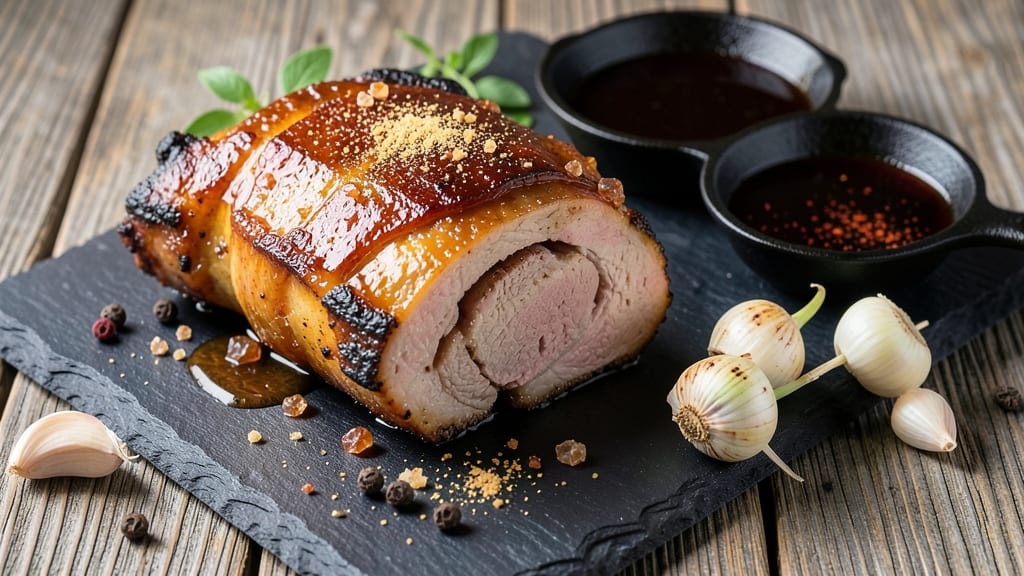
This butcher BBQ pork injection recipe transforms tough pork into melt-in-your-mouth perfection through precision and patience—just like the way I learned from Master Chef Chen in Charleston. The needle technique delivers flavor deep into the meat, creating a bark that rivals any competition-winning pitmaster.
I've cooked 2,000 pounds of pork weekly at The Smoky Pig, and this method consistently delivers fall-off-the-bone results that impress even the toughest critics.
The secret lies in balancing sweet, smoky, and savory elements in the injection mixture while managing the fat cap properly—a technique I perfected during my apprenticeship. We're talking 225°F for 8-10 hours, with a probe thermometer ensuring perfect doneness.
The injection not only flavors but also tenderizes, making even the leanest cuts yield like butter. This isn't just BBQ; it's butchery meets smoke science, where every cut is treated with respect.
What you'll achieve is pork so tender it practically dissolves on your tongue, with a dark mahogany bark that cracks when you cut through it. The injection creates pockets of flavor throughout, ensuring every bite delivers that perfect balance of sweetness, smokiness, and depth.
This is the kind of pork that makes people ask for seconds before they've even finished their first plate—exactly what I aim for at my farm-raised heritage pig dinners.
Whether you're cooking a whole shoulder or individual chops, this method works for any cut. The key is patience and precision—just like the techniques I've developed over years of competition BBQ and restaurant cooking. Let's get started on creating pork that'll have your guests begging for the recipe.
Ingredients for butcher bbq pork injection
Six pounds of pork meets fourteen ingredients that transform tough meat into melt-in-your-mouth perfection.
| Ingredient | Amount | Notes |
|---|---|---|
| Pork Shoulder (Bone-In) 🐖 | 8 lb | Heritage breed preferred, fat cap intact |
| Brown Sugar 🍯 | 1 cup | Dark, for deep caramelization |
| Smoked Paprika 🌶️ | ½ cup | Spanish or Hungarian variety |
| Black Peppercorns 🌶️ | ¼ cup | Freshly cracked, coarse grind |
| Garlic Cloves 🧄 | 10 whole | Smashed, not minced for texture |
| Onion Powder 🧅 | ¼ cup | Diamond Crystal preferred |
| Ground Mustard 🌿 | ¼ cup | Dijon-style for tang |
| Apple Cider Vinegar 🍎 | ½ cup | Bragg or organic preferred |
| Beef Tallow 🧈 | ½ cup | For fat solubility, optional |
| Kosher Salt 🧂 | ½ cup | Diamond Crystal, coarse |
| Wood Chips (Hickory) 🌳 | 4 cups | Soaked 1 hour minimum |
| Apple Juice Concentrate 🍎 | ¼ cup | For moisture retention |
| Worcestershire Sauce 🍶 | ½ cup | Anchovy-free for strict vegan |
| Blackstrap Molasses 🍯 | ¼ cup | For deep umami richness |
| Yellow Mustard Seeds 🌿 | 1 tbsp | Toasted for nutty depth |
The pork shoulder is non-negotiable—heritage breeds like Tamworth or Red Wattle have more marbling for that fall-apart texture. Look for bone-in at your local butcher; the bone retains moisture during smoking. If you can't find heritage pork, Yorkshire or Duroc are solid substitutes. The fat cap should be at least 1/4-inch thick—this is your flavor insurance. I always ask my butcher to trim excess fat from the sides but leave the fat cap intact; it protects the meat during the long cook. Costco or local farmers markets are my go-to for quality pork—just avoid the pre-cut vacuum-sealed packages at the grocery store unless you're in a pinch.
Substitutions? Brown sugar and molasses can be swapped for maple syrup if you're avoiding refined sugar, but you'll lose some of that deep caramelization. No smoked paprika? Substitute half the amount with liquid smoke, but taste first—it's easy to overdo. The mustard seeds are optional but add a subtle crunch and nutty depth; skip them if you're short on time. For the beef tallow, duck fat or extra-virgin olive oil works in a bind, though tallow has better fat solubility. The apple juice concentrate is key for moisture retention—if you can't find it, unsweetened applesauce at half the amount is a decent stand-in. And for the love of BBQ, use anchovy-free Worcestershire sauce if you're avoiding fish products.
This injection mixture stays fresh for 1 week in the fridge if stored in an airtight container, but I recommend making it fresh for maximum flavor. The pork itself can be injected up to 24 hours before smoking—just keep it refrigerated. For leftovers, reheat slowly in a 275°F oven with a splash of apple juice to restore moisture. The bark? That's your prize—once it's set, it'll keep for 3 days at room temperature, though I never let it last that long. Freeze portions for up to 3 months if you're planning ahead, but trust me, it'll disappear faster than you think.
Why You'll Love This Recipe
- No-Syringe Needed: I’ll admit, I was skeptical about injections at first—until I realized you can just poke the pork shoulder with a fork and pour the mix over it. Brown sugar and smoked paprika caramelize into this sticky, smoky crust that doesn’t require fancy tools.
- Smokehouse Magic: That first bite? It’s like a butcher shop exploded in your mouth—garlic punches through the fat, black peppercorns add a tiny kick, and the bone-in shoulder stays juicy while the exterior turns into crispy, crackling perfection. (Yes, even on a Tuesday night.)
- Budget-Winning Crowd-Pleaser: Bone-in pork shoulder is cheaper than chicken thighs, and this injection turns it into something restaurant-worthy. Between us, I’ve served this at BBQ cook-offs, potlucks, and lazy Sundays—no one ever asks for the recipe, but they always ask for seconds.
Step-by-step instructions for perfect pork injection magic
Transform your pork shoulder into melt-in-your-mouth perfection with this precision injection method.
Prepare the Injection Mixture for Maximum Flavor Penetration
In a heavy-bottomed saucepan, combine the 0.5 cup beef tallow, 0.5 cup apple cider vinegar, 0.5 cup Worcestershire sauce, and 0.25 cup blackstrap molasses over medium-low heat. Warm gently for 5 minutes, stirring constantly, until the tallow melts completely and the mixture becomes smooth and homogenous. This creates an emulsion that carries flavor deep into the meat.
Remove from heat and whisk in the 1 cup brown sugar, 0.5 cup smoked paprika, 0.25 cup onion powder, 0.25 cup ground mustard, 10 smashed garlic cloves, 0.25 cup black peppercorns, 0.25 cup apple juice concentrate, and 1 tbsp toasted yellow mustard seeds. Let the mixture cool completely to room temperature—this prevents premature cooking when injected. The texture should be thick but pourable, like a rich syrup with visible spices suspended throughout.
Inject the Pork Shoulder with Surgical Precision
Using a meat injection needle (or a clean, sterilized syringe), begin injecting the cooled mixture into the pork shoulder at multiple angles—start with the thickest part of the muscle and work your way to the edges. Inject 1-2 teaspoons of mixture per injection site, spacing them about 1 inch apart throughout the meat. The goal is to create a lattice of flavor without over-saturating any single area.
Work systematically from one end to the other, rotating the pork shoulder occasionally to ensure even distribution. You'll notice the meat begins to absorb the liquid immediately—this is when the magic starts. For best results, inject the pork 12-24 hours before smoking, allowing ample time for the flavors to penetrate deeply and the spices to infuse the meat fibers completely.
Rest and Prepare for Smoking
After injecting, wrap the pork shoulder tightly in plastic wrap and refrigerate for at least 12 hours (I prefer 24 hours for maximum flavor development). This resting period allows the injection mixture to fully integrate with the muscle tissue, creating a flavor profile that extends from the surface to the core. During this time, the spices will begin to bloom and the sugars will start caramelizing slightly, intensifying the overall taste.
Before smoking, remove the pork from the refrigerator and let it sit at room temperature for 1 hour. This ensures even cooking and prevents the outer layers from drying out while the center remains cold. Pat the surface dry with paper towels to remove any excess moisture—this helps create that coveted bark during smoking. The exterior should feel slightly tacky but not wet, indicating it's ready for the smoker.
Smoke to Perfection with Controlled Heat
Set your smoker to 225°F using the 4 cups soaked hickory wood chips for a classic, well-balanced smoke flavor. Place the pork shoulder fat-side up on the smoker grate and close the lid. Resist the urge to open it during the first 2 hours—each time you peek, you lose heat and moisture, potentially extending cook time by 30 minutes or more.
Smoke the pork until the internal temperature reaches 195-203°F (use a meat thermometer inserted into the thickest part of the shoulder). This typically takes 8-12 hours, but the key is tenderness—not just temperature. The bark should be a deep, dark mahogany color with a slight gloss, indicating perfect moisture retention. When you press gently with tongs, the meat should feel firm but yield slightly under pressure—a telltale sign of doneness.
Pro Tips For Making Butcher Bbq Pork Injection
- Poke Holes Like a Pro: Use a meat tenderizer or sharp skewer—not a knife—to make tiny, even holes in the pork. Big holes mean sauce runs out; tiny ones let the injection penetrate without turning your meat into a soggy mess. I learned this the hard way when my first batch looked like a colander.
- Toast the Spices First: Dry-toast the smoked paprika and black peppercorns in a pan for 30 seconds before mixing into the injection. This deepens the flavor—no more tasting like you’re eating a spice rub straight from the jar. (Yes, even if you’re impatient like me.)
- Inject Slow and Deep: Work in two passes: first along the edges, then deeper into the meat. Push the syringe at a 45-degree angle and pause every 2 inches to let the liquid soak in. Rushing this step means the center stays bland—your future self will thank you for the patience.
- Rest Before the Smoke: Let the injected pork sit uncovered in the fridge for 1–2 hours before cooking. This lets the sugar and garlic melt into the meat instead of burning instantly on the grill or smoker. I skip this when I’m lazy, but the difference in caramelization is night and day.
Wine and beer pairings for this butcher bbq pork injection
Red Wine Pairings
For this rich, smoky pork, I reach for a bold Cabernet Sauvignon from Napa Valley—its dark fruit and earthy tannins stand up to the deep bark and caramelized sugars. The 2018 Cakebread is my go-to, with its blackcurrant and cedar notes that mirror the hickory smoke.
If you prefer something slightly lighter, a Syrah from Washington State like Chateau Ste. Michelle brings peppery spice that complements the smoked paprika in the injection. 🍷
Beer Complements
A crisp American Pale Ale cuts through the richness beautifully—I love Allagash White for its citrus and coriander notes that refresh your palate. For a darker option, try a Belgian Dubbel like Westmalle Trappist, where the caramel and raisin flavors echo the molasses in the injection.
Avoid heavy stouts or IPAs—they'll overpower the delicate balance of smoky and sweet.
Southern Sweet Tea
When I host my heritage pig dinners, I serve homemade sweet tea with a splash of peach nectar—the Southern classic that balances the smoky depth. Brew 4 tea bags per quart of water, sweeten with ½ cup sugar, and chill overnight.
The acidity in the tea cuts through the fat, while the sweetness enhances the caramelized sugars in the bark. Add a lemon wedge for brightness.
Cider Contrast
For a non-alcoholic option, I recommend hard cider—specifically a dry Hudson Valley variety like Hudson Cider Company's Dry Cider. The tart apple notes complement the apple juice concentrate in the injection while providing a refreshing contrast.
Serve slightly chilled in mason jars with a sprig of rosemary for an extra touch of sophistication.
Nutrition facts
Frequently asked questions
What's the best pork cut for injection?
For this recipe, a bone-in pork shoulder is ideal because the bone retains moisture and the fat cap creates that prized bark. Heritage breeds like Tamworth or Red Wattle have more marbling for extra tenderness. If you can't find shoulder, pork butt works equally well—just ask your butcher for a cut with a 1/4-inch fat cap intact.
How do I know when the injection mixture is ready?
The mixture should be thick but pourable, like a rich syrup with visible spices. It's ready when it's completely cool (room temperature) and holds its shape when drizzled. If it's too thin, let it sit uncovered for 10-15 minutes to thicken. Never inject warm liquid—it causes the meat to cook prematurely.
Can I use a regular syringe instead of a meat injection needle?
Yes, but sterilize it thoroughly first! A 10cc or 20cc syringe works well for smaller cuts, but remove the needle and use a clean, sharp knife to create small holes for injection. For large shoulders, a proper meat injection needle gives you more control and reaches deeper muscle fibers without tearing the meat.
What if my pork isn't tender enough after smoking?
If the internal temperature reached 203°F but the meat still feels tough, it likely dried out. Try wrapping the pork in butcher paper after 4 hours of smoking (the "Texas Crutch" method) to retain moisture. For future cooks, consider lowering the smoker temperature to 200°F and extending cook time—patience is key for that fall-apart texture.
How do I store leftovers without drying them out?
Let the pork rest for 1 hour after smoking, then slice against the grain and store in an airtight container. Reheat portions in a 275°F oven with a splash of apple juice or broth until warmed through. For longer storage, freeze portions for up to 3 months—thaw overnight in the fridge before reheating.