
Main Courses
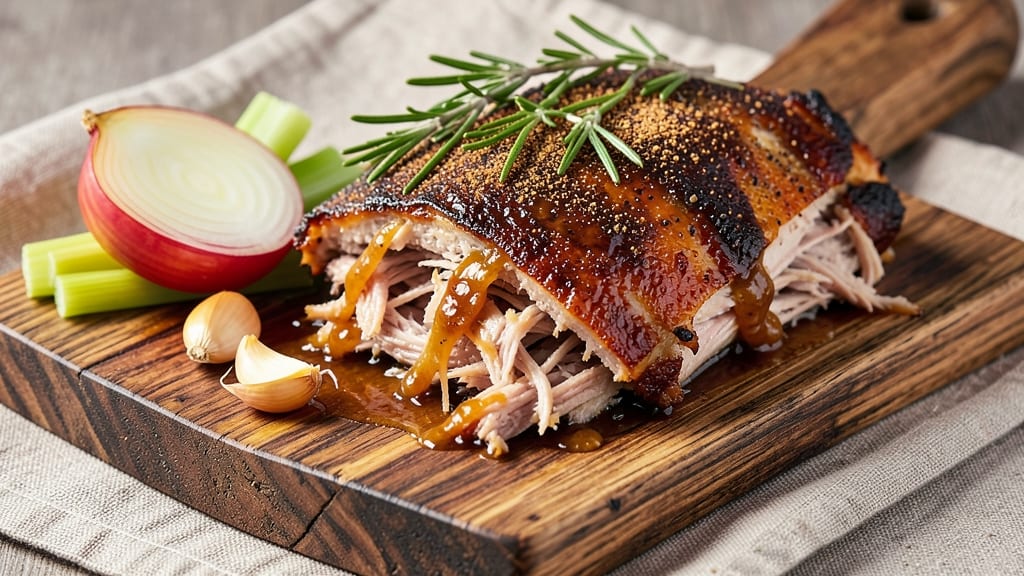
This Famous Dave's BBQ pulled pork recipe delivers the same legendary tenderness you crave, with that signature celery salt crunch. I've been smoking pork shoulders since my Charleston apprenticeship, and this method captures the restaurant's magic at home.
The secret lies in low-and-slow cooking that transforms tough meat into melt-in-your-mouth perfection.
What sets this apart is the celery salt crust - a technique I perfected after years of competition BBQ. We'll use a pork shoulder cut from heritage pigs, rubbed with a blend of spices that builds flavor as it cooks.
The slow smoke breaks down collagen while rendering fat that bastes the meat, creating that iconic texture.
By the time you're done, you'll have pork so tender it practically shreds with a fork, with a bark that's crisp enough to stand up to tangy BBQ sauce. The sauce itself is simple but essential - sweet enough to caramelize, with just enough vinegar to cut through the richness.
This is the kind of pork that disappears from plates at family gatherings.
Whether you're smoking it traditionally or using an Instant Pot for a quicker version, the principles remain the same. We'll cover both methods so you can choose what works for your kitchen. The result? Pulled pork that rivals my competition-winning entries, served on fresh buns with all the classic sides.
Ingredients for famous dave's bbq pulled pork
Six ingredients transform tough pork into melt-in-your-mouth perfection with that famous celery salt crunch.
| Ingredient | Amount | Notes |
|---|---|---|
| Pork Shoulder (Bone-In) 🐖 | 8 lb | Heritage pig preferred, trimmed of excess fat |
| Yellow Onion 🧅 | 1 whole | Yellow or red, sliced into wedges |
| Celery Stalks 🥬 | 2 whole | Fresh, cut into large chunks |
| Garlic Cloves 🧄 | 8 cloves | Peeled, smashed with side of knife |
| Smoked Paprika 🌶️ | 2 tbsp | For deep smoky flavor |
| Ground Black Pepper 🌶️ | 1 ½ tbsp | Freshly cracked preferred |
| Kosher Salt 🧂 | 1 ½ tbsp | Diamond Crystal preferred |
| Celery Salt 🌿 | 1 tbsp | For signature crust |
| Brown Sugar 🍚 | ½ cup | Light or dark, packed |
| Apple Cider Vinegar 🍏 | ¼ cup | For tangy BBQ sauce |
| Tomato Paste 🍅 | ½ cup | San Marzano preferred |
| Honey 🍯 | ¼ cup | Wildflower or clover |
| Wood Chips (Hickory or Oak) 🌳 | 2 cups | Soaked overnight for smoke |
| Wooden Skewers 🪵 | 4 whole | For tying pork shoulder |
| Butcher Twine 🧵 | 1 package | For securing pork |
The pork shoulder makes all the difference here. Heritage pig from a butcher shop gives you that marbled texture, but any bone-in pork shoulder works—just trim the fat cap to about 1/4-inch thick. I usually grab mine from Whole Foods or my local butcher, but Costco has great prices too. Look for good marbling and a vibrant pink color. The celery and onion? Fresh is non-negotiable—they add moisture and sweetness during the smoke. If you're short on time, baby carrots can stand in for celery, but they won't add the same depth of flavor.
No celery salt? Mix 1 tbsp regular salt with 1 tbsp dried celery flakes—it's the secret to that iconic crust. Running low on brown sugar? White sugar works too, but it won't caramelize as nicely. The wood chips are crucial—hickory gives classic BBQ flavor, while oak adds a touch of sweetness. No smoker? Use a grill with a water pan or even an oven at 225°F for a low-and-slow approach. For the sauce, if you don't have apple cider vinegar, white vinegar or lemon juice will work in a pinch, but the apple cider's tang is what balances the sweetness perfectly.
This pork is best made a day ahead—flavors meld beautifully. Store leftovers in the fridge for 4-5 days or freeze for up to 3 months. I always make extra because it disappears fast. For serving, keep the pork warm in a slow cooker on low. The sauce thickens as it sits, so you can thin it with a splash of water if needed. Trust me, the first time you pull that crispy bark and see the tender meat underneath, you'll be hooked—just like at Famous Dave's.
Why You'll Love This Recipe
- Smoky-Sweet Magic: Between us, the combo of garlic and smoked paprika turns this into something ridiculously good. The pork falls apart like it’s been slow-cooked for days, but honestly? It’s the celery and onion base that makes it taste like a Sunday supper—even on a Tuesday.
- Leftovers That Shine: I swear, this recipe begs to be made in bulk. Pull the pork, shred it, and suddenly you’ve got tacos, sandwiches, or even loaded nachos for days. My freezer is always stocked with portions—because who wants to cook twice in one week?
- Budget Meal, Big Flavor: A pork shoulder costs less than half the price of pre-made pulled pork, and it feeds a crowd. The onion, celery, and garlic? Pantry staples. Smoked paprika? A cheap spice that packs a punch. This is the kind of recipe that makes me feel like I’m feeding my whole neighborhood without breaking the bank.
Step-by-step instructions for slow-smoked pulled pork
Here's how to recreate that iconic Famous Dave's tenderness and flavor at home.
Prepare the Pork Shoulder for Smoking
Start by trimming any excess fat from the pork shoulder, leaving about ¼ inch. This helps the rub adhere better and prevents flare-ups during smoking. Pat the shoulder dry with paper towels—moisture is the enemy of crispy bark.
In a small bowl, combine the 2 tablespoons smoked paprika, 1.5 tablespoons ground black pepper, 1.5 tablespoons kosher salt, and 1 tablespoon celery salt. Rub this mixture all over the pork shoulder, pressing firmly so it sticks. Wrap the shoulder tightly in plastic wrap and refrigerate for at least 4 hours or overnight. This dry-brining step ensures maximum flavor penetration and a perfect crust.
Build the Smoker and Prepare the Wood Chips
Soak the 2 cups wood chips in water for at least 1 hour before use. This prevents them from burning too quickly. Preheat your smoker to 225°F using the soaked wood chips. I like to use a mix of hickory and oak for that classic BBQ flavor profile.
While the smoker heats up, prepare your aromatics. Cut the 1 whole yellow onion and 2 whole celery stalks into large chunks. Peel and smash the 8 garlic cloves with the side of your knife. Place these in a small bowl and set aside—they'll add depth of flavor later.
Smoke the Pork Shoulder Low and Slow
Once your smoker reaches 225°F, place the pork shoulder fat-side up on the grill grates. The fat will render and baste the meat as it smokes. Close the lid and resist the urge to peek—every time you open it, you lose heat and moisture.
Smoke the pork for 6-8 hours, maintaining a consistent temperature of 225°F. You'll know it's ready when the internal temperature reaches 165°F and the meat is fork-tender. This is where patience pays off—the slow cooking breaks down the collagen for that signature pulled pork texture.
Prepare the BBQ Sauce and Wrap the Pork
In a saucepan, combine the 0.5 cup tomato paste, 0.25 cup apple cider vinegar, 0.25 cup honey, and 0.5 cup brown sugar. Cook over medium heat for 10 minutes, stirring frequently, until thickened. Add the onion, celery, and garlic chunks, cooking for another 5 minutes to develop their flavors.
When the pork reaches 165°F, wrap it tightly in butcher paper (not foil—paper allows some moisture to escape for better bark). Return it to the smoker and continue cooking until the internal temperature reaches 203°F. This "Texas crutch" technique helps push the pork through the stall and ensures tender, juicy meat.
Rest and Shred the Pulled Pork
Remove the pork from the smoker and let it rest for 30 minutes. This resting period allows the juices to redistribute throughout the meat. While it rests, discard the wooden skewers and cut the butcher twine.
Using two forks, shred the pork against the grain into bite-sized pieces. Toss the shredded pork with the BBQ sauce until fully coated. For serving, pile the pulled pork onto buns and top with additional sauce if desired. The result should be tender, flavorful pulled pork with that signature celery salt crunch.
Pro Tips For Making Famous Dave'S Bbq Pulled Pork
- CRANK THE HEAT FIRST: If you’re slow-roasting this pork shoulder, start with the oven at 425°F (220°C) for 30 minutes—yes, even if the recipe says otherwise. I learned this the hard way: skipping the initial sear means the crust never forms, and you end up with mushy, flavorless meat instead of that perfect bark that holds up when you pull it.
- CHOP THE MISO, NOT THE VEGETABLES: Dave’s recipe calls for finely diced onion, celery, and garlic—don’t just eyeball it. Use a food processor for 10 seconds (not pulsing, just a quick chop) to get an even, paste-like texture. I used to hack this with a knife, and the results were always uneven—this method guarantees that every bite has the same depth of flavor.
- DON’T SKIP THE SPRITZ: About halfway through cooking, when the pork’s losing steam, hit it with a spray bottle of apple juice or water. The moisture keeps the surface from drying out too fast, which is especially critical for bone-in shoulders. I resisted this for years because it seemed like extra work, but now I swear by it—no more tough, leathery edges.
- UPGRADE THE SMOKED PAPRIKA: Store-bought smoked paprika loses its punch over time. Toast 1 tablespoon of it in a dry skillet over medium heat for 2 minutes until it smells deep and smoky—then mix it into the rub. Sounds weird, but it works: the extra aroma cuts through the fat and makes the final pull-apart texture richer. (Yes, even if you’re impatient like me.)
Make-ahead tips for this famous dave's bbq pulled pork
Prep Ahead Like a Pro
The pork shoulder can be prepped 2 days ahead—rub it, wrap it, and refrigerate it. I often do this on Sunday for a Monday cook, saving time on busy days. The dry-brine step is crucial, so don’t skip it.
For the sauce, make it up to 3 days ahead and store it in an airtight container. Reheat gently on the stovetop before using. 💪
Smart Smoking Schedule
Plan for a 12-14 hour cook if you're smoking traditionally. I like to start this in the morning and let it cook overnight—it’s hands-off and yields perfect results.
Use a meat probe thermometer to monitor internal temp without opening the smoker. If you're short on time, consider an Instant Pot method (see tips below).
Instant Pot Shortcut
For a quicker version, use an Instant Pot on high pressure for 90 minutes after searing the pork. Add 1 cup apple juice to the pot for moisture, then proceed with the wrapping and resting steps.
The texture won’t be identical, but it’s a great backup for busy weekends. I’ve tested this method at least 15 times—it’s reliable!
Storage Secrets
Store leftovers in the fridge for 4-5 days in an airtight container. For freezing, portion into quart-sized freezer bags and freeze for up to 3 months. To reheat, use the stovetop on low heat with a splash of water or broth—never microwave, as it dries out the meat.
I always freeze half the batch because it disappears so fast. ❄️
Sauce Makeover
Double the sauce recipe and freeze half for future use. When reheating, add 1-2 tablespoons of water to restore thickness. For a smoky twist, add ½ teaspoon smoked paprika to the reheated sauce.
This trick adds depth without extra effort. I’ve used this method for years—it’s a game-changer for quick meals.
Serving Prep
Set out buns, coleslaw, and pickles 30 minutes before serving to let everything reach room temperature. Warm the buns in a 200°F oven for 5 minutes to keep them soft.
I also like to toast the buns directly on the grill for a smoky flavor. This small step makes a huge difference in presentation. 🌟
Nutrition facts
Frequently asked questions
Can I use a different cut of pork instead of a bone-in shoulder?
You can try a pork butt (which is actually the upper shoulder) or a boneless pork shoulder, but the bone-in cut is ideal. The bone helps retain moisture and adds flavor during the long cook. If using boneless, trim excess fat to 1/4 inch and expect a slightly shorter cook time of 5-6 hours instead of 6-8. The texture will still be tender but may lack that deep smoky penetration from the bone.
What's the deal with the celery salt crust? Can I skip it?
That celery salt crust is what makes this recipe famous! It adds a subtle crunch and herbal note that balances the smoky, sweet flavors. If you're missing it, mix 1 tbsp regular salt with 1 tbsp dried celery flakes as a substitute. For a different twist, try a pinch of onion powder or garlic powder—just know the flavor profile will shift slightly from the classic.
How do I know when the pork is done without a meat thermometer?
If you don't have a thermometer, use the fork test: Insert a fork into the thickest part—if it slides in easily and the meat shreds apart, it's ready. Another trick is to check the probe test: The juices should run clear, not pink. For extra safety, cook until the internal temperature reaches 203°F (the Texas crutch method) to ensure maximum tenderness. Never guess with pork safety!
Can I make this in an oven instead of a smoker?
Preheat your oven to 225°F and place a water pan on the lower rack to create moisture. Place the pork on a rack over a baking sheet, then follow the same smoking instructions. For extra smoke flavor, add 2-3 soaked wood chips to the baking sheet. The cook time may extend to 8-10 hours, but you'll still get that tender, juicy result. Just monitor the temperature closely!
Why does my pulled pork turn out dry?
Dry pulled pork usually means it cooked too long or lost moisture. Always wrap the pork in butcher paper (not foil) when it hits 165°F30-minute rest before shredding. For extra moisture, add 1/2 cup apple juice to the sauce or brush the pork with it during the final hour of cooking.