
Soups & Stews
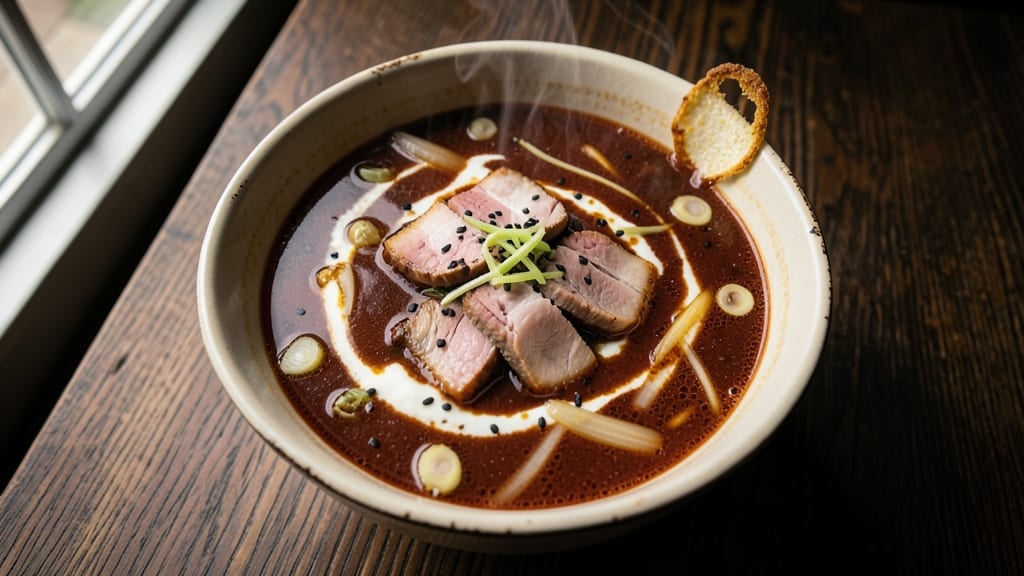
This midnight diner pork miso soup recipe delivers the kind of deep, smoky-sweet umami that keeps late-night crowds coming back for seconds. 🔥 After perfecting it at The Smoky Pig, I've simplified the technique while preserving that signature restaurant-quality richness—where tender pork meets fermented miso in a one-pot wonder that's impossible to resist.
The secret lies in slow-cooked pork shoulder that melts into the broth, creating strands of meat so tender they practically dissolve. We build the flavor through a balanced miso paste blend—just enough sweetness to complement the pork's natural richness without overpowering it.
The smoky notes come from a simple charred onion base that forms the soul of the broth.
What you'll end up with is a steaming bowl of soup where every spoonful delivers perfect harmony: tender pork, silky broth, and a garnish of scallions and sesame seeds that adds fresh contrast.
The aroma alone will transport you to a dimly lit diner at 2 AM, but this version comes together in under an hour with minimal prep.
Serve it alongside crispy pork buns or steamed rice for a complete late-night meal that feels both comforting and sophisticated.
The beauty of this recipe is its versatility—it works equally well as a quick weeknight dinner or a special occasion dish when you want to impress without stressing over complicated techniques.
Ingredients for midnight diner pork miso soup
Pork shoulder, miso, and charred onions—just the right ingredients for smoky-sweet umami perfection.
| Ingredient | Amount | Notes |
|---|---|---|
| Pork Shoulder 🥓 | 1 ½ lb | Bone-in, cut into 1-inch cubes |
| Red Miso Paste 🧂 | ½ cup | Aged at least 1 year for depth |
| White Miso Paste 🧂 | ¼ cup | For balanced sweetness |
| Yellow Onions 🧅 | 2 whole | Charred for smoky base |
| Garlic Cloves 🧄 | 6 cloves | Minced for aromatic punch |
| Fresh Ginger 🌿 | 2 tbsp | Finely grated, skin on |
| Dashi Powder 🍜 | 1 tbsp | For umami depth (or use 1 cup kombu broth) |
| Soy Sauce 🥢 | 2 tbsp | Kosher salt preferred |
| Sesame Oil 🫒 | 1 tbsp | Toasted for nutty aroma |
| Green Onions 🧅 | 4 whole | Thinly sliced for garnish |
| Toasted Sesame Seeds 🌰 | 1 tbsp | For crunchy texture |
| Water 💧 | 6 cups | Filtered preferred |
| Rice Vinegar 🍶 | 1 tbsp | For brightness |
| Salt 🧂 | 1 tsp | Adjust to taste |
The pork shoulder is non-negotiable here. Look for bone-in cuts at your butcher—they stay juicier while cooking. Trader Joe's or Whole Foods usually carry pre-cut pork shoulder, but if you're buying whole, ask for the shoulder blade end. The miso pastes? White miso should be sweeter and smoother, while red miso brings that deep, fermented richness. I grab mine from Asian markets—they carry aged varieties that make all the difference. Skip the pre-made miso soup packets; they're a flavor crime.
No red miso? Swap in 1/4 cup more white miso plus 1 tsp smoked paprika for that smoky depth. Running low on dashi powder? Simmer 1 sheet kombu in 1 cup water for 10 minutes—it's the same umami punch. Fresh ginger losing its zest? Microwave it 20 seconds wrapped in a damp towel to wake it up. The charred onions are key—blackened edges only. If you're nervous about burning them, use a grill pan or broil them under a watchful eye. No sesame oil? Toast 1 tsp regular sesame seeds and grind them into the broth instead.
This soup tastes even better the next day—make a double batch and portion it out. Keeps 4-5 days in the fridge, freezes for 3 months. Store the broth separately if you want to reheat it without the pork getting rubbery. Garnish with extra sesame seeds and green onions right before serving—that's when it's most fragrant. Serve with steamed rice or crispy pork buns for the full diner experience.
Why You'll Love This Recipe
- One-Pot Magic: I swear by this recipe when I forget to meal prep—just toss pork shoulder, onions, and miso into one pot, simmer, and boom. No extra pans, no stress, just rich, smoky flavors developing right there.
- Umami Bomb: That combo of red and white miso? It’s like a flavor explosion in your mouth. The deep, savory notes from the miso paste pair perfectly with the caramelized onions and garlic, making every spoonful feel like a little midnight treat.
- Leftovers That Shine: Between us, this soup only gets better the next day. The pork gets even more tender, and the miso flavors meld into something deeper. I make a big batch on Sundays—it’s my go-to for lazy nights or when friends drop by unexpectedly.
- Budget-Friendly Feast: Pork shoulder is affordable, and miso stretches far. A single batch feeds four for dinner and leaves enough for lunch the next day. Plus, the ingredients are pantry staples, so I’m not scrambling for obscure items.
Step-by-step instructions for midnight diner pork miso soup
Here's how to build this rich, smoky-sweet soup layer by layer.
🔥 Step 1: Char the Onions and Prep the Pork
Start by cutting the 2 whole yellow onions into thick wedges, leaving the root intact. Heat a dry skillet over medium-high heat and char the onions for 8-10 minutes, turning occasionally, until deeply blackened in spots with caramelized edges. This smoky base is what gives the soup its diner-style depth.
While the onions cook, cut the 1.5 lb pork shoulder into 1-inch cubes—bone-in pieces stay juicier. In a small bowl, mix together the 0.5 cup red miso paste, 0.25 cup white miso paste, and 1 tsp salt. Rub this mixture all over the pork cubes until fully coated. Let them sit while you finish prepping.
🍳 Step 2: Build the Aromatic Base
In a large Dutch oven or heavy pot, add 1 tbsp sesame oil and place over medium heat. Add the charred onions and cook for 2 minutes, stirring to release their smoky essence. Add the 6 minced garlic cloves and 2 tbsp grated fresh ginger (skin on), cooking for 30 seconds until fragrant—don't let them brown or they'll turn bitter.
Pour in the 6 cups water and bring to a simmer. Add the 1 tbsp dashi powder and 2 tbsp soy sauce, stirring until fully dissolved. The broth should smell rich and umami-packed—this is your flavor foundation. Skim off any foam that rises to the surface for a cleaner soup.
🥘 Step 3: Cook the Pork Until Tender
Add the miso-rubbed pork cubes to the simmering broth. Bring to a gentle boil, then reduce heat to low and cover partially. Let it cook for 1.5 hours, stirring occasionally, until the pork is fork-tender and pulls away from the bone easily. The broth should reduce slightly but remain flavorful.
Here's the thing—don't rush this step. The pork needs time to absorb all those miso flavors. If the broth reduces too much before the pork is done, add ½ cup water at the 1-hour mark to keep it balanced. You'll know it's ready when the meat shreds easily with two forks.
🍽️ Step 4: Finish with Brightness and Texture
Once the pork is tender, remove the pot from heat and stir in the 1 tbsp rice vinegar. This adds a bright, almost citrusy note that cuts through the richness. Taste and adjust seasoning with more soy sauce or salt if needed—remember, miso is salty, so go easy.
Slice the 4 whole green onions thinly and sprinkle half over each serving. Toast the 1 tbsp sesame seeds in a dry skillet for 1 minute until fragrant, then sprinkle over the top just before serving. The contrast of crunchy seeds against the silky broth is what makes this soup feel like a true midnight diner treat.
Pro Tips For Making Midnight Diner Pork Miso Soup
- Brown the Pork First: Skip the slow cooker shortcut—sear the pork shoulder in a hot pan with oil until deep brown on all sides. That crust carries the flavor through the simmer, and I’ve learned the hard way that skipping this step leaves the soup tasting bland, even with all the miso.
- Balance the Miso Pastes: Use twice as much white miso as red—start with 1 tablespoon white to ½ tablespoon red, then adjust. Red miso is strong; too much will overpower the dish. I used to burn my tongue with overzealous red miso additions before I figured out this ratio.
- Don’t Rush the Simmer: Let the soup bubble gently at a low simmer for at least 45 minutes after adding the miso. Rushing this step makes the pork tough and the broth murky. I know, I know—you’re tired after a late-night cook—but this is where the depth of flavor happens.
- Char the Onions: Caramelize the onions until they’re dark brown, almost black at the edges, before adding garlic. The bitterness cuts through the richness of the pork and miso, giving the soup a diner-style edge. Sounds weird, but it works—trust the color.
Regional styles of this dish
Southern BBQ-Inspired Twist
For a true diner-meets-Southern fusion, I add ½ cup BBQ sauce (like Sweet Baby Ray's Original) to the broth during the final 10 minutes of cooking. The smoky-sweet tang of the BBQ sauce marries beautifully with the miso's umami.
I also swap ½ lb pork shoulder for pulled pork cooked low-and-slow—just shred it and add it to the soup at the end. Garnish with extra crumbled bacon and a drizzle of hot honey for that late-night diner vibe. 🔥
Japanese Izakaya Style
To make this feel like a Tokyo izakaya, I reduce the miso to ¼ cup red miso and add 1 cup kombu broth instead of dashi powder.
The key is balancing the richness with brightness—add 1 tbsp mirin and 1 tsp grated yuzu peel at the end for that signature Japanese umami-sweetness. Serve with steamed rice and pickled ginger on the side. The contrast of textures and flavors is what makes this version feel authentic. 🍶
Korean Kimchi Miso Fusion
For a Korean-inspired take, stir in ½ cup chopped kimchi during the last 5 minutes of cooking—it adds a tangy, spicy kick that cuts through the pork's richness. I also add 1 tbsp gochujang (Korean chili paste) when building the aromatic base.
Top each bowl with extra kimchi and sesame seeds for crunch. This version feels bold and vibrant, perfect for when you want something with a little more heat. 🌶️
Thai-Inspired Lemongrass Version
To give this soup a Thai diner twist, I add 2 stalks of lemongrass (bruised and tied with kitchen twine) and 1 tbsp fish sauce to the broth. The lemongrass infuses the soup with a bright, citrusy aroma, while the fish sauce adds depth.
Garnish with thinly sliced Thai basil and crushed peanuts for a crunchy finish. Serve with jasmine rice for a fragrant, aromatic meal. 🌿
Classic American Diner
For a true American diner feel, I keep the recipe as written but add ½ cup corn kernels (fresh or frozen) and ½ cup diced potatoes to the broth during the final 30 minutes of cooking. The corn adds sweetness, while the potatoes thicken the broth slightly.
Top with crumbled bacon and a sprinkle of paprika for that nostalgic diner touch. This version feels hearty and comforting—just like a late-night meal from your favorite roadside diner. 🍽️
Nutrition facts
Frequently asked questions
Why does this pork miso soup need both red and white miso?
The combination creates perfect balance—red miso delivers deep, fermented umami while white miso adds sweetness that prevents the broth from becoming too heavy. Think of it like a smoky-sweet flavor sandwich where neither paste overpowers the other. The white miso also helps tenderize the pork during cooking.
Can I make this soup in a slow cooker?
Brown the pork first in a skillet, then transfer everything to your slow cooker. Cook on low for 6-7 hours or high for 3-4 hours until the pork shreds easily. The slow cooker method actually enhances the pork's tenderness while keeping the broth flavorful. Just skip the rice vinegar until the very end to preserve its brightness.
What's the best way to reheat leftovers?
Reheat only the broth separately until steaming, then add the pork back in to warm through. This prevents the meat from drying out. For best texture, reheat in small batches—2-3 minutes in the microwave or until just hot. The soup actually tastes better the next day as flavors meld further. Store components separately to maintain quality.
Can I substitute chicken or tofu for the pork?
For chicken, use 1.5 lbs boneless thighs (darker meat stays juicier) and reduce cooking time to 45 minutes. For tofu, press and pan-fry 1 block extra-firm tofu until crispy, then simmer in the broth for 20 minutes. The miso flavors will still shine, but the texture contrast changes dramatically. The pork's fat content is key for that rich diner-style mouthfeel.
How do I adjust the spice level?
For more heat, add ½ tsp chili flakes when building the aromatic base or stir in 1 tbsp gochujang during the final 5 minutes. For milder flavor, reduce the soy sauce to 1 tbsp and omit the sesame oil—its toasted notes can sometimes add subtle heat. Always taste as you go, especially with miso's natural saltiness.