
Main Courses
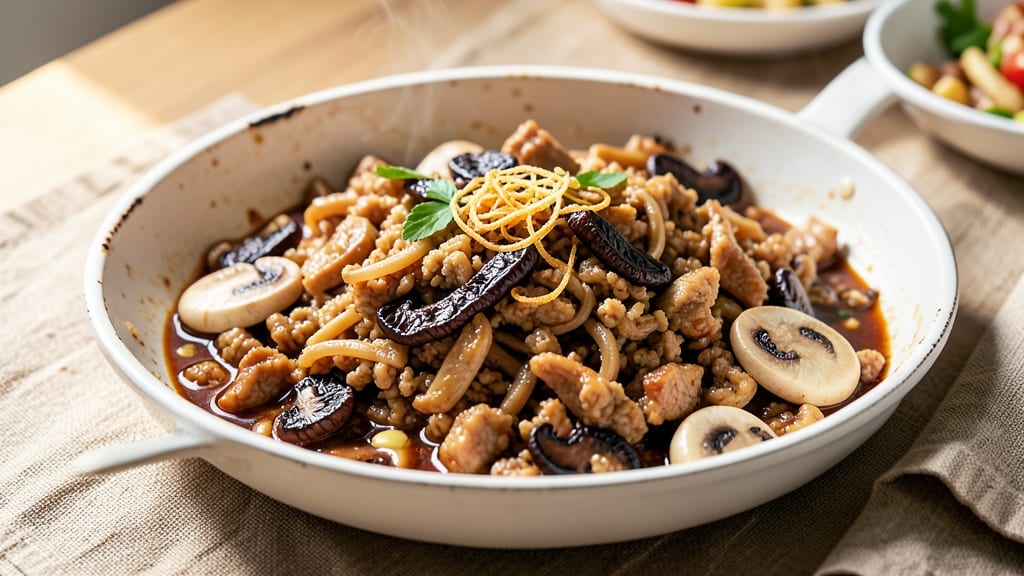
This minced pork and mushrooms recipe delivers restaurant-quality depth with just a few simple ingredients and a technique I perfected during my time in Charleston. The key? Cooking the pork low and slow until it renders into a rich, savory sauce that coats every bite of earthy mushrooms.
I've been making this dish since my apprenticeship—it's the kind of meal that transforms a weeknight into something special without requiring hours in the kitchen.
The beauty of this recipe lies in its balance: tender minced pork that dissolves into a flavorful sauce while mushrooms absorb all the umami goodness. We're talking garlicky, soy-infused richness with just enough acidity from a splash of vinegar to cut through the fat.
The secret weapon? A proper sear in cast iron—something I learned from Master Chef Chen—followed by a gentle simmer that develops layers of flavor without drying out the meat.
What you'll end up with is a dish that's equally at home over steamed rice, with buttered noodles, or even as a filling for crispy bao buns. The texture is perfect—tender pork threads clinging to mushrooms that stay just firm enough to hold their shape.
This isn't just another stir-fry; it's a deeply flavorful, one-pan meal that comes together in under 30 minutes but tastes like it simmered all day.
For those who want to elevate it further, I always keep a stash of dried shiitake mushrooms on hand—they add an extra layer of earthiness when rehydrated. The dish also freezes beautifully, making it perfect for meal prep.
Let's get cooking—this is the kind of recipe that gets better with each reheat, and your taste buds will thank you.
Ingredients for minced pork and mushroom
This dish starts with just 14 ingredients—simple but packed with umami magic.
| Ingredient | Amount | Notes |
|---|---|---|
| Minced Pork 🥩 | 1 lb | Ground pork, 80% lean preferred |
| White Button Mushrooms 🍄 | 1 ½ lb | Sliced thin, stems removed |
| Dried Shiitake Mushrooms 🍄 | ¼ oz | Rehydrated in hot water |
| Garlic Cloves 🧄 | 6 cloves | Minced finely for depth |
| Light Soy Sauce 🍶 | ¼ cup | Kikkoman preferred |
| Dark Soy Sauce 🍶 | 1 tbsp | For color and richness |
| Rice Vinegar 🍶 | 1 ½ tbsp | Seasoned preferred |
| Sesame Oil 🫒 | 1 tsp | Toasted for aroma |
| Sugar 🍚 | 1 tsp | Balances acidity |
| Vegetable Oil 🫒 | 2 tbsp | High smoke point |
| Green Onions 🧅 | 3 whole | Sliced thin for garnish |
| Salt 🧂 | 1 tsp | Kosher preferred |
| Black Pepper 🌶️ | ½ tsp | Freshly ground |
| Cornstarch 🌾 | 1 tbsp | For thickening sauce |
The pork is everything here. Ground pork with 80% lean renders beautifully, but if you can only find 90% lean, just pat it extra dry before cooking. I always grab mine from Whole Foods or the butcher counter at Trader Joe's—they keep it fresher than the pre-packaged stuff. For mushrooms, white buttons are the workhorse, but don't skip the dried shiitake. Soak them in hot water for 10 minutes first—they'll triple in size and add that deep, earthy flavor. The garlic should be fresh, not jarred—nothing compares to the aroma when you mince it right before cooking.
No light soy sauce? Regular soy sauce works in a pinch, but you'll lose some of that sweet balance. The dark soy gives color, so if you're serving this over white rice, it's worth hunting down—Lee Kum Kee makes a great one. Short on sesame oil? Toasted sesame seeds at half the amount will give you that nutty aroma, though it won't coat the same. The rice vinegar is non-negotiable for that bright finish, but if you've only got apple cider vinegar, use half the amount. For the cornstarch slurry, mix it with 1 tbsp cold water first—this prevents clumping and makes it easier to stir into the sauce at the end.
This sauce tastes even better the next day—honestly, it's the kind of dish that improves with reheating. Store leftovers in an airtight container for up to 4 days in the fridge. For freezing, portion it out in single-serving containers—it reheats beautifully over rice or noodles. The dried shiitake mushrooms keep for 6 months in a cool, dark place, so buy extra. I always make a double batch because it disappears fast—great for meal prep or freezing. And if you're feeling fancy, drizzle a little extra sesame oil on top before serving—trust me on this.
Why You'll Love This Recipe
- Foolproof Pantry Stash: I swear by this when I forget fresh herbs—just toss in those dried shiitakes rehydrated in hot water, and boom, umami depth without extra shopping. The mushrooms plump up while the pork browns, so you’re not waiting around.
- Umami Bomb Combo: That dried shiitake soak? Liquid gold. Mix it with the light soy and minced garlic, and suddenly your white buttons aren’t just mushrooms—they’re flavor powerhouses. The pork soaks it all up like a sponge, giving every bite that rich, savory punch.
- Lunchbox Hero: Between us, this is my go-to for meal prep. Cook a big batch on Sunday, and you’ve got weeknight dinners covered—toss it in noodles, rice, or even wraps. (Yes, even on a Tuesday night when takeout feels like work.)
- Budget Magic: A pound of minced pork and a bag of mushrooms stretch far—this feeds four for under $10, and leftovers reheat like a dream. Honestly, it’s the kind of recipe that makes grocery day feel like a victory.
Step-by-step instructions for savory minced pork and mushroom pan sauce
Here's how to create a rich, umami-packed sauce with tender pork and mushrooms.
Prepare the Mushrooms and Aromatics
Start by rehydrating the 0.25 oz dried shiitake mushrooms in ½ cup hot water for 10 minutes. Slice the 1.5 lb white button mushrooms thinly and set aside. Finely mince the 6 cloves garlic - you want tiny pieces that will dissolve into the sauce rather than remain distinct.
In a large skillet, heat 2 tablespoons vegetable oil over medium-high heat until shimmering. Add the sliced white mushrooms and cook for 5-6 minutes until they release their moisture and begin to brown. Stir occasionally to ensure even cooking. The mushrooms should be tender but still hold their shape slightly - they'll continue cooking with the pork.
Cook the Pork Until Fully Browned
Push the mushrooms to one side of the skillet and add the 1 lb minced pork to the empty space. Cook undisturbed for 2-3 minutes until the pork begins to brown and pull away from the pan. This initial searing creates deep flavor - don't stir too soon or you'll get gray pork instead of browned.
Once the pork has browned in patches, use a wooden spoon to break it up and distribute it evenly among the mushrooms. Continue cooking for another 4-5 minutes until the pork is fully cooked through - it should be no longer pink in the center. The mixture will look rich and moist, with deep brown color from the caramelization.
Build the Sauce with Umami Layers
Add the rehydrated shiitake mushrooms (reserve the soaking liquid), minced garlic, 0.25 cup light soy sauce, 1 tablespoon dark soy sauce, 1.5 tablespoons rice vinegar, and 1 teaspoon sugar to the skillet. Stir well to combine, scraping up any browned bits from the bottom - these contain concentrated flavor.
Let the mixture simmer for 3-4 minutes until the liquid reduces by about half and the sauce begins to thicken slightly. The dark soy sauce will give the sauce its characteristic rich color while balancing the acidity of the rice vinegar. Taste and adjust seasoning with 1 teaspoon salt and 0.5 teaspoon black pepper - you want a balance of salty, sweet, and umami flavors.
Thicken and Finish the Sauce
In a small bowl, mix the 1 tablespoon cornstarch with 2 tablespoons water to create a slurry. Pour this into the skillet while stirring constantly. The sauce will begin to thicken immediately - keep stirring for about 1-2 minutes until it reaches a glossy, slightly sticky consistency that coats the back of a spoon.
Remove from heat and stir in the 1 teaspoon sesame oil. This adds a nutty aroma that complements the umami depth. Slice the 3 whole green onions thinly and sprinkle them over the top just before serving. The bright green color provides a beautiful contrast to the rich brown sauce, and the mild onion flavor cuts through the intensity.
Pro Tips For Making Minced Pork And Mushroom
- COOK PORK IN BATCHES: I learned this the hard way—dumping all the minced pork in one go makes it steam instead of brown. Split it into two portions, spread them thin, and let the pan get hot again between batches. That crispy crust on the pork is what makes this dish sing.
- SOAK SHIITAKES FIRST: Dried shiitake mushrooms are like little sponges—toss them in hot water for 10 minutes before using. Slice them after soaking while they’re still plump, or they’ll turn to sawdust. (Yes, even if you’re impatient like me.)
- DON’T OVERMIX THE MUSHROOMS: After adding the mushrooms, resist the urge to stir constantly. Let them sit undisturbed for 2-3 minutes so they release their juices and develop flavor. Poking them every 30 seconds just turns them to mush—literally.
- USE GARLIC OIL LAST: Save a minced garlic clove to toss in at the very end, cooked for just 10 seconds. This prevents it from burning into bitter oblivion while the rest of the dish finishes. (Your nose will thank you.)
Essential equipment for this recipe
Cast Iron Skillet
This is my non-negotiable tool for this recipe—nothing beats a 10-inch cast iron skillet for developing that deep, caramelized flavor. I use my Lodge Pre-Seasoned skillet because it handles high heat beautifully and develops a natural non-stick surface over time.
If you don’t own cast iron, a heavy stainless steel skillet like All-Clad works too, though it won’t brown the pork as dramatically. Preheat your skillet for 5 minutes on medium-high before adding oil—this ensures an even sear. 🔥
Wooden Spoon
A long-handled wooden spoon is essential for stirring without scratching your skillet. I prefer olive wood spoons because they’re gentle on seasoning and heat-resistant. Avoid metal utensils during cooking—they can react with the acidity in the soy sauce and ruin the flavor.
If you don’t have wood, a heatproof silicone spatula is a good alternative. Pro tip: Keep your spoon handy while cooking to scrape up those flavorful browned bits from the bottom of the pan.
Fine-Mesh Strainer
For rehydrating the dried shiitake mushrooms, a fine-mesh strainer prevents tiny mushroom bits from slipping through while allowing the water to drain. I use a stainless steel strainer because it’s durable and won’t rust.
If you’re in a pinch, a clean kitchen towel works too—just squeeze out the excess water. The rehydrated mushrooms should be soft enough to chop but still hold their shape when added to the skillet. 🍄
Kitchen Scale
While you can eyeball measurements, a digital kitchen scale ensures precision, especially for the minced pork and dried shiitake mushrooms. I swear by my OXO Good Grips scale—it’s affordable and accurate.
For the pork, aim for 1 lb (454g) exactly, as too little will make the sauce thin, and too much can overpower the mushrooms. The dried shiitake should weigh 0.25 oz (7g) before rehydration—this makes a noticeable difference in flavor.
Small Mixing Bowl
A small mixing bowl (about 8-inch diameter) is perfect for making the cornstarch slurry without spills. I keep a glass Pyrex bowl on hand for this step because it’s easy to clean and won’t absorb odors.
Whisk the 1 tbsp cornstarch with 2 tbsp water until smooth—this prevents clumps from forming in the sauce. If you don’t have a bowl, a clean measuring cup works, but it’s trickier to stir thoroughly. 💡
Tongs for Garnish
For the final garnish of green onions, a pair of kitchen tongs makes slicing and arranging them effortless. I use stainless steel tongs with a comfortable grip. Hold the green onion with one hand and slice thinly with a sharp chef’s knife—this keeps your fingers safe.
If you’re short on time, just chop them roughly and sprinkle them on top. The bright color and freshness cut through the richness of the sauce beautifully. ✨
Nutrition facts
Frequently asked questions
Can I substitute ground turkey or chicken for the minced pork?
While you can use ground turkey or chicken, the flavor and texture will differ significantly. Pork has a richer fat content that creates a deeper, more complex sauce. If substituting, use 93% lean ground turkey (not leaner) and reduce cooking time by 1-2 minutes since poultry cooks faster. The sauce will be lighter, so add an extra ½ teaspoon soy sauce for umami depth.
What's the best way to store leftovers?
Store in an airtight container in the fridge for up to 4 days. For freezing, portion into single-serving containers—it reheats beautifully over rice or noodles. The sauce actually improves after reheating as flavors meld further. When reheating, add 1 teaspoon water per serving to prevent drying out.
Can I make this dish in a slow cooker?
Yes, but with adjustments. Brown the pork and mushrooms first in a skillet, then transfer everything to the slow cooker with all sauce ingredients. Cook on low for 2 hours instead of high heat. The sauce will be thinner—stir in the cornstarch slurry at the end and simmer on the stovetop for 2 minutes to thicken properly. The slow cooker method works well for meal prep!
Why does my sauce turn out too salty?
This usually happens when using both light and dark soy sauce without tasting first. Start with ¼ cup light soy sauce and 1 teaspoon dark soy sauce, then taste before adding full amounts. The sugar and vinegar help balance saltiness—add a pinch of sugar if needed. For extra depth, a splash of chicken or vegetable broth can dilute without sacrificing flavor.
What are the best sides to serve with this dish?
This rich pan sauce pairs perfectly with steamed jasmine rice or fresh egg noodles. For extra texture, serve with crispy fried rice or garlic toast. In Asian-inspired meals, it works wonderfully with stir-fried bok choy or quick-pickled cucumbers to cut through the richness. The key is balancing the hearty pork-mushroom combo with something light and fresh.