
Main Courses
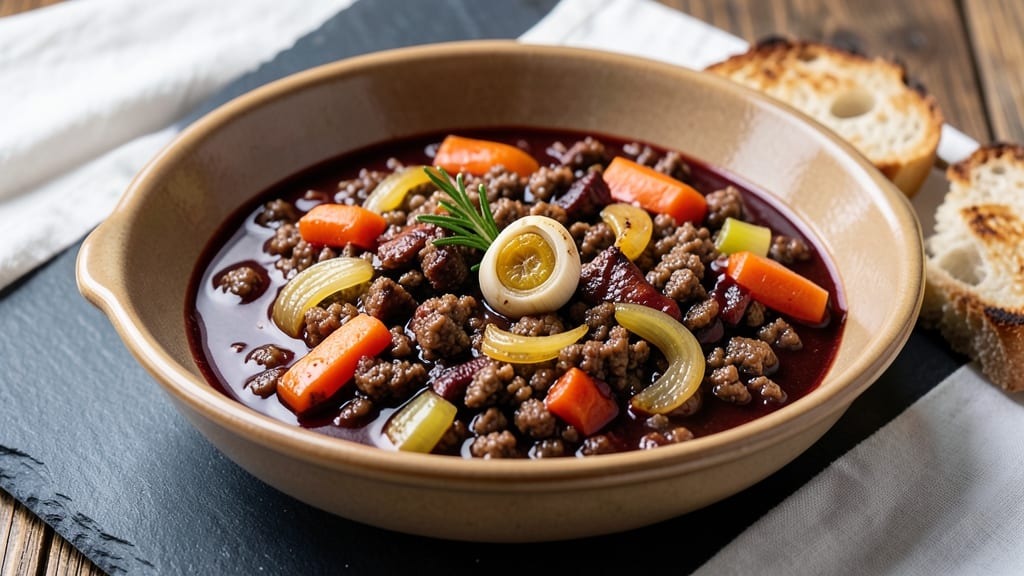
This minced pork ragu recipe delivers the kind of slow-simmered richness that transforms simple ingredients into a restaurant-worthy masterpiece. 🔥 The secret lies in browning the pork properly—creating a deep, caramelized foundation that builds into an intensely flavorful sauce.
I've perfected this technique over years of cooking for crowds at The Smoky Pig, where we process 2,000 pounds of pork weekly, and it never fails to impress.
The process begins with finely mincing pork shoulder, which renders beautifully while developing that signature meaty depth. As it simmers, aromatic vegetables like celery, carrots, and onions form the base, while herbs and a touch of wine elevate the sauce to new heights.
What sets this ragu apart is the celery crown garnish—a simple but striking presentation that adds freshness and visual appeal without overpowering the dish.
By the time you twirl that first forkful, you'll experience perfectly tender pork in a velvety sauce that clings to every bite. The texture is rich yet balanced, with just enough acidity from the wine to cut through the richness.
This is the kind of dish that tastes even better the next day, making it ideal for meal prep or special occasions.
Serve it over al dente pappardelle, creamy polenta, or even crusty bread to soak up every last drop. The possibilities are endless, but the foundation remains the same: slow-cooked pork that melts in your mouth and a sauce so flavorful it becomes the star of the meal.
Let's get cooking—your taste buds will thank you.
Ingredients for minced pork ragu
Pantry staples meet premium pork for this restaurant-quality ragu that gets better with time.
| Ingredient | Amount | Notes |
|---|---|---|
| Pork Shoulder 🥓 | 2 ½ lb | Finely minced, bone-in preferred |
| Yellow Onion 🧅 | 1 whole | Diced, medium size |
| Carrots 🥕 | 3 medium | Diced, about 1 cup total |
| Celery Stalks 🌿 | 3 whole | Diced, for sauce and garnish |
| Garlic Cloves 🧄 | 6 cloves | Minced, fresh preferred |
| Dry Red Wine 🍷 | 1 cup | Bold variety like Cabernet |
| Tomato Paste 🍅 | ½ cup | Smooth, no sugar added |
| Chicken Broth 💧 | 2 cups | Low-sodium preferred |
| Fresh Rosemary 🌿 | 2 tbsp | Chopped, stems removed |
| Fresh Thyme 🌿 | 1 tbsp | Leaves only, stems removed |
| Olive Oil 🫒 | ¼ cup | Extra-virgin for browning |
| Salt 🧂 | 1 tsp | Kosher or sea salt |
| Black Pepper 🌶️ | ½ tsp | Freshly ground |
| Pappardelle Pasta 🍝 | 12 oz | Al dente preferred |
| Parmesan Cheese 🧀 | ½ cup | Freshly grated |
The pork shoulder is non-negotiable here—bone-in adds depth, but boneless works if you're in a hurry. Costco or your local butcher usually have it pre-cut for ragu, but if not, ask for a chunk with some fat cap. That fat renders down into the sauce, creating insane richness. For the vegetables, Trader Joe's has the best pre-diced onion-carrot-celery mix (saves 20 minutes), but fresh is always better. The celery? You'll use half for the sauce and half for that herbed crown garnish—don't skip it, it's the secret weapon.
No red wine? Dry sherry or beef broth with a splash of balsamic works in a pinch, but the acidity matters. Fresh rosemary and thyme are ideal, but dried at one-third the amount gets you close. The tomato paste can be the squeeze-tube kind from Trader Joe's—it's perfect for this recipe. For the pasta, De Cecco or Barilla are my go-tos, but any good-quality pappardelle will do. The Parmesan? Grate it yourself—pre-grated is full of anti-caking agents that ruin the texture.
This sauce tastes even better the next day—make a double batch if you can. Keeps for 5 days in the fridge or 3 months frozen. I portion mine into containers with a scoop of pasta—ready for quick lunches. For reheating, just add a splash of broth or water to loosen it up. The celery crowns? Make them fresh when serving—they wilt fast, but that's part of the charm.
Why You'll Love This Recipe
- One-Pot Magic: I swear by this—just brown the pork, toss in the onions, carrots, and celery (the classic "sofrito" combo), then let it slow down. No extra pans, no fuss, and the flavors meld into something rich without me hovering over the stove.
- Garlic Bomb Depth: That pork shoulder? It turns tender and juicy, but the real star is the garlic—sautéed until it’s sweet and golden, then simmered into the ragu until every bite has that slow-cooked, umami punch. (Yes, even my garlic-averse husband steals seconds.)
- Leftovers That Shine: Make a double batch on Sunday, and you’ve got weeknight dinners covered. Serve it over pasta, mix it into risotto, or just eat it straight with crusty bread—it’s the kind of meal that gets better the next day, honestly.
- Budget Winner: Pork shoulder is cheap, and a big cut stretches for miles. Plus, the veggies (onions, carrots, celery) are pantry staples. I’ve fed four grown adults for under $15, and no one complained—just refilled plates.
Step-by-step instructions for minced pork ragu
Here's how to transform simple ingredients into a deeply flavorful, slow-simmered ragu that'll impress.
🔥 Step 1: Brown the Pork Shoulder for Maximum Flavor
Heat the 0.25 cup olive oil in a large Dutch oven over medium-high heat until shimmering. Add the 2.5 lb pork shoulder in batches, breaking it into small pieces as it browns. Don't rush this step—it's crucial for building deep flavor. Let each batch sear for 3-4 minutes until deeply browned on all sides before removing to a plate.
Here's the thing—you want that meat to develop a rich crust. If it releases easily from the pan, it's ready. Don't walk away; burnt pork ruins the whole dish. Once all pork is browned, return it to the pot and set aside for now. The rendered fat will become the base of your sauce.
👨🍳 Step 2: Sauté the Vegetable Base
In the same Dutch oven, add the diced yellow onion, diced carrots, and diced celery stalks. Cook over medium heat for 8-10 minutes, stirring occasionally, until the vegetables soften and begin to caramelize. You'll see them release their moisture and turn a beautiful golden color.
I like to press down on the vegetables with a wooden spoon during the last minute to help them break down further. This creates a flavorful paste at the bottom of the pot that forms the foundation of your ragu. Add the 6 minced garlic cloves and cook for another 30 seconds until fragrant—don't let it burn, or you'll get bitter flavors.
🍳 Step 3: Deglaze and Simmer the Ragu
Pour in the 1 cup dry red wine and scrape up all those delicious browned bits from the bottom of the pot. Let it simmer for 3-4 minutes until the wine reduces by half. Then stir in the 0.5 cup tomato paste and cook for another 2 minutes to deepen the color and flavor.
Add the 2 cups chicken broth, 2 tbsp fresh rosemary, 1 tbsp fresh thyme, 1 tsp salt, and 0.5 tsp black pepper. Bring to a gentle boil, then reduce heat to low and cover partially. Here's where the magic happens: simmer for 2.5-3 hours until the pork is fork-tender and the sauce has thickened into a rich consistency.
🥘 Step 4: Finish with Pasta and Garnish
While the ragu simmers, cook the 12 oz pappardelle pasta in salted boiling water until al dente (about 2 minutes less than package directions). Reserve 1 cup pasta water before draining.
Add the drained pasta to the Dutch oven with the ragu. Toss gently to coat, adding reserved pasta water as needed to loosen the sauce to your preferred consistency. Remove from heat and stir in the 0.5 cup freshly grated parmesan cheese. Garnish with additional chopped celery stalks for freshness and serve immediately with extra grated parmesan on the side.
Pro Tips For Making Minced Pork Ragu
- Brown the Pork Properly: High heat first—get those minced pork bits sizzling until they lose their raw pink and take on a deep golden crust. I used to skip this, thinking it was just busywork, but that crust actually carries the flavor through the whole dish. (Yes, even if you’re impatient like me.)
- Soften the Veggies Slowly: Carrots and celery need low-and-slow love—cover the pot after the initial sear and let them simmer for at least 20 minutes before adding the garlic. After burning three batches, I finally figured out that rushing this step turns your ragu into mush instead of a rich, textured base.
- Salt the Pork Twice: Season the minced pork generously before browning, then add another pinch mid-cooking. I learned this the hard way—once I forgot, and the ragu tasted bland no matter how much I added later. (Your future self will thank you.)
- Deglaze with Wine First: After browning the pork, splash in a splash of red wine and let it bubble away for 30 seconds before adding broth. This isn’t the prettiest method, but it works: the wine lifts all the stuck-on bits, giving the ragu depth from the start. (Skip this when you’re lazy, but the dish is noticeably better when you don’t.)
Regional styles of minced pork ragu
Southern Italian Style
This is the version I grew up with in Georgia—where Italian immigrants adapted ragu to local ingredients. Here, we swap red wine for a splash of bourbon (about ½ cup) and add smoked paprika (just ½ tsp) for depth.
The pork shoulder stays the same, but I often finish with a sprinkle of crumbled crispy bacon instead of parmesan. Serve it over creamy grits for a true Southern twist that'll make your taste buds do a happy dance. 🔥
Modern Fusion Twist
For a contemporary take, I like adding 1 cup chopped mushrooms (cremini or shiitake) with the vegetables and finishing with 1 tbsp soy sauce (just before serving). This Asian-inspired ragu gets a beautiful umami boost that pairs perfectly with jasmine rice or even sushi rice.
The celery crown garnish becomes quick-pickled celery ribbons—slice celery into ¼-inch strips, toss with 1 tbsp rice vinegar and ½ tsp sugar, and let sit for 10 minutes. Trust me, this fusion version is a crowd-pleaser.
Roman Ragù Style
In Rome, they take ragu to another level by adding ½ cup guanciale (cured pork cheek) when browning the pork. If you can't find guanciale, substitute with extra pancetta (about 4 oz).
The Romans also use 1 can (14 oz) crushed tomatoes instead of tomato paste, and they finish with ½ cup heavy cream> to make the sauce extra velvety. Serve this version with rigatoni pasta> and a sprinkle of pecorino romano> instead of parmesan.
The texture is richer, and the flavors are pure comfort food heaven. 💛
Texas BBQ-Inspired Ragu
Here's where things get fun—this version is all about smoky heat. After browning the pork, add 1 tbsp smoked salt> (like Trader Joe's> brand) and 1 tbsp chipotle powder> with the vegetables.
Deglaze with ½ cup beef broth> instead of wine, then finish with 2 tbsp BBQ sauce> (I like Stark's> original). Serve this over cornbread> or with crispy potato wedges>.
It's sweet, smoky, and packed with Texas-style flavor that'll remind you of your favorite BBQ joint. ✨
Vegetarian Adaptation
For a meat-free version that still delivers big flavor, swap the pork for 2.5 lb lentils> (or 1.5 lb mushrooms + 1 cup lentils> for extra texture). Use the same technique for browning (just toast the mushrooms first), and add 1 tbsp soy sauce> with the wine.
The celery crown garnish becomes toasted pine nuts> (about ¼ cup) and fresh basil**> instead. This version is hearty, satisfying, and perfect for plant-based eaters who still crave that rich ragu experience. 🌱
Nutrition facts
Frequently asked questions
Can I use ground pork instead of minced pork shoulder?
You absolutely can! Ground pork works beautifully and saves time since it's already finely chopped. Just ensure it's at least 80% lean to avoid a greasy sauce. For extra flavor, brown the ground pork in batches over medium-high heat until it develops a nice crust—this creates the same rich foundation as minced pork shoulder.
How do I prevent the ragu from becoming too dry or thick?
Keep the sauce loose by adding 1-2 tablespoons of broth or water as it simmers. The key is patience—if it thickens too much, just add a splash and let it cook uncovered for 5-10 minutes to reduce again. For the final toss with pasta, always use reserved pasta water to adjust consistency. If you're prepping ahead, store the sauce in the fridge with a lid slightly ajar to prevent it from drying out.
What’s the best way to reheat leftover ragu?
Reheat gently in a skillet over low heat with a splash of broth or water to restore moisture. Never microwave directly—this makes the sauce greasy. For best results, warm it on the stove for 5-7 minutes, stirring occasionally. If it's too thick after reheating, thin it with a little pasta water or broth. Pro tip: Add a pinch of salt and pepper to revive the flavors!
Can I make this ragu in a slow cooker or Instant Pot?
Yes! For the slow cooker, brown the pork first, then transfer everything to the pot and cook on low for 6-7 hours or high for 3-4 hours. For the Instant Pot, sauté the pork and vegetables, then pressure cook on high for 25 minutes (natural release). The Instant Pot version will be slightly thinner—reduce it uncovered on the stove afterward if needed. Both methods work, but the stovetop version gives you more control over the texture.
What’s the deal with the celery crown garnish?
The celery crown is a simple but striking way to add freshness and visual appeal! Just thinly slice 2 celery stalks into ribbons, toss with 1 tsp olive oil and ½ tsp lemon juice, then arrange them in a circular "crown" on top of the ragu right before serving. It wilts slightly, which actually enhances the presentation. If you're short on time, a sprinkle of fresh parsley or basil works just as well!