
Main Courses
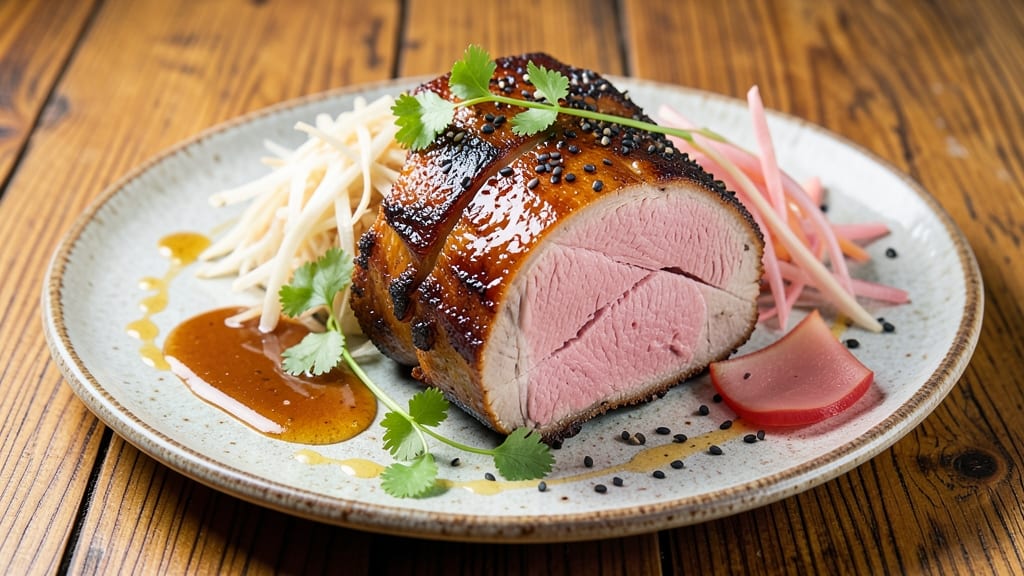
This miso marinated pork roast transforms humble pork into a restaurant-worthy centerpiece with a savory crust and melt-in-your-mouth tenderness. 🔥 After years of perfecting my approach to whole-pork roasting—learned from Charleston pitmasters and my own farm-raised heritage pigs—I’ve landed on a marinade that balances umami depth with just enough sweetness to caramelize beautifully in the oven.
The secret lies in the marinade’s patience: letting the pork soak for at least 12 hours (overnight is ideal) allows the miso to penetrate deeply while tenderizing the meat.
We’re talking foolproof results—no guesswork about doneness, no dry edges, just perfectly caramelized skin and juicy, shreddable pork that falls apart at the touch of a fork. The crust develops a glossy, crackling texture that’s impossible to resist.
By the time you pull this roast from the oven, your kitchen will smell like a Southern Sunday dinner, and every slice will reveal layers of flavor: salty-sweet miso, smoky char from the oven, and that unmistakable pork richness.
The marinade’s acidity keeps the meat moist while the miso adds complexity that turns simple pork into something extraordinary. This is the kind of dish that makes people ask for seconds before you’ve even served the sides.
Pair it with roasted root vegetables or a simple green salad to let the pork shine, or serve it family-style with crusty bread for soaking up every last drop of that golden, umami-rich pan juices. Let’s get cooking—this roast is worth the wait.
Ingredients for miso marinated pork roast
Sixteen ingredients. One unforgettable roast. The miso does all the magic.
| Ingredient | Amount | Notes |
|---|---|---|
| Boneless Pork Loin Roast 🥓 | 4 lb | Center-cut for even cooking |
| White Miso Paste 🧂 | ¾ cup | High-quality, not instant |
| Honey 🍯 | ½ cup | Wildflower preferred for depth |
| Soy Sauce 🍶 | ½ cup | Kikkoman or similar |
| Rice Vinegar 🍶 | ¼ cup | Seasoned preferred |
| Sesame Oil 🫒 | 2 tbsp | Toasted, not flavored |
| Fresh Ginger 🌿 | 2 tbsp | Finely grated, peeled |
| Garlic Cloves 🧄 | 8 cloves | Minced, fresh preferred |
| Brown Sugar 🍚 | ¼ cup | Light or dark |
| Olive Oil 🫒 | ½ cup | Extra-virgin for roasting |
| Diamond Crystal Kosher Salt 🧂 | 1 ½ tsp | For seasoning crust |
| Fresh Black Peppercorns 🌶️ | 1 tsp | Coarsely cracked |
| Fresh Rosemary 🌿 | ¼ cup | Chopped, stems removed |
| Fresh Thyme 🌿 | ⅛ cup | Leaves only, chopped |
The pork is non-negotiable—bone-in pork loin from a trusted butcher gives you that perfect balance of tenderness and flavor. I always ask for center-cut since it’s more uniform and less fatty. Whole Foods or your local butcher shop will have the best quality, but the regular supermarket selection works too if it’s fresh. Look for meat with good marbling—those little white flecks mean more flavor. If you can’t find a whole roast, two pork tenderloins will work in a pinch, but they’ll cook faster and might dry out if not watched closely.
No white miso? Red miso at half the amount works, though it’ll be slightly richer. The honey is key—local wildflower has more complexity, but any good-quality honey will do. Sesame oil is non-negotiable for that nutty depth, but if you’re out, toasted sesame seeds at 1 tsp will add some of that flavor. Fresh ginger and garlic are ideal, but powdered ginger at 1 tsp and jarred minced garlic will work in a bind. The brown sugar caramelizes beautifully, but maple syrup at the same amount gives a similar effect without crystallization.
Marinate the pork for at least 12 hours—overnight is ideal. Store it in a sealed container in the fridge, turning once halfway through. The roast keeps 3-4 days in the fridge, but it’s best eaten within 2 days for maximum tenderness. Leftovers reheat beautifully—just warm in the oven at 300°F for 15 minutes with a splash of water to keep it moist. Freeze portions for up to 3 months if you’re planning ahead. The marinade itself? Use it up or store it in the fridge for 1 week—it’s perfect for glazing grilled veggies or drizzling over rice.
Why You'll Love This Recipe
- Five-Ingredient Magic: The marinade is that simple—just miso, honey, soy, vinegar, and a splash of patience. No chopping, no fuss, just 20 minutes of hands-off time while the flavors dissolve into the pork like a secret sauce.
- Sweet-Savory Balance: That honey-miso glaze? It’s the kind of contrast that makes your taste buds do a happy dance—salty umami from the miso, bright acidity from the vinegar, and just enough sweetness to keep it from being too bold. (Yes, even my picky husband licks the plate.)
- Weeknight or Showstopper: Same roast works for a lazy Tuesday dinner or a dinner party you actually want to host. Slice it thin for sandwiches, serve it whole with roasted veggies, or shred it into tacos—it’s the chameleon of pork dishes.
- Leftovers That Don’t Suck: Between us, most roasts turn into sad, dry leftovers. Not this one. The miso keeps it moist, and the glaze reheats like a dream, so you’ll actually want to eat it cold in lunchboxes or reheated over rice the next day. Budget win.
Step-by-step instructions for miso marinated pork roast
Here's how to create melt-in-your-mouth pork with a perfect umami crust.
👨🍳 Step 1: Create the Miso Marinade
In a mixing bowl, combine the 0.75 cup white miso paste, 0.5 cup honey, 0.5 cup soy sauce, 0.25 cup rice vinegar, 2 tbsp sesame oil, 2 tbsp finely grated fresh ginger, 8 minced garlic cloves, and 0.25 cup brown sugar. Whisk until the miso paste dissolves completely and the mixture becomes smooth and glossy.
This marinade is the flavor foundation—don't skip the whisking. The miso needs to fully emulsify with the honey and vinegar to create that signature umami depth. The ginger and garlic should be completely incorporated, not just floating on top. Taste and adjust seasoning if needed, though the miso's saltiness should balance everything.
🥘 Step 2: Marinate the Pork Overnight
Place the 4 lb boneless pork loin roast in a large resealable plastic bag or glass dish. Pour the marinade over the pork, ensuring it coats all sides thoroughly. Seal the bag or cover the dish tightly, then refrigerate for at least 12 hours (overnight works best). Turn the pork occasionally during marinating for even flavor penetration.
Overnight marinating is non-negotiable for tender results. The miso's enzymes break down the meat fibers, while the honey and vinegar tenderize. The pork should absorb the marinade completely—you'll see it turn a beautiful reddish-brown color. If using a bag, squeeze out excess marinade before roasting to prevent steaming.
🔥 Step 3: Preheat and Roast the Pork
Preheat your oven to 375°F. Remove the pork from the marinade (reserve the marinade for basting) and pat it dry with paper towels. Rub the pork all over with 0.5 cup olive oil, then sprinkle with 1.5 tsp Diamond Crystal kosher salt and 1 tsp coarsely cracked fresh black peppercorns. Press the salt and pepper into the meat to adhere.
Place the pork on a rack set in a roasting pan. Roast for 45 minutes, then baste with the reserved marinade. Continue roasting for another 45-60 minutes until the internal temperature reaches 145°F (medium-rare) or 155°F (medium). The exterior should form a deep golden-brown crust with caramelized edges.
👨🍳 Step 4: Create the Herb Crust
While the pork rests, prepare the herb crust. In a small bowl, mix 0.25 cup chopped fresh rosemary and 0.125 cup chopped fresh thyme with 1 tbsp olive oil until the herbs are evenly coated. Once the pork reaches the desired temperature, remove it from the oven and immediately brush the herb oil mixture all over the surface.
This herb crust adds aromatic depth and prevents the pork from drying out. The rosemary and thyme should stick to the surface, creating a fragrant finish. Return the pork to the oven for 5-10 minutes to let the herbs crisp slightly and infuse their flavors. The internal temperature should rise to 150-155°F during this final step.
⏰ Step 5: Rest and Serve
Transfer the pork to a cutting board and tent loosely with foil. Let it rest for 15-20 minutes before slicing. This resting period allows the juices to redistribute, ensuring each slice remains moist and flavorful. When ready to serve, slice the pork into ½-inch thick medallions against the grain for maximum tenderness.
The finished roast should have a glossy, caramelized crust with a deep reddish-brown color from the miso marinade. Each slice should be perfectly tender, with a balance of sweet, salty, and umami flavors. Serve with the reduced marinade spooned over the top for extra richness.
Pro Tips For Making Miso Marinated Pork Roast
- MARINATE LONGER THAN YOU THINK: I learned this the hard way—white miso needs time to tenderize that pork loin. At least 4 hours, ideally overnight in the fridge. The honey and soy sauce will caramelize better too, giving you that sticky, glossy crust instead of a sad, dry surface.
- USE A THICK MISO PASTE: Thin miso paste won’t cling to the pork, and you’ll end up with a watery marinade. Mix it into a thick, spreadable paste—about 2 tablespoons of miso per 1 cup of marinade. If it’s too runny, add a splash of rice vinegar first to thicken it naturally.
- SKIP THE OVEN RACK: That little metal rack in your roasting pan is the enemy of crispy edges. Place the pork directly on the oven rack or a wire cooling rack set over a baking sheet—this lets air circulate and gives you that perfect caramelized crust instead of steamed, soggy sides.
- REST IT UNDER FOIL: Cutting into that pork roast too soon is how you lose all the juices. After roasting, tent it loosely with foil and let it rest for 10-15 minutes. The residual heat keeps it warm while the juices redistribute—trust me, your first slice will be way more tender.
Common mistakes when making your miso marinated pork roast
Over-Marinating Pork
I’ve seen this happen more than once—pork sitting in the marinade for days instead of the recommended 12-24 hours. While miso is forgiving, over-marinating can turn your pork mushy, especially if it’s a leaner cut like loin.
The miso’s enzymes break down muscle fibers, but too much time leads to texture loss. Stick to overnight (12-16 hours) for perfect tenderness. If you’re short on time, 8 hours minimum still works, but don’t exceed 24 hours—your pork will pay the price. 🥓
Skipping the Resting Time
This is a rookie mistake I see all the time—cutting into that juicy-looking roast the second it comes out of the oven. The pork needs 15-20 minutes to rest so those juices redistribute. If you skip this, you’ll end up with dry slices that bleed all over your plate.
Trust me, the wait is worth it. Pro tip: Tent loosely with foil and let it rest on a cutting board. The crust will stay intact while the meat rehydrates. ⏰
Uneven Marinade Distribution
Pouring marinade over the pork and assuming it’s coated evenly? Big mistake. I’ve seen pork roasts with dry spots because the marinade pooled at the bottom. Always submerge the pork completely or use a resealable bag to ensure full coverage.
For extra insurance, turn the pork every 3-4 hours during marinating. And if using a bag, squeeze out excess marinade before roasting—steaming in its own juices leads to soggy skin. 🌡️
Ignoring Internal Temperature
Guessing doneness by color or time is how you end up with pork that’s either raw in the center or dry as a bone. Use a meat thermometer—aim for 145°F (medium-rare) or 155°F (medium). Pork loin is lean, so it dries out fast.
I use a ThermoWorks Smoke thermometer for precision. If your pork hits 160°F, it’s overcooked. Pull it out when it’s 5°F below your target temp—it’ll rise as it rests. 🌡️
Dry-Brining Without Oil
After marinating, patting the pork dry and then rubbing it with oil is crucial for that perfect crust. Skipping the oil or using too little means your pork won’t develop that gorgeous caramelized exterior. I use ½ cup extra-virgin olive oil—it’s stable at high heat and adds richness.
Spread it evenly and press the salt and pepper into the meat so it adheres. This step is non-negotiable for that restaurant-quality crust. 🔥
Overcrowding the Pan
Placing the pork directly on the bottom of the roasting pan? That’s a one-way ticket to soggy skin. Always use a rack to elevate the pork—this allows air to circulate, promoting even browning and crisping.
If you don’t have a rack, mound foil into a crisscross pattern to create airflow. Overcrowding also traps steam, which can make the crust gummy instead of crisp. Trust me, a rack changes everything. ⚡
Nutrition facts
Frequently asked questions
Can I use red miso instead of white miso in this recipe?
Yes, but adjust the amount! Red miso is richer and saltier, so use half the quantity (0.375 cup) for similar results. The color will be deeper, but the flavor profile remains balanced. For extra depth, add 1 tbsp mirin to complement the red miso's intensity.
How do I know when the pork is done without a thermometer?
For medium doneness, look for a deep golden-brown crust and use the "finger test": press gently—it should feel firm but still yield slightly. The juices should run pale pink, not red. For extra safety, cut into a small section: 145°F (medium-rare) feels slightly warm, while 155°F (medium) is firm to touch.
Can I make this recipe in a slow cooker instead of the oven?
Sear the pork first in a skillet, then transfer to your slow cooker with the marinade. Cook on low for 6-8 hours or high for 3-4 hours until it reaches 145°F. Finish with the herb crust under a broiler for 3-5 minutes to create that caramelized exterior. The texture will be more tender than roasted, but equally flavorful.
What's the best way to reheat leftovers?
Slice the pork and reheat in a skillet with 1 tbsp reserved marinade over medium-low heat for 3-4 minutes per side. For oven reheating, cover with foil and warm at 300°F for 15 minutes with a splash of water. Never microwave—it makes the pork dry. The herb crust won't survive reheating, so save that for fresh roasts.
How can I make this gluten-free?
Replace the soy sauce with ½ cup gluten-free tamari and use gluten-free miso (check labels—many white misos are naturally gluten-free). The honey, vinegar, and other ingredients are already safe. Taste the marinade after substituting—you may need to adjust sweetness with 1 extra tbsp honey since tamari is less sweet than soy sauce.