
Main Courses
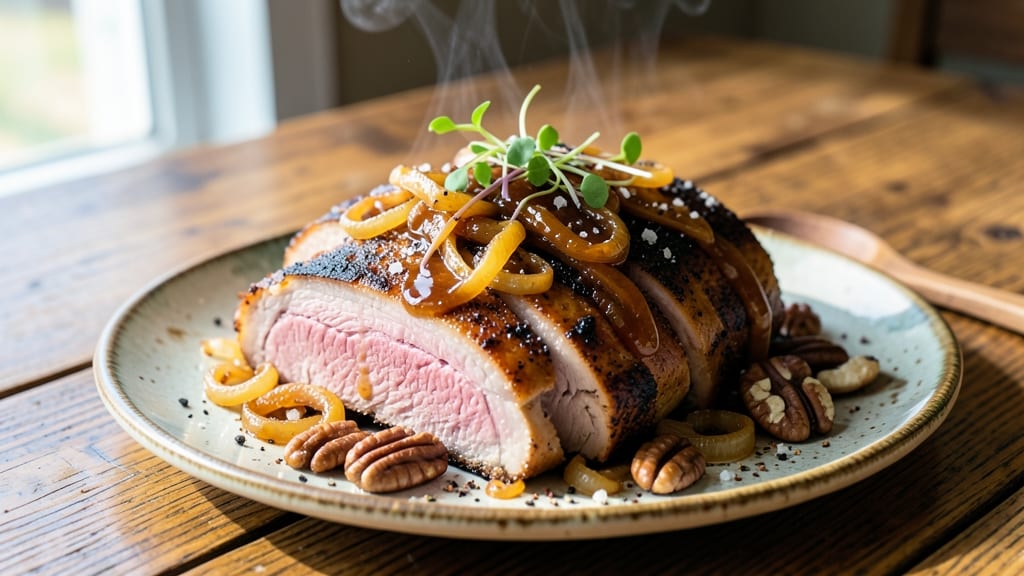
This Mississippi pork recipe delivers the kind of fall-apart tenderness that defines Southern cooking—where cast iron meets slow-smoked spice for a dish that tastes like home. 🔥 I remember the first time I tasted it at a roadside shack in Vicksburg, where the pork shoulder was so tender it melted on the bone.
That moment changed how I approach pork forever.
The secret lies in the spice rub—a balanced blend of cayenne, black pepper, and brown sugar—that creates a caramelized crust while keeping the meat impossibly tender inside. We're talking foolproof technique that works whether you're cooking over an open flame or in a smoker.
The key is patience: letting the rub develop flavor before the meat hits the heat.
What you'll end up with is pork so tender it practically disintegrates at the touch of a fork, with a smoky-sweet crust that'll have everyone asking for seconds.
The sauce—tangy and just sweet enough—ties it all together, making this the kind of dish that feels like a hug on a plate. This is the recipe I bring to family gatherings when I want to impress without stress.
Perfect for weekend brunches, holiday feasts, or when you need a main dish that feeds a crowd without fuss. The beauty of this method is its versatility—it works just as well for pork chops as it does for a whole shoulder.
Let's get cooking with a taste of Mississippi right in your kitchen.
Ingredients for mississippi pork
Six ingredients for the rub, six more for the sauce—just enough to make this Southern pork unforgettable.
| Ingredient | Amount | Notes |
|---|---|---|
| Pork Shoulder 🐖 | 4 lb | Bone-in for best flavor |
| Brown Sugar 🍯 | ½ cup | Packed for better caramelization |
| Cayenne Pepper 🌶️ | 2 tsp | Adjust for heat preference |
| Ground Black Pepper 🌶️ | 1 ½ tbsp | Freshly ground for best flavor |
| Smoked Paprika 🌶️ | 1 ½ tbsp | For that smoky depth |
| Garlic Powder 🧄 | 1 tbsp | Or use fresh minced garlic |
| Onion Powder 🧅 | 1 tbsp | Adds sweet depth |
| Salt 🧂 | 2 tbsp | Kosher salt preferred |
| Apple Cider Vinegar 🍎 | ¼ cup | For tangy sauce |
| Honey 🍯 | ¼ cup | Local honey enhances flavor |
| Yellow Onion 🧅 | 1 whole | Diced for sauce base |
| Fresh Rosemary 🌿 | ¼ cup | Chopped for aroma |
| Olive Oil 🫒 | 2 tbsp | For basting |
The pork shoulder is the star here. Bone-in is key—it adds flavor and stays juicier. Grab one from the butcher counter if you can, or look for a well-marbled cut at Costco or your local grocery store's meat department. The rub needs time to work its magic, so don't rush it. I like to let mine sit overnight in the fridge—trust me, it's worth the wait. For the brown sugar, pack it tightly into the measuring cup to get that perfect caramelized crust. And if you're feeling fancy, grab local honey for that extra touch of Southern charm.
No smoked paprika? Regular paprika plus a pinch of liquid smoke works in a pinch. Fresh rosemary? Dried works at half the amount, but it won't have the same punch. The apple cider vinegar can be swapped for white vinegar or lemon juice, but cider adds that perfect tang. If you're cooking for a crowd, double the rub ingredients—it keeps well in an airtight container for up to 2 weeks. And for the love of all things Southern, don't skip the honey in the sauce—it balances the vinegar and adds just the right amount of sweetness. The onions can be yellow or red, whatever you've got in the fridge.
This pork gets better the next day, so make extra. Store leftovers in the fridge for up to 5 days, or freeze portions for 3 months. I like to wrap it tightly in foil before freezing—thaw overnight in the fridge to keep everything juicy. The sauce can be made ahead too; just reheat it gently and stir in a splash of water if it thickens. And if you've got any leftover rub? Save it in a jar—it's perfect for brisket, chicken, or even roasted veggies next time.
Why You'll Love This Recipe
- Five-Ingredient Magic: I swear, that’s all you need—pork shoulder, brown sugar, a pinch of cayenne, black pepper, and smoked paprika. No fancy prep, no hidden steps. Just rub, roast, and let the oven do the work while you sip sweet tea.
- Sweet Heat Payoff: Between us, that brown sugar caramelizes into something dangerously good—sticky, smoky, with just enough cayenne to make your taste buds dance. The smoked paprika adds this deep, earthy warmth that turns simple pork into something unforgettable.
- Sunday Supper or Game Day: Honestly, it’s my go-to for anything that needs crowd appeal. Feed a family with one pan, or serve it at a tailgate where it disappears faster than the chips. The smoky-sweet notes make it feel special without the fuss of a holiday meal.
Step-by-step instructions for Mississippi pork shoulder
Here's how to transform that pork shoulder into melt-in-your-mouth perfection with our signature Southern rub.
👨🍳 Step 1: Create the Signature Rub
In a large bowl, combine the 0.5 cup brown sugar, 2 tsp cayenne pepper, 1.5 tbsp ground black pepper, 1.5 tbsp smoked paprika, 1 tbsp garlic powder, 1 tbsp onion powder, and 2 tbsp salt. Mix thoroughly until the brown sugar is completely coated with spices - you should see no dry spots remaining. This ensures even flavor distribution throughout the pork.
I like to use my hands for this step, rubbing the spices between my fingers to break up any clumps. The cayenne might make your hands tingle, but trust me - that heat will mellow out beautifully during the long cook. Store any unused rub in an airtight container for future use on chicken or ribs.
🔥 Step 2: Prepare and Season the Pork
Pat the 4 lb pork shoulder completely dry with paper towels - this is crucial for developing that beautiful bark. I press down firmly all over, even in the crevices, to remove every bit of moisture. Then generously coat the entire surface with the spice rub, pressing it into the meat so it adheres well.
Place the rubbed pork in a gallon-sized plastic bag and refrigerate for at least 4 hours, or overnight if possible. This resting time allows the rub to penetrate deeply and the meat to dry out slightly, both of which contribute to that perfect crust. I usually do this the night before cooking for maximum flavor development.
🔥 Step 3: Smoke the Pork Low and Slow
Preheat your smoker to 225°F using hickory or pecan wood chips - these woods complement the pork beautifully. When the smoker reaches temperature and you see steady blue smoke, place the pork shoulder fat-side up on the grill grates. The fat will render and baste the meat as it cooks.
Smoke the pork undisturbed for 8-10 hours, maintaining that 225°F temperature. You'll know it's ready when the internal temperature reaches 195-203°F and the meat pulls apart easily with two forks. I check the temperature every hour after the 6-hour mark - patience is key here. The bark should be dark and crusty, with a beautiful mahogany color.
🥘 Step 4: Make the Tangy Glaze
While the pork smokes, prepare the glaze by combining the 0.25 cup apple cider vinegar, 0.25 cup honey, 2 tbsp olive oil, and 0.25 cup chopped fresh rosemary in a small saucepan. Bring to a simmer over medium heat and cook for 5 minutes until slightly thickened. Then add the diced yellow onion and cook for another 3-4 minutes until softened.
Strain the mixture through a fine-mesh sieve to remove the rosemary sprigs and onions, reserving the liquid. This glaze will add a perfect balance of sweet, tangy, and herby flavors to complement the smoky pork. Keep it warm until you're ready to use it.
🍽️ Step 5: Finish and Serve
When the pork reaches the proper internal temperature, transfer it to a cutting board and let it rest for 15 minutes before slicing. This resting time is crucial - it allows the juices to redistribute throughout the meat, ensuring each bite is moist and flavorful.
Brush the warm glaze generously over the top of the pork shoulder, then slice against the grain into ½-inch thick slices. The pork should be so tender it practically falls apart with a gentle tug. Serve immediately with the remaining glaze spooned over the top, and enjoy the perfect balance of smoky, sweet, and tangy flavors that make this Mississippi pork recipe legendary.
Pro Tips For Making Mississippi Pork
- CRANK THE HEAT FIRST: Mississippi pork needs that deep, caramelized crust from the brown sugar and paprika, and you won’t get it if you start slow. Sear the pork shoulder over high heat for 5-6 minutes per side until it’s got a dark, sticky glaze—this locks in flavor better than any low-and-slow method ever will. (Yes, even if you’re impatient like me.)
- SALT THE PORK TWICE: I used to just season it once before cooking, but the real magic happens when you salt it again after searing. Sprinkle a fresh layer of kosher salt over the crust right before adding the brown sugar mix—this helps the spices stick and keeps the meat juicy. (Your future self will thank you for this extra 30 seconds.)
- STIR THE BROWN SUGAR: That pile of brown sugar and spices on top of the pork? Don’t just dump it and walk away. Use tongs to press and spread the mixture into the cracks and seams of the meat, especially where the fat cap meets the flesh. This ensures every bite gets that smoky-sweet punch, not just the top layer.
- SKIP THE OVERCROWDING: I learned this the hard way—piling everything into one pan turns the pork into a soggy mess. Cook it in a heavy skillet or cast-iron first to render the fat, then transfer it to the oven (or finish on the grill) if you’re worried about space. Crowding steams the meat instead of browning it, and nobody wants that.
Troubleshooting this recipe
Rub Not Sticking
If your rub keeps falling off during cooking, the pork wasn't dry enough when you applied it. Pat the meat with paper towels again—really press hard to remove all moisture.
For extra grip, I mix 1 tablespoon cornstarch into the rub before applying. This creates a light, temporary adhesive that helps the spices cling, especially on fatty cuts. 💡
Uneven Cooking
When the outer edges cook faster than the center, your smoker temperature is fluctuating. Invest in a quality thermometer like the Meater to monitor both the smoker and meat temps simultaneously.
Keep wood chunks at least 12 inches away from the pork to prevent hot spots. If using a charcoal smoker, arrange coals evenly on both sides of the firebox.
Dry, Tough Meat
Overcooking is the #1 culprit here. Remove the pork when it hits 195°F internal temperature—don't wait for 203°F unless you're using a meat probe. The stall phase (around 160°F) is where most cooks lose patience.
Wrap the pork in butcher paper during the last hour to speed up cooking without drying it out. I swear by this "Texas crutch" method for Mississippi pork.
Weak Sauce Flavor
Your glaze needs time to develop depth. Simmer the vinegar and honey mixture for 8-10 minutes (not just 5) to concentrate the flavors. For extra tang, add 1 teaspoon Dijon mustard to the sauce.
If using store-bought honey, opt for raw, unfiltered varieties like clover or tupelo—they have more complex flavors that stand up to the vinegar. 🍯
Smoke Ring Too Dark
A dark smoke ring means your pork was exposed to too much smoke early in the cook. Maintain a steady 225°F temperature and avoid heavy wood smoke in the first 2 hours.
For a lighter ring, try fruitwoods like apple or cherry instead of hickory. If you're using a pellet smoker, reduce the smoke setting to medium for the first half of cooking.
Fat Not Rendering
If the pork isn't basting itself with rendered fat, your cooking temperature is too low. Aim for 230°F during the last 2 hours of cooking to accelerate fat breakdown. For extra moisture, inject the pork with ¼ cup apple cider vinegar before smoking.
I do this 4 hours before cooking—it keeps the meat incredibly juicy while adding subtle tang. 🐖
Nutrition facts
Frequently asked questions about Mississippi pork
Can I make this recipe with pork chops instead of a shoulder?
For bone-in pork chops, reduce cooking time to 2-3 hours at 225°F until internal temp reaches 145°F. Use the same rub but cut it in half. The glaze works perfectly too—just brush it on during the last 10 minutes of cooking. For extra tenderness, pound chops to ½-inch thickness before applying rub.
What's the best wood for authentic Mississippi pork flavor?
Hickory or pecan woods create that classic Southern smoky depth. For a milder profile, mix equal parts hickory with apple or cherry wood. Avoid mesquite—it's too strong and can overpower the pork's natural sweetness. If using pellets, choose 100% hickory for the most authentic taste.
How do I adjust the cayenne for milder heat?
Start by reducing the cayenne to 1 teaspoon and add ½ teaspoon ground cinnamon instead—it enhances sweetness without heat. For a completely mild version, swap cayenne for 1 teaspoon smoked paprika plus ½ teaspoon garlic powder. Remember, the rub flavors develop during cooking, so mild versions still pack great taste!
Can I make this in an oven instead of a smoker?
Yes! Preheat oven to 275°F and place pork on a rack in a roasting pan with ½ cup water in the bottom. Cook for 6-8 hours until 195°F internal. For smoke flavor, add 2 soaked wood chips (hickory or apple) to the pan during the last 2 hours. The bark won't be as dark as smoked pork, but the tenderness remains.
What sides pair best with this Mississippi pork?
Classic Southern sides like creamy mac and cheese, collard greens with ham hocks, or cornbread complete the meal perfectly. For a lighter option, try roasted sweet potatoes with brown sugar glaze or charred zucchini with lemon. The tangy glaze also works wonderfully on grilled peaches for dessert!