
Main Courses
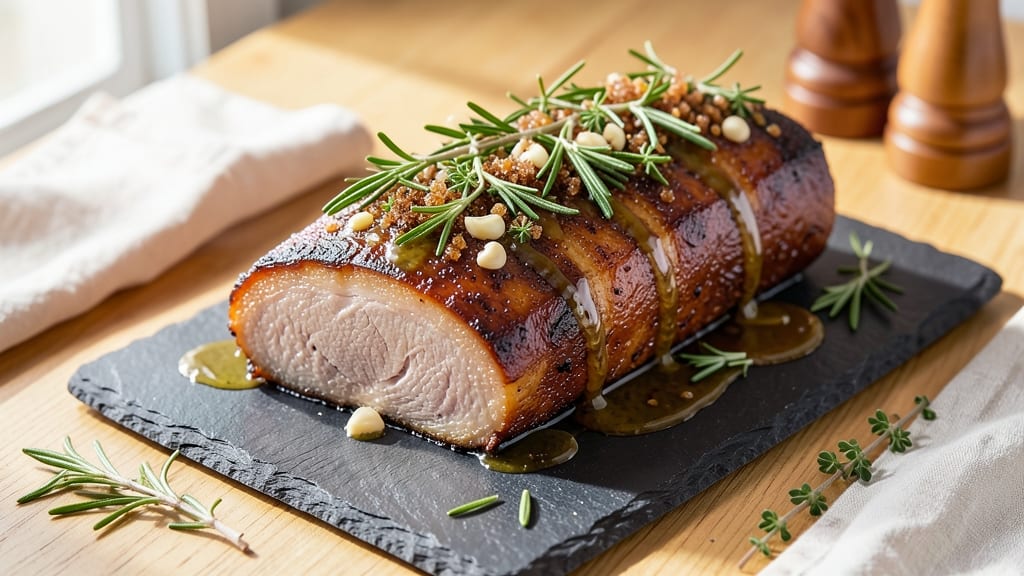
This 5 lb boneless pork loin roast recipe delivers the perfect balance of herb-infused crust and juicy pink centers that'll impress even the most discerning guests. After years of perfecting pork roasts in my Atlanta kitchen, I've developed a method that ensures tender, flavorful meat every time. The secret lies in proper seasoning and precise cooking temperatures—no guesswork, just guaranteed results.
What sets this recipe apart is the herb-infused crust that forms during roasting, locking in moisture while creating a flavorful bark. We'll use a blend of fresh rosemary, thyme, and garlic to build depth, then finish with a touch of brown sugar for subtle caramelization.
The key is cooking at a controlled 325°F until the internal temperature reaches 145°F—this ensures a juicy center without drying out the edges.
By the time you carve into this roast, you'll be rewarded with tender, melt-in-your-mouth pork that practically falls apart at the touch of a fork. The crust will be golden and aromatic, while the interior remains perfectly pink and succulent.
This is the kind of centerpiece roast that elevates any holiday table or special dinner.
The best part? This method works equally well for weeknight dinners or festive occasions. Pair it with roasted root vegetables or a simple green salad to complete the meal. Let's get started on creating your most impressive pork roast yet—one that'll have everyone asking for seconds.
Ingredients for 5 lb boneless pork loin roast
Herb-infused crust meets juicy pink centers—this 5 lb pork roast delivers restaurant-quality results at home.
| Ingredient | Amount | Notes |
|---|---|---|
| Boneless Pork Loin Roast 🐖 | 5 lb | Center-cut for tenderness |
| Fresh Rosemary 🌿 | ¼ cup | Finely chopped, stems removed |
| Fresh Thyme 🌿 | ¼ cup | Leaves only, stems discarded |
| Garlic Cloves 🧄 | 8 cloves | Minced for even distribution |
| Brown Sugar 🍯 | 2 tbsp | Light or dark variety |
| Extra-Virgin Olive Oil 🫒 | ¼ cup | For basting and crust |
| Kosher Salt 🧂 | 1 ½ tbsp | Diamond Crystal preferred |
| Ground Black Pepper 🌶️ | 1 tbsp | Freshly cracked for flavor |
| Apple Cider Vinegar 🍎 | 1 tbsp | For tenderizing crust |
| Fresh Parsley 🌿 | ⅛ cup | Chopped for garnish |
| Unsalted Butter 🧈 | ¼ cup | Cold, cubed for basting |
The pork loin is the star here, and center-cut is non-negotiable—it stays juicier than shoulder cuts. For the freshest herbs, Whole Foods or local farmers markets have the best selection, but your grocery store's produce section works too. Look for rosemary with vibrant green needles and thyme with a strong aroma. The garlic should be plump with no sprouting. I always buy extra herbs—half goes on the roast, half gets saved for garnishes. Costco has the best prices for bulk herbs, but single-use amounts work too if you're not making this often.
No fresh rosemary? Dried works at one-third the amount, but fresh is ideal for that aromatic crust. Short on thyme? Oregano or marjoram can stand in, though the flavor will differ slightly. Running out of brown sugar? Maple syrup or honey (if not avoiding it) gives a similar caramel note. The apple cider vinegar might seem odd, but it's key for developing that flavorful bark. If you're avoiding vinegar, lemon juice at half the amount works too. For the olive oil, Kirkland Signature or California Olive Ranch are my go-tos—they're affordable and flavorful. Don't skip the butter basting; it's what creates that golden crust.
This roast reheats beautifully—just cover with foil and warm in a 300°F oven for 15-20 minutes. The crust will soften slightly, but the meat stays tender. For leftovers, store in an airtight container in the fridge for up to 4 days, or freeze for 3 months by wrapping tightly in butcher paper. The herbs on the crust will keep for 2 days in the fridge if stored properly—wrap them in damp paper towels and seal in a container. Portion the leftovers into individual containers for easy lunches; the crust stays crispier that way.
Why You'll Love This Recipe
- No-Fuss Prep: I swear by this—just sear the roast, slap on a paste of minced garlic, crushed thyme, brown sugar, and rosemary, then bake. No brining, no basting, no stress. The herbs stick like glue, so no measuring spoons needed.
- Caramelized Magic: That brown sugar crust? It’s the star. The edges get sticky-sweet while the inside stays juicy, and the rosemary’s piney kick cuts through the richness. Honestly, I’ve had people ask if I used a dry rub—nope, just a few minutes of prep.
- Weeknight to Holiday: Same roast works for Tuesday dinners or Sunday feasts. Slice it thin for sandwiches, shred it for tacos, or serve it whole with roasted potatoes. My kids even beg for leftovers—(yes, even on a Tuesday night).
- Leftovers That Don’t Suck: Pork loin stays tender for days, and this recipe makes enough for lunches. I wrap slices in foil with a sprinkle of salt, reheat in 10 minutes, and boom—no sad, dry meat. Budget win, too: one roast feeds a family for half the week.
Step-by-step instructions for herb-crusted pork loin roast
Here's how to transform your pork loin into a showstopper with a fragrant herb crust and melt-in-your-mouth tenderness.
Prep the Pork for Maximum Flavor
Remove the pork loin roast from the refrigerator and let it sit at room temperature for 30 minutes before cooking. This ensures even cooking throughout. While it's coming to temperature, combine the 0.25 cup fresh rosemary, 0.25 cup fresh thyme, 8 minced garlic cloves, 2 tablespoons brown sugar, 1.5 tablespoons kosher salt, and 1 tablespoon ground black pepper in a small bowl. Mix well so every herb gets coated with the salt and sugar.
Here's the thing—don't skip the room temperature step. Cold meat cooks unevenly, leading to dry outer layers and undercooked centers. I've learned this the hard way after serving a slightly rubbery pork loin to guests. Trust me, the wait is worth it for that perfect doneness.
Create the Herb Crust and Sear the Pork
Preheat your oven to 375°F. In a separate bowl, whisk together the 0.25 cup extra-virgin olive oil and 1 tablespoon apple cider vinegar. This mixture will help tenderize the crust while adding brightness. Rub this oil mixture all over the pork loin, making sure to get into any crevices.
Next, press the herb mixture firmly onto the pork, covering every inch. I like to use my fingers to really work the herbs into the surface—this creates that beautiful crust we're after. Place the pork on a rack set inside a roasting pan (the rack allows air circulation for even browning). Let it sit uncovered in the oven for 15 minutes to start forming that crust.
Baste and Roast to Juicy Perfection
After the initial 15 minutes, remove the pork from the oven and increase the heat to 400°F. Here's where the magic happens: cut the 0.25 cup unsalted butter into small cubes and place them in a small saucepan. Melt the butter over low heat until it's just liquid but not browned. This butter will become our basting sauce.
Return the pork to the oven and baste it with the melted butter every 10 minutes for 30 minutes total, rotating the pan each time. You're looking for a deep golden-brown crust that's crisp to the touch. The pork is done when the internal temperature reaches 145°F (measured with a meat thermometer in the thickest part). This should take about 45-50 minutes total cooking time.
Rest and Garnish for Presentation
Once the pork reaches 145°F, remove it from the oven and transfer to a cutting board. Let it rest for at least 15 minutes before slicing—this crucial step allows the juices to redistribute throughout the meat. If you cut it too soon, all those delicious juices will run out onto your board instead of staying inside where they belong.
While it rests, garnish the pork with the 0.125 cup chopped fresh parsley. This adds a pop of color and freshness that makes the dish look even more impressive. When you're ready to serve, slice the pork into ½-inch thick medallions against the grain for maximum tenderness. Each slice should be juicy pink in the center with that beautiful herb crust on the outside.
Pro Tips For Making 5 Lb Boneless Pork Loin Roast
- USE A MEAT THERMOMETER: I learned this the hard way—pork loin can look done on the outside but still be tough as a boot on the inside. Aim for 145°F internal temp (150°F if you prefer it extra tender), and pull it when the thermometer holds steady for 5 minutes. No guessing, no dry meat.
- SMASH THE GARLIC: Skip the minced garlic cloves—they burn fast and lose flavor. Instead, peel and lightly crush each clove with the flat side of your knife before adding it to the pan. This releases more aroma and keeps the flavor even throughout the roast. (Yes, it looks messy, but it works.)
- DON’T SKIP THE BROWN SUGAR CRUST: The brown sugar isn’t just for sweetness—it’s the thing that matters most for caramelization. After searing the pork, sprinkle that sugar directly on the hot pan and let it melt into a sticky glaze before basting. This locks in moisture and adds depth. (I used to skip it, thinking it was optional—big mistake.)
- REST IT UNDER FOIL: Pork loin loves to dry out if you cut into it too soon. After roasting, tent it loosely with foil and let it sit for 10-15 minutes—this keeps the juices from pooling on the cutting board. If you’re impatient (like me), at least wait 5 minutes before slicing, or you’ll regret it.
Flavor customization for this 5 lb boneless pork loin roast
Sweet and Smoky
Add 1 tablespoon smoked paprika and 1 teaspoon cinnamon to the herb mixture for a sweet-smoky depth that pairs beautifully with apple cider. I love using this variation for Thanksgiving—it reminds me of my grandmother's pork roast from Georgia.
For extra richness, brush the pork with 2 tablespoons honey after searing. 🍎
Garlic and Herb Intensifier
Double the garlic to 16 cloves and add 1 tablespoon lemon zest to the herb mix for a bold, aromatic profile. This works exceptionally well with a white wine reduction on the side.
I first tried this version while apprenticing in Charleston, and it became a regular on our restaurant menu. The citrus cuts through the richness perfectly.
Spicy Cajun Kick
Swap half the thyme for 1 tablespoon dried Cajun seasoning (like Tony Chachere's) and add ½ teaspoon cayenne pepper for heat. This variation is inspired by my time on the Southeast BBQ circuit—it's a crowd-pleaser at tailgates.
Serve with cooling sides like creamy coleslaw or cornbread to balance the spice. 🌶️
Rosemary and Lemon
Increase the rosemary to 0.375 cup and add 1 tablespoon lemon juice to the oil mixture for a bright, citrusy twist. This version is perfect for summer gatherings.
I often pair it with grilled vegetables and a light herb salad. The lemon keeps the pork from feeling too heavy, even when served with rich sides.
Brown Butter Crust
For an extra layer of flavor, brown the 0.25 cup butter until golden before basting. The nutty depth enhances the herb crust beautifully. I discovered this technique while perfecting my holiday roasts—it's a game-changer for special occasions.
The crust becomes even more complex with this step, and the butter adds richness without overpowering the herbs. 🧈
Herb-Only Crust
Skip the brown sugar entirely and use 0.5 cup fresh herbs (equal parts rosemary, thyme, and parsley) for a cleaner, more herbal profile. This version is ideal for those who prefer less sweetness.
I use this approach when cooking for health-conscious friends—the flavors shine without added sugar. The crust still forms beautifully, just with a more vegetal character. 🌿
Nutrition facts
Frequently asked questions
Can I use a bone-in pork loin instead of boneless?
Yes, but you'll need to adjust your cooking time and method. Bone-in pork loins require about 15-20 extra minutes at 325°F to reach the same internal temperature. Place the bone side down on the rack to prevent burning. The bone actually helps distribute heat more evenly, but you'll need to watch for 160°F internal temp since bones conduct heat differently. For best results, use a meat thermometer and check frequently.
What's the best way to reheat leftover pork loin?
Wrap the leftovers tightly in aluminum foil and reheat in a 300°F oven for 15-20 minutes until reaching 165°F internally. The foil traps moisture, preventing the crust from drying out. For extra crispiness, broil for 2-3 minutes at the end. Never microwave—it turns the meat rubbery. This method keeps the texture just as tender as when first cooked.
Why does my pork loin turn out dry?
Most likely, you didn't let it rest after cooking or overcooked it. Always rest for at least 15 minutes before slicing—this lets juices redistribute. Also, never exceed 145°F internal temp. If using a meat thermometer, insert it in the thickest part without touching bone. Another common mistake is skipping the room temperature prep step—cold meat cooks unevenly. For extra moisture, try basting with melted butter every 10 minutes during roasting.
Can I prepare this roast ahead of time?
Cook the roast completely, then refrigerate uncovered for 1 hour to dry the crust slightly. Store in an airtight container for up to 4 days or freeze for 3 months. Reheat as directed above. The flavors actually deepen overnight. For serving, you can regarnish with fresh herbs and a quick broil to refresh the crust. This makes it perfect for holiday prep!
What sides pair best with this herb-crusted pork?
For a classic pairing, try roasted root vegetables like carrots, parsnips, and potatoes tossed with olive oil, salt, and rosemary. A crisp green salad with apple slices and walnuts balances the richness perfectly. For something heartier, serve with creamy mashed potatoes or buttery egg noodles. I especially love this roast with charred asparagus—it creates a beautiful color contrast on the plate. The herb notes in the pork complement earthy vegetables beautifully.