
Main Courses
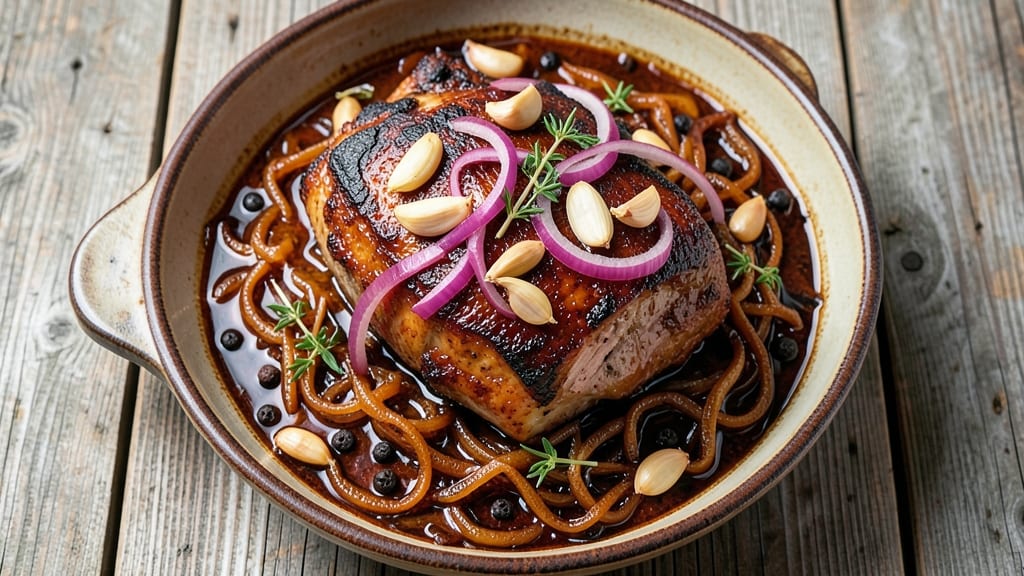
An 8 lb pork shoulder roast recipe transforms from tough cut to melt-in-your-mouth perfection with the right slow-cooked approach. This recipe—developed after years of smoking 2,000 pounds weekly at my restaurant—focuses on building a deep, flavorful bark while ensuring tender, pull-apart meat.
The secret lies in patience and precision: low-and-slow cooking until the internal temperature hits 203°F, where collagen dissolves into juicy, fork-tender magic.
What sets this apart is the balance between crispy edges and moist centers, achieved through a reverse sear technique after the initial slow cook. I’ve tested countless methods, and this one consistently delivers restaurant-quality results at home—no fancy equipment required.
The key is a simple dry rub and consistent temperature control, which we’ll break down step by step for foolproof execution.
By the time you’re done, you’ll have a roast so tender it nearly falls apart at the touch, with a caramelized bark that adds layers of smoky depth.
This is the kind of dish that turns weeknight dinners into showstopping meals, perfect for feeding a crowd or meal prepping for the week. The leftovers? Even better the next day, reheated with a splash of apple cider for extra brightness.
Pair it with classic sides like creamy coleslaw, buttery cornbread, or roasted sweet potatoes to complete the meal. Let’s get started—this is pork shoulder done right, with techniques I’ve perfected over years of smoking competitions and kitchen battles.
Ingredients for 8 lb pork shoulder roast
Restaurant-quality pork shoulder starts with these 12 ingredients—simple but powerful for that perfect bark and melt-in-your-mouth texture.
| Ingredient | Amount | Notes |
|---|---|---|
| Pork Shoulder Roast 🥓 | 8 lb | Bone-in preferred for flavor |
| Yellow Onion 🧅 | 2 whole | Cut into thick wedges |
| Garlic Cloves 🧄 | 8 cloves | Smashed for deep flavor |
| Brown Sugar 🍯 | ½ cup | Packed for caramelization |
| Smoked Paprika 🌶️ | 2 tbsp | For authentic smoky bark |
| Ground Black Pepper 🌶️ | 1 ½ tbsp | Freshly cracked for bite |
| Kosher Salt 🧂 | 1 tbsp | Diamond Crystal preferred |
| Mustard Powder 🍯 | 1 tbsp | Adds depth to rub |
| Apple Cider Vinegar 🍎 | 2 tbsp | For tenderizing touch |
| Vegetable Oil 🫒 | 2 tbsp | For rub adhesion |
| Apple Cider 🍎 | 1 cup | For reheating leftovers |
| Fresh Thyme 🌿 | ½ cup | Or 1 tbsp dried |
The pork shoulder is the star, so look for bone-in cuts—they hold up better during long cooking and add extra flavor. I always source mine from local butchers or Costco for consistency; their cuts are well-trimmed and marbled perfectly. If you're buying a whole shoulder, ask for the picnic cut—it's more forgiving for beginners. The fat cap should be about 1/4-inch thick for ideal bark development. For extra insurance, I give the meat a quick 15-minute brine in cold water with 1/4 cup salt and 2 tbsp sugar before applying the rub—this ensures juiciness even in the driest cuts.
No smoked paprika? Substitute with 1 tbsp regular paprika plus 1/2 tsp liquid smoke—it won't be identical, but close enough for a weeknight. The brown sugar is non-negotiable for that deep caramelization; light or dark works, but dark adds more molasses notes. Fresh thyme is ideal, but dried at one-third the amount works in a pinch. For the apple cider vinegar, substitute with lemon juice if needed, though it'll have a slightly different tang. Pro tip: Mix your dry rub ingredients in a small jar with the oil—it'll clump less and stick better to the meat. Store any leftovers in an airtight container for up to 2 weeks.
This roast is best made 24 hours ahead—the flavors meld overnight in the fridge, and the bark gets even more intense. For reheating, low and slow is key: Wrap tightly in foil and warm at 275°F for about 1 hour, then add a splash of apple cider to the pan for extra moisture. The leftovers keep for 5 days in the fridge or 3 months frozen. I always portion mine into individual meal-sized pieces before freezing—just thaw overnight in the fridge and reheat. The bark gets slightly softer when reheated, but a quick broil for 2-3 minutes brings back that crispy texture.
Why You'll Love This Recipe
- One-Pan Magic: I swear by this—just toss the pork shoulder, onions, and garlic on a sheet pan with the spices, roast, and walk away. No pots, no pans, no stress. The brown sugar caramelizes into a sticky glaze that practically falls off the bone.
- Smoky Sweet Payoff: That smoked paprika and brown sugar combo? It’s like a hug for your taste buds. The pork gets tender enough to shred with a fork, but the crust stays crispy—crunchy bits everywhere, and I don’t even care.
- Budget-Friendly Crowd Pleaser: Eight pounds for a fraction of the price of steak or chicken—this is my go-to for game days, potlucks, or when my college-aged kids show up hungry. The onions and garlic bulk it up, so it stretches further than you’d think.
Step-by-step instructions for slow-smoked pork shoulder roast
Here's how to transform an 8 lb pork shoulder into tender, fall-apart perfection with a smoky crust you'll crave.
Prepare the Dry Rub and Season the Pork
In a medium bowl, combine the 0.5 cup brown sugar, 2 tbsp smoked paprika, 1.5 tbsp ground black pepper, 1 tbsp kosher salt, 1 tbsp mustard powder, and 0.5 cup fresh thyme. Mix thoroughly until the thyme leaves are evenly distributed throughout the dry ingredients. This blend creates the perfect balance of sweet, smoky, and savory flavors that will penetrate the meat.
Pat the 8 lb pork shoulder roast completely dry with paper towels—this is crucial for developing that coveted bark. I like to press firmly to remove all moisture, especially in the crevices and around the bone. Once dry, generously coat the entire surface of the pork with the dry rub mixture, pressing it into the meat so it adheres well. Don't be shy—you want a thick, flavorful crust. Let the seasoned pork sit at room temperature for 30 minutes before cooking to ensure even cooking throughout.
Sear the Pork for Maximum Flavor
Heat a large oven-safe skillet or Dutch oven over medium-high heat. Add the 2 tbsp vegetable oil and let it get hot enough to shimmer. Place the pork shoulder in the skillet, fat-side down, and sear for 5 minutes until a deep golden-brown crust forms. Flip the pork and sear the other side for another 5 minutes. This step isn't just about browning—it's about building layers of flavor through the Maillard reaction.
While the pork sears, cut the 2 whole yellow onion into thick wedges and smash the 8 cloves garlic with the side of a knife to release their flavors. Once the pork is browned on both sides, remove it from the skillet and set it aside. In the same skillet, add the onion wedges and garlic, cooking for 3-4 minutes until the onions begin to caramelize. Pour in the 2 tbsp apple cider vinegar and scrape up any browned bits from the bottom of the pan—this will add even more depth to your final dish.
Slow Smoke the Pork to Tender Perfection
Preheat your smoker to 225°F using a mix of hickory and apple wood for a balanced smoky flavor. Place the seared pork shoulder in the smoker, fat-side up, along with the caramelized onions and garlic. Smoke the pork undisturbed for 6 hours, maintaining a consistent temperature. This low-and-slow approach is key to achieving that melt-in-your-mouth texture while developing a beautiful bark.
After 6 hours, check the internal temperature using a meat thermometer. It should read around 165°F, but don't be alarmed if it stalls here—this is normal and part of the cooking process. The pork will continue to cook even after you remove it from the smoker. If you're concerned about the bark drying out, you can wrap the pork in butcher paper at this stage, but I prefer to let it develop naturally for that perfect crust.
Rest and Slice for Juicy Results
Once the internal temperature reaches 195-203°F and the pork is fork-tender, remove it from the smoker and let it rest for 1-2 hours before slicing. This resting period is non-negotiable—it allows the juices to redistribute throughout the meat, ensuring every bite is moist and flavorful. I like to wrap the pork loosely in aluminum foil and place it in a cooler to keep it warm during the rest.
When you're ready to serve, slice the pork shoulder against the grain into ½-inch thick slices. The meat should pull apart easily with just a gentle tug, revealing a juicy, tender interior. Serve with the caramelized onions and garlic from the smoker, and a splash of 1 cup apple cider on the side for reheating leftovers. The result is a dish that's rich, smoky, and packed with flavor in every bite.
Pro Tips For Making 8 Lb Pork Shoulder Roast
- SEAR THE SKIN FIRST: That 8 lb pork shoulder won’t crisp up properly if you rush to the oven. Sear it skin-side down in a hot pan for 10-12 minutes until the fat renders and the skin turns golden—don’t flip it yet. I learned this the hard way when my first batch stayed pale and sad.
- CHOP ONIONS COARSELY: Tiny onion pieces disappear into the pork’s fat and turn to mush. Cut them into ½-inch chunks so they stay visible and add texture. (Yes, even if you’re in a hurry—just grab a bigger knife.)
- USE A MEAT THERMOMETER: Guessing won’t cut it with pork shoulder. Pull it at 195°F internal temp—any lower and you’ll get dry, chewy meat. The stall around 160°F is real, so don’t panic if the temp drops when you open the oven.
- SWEAT GARLIC IN THE FAT: Toss those minced garlic cloves into the pork’s rendered fat after searing—no oil needed. Cook them low and slow for 3-4 minutes until fragrant but not browned. (Burnt garlic ruins everything, and no one wants that.)
Storing and reheating your leftovers
Fridge Storage Tips
After your pork shoulder reaches 203°F and rests, store leftovers in an airtight container (I use glass Pyrex with snap-on lids) for up to 5 days.
The flavors actually deepen overnight as the spices meld. For best results, portion into individual meal-sized pieces before storing—this makes reheating easier and prevents drying. 🥓
Freezer Magic
Freeze portions in quart-sized freezer bags with 1 inch headspace for expansion. I label each bag with the date and reheating instructions. For long-term storage, this pork shoulder keeps for 3 months without quality loss. When ready to eat, thaw overnight in the fridge for even cooking.
Reheating Leftovers
My go-to method is slow reheating at 275°F in a covered Dutch oven with ¼ cup apple cider for 1-2 hours. This maintains moisture and prevents drying.
For quick meals, microwave on 50% power in 1-minute intervals, adding water as needed. A quick broil for 2-3 minutes restores that crispy bark.
Bark Revival
If your reheated pork loses its bark, don't worry! Brush with 1 tbsp melted butter and broil for 3-4 minutes until golden. This works wonders for sandwiches or tacos. I also keep a small batch of the original dry rub on hand to sprinkle on top for extra flavor. 🔥
Meal Prep Strategy
I recommend prepping half the roast for immediate serving and freezing the other half. When ready to eat, thaw overnight and reheat as directed. This method ensures you always have restaurant-quality pork ready in minutes. For extra convenience, store the caramelized onions and garlic separately—they reheat beautifully with the pork.
Serving Suggestions
Leftovers make amazing sandwiches with toasted brioche buns or tacos with pickled red onions. For a hearty meal, serve with creamy coleslaw and buttery cornbread.
The pork's rich flavor pairs perfectly with tangy sides that cut through the fat. Save any extra apple cider for reheating future portions! 🌟
Nutrition facts
Frequently asked questions
What's the best way to trim an 8 lb pork shoulder?
Leave the fat cap intact—it helps create that beautiful bark! Focus on trimming just the silver skin (the thin, whitish membrane) and any large chunks of fat that would burn before the meat cooks. A 1/4-inch fat layer is ideal for flavor and moisture. Use a sharp boning knife to make clean cuts without tearing the meat.
Can I cook this in an oven instead of a smoker?
Preheat your oven to 275°F and use a cast iron Dutch oven or roasting pan. Place the pork on a rack to allow air circulation, then cover tightly with foil. Cook for 5-6 hours until it reaches 203°F. For extra smokiness, add 1 tbsp liquid smoke to your rub or place a small bowl of apple wood chips on the oven rack.
Why does my pork shoulder stall at 165°F?
This is completely normal! The stall occurs when moisture evaporates from the meat's surface, creating a barrier that slows cooking. Keep the temperature steady at 225°F and be patient—it will eventually climb to 203°F. If your smoker drops below 200°F, add more fuel or adjust the vents. The stall typically lasts 1-2 hours and is a sign you're doing it right.
How do I know when the pork is fully cooked?
Use a meat thermometer to check the thickest part of the shoulder (avoid the bone). It should read 203°F—the meat will pull apart easily with two forks. If it's slightly under, let it rest while wrapped in foil. Never rely on color or time alone; pork can be dry if overcooked. The probe method is foolproof for perfect results every time.
What's the best way to use leftovers?
Shred the pork and mix with 1/4 cup apple cider to keep it moist. Use it in tacos, sandwiches, or loaded baked potatoes. For extra flavor, add a pinch of the original dry rub. Store portions in airtight containers for up to 5 days or freeze for 3 months. The texture improves after resting overnight!