
Main Courses
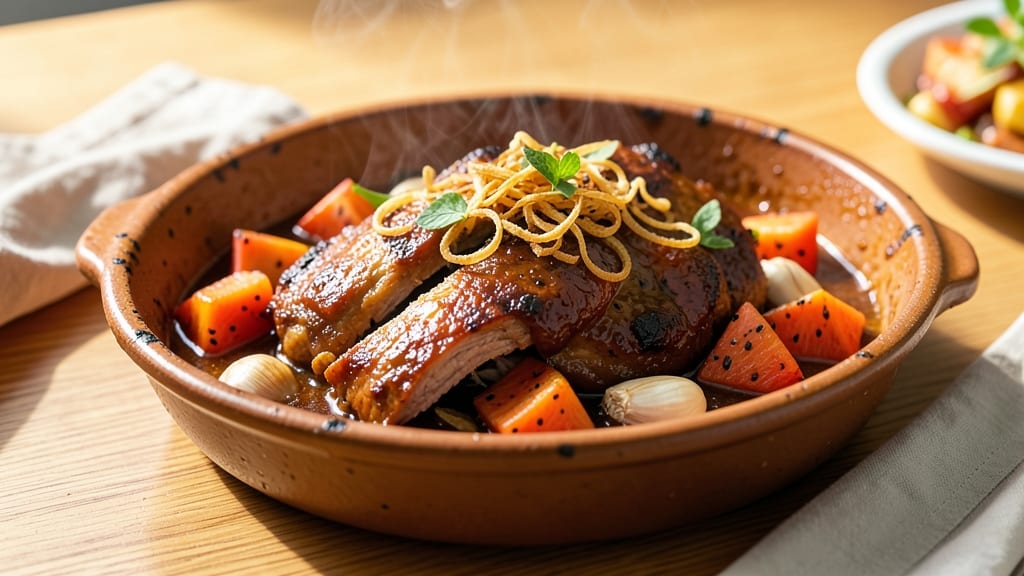
This adobo pork with pineapple recipe brings bold Filipino flavors to your kitchen with a perfect balance of tangy, sweet, and savory notes. 🌟 The secret lies in marinating the pork overnight in a mix of soy sauce, vinegar, and brown sugar, which tenderizes the meat while building deep flavor.
Pineapple adds natural sweetness that cuts through the richness, creating a dish that's both comforting and exciting.
What makes this recipe special is its one-pan simplicity—no complicated techniques required. The pork simmers until fork-tender while the pineapple caramelizes slightly, infusing the dish with its juices.
Traditional Filipino adobo often uses vinegar as the base, but this version incorporates soy sauce for a deeper umami profile that many home cooks prefer. The result is a dish that's hearty enough for a family dinner but elegant enough for guests.
By the time you serve this, you'll have juicy, fall-apart pork swimming in a glossy sauce that's sweet, tangy, and just slightly sticky from the caramelized pineapple. The aroma alone will have everyone gathering at the table, and the flavors—rich yet balanced—make it a standout main course.
Pair it with steamed jasmine rice to soak up every last drop of that delicious sauce.
This recipe works beautifully for weeknight dinners or special occasions, and the leftovers reheat just as well. Whether you're new to Filipino cooking or a seasoned fan, this foolproof method delivers restaurant-quality results with minimal effort. Let's get cooking!
Ingredients for adobo recipe pork with pineapple
Pork, pineapple, and bold Filipino flavors—just 12 ingredients for one-pan magic.
| Ingredient | Amount | Notes |
|---|---|---|
| Pork Shoulder 🥩 | 2 lb | Cut into 1.5-inch cubes, boneless |
| Fresh Pineapple 🍍 | 1 whole | Cut into 1-inch chunks, skin removed |
| Coconut Aminos 🥢 | ½ cup | Or sub with soy sauce, reduced by half |
| White Vinegar 💧 | ½ cup | Distilled preferred for tang |
| Brown Sugar 🍚 | ½ cup | Light or dark, packed |
| Garlic Cloves 🧄 | 6 cloves | Minced, fresh preferred |
| Fresh Ginger 🌿 | 2 tbsp | Grated, peeled, or finely chopped |
| Bay Leaves 🍃 | 2 whole | Dried, for aroma |
| Black Peppercorns 🌶️ | 1 tsp | Crushed, fresh preferred |
| Olive Oil 🫒 | 2 tbsp | Extra-virgin for richness |
| Jasmine Rice 🍚 | 2 cups | Uncooked, for serving |
| Green Onions 🧅 | 3 whole | Sliced, for garnish |
The pork shoulder is your secret weapon here—bone-in, skin-on for maximum flavor, but boneless works too. Look for cuts with good marbling at Filipino markets or the butcher counter, where they often carry pork shoulder specifically for adobo. If you can't find coconut aminos, soy sauce works in a pinch, but reduce it by half since it's saltier. The pineapple should be ripe but firm—golden or red varieties work best, and don't skip removing the skin. For the brown sugar, pack it tightly to avoid measuring errors, and if you're feeling fancy, use muscovado for a deeper molasses flavor.
No coconut aminos? Soy sauce plus a splash of fish sauce (if not vegetarian) mimics the umami depth. Fresh ginger is ideal, but ground ginger at half the amount works in a bind. The garlic can be pre-minced from a jar if you're short on time, but freshly minced makes all the difference. For the pineapple, canned crushed pineapple in juice is a budget-friendly swap—just drain it well. If you're serving a crowd, double the rice and prep the pork marinade a day ahead so the flavors meld even deeper. The black peppercorns should be lightly crushed with a mortar and pestle or the side of your knife for maximum aroma.
This dish tastes even better the next day, so make extra—it reheats beautifully in a skillet with a splash of water. Store the pork and sauce separately in the fridge for up to 4 days, or freeze for 3 months. The rice keeps for 3 days if stored dry in an airtight container. For serving, I like to reheat the pork and sauce together on low heat, then garnish with fresh green onions right before eating. The aroma alone will have everyone rushing to the table!
Why You'll Love This Recipe
- One-Pan Magic: I swear by this—just dump everything in one pot and let it simmer. The pork shoulder falls apart, the pineapple caramelizes, and the coconut aminos tie it all together with zero fuss. (Yes, even on a Tuesday night when you’d rather be scrolling TikTok.)
- Sweet-Savory Balance: That tangy vinegar cut with brown sugar? It’s the secret weapon here. The pork stays juicy while the pineapple adds a bright, almost dessert-like finish—like a main course that sneaks in as a treat.
- Leftovers That Don’t Suck: This recipe actually improves the next day. The flavors meld into something even richer, and it reheats like a dream. Pack it for lunch or serve it cold over rice—no one will guess it’s not fresh.
- Budget-Friendly Feast: Pork shoulder stretches for miles, and pineapple adds freshness without breaking the bank. Honestly, I make this when I’m trying to feed a crowd without emptying my wallet. Plus, coconut aminos cost less than half the soy sauce aisle.
Step-by-step instructions for adobo pork with pineapple
Here's how to balance sweet, tangy, and savory flavors in this one-pan wonder.
🔥 Step 1: Sear the Pork Shoulder for Maximum Flavor
Heat a large Dutch oven over medium-high heat and add the 2 tablespoons olive oil. Once shimmering, add the 2 lb pork shoulder cut into 1.5-inch cubes, working in batches to avoid crowding. Sear for 3-4 minutes per side until deeply golden brown—this creates that irresistible crust we're after.
Real talk: don't rush this step. You'll know it's ready when the pork releases easily from the pan and has developed a rich caramelized exterior. Transfer the seared pork to a plate and set aside. We're building layers of flavor here, and that crispy sear is the foundation.
🍳 Step 2: Build the Adobo Sauce with Pineapple and Aromatics
In the same Dutch oven, add 6 cloves minced garlic and 2 tablespoons grated fresh ginger. Sauté for 1 minute until fragrant—you should smell that bright, zesty aroma. Then add 2 whole bay leaves and 1 teaspoon crushed black peppercorns, stirring for 30 seconds to toast the spices.
Pour in the 0.5 cup coconut aminos, 0.5 cup white vinegar, and 0.5 cup brown sugar, scraping up any browned bits from the bottom. Add the 1 whole fresh pineapple cut into 1-inch chunks and bring to a simmer over medium heat. This is where the magic happens—the sweetness of the pineapple and sugar will caramelize beautifully with the tangy vinegar.
🥘 Step 3: Simmer the Pork Until Fork-Tender
Return the seared pork to the Dutch oven, spooning the sauce over the top. Add enough water to just cover the pork (about 2 cups). Bring to a boil, then reduce heat to low, cover partially, and simmer for 1 hour 30 minutes to 2 hours—until the pork is fork-tender and easily pulls apart.
Here's the thing—this is where patience pays off. The pork should be so tender that a fork slides in like butter, but not falling apart. If the sauce reduces too much, add a splash of water. We want that glossy, sticky glaze that coats every bite.
🍽️ Step 4: Finish with Jasmine Rice and Garnish
While the pork simmers, cook the 2 cups jasmine rice separately according to package instructions. Once the pork is tender, discard the bay leaves and adjust the sauce if needed—add a bit more brown sugar for sweetness or vinegar for tang. Serve the pork over the rice, spooning the rich adobo sauce generously over the top.
Garnish with 3 whole sliced green onions for freshness and color. The contrast of the bright green against the caramelized pork and sweet-savory sauce makes this dish visually stunning. Serve immediately while the pork is still juicy and the sauce is warm and glistening.
Pro Tips For Making Adobo Recipe Pork With Pineapple
- SEAR THE PORK FIRST: Don’t skip browning that pork shoulder—high heat for 5-6 minutes until it’s deep golden. I used to rush this, and the sauce never stuck to the meat like it should. That crust locks in flavor and keeps the pork juicy when it braises later.
- USE FIRM PINEAPPLE CHUNKS: Grab the harder parts of the pineapple—those near the core—because they hold up better during long cooking. Soft chunks turn to mush and make the sauce watery. (Yes, even if you’re impatient like me, resist the urge to use the juiciest bits.)
- DILUTE THE VINEGAR: Mix your white vinegar with an equal part water before adding it to the pot. Straight vinegar can curdle the sauce and make it taste harsh. I learned this the hard way after a batch turned weirdly tangy.
- BROWN THE SUGAR: Caramelize that brown sugar in the pan for 2-3 minutes before adding liquids—it adds a deeper, almost buttery note. Skip this, and you’re missing out on the richest part of the flavor. (Your future self will thank you.)
Essential equipment for this recipe
Dutch Oven Essentials
Your Dutch oven is the star of this recipe—look for a 5-6 quart model like Le Creuset or Lodge for even heat distribution. I swear by my Lodge cast iron Dutch oven because it retains heat beautifully and develops a natural nonstick patina over time.
If you don’t own one, a heavy-bottomed pot will work, but the Dutch oven’s tight lid helps trap steam and tenderize the pork more efficiently. 🥘
Measuring Tools
Precision matters with this recipe, so grab a stainless steel measuring cup set (like OXO Good Grips) for the vinegar, coconut aminos, and brown sugar. A microplane for the ginger and garlic ensures fine, even mincing—no need for a food processor.
I also recommend a digital kitchen scale for the pork if you’re feeling fancy, as it’s more accurate than volume measurements for meat. 📏
Marinating Containers
For the overnight marinade, use a glass or stainless steel container with a tight-sealing lid (like Cambro or Rubbermaid). Avoid plastic—it can absorb odors and flavors, especially with vinegar and soy-based ingredients.
If you’re short on space, a large zip-top bag works too, but make sure it’s sealed tightly to prevent leaks. Pro tip: Label your container with the date and contents to avoid mix-ups in the fridge. 🧊
Heat Control Tools
A thermometer (like ThermoWorks Smoke) is optional but helpful to monitor the pork’s internal temperature—aim for 195°F for fork-tender results. For heat control, I use silicon oven mitts (like Oven Bird) to handle the hot Dutch oven safely.
If your stove lacks precise temperature control, a stovetop thermometer ensures consistent simmering. 🌡️
Garnish Essentials
Fresh green onions and a sharp chef’s knife (like Wüsthof) are all you need for garnishing. If you’re feeling ambitious, a microplane can zest a little lime for brightness, though it’s optional.
For extra flair, toasted sesame seeds or crushed peanuts add texture. Keep these tools handy so you can finish plating like a pro without breaking stride. ✨
Storage Containers
For leftovers, glass storage containers (like Pyrex) are ideal—they’re microwave-safe and won’t absorb odors. If you’re freezing, quart-sized freezer bags (with ZipLoc) save space and reheat evenly.
Label everything with the date to track freshness. I like to store the pork and sauce separately in the fridge to keep the rice from getting soggy. ❄️
Nutrition facts
Frequently asked questions
Can I substitute coconut aminos with regular soy sauce?
Yes, but adjust the amount! Use ½ cup soy sauce instead of coconut aminos, but reduce the brown sugar to ¼ cup since soy sauce is saltier. For deeper umami, add 1 teaspoon fish sauce (if not vegetarian). The flavor will be slightly saltier but still delicious.
How long can I marinate the pork before cooking?
Marinate the pork for at least 4 hours, but overnight (up to 24 hours) yields the best flavor. The acid in vinegar tenderizes the meat while the soy and sugar penetrate deeply. For best results, refrigerate the marinade and never leave it at room temperature.
What if my pork isn't tender after 2 hours?
Check the internal temperature—it should reach 195°F for fork-tender pork. If not, add ½ cup water and simmer uncovered for another 30-45 minutes. Avoid high heat, which can make the pork tough. Patience is key! If it's still tough, shred it for tacos or stews instead.
Can I make this recipe without pineapple?
Skip the pineapple and add ½ cup apple cider or 1 cup tomatoes instead for acidity. For sweetness, use ¼ cup honey or 2 tablespoons maple syrup. The dish will still be rich and savory, just without the tropical twist.
How do I reheat leftovers without drying out the pork?
Reheat in a skillet over low heat with 2 tablespoons water or broth to restore moisture. Cover and simmer for 5-7 minutes, stirring occasionally. Avoid microwaving—it turns the pork rubbery. For extra flavor, add a splash of vinegar or coconut aminos.