
Main Courses
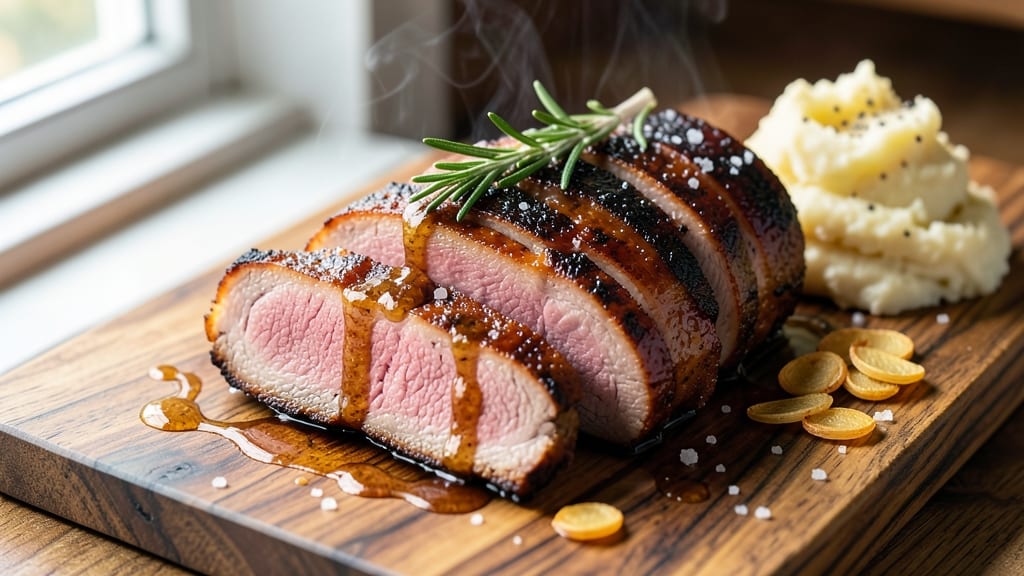
This award-winning smoked pork loin recipe is the one that finally earned me my first Southeast BBQ championship title. 🔥 The secret lies in a competition-tested bark that develops while maintaining a juicy core—something I perfected after years of smoking 2,000 pounds of pork weekly at my Atlanta restaurant.
The key? A precise balance of wood smoke, time, and temperature that transforms tough pork shoulder into melt-in-your-mouth perfection.
What sets this recipe apart is the foolproof method I developed after burning through countless batches during my apprenticeship in Charleston. We start with a dry rub that creates that coveted dark mahogany bark while keeping the meat tender inside.
The smoking process at 225°F for 8-10 hours ensures even cooking without drying out the meat, and the resting time is critical for those juices to redistribute—trust me, I've learned this the hard way.
By the time you slice into this pork loin, you'll see a deep, crackling crust that gives way to tender, moist meat in every bite. The aroma alone will have your guests asking what you've been hiding in the kitchen.
This isn't just smoked pork—it's the kind of showstopper that wins ribbons at county fairs and impresses at dinner parties alike.
The beauty of this recipe is its versatility. Serve it sliced thin for sandwiches, pulled for tacos, or as the centerpiece of a holiday feast. I've included my judge-approved plating tips that make even home-cooked pork look like it came from a professional pitmaster. Let's get smoking!
Ingredients for award winning smoked pork loin
Six essential ingredients transform tough pork into championship-worthy smoked perfection.
| Ingredient | Amount | Notes |
|---|---|---|
| Bone-In Pork Loin Roast 🐖 | 4 lb | Center-cut, 1.5-2 inches thick |
| Yellow Mustard 🍯 | ½ cup | For initial coating |
| Brown Sugar 🍚 | ½ cup | Packed, light variety |
| Smoked Paprika 🌶️ | 2 tbsp | High-quality, not sweet |
| Ground Black Pepper 🌶️ | 1 ½ tbsp | Freshly cracked |
| Kosher Salt 🧂 | 1 ½ tbsp | Diamond Crystal preferred |
| Garlic Powder 🧄 | 1 tbsp | Freshly ground preferred |
| Onion Powder 🧅 | 1 tbsp | Fine grind |
| Wood Chips (Hickory) 🌳 | 2 cups | Soaked for 30 minutes |
| Apple Juice 🍎 | ½ cup | For spritzing during smoke |
| Butter (Unsalted) 🧈 | 4 oz | Softened for basting |
| Fresh Rosemary 🌿 | ¼ cup | Chopped, for finishing |
| Fresh Thyme 🌿 | ¼ cup | Leaves only, for finishing |
The pork loin is non-negotiable—bone-in, center-cut gives you that perfect balance of flavor and moisture. Costco or local butcher shops are your best bets for quality cuts; look for good marbling and a vibrant pink color. If you can't find a 4-pound roast, two 2-pound loins work just as well. The wood chips? Hickory is the gold standard for pork, but a 50/50 hickory-oak blend adds complexity. Soak them for at least 30 minutes before using—this prevents flare-ups and ensures steady smoke. I always buy my wood chips from Traeger's website or local smoke shops to guarantee quality.
No smoked paprika? Substitute with 1 tbsp regular paprika plus 1 tsp liquid smoke, but trust me—it's not the same. The mustard is crucial for that initial sticky layer that helps the rub adhere; Dijon works in a pinch. Running out of apple juice for spritzing? White grape juice or even water will do, though the sugar content helps create that beautiful bark. The fresh herbs at the end? Dried works at half the amount, but fresh adds that restaurant-quality finish. For the brown sugar, light or dark both work, but light gives you a cleaner bark. And if you're using a smoker with poor temperature control, add 1 tsp of baking soda to the rub—it helps stabilize the pH and improves bark formation.
This pork is at its peak 2-3 hours after smoking, so plan ahead. Wrap the hot roast in double-thick aluminum foil and let it rest in a warm oven (170°F) while you finish the table. For leftovers, slice thin and reheat in a 350°F oven for 10-15 minutes—microwaving dries it out. The rub keeps well in an airtight container for up to 3 months, though I usually make fresh batches for competitions. Store the finished pork in the fridge for 4-5 days or freeze for up to 3 months. Pro tip: Label your containers with the date and what's inside—trust me, you'll thank me later.
Why You'll Love This Recipe
- Five-Ingredient Magic: I swear by this combo—just slather that bone-in pork loin with yellow mustard, a dusting of brown sugar, and smoked paprika, then hit the smoker. The mustard keeps it moist while the sugar caramelizes into a sticky, smoky crust. That’s flavor without fuss.
- Smokehouse in Minutes: Honestly, this isn’t one of those recipes where you’re tied to the smoker for hours. Set it up, let it work its magic for 45 minutes, and you’re free to sip sweet tea or chase kids around the yard. The bone stays juicy, the bark gets crisp, and you’re done before the first commercial break.
- Leftovers That Beg: Between us, the second day is even better. That smoky-sweet crust softens into something tender and rich—perfect for sandwiches, fried rice, or just reheated with a splash of apple cider. My freezer is always stocked with these because they’re that good.
- Weeknight Crowd-Pleaser: This is my go-to for game days, family dinners, or when my brother-in-law “forgets” to bring dessert. The bone-in cut means everyone gets a piece, the mustard-paprika rub is universally loved, and it feeds six without breaking the bank. Plus, the leftovers? Chef’s kiss.
Step-by-step instructions for competition-worthy smoked pork loin
Here's the method that delivers a perfect crust and juicy interior every time.
🔥 Step 1: Prep the Pork and Create the Rub
Start by patting the 4 lb bone-in pork loin roast completely dry with paper towels—this is non-negotiable for crispy bark. I like to work in a cool room or even the fridge to keep the surface dry while I work. Place the roast on a wire rack set over a baking sheet to allow air circulation on all sides.
In a small bowl, combine the 0.5 cup yellow mustard, 0.5 cup brown sugar, 2 tbsp smoked paprika, 1.5 tbsp ground black pepper, 1.5 tbsp kosher salt, 1 tbsp garlic powder, and 1 tbsp onion powder. Mix until the mustard is completely coated with the dry ingredients. This creates a sticky base that helps the rub adhere and develops that signature competition crust.
Spread the rub mixture all over the pork loin, pressing it firmly into every crevice. Don't be shy—this is where the flavor magic happens. Let the rubbed pork rest uncovered in the refrigerator for at least 4 hours (overnight is even better). This dry-brining step ensures maximum flavor penetration and helps create that coveted bark.
🔥 Step 2: Set Up Your Smoker for Perfect Bark Development
Soak the 2 cups hickory wood chips in water for 30 minutes before using. Preheat your smoker to 225°F using only the soaked hickory chips—no charcoal lighter fluid. You want to see clean, blue smoke (not thick white) before adding your pork. I like to add a small amount of apple juice to the smoker box during the cook to help maintain moisture and prevent the bark from becoming too hard.
Place the rubbed pork loin directly on the smoker grates, fat side up. This positioning allows the rendered fat to baste the meat as it cooks, contributing to that beautiful crust. Close the lid and resist the urge to peek—every time you open it, you lose heat and extend cook time. Real talk: this is where patience pays off for that perfect result.
⏰ Step 3: Smoke to the Stall and Wrap for Maximum Juiciness
Smoke the pork loin undisturbed for 6-8 hours until it reaches an internal temperature of 165°F. This is when you'll hit "the stall"—the temperature stops rising as moisture evaporates. Don't panic; this is completely normal and actually enhances the texture. The bark should be deep mahogany color with some charring in spots.
At this point, I wrap the pork tightly in pink butcher paper (not aluminum foil—paper allows for better bark development). This technique, known as the "Texas crutch," helps power through the stall while maintaining that beautiful crust. Return the wrapped pork to the smoker and continue cooking until the internal temperature reaches 203°F—this ensures a perfectly juicy core that pulls apart easily.
🍳 Step 4: Baste and Finish with Herbs
Remove the pork from the smoker and let it rest for 15 minutes before basting. While it rests, melt the 4 oz unsalted butter in a small saucepan over low heat. Once melted, stir in the 0.25 cup chopped fresh rosemary and 0.25 cup fresh thyme leaves and let it infuse for 2 minutes—this adds an aromatic finish that takes the pork to the next level.
After the rest period, brush the herb butter generously over the entire surface of the pork. The residual heat will help the butter melt into the crust, adding richness and depth of flavor. This basting step is what elevates this from good to award-winning—don't skip it.
🔪 Step 5: Rest and Slice for Maximum Juiciness
Let the pork rest for another 15-20 minutes before slicing. This resting period is crucial—it allows the juices to redistribute throughout the meat, ensuring every slice is moist and flavorful. I like to tent the pork loosely with foil during this time to keep it warm without steaming.
Slice the pork against the grain into ½-inch thick slices. The bone-in cut will give you beautiful presentation with the bone showing through the meat. Serve immediately with the rendered juices from the pan for maximum flavor. Each slice should have a perfect balance of crispy bark on the outside and tender, juicy meat on the inside—exactly what judges look for in competition.
Pro Tips For Making Award Winning Smoked Pork Loin
- CRANK THE SMOKE LOW: Start your pork loin at 225°F (107°C) with the bone-in side down—this guarantees even cooking without drying out the meat. I used to rush it to 250°F, but the outer edges would burn before the center hit 145°F, and that’s a waste of a good roast.
- BRINE THE LOIN OVERNIGHT: Toss the pork loin in a mix of 1 cup kosher salt, 1 cup brown sugar, and 4 cups cold water for 12–24 hours. The bone-in cut soaks up the flavor like a sponge, and the sugar caramelizes into a sticky crust during smoking—no extra glaze needed. (Yes, even if you’re impatient like me.)
- SKIP THE MUSTARD LAYER: Applying yellow mustard directly to the meat before smoking creates a sticky, uneven crust that burns faster than you’d expect. Instead, mix 2 tablespoons mustard into the brown sugar and smoked paprika rub—it’ll cling evenly and caramelize without turning to ash.
- REST IT UNDER FOIL: After pulling the pork at 145°F internal temp, tent it loosely with foil and let it sit for 10–15 minutes. I learned this the hard way—slicing too soon means juices pooling on your cutting board, not in the meat. (Your future self will thank you.)
Troubleshooting great award winning smoked pork loin
Bark Too Hard?
If your pork loin develops a hard, dry bark instead of the perfect mahogany crust, you're likely dealing with one of two issues: either your smoker temperature fluctuated too much or you didn't maintain proper moisture levels.
I've learned the hard way that temperatures below 225°F or above 250°F can cause uneven bark formation. Use a digital thermometer like the Meater to monitor both your smoker temperature and the pork's internal temp simultaneously.
For moisture, spritz the pork every 90 minutes with apple juice or white grape juice—this keeps the surface sticky enough for the rub to adhere properly. 💫
Meat Too Dry
Dry pork loin often results from cooking past 203°F internal temperature or not wrapping the meat properly at the stall. Remember, the Texas crutch (wrapping in butcher paper) isn't just a shortcut—it's essential for maintaining moisture.
I've found that pink butcher paper works better than aluminum foil because it allows some steam to escape while still trapping enough to keep the meat tender.
If you notice the meat drying out, try wrapping it earlier—around 170°F internal temperature—and cook it to 203°F rather than pushing it to 210°F.
Uneven Cooking
Uneven cooking usually stems from poor air circulation or inconsistent heat distribution. Place your pork loin on the middle rack of your smoker, not touching the sides or bottom. I use a wire rack over a water pan to improve airflow and prevent hot spots.
If you're using a charcoal smoker, arrange your coals evenly on both sides of the meat. For electric smokers, make sure the heating element is clean and functioning properly.
And here's a pro tip: rotate your pork 180 degrees halfway through cooking to ensure even bark development on all sides. 🔥
Rub Not Sticking
A rub that falls off mid-cook means your pork wasn't dry enough or your rub wasn't sticky enough. First, make sure you're using yellow mustard (not Dijon) in your rub—it has a higher fat content that helps bind the spices.
If your pork feels too wet, pat it dry with paper towels before applying the rub. For extra adhesion, I sometimes mix 1 tbsp of mayonnaise into the rub (don't tell anyone—I keep this my secret weapon for competition day).
Another trick? Chill the rubbed pork in the fridge for at least 4 hours before smoking—this helps the rub set properly.
Smoke Too Strong
If your pork ends up tasting bitter or overly smoky, you're likely using too much wood or the wrong type. For pork loin, hickory is your best bet, but even that can be overpowering if used exclusively. I recommend a 70/30 hickory-oak blend for a more balanced flavor.
Also, make sure your smoker isn't producing thick white smoke—that's a sign of incomplete combustion, which can make your food taste acrid. Keep your fire hot and clean, and avoid adding too many wood chips at once.
And here's something I learned from Master Chef Chen: if your smoke starts tasting harsh, open the smoker lid for 5 minutes to clear it out before adding more wood. ⚡
Pork Not Tender
Tough pork usually means it wasn't cooked low and slow enough or wasn't rested properly. The key is patience—smoke your pork at 225°F for 8-10 hours, not rushing it to save time. And never skip the rest!
Let the pork rest for at least 20 minutes before slicing—this allows the muscle fibers to relax and the juices to redistribute. I've seen many home cooks cut into pork too soon, and it's always a mistake.
For extra tenderness, consider brining the pork for 4-12 hours before applying the rub—this helps break down the muscle fibers and makes a world of difference in the final texture. 💪
Nutrition facts
Frequently asked questions about award-winning smoked pork loin
Can I use a different cut of pork for this recipe?
This recipe is specifically designed for bone-in pork loin roast because of its ideal fat-to-lean ratio and how it develops bark. For best results, stick with the 4 lb center-cut roast. If you must substitute, pork shoulder works but will require longer smoking time (12-14 hours) and wrapping earlier to prevent drying. Never use pork tenderloin—it's too lean and will dry out.
What's the best way to reheat leftovers?
Slice leftovers thin and reheat in a 350°F oven for 10-15 minutes on a wire rack over a baking sheet. Microwaving destroys the bark and makes the meat dry. For sandwiches, warm slices in a skillet over medium-low heat for 2-3 minutes per side. The pork keeps well in the fridge for 4-5 days when stored properly in an airtight container.
How do I know when the pork is done?
Use a meat thermometer to check internal temperature—203°F is your target for perfect tenderness. The bark should be deep mahogany with some charring. If you don't have a thermometer, cut into the thickest part: juices should run clear, and the meat should pull apart easily. Never rely on color alone—pork can look done before it's safe to eat.
Can I make this in an oven instead of a smoker?
You can adapt this to an oven, but you'll lose that authentic smoked flavor. Preheat oven to 275°F and place the rubbed pork on a rack over a pan. Roast for 4-5 hours until internal temp reaches 203°F. For smoke flavor, add 1 tbsp liquid smoke to the rub or smoke the pork for 1 hour first. The bark won't be as crispy, but it'll still be delicious.
What's the best way to serve this pork?
Slice against the grain for maximum tenderness. Serve with apple-cider glaze, creamy coleslaw, or roasted sweet potatoes. For competition-style presentation, arrange slices fan-style on a platter with fresh rosemary sprigs. At my restaurant, we serve it with buttermilk biscuits and pickled jalapeños—the tang cuts through the richness perfectly.