
Main Courses
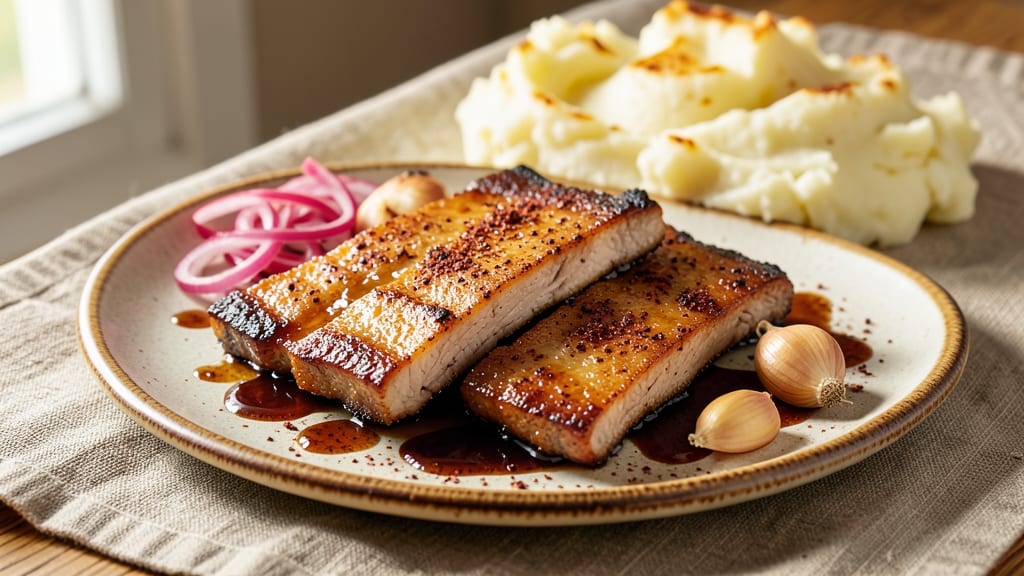
This boneless pork spare ribs oven recipe delivers melt-in-your-mouth tenderness without the traditional smoker mess. 🔥 After years of perfecting pork cuts in professional kitchens, I developed this method that transforms tough ribs into restaurant-quality bites with just a honey glaze and your home oven.
The secret lies in the slow, even cooking that breaks down fibers while keeping the meat impossibly juicy.
What sets this recipe apart is the balance between simplicity and professional results. You'll start with a dry rub that develops deep flavor, then let the oven do the work while you prepare sides.
The honey glaze in the final minutes creates that coveted caramelized crust that makes every bite irresistible. This method works with standard kitchen tools—no special equipment required.
By the time these ribs emerge from the oven, you'll have perfectly tender meat that practically falls apart at the touch, coated in a sticky-sweet glaze that's both complex and approachable. The aroma alone will have everyone gathering at your table.
What makes this recipe truly special is how it transforms a simple cut of pork into something that feels like a celebration.
Pair these ribs with classic Southern sides like collard greens or cornbread for the full experience. The beauty of this method is its versatility—it works equally well for weeknight dinners or special occasions. Let's get cooking with this foolproof oven technique that delivers professional-quality results at home.
Ingredients for boneless pork spare ribs oven
Professional-quality ingredients for ribs that rival your favorite restaurant's smoky flavor.
| Ingredient | Amount | Notes |
|---|---|---|
| Boneless Pork Spare Ribs 🥩 | 2 ½ lb | Cut into 2-inch pieces |
| Yellow Onion 🧅 | 1 whole | Large, thinly sliced |
| Garlic Cloves 🧄 | 6 cloves | Minced, fresh preferred |
| Brown Sugar 🍯 | ½ cup | Packed, light brown preferred |
| Smoked Paprika 🌶️ | 2 tbsp | For deep smoky flavor |
| Ground Black Pepper 🌶️ | 1 tbsp | Freshly ground preferred |
| Kosher Salt 🧂 | 1 tbsp | Diamond Crystal preferred |
| Dried Thyme 🌿 | 1 tsp | Or 1 tbsp fresh chopped |
| Honey 🍯 | ½ cup | Wildflower preferred |
| Apple Cider Vinegar 🍎 | 2 tbsp | For tangy balance |
| Extra-Virgin Olive Oil 🫒 | 2 tbsp | For glaze and searing |
| Fresh Rosemary 🌿 | ¼ cup | Chopped, stems removed |
| Balsamic Vinegar 🍷 | 1 tbsp | For glaze depth |
The pork ribs are the star—look for good marbling and even thickness for consistent cooking. Most grocery stores carry boneless spare ribs, but Costco or local butchers often have better quality. The honey glaze requires wildflower or clover honey for that floral depth, though regular honey works in a pinch. Fresh rosemary and thyme elevate the dish, but dried substitutes work at one-third the amount. For the brown sugar, light brown gives better caramelization than dark.
No smoked paprika? Substitute with 1 tbsp regular paprika plus 1/2 tsp liquid smoke. Out of apple cider vinegar? White vinegar or lemon juice works equally well. The olive oil matters—use extra-virgin for richness in the glaze. For a quicker prep, use pre-minced garlic from a jar (though fresh is always better). The ribs can be trimmed of excess fat before seasoning, but leave some for flavor. If you're short on time, baby carrots or celery can replace the onion in the marinade base.
Store prepped ribs on a wire rack over a tray in the fridge for up to 24 hours before cooking. The dry rub keeps well in an airtight container for 1 week, and the honey glaze ingredients can be mixed ahead and stored for 3 days. Leftovers reheat beautifully—4-5 minutes at 350°F with a splash of water to restore moisture. These ribs freeze well for 3 months if vacuum-sealed, making them perfect for meal prep.
Why You'll Love This Recipe
- No-Bone Hassle: I swear by boneless ribs—no trimming, no fussing with racks, just meat that cooks through evenly. The onions caramelize right on the same pan, so you’re not stuck with extra dishes.
- Sweet-Smoky Magic: That brown sugar and smoked paprika combo? It’s a flavor bomb—sticky, slightly sweet, with just enough heat to linger. I’ll be real: the first bite makes me want to skip dinner and just eat these straight from the pan.
- Weeknight Workhorse: Toss these in the oven while you prep sides or even watch a show. They’re perfect for game days, lazy Sundays, or when you need a crowd-pleaser that doesn’t require babysitting. (Yes, even on a Tuesday night.)
- Budget Win: Boneless ribs are cheaper than bone-in, and this recipe stretches them far—great for leftovers. I often double the batch, reheat slices in a skillet the next day, and no one complains. Efficiency meets deliciousness.
Step-by-step instructions for honey-glazed oven-braised pork ribs
Here's how to transform tough ribs into melt-in-your-mouth tenderness with minimal effort.
👨🍳 Step 1: Prep and Season the Ribs for Maximum Flavor
Pat the 2.5 lb boneless pork spare ribs completely dry with paper towels—this ensures a proper sear. Cut them into 2-inch pieces as specified, which helps them cook evenly. In a large bowl, combine 2 tbsp smoked paprika, 1 tbsp ground black pepper, 1 tbsp kosher salt, and 1 tsp dried thyme. Rub this mixture all over the ribs until fully coated.
Here's the thing—don't skip the drying step. Any moisture left on the meat will steam instead of sear, leaving you with bland, soggy ribs. The seasoning blend gives you that perfect balance of smoky depth and aromatic warmth that carries through the entire cooking process.
🍳 Step 2: Sear the Ribs for Deep Flavor Foundation
Heat 2 tbsp extra-virgin olive oil in a large oven-safe skillet over medium-high heat until shimmering. Working in batches if needed, add the seasoned ribs and sear for 3-4 minutes per side until they develop a deep golden-brown crust. You'll smell that irresistible caramelization—this is where all the flavor starts.
Don't crowd the pan. You want those ribs to sizzle and develop color, not steam. If they're too packed, they'll release moisture and lose that beautiful crust. Once seared, transfer the ribs to a plate and set aside—we're not done with them yet.
🥘 Step 3: Build the Aromatic Glaze Base
In the same skillet (no need to clean it—the browned bits are flavor gold), add the thinly sliced 1 whole yellow onion and cook for 5-6 minutes until softened and golden. Add the 6 cloves minced garlic and cook for another 30 seconds until fragrant. This quick cook prevents the garlic from burning, which would make the whole dish bitter.
Stir in the 0.5 cup packed brown sugar and cook for 1 minute until it begins to caramelize slightly. This step develops the sweet-savory foundation for your glaze. The sugar will dissolve completely during the braising process, creating that perfect balance of sweet and smoky flavors.
🔥 Step 4: Braise Until Fork-Tender Perfection
Return the seared ribs to the skillet. Pour in 0.5 cup honey, 2 tbsp apple cider vinegar, and 1 tbsp balsamic vinegar. Add 0.25 cup chopped fresh rosemary and stir everything together. The mixture should coat the bottom of the pan completely.
Transfer the skillet to a 375°F oven and braise uncovered for 1 hour 15 minutes. The ribs are done when they're fork-tender with no resistance and the sauce has reduced to a glossy glaze. You'll know it's ready when the ribs pull apart easily and the sauce clings beautifully to each piece.
🍽️ Step 5: Finish with Glossy Sheen and Serve
Remove the skillet from the oven and increase heat to medium-high on the stovetop. Simmer uncovered for 3-5 minutes to thicken the glaze slightly and create that beautiful glossy finish. The sauce should coat the back of a spoon and have a syrupy consistency.
Serve immediately with the glaze spooned generously over each portion. The ribs should be tender enough to pull apart with a fork but still hold their shape. Each bite should deliver that perfect combination of sweet honey glaze, smoky depth from the paprika, and tender meat that falls apart easily. Pair with crusty bread to soak up every last bit of that delicious sauce.
Pro Tips For Making Boneless Pork Spare Ribs Oven
- Trim the Fat First: Cut off any visible fat from the pork ribs before seasoning—it burns fast and makes your sauce greasy. I learned this after my first batch turned into a sad, greasy mess instead of crispy ribs.
- Roast Onions Separately: Slice the yellow onion thin, toss it in olive oil, salt, and smoked paprika, then roast it at 400°F (200°C) for 20 minutes before adding to the ribs. This caramelizes them perfectly without stealing heat from your main dish.
- Don’t Rush the Rest: Let the ribs sit under foil for at least 10 minutes after pulling them from the oven—this keeps them juicy. I used to cut into them too soon, and they’d dry out like sad, overcooked jerky.
- Brown Sugar Last: Sprinkle the brown sugar in the final 10 minutes of cooking—it burns fast and turns bitter if left too long. A little char is fine, but a full-on sugar disaster? Not worth it.
Troubleshooting your boneless pork spare ribs oven
Ribs Too Dry?
If your ribs emerge dry instead of tender, it's likely due to overcooking or insufficient braising liquid. First, ensure you're using a liquid ratio of 1:1 (equal parts liquid to ribs by volume).
For 2.5 lbs of ribs, you need at least 1 cup of braising liquid (honey, vinegar, and aromatics combined). I've found that using a heavy-bottomed Dutch oven helps distribute heat more evenly and prevents evaporation.
If you notice the sauce reducing too quickly, tent the pan with aluminum foil during the last 30 minutes of cooking. 💫
Glaze Not Sticky?
The honey glaze should be thick and glossy, not watery. If it's too thin, reduce the oven temperature by 25°F (to 350°F) and braise for an additional 10-15 minutes uncovered.
Alternatively, remove the ribs and simmer the sauce alone on the stovetop over medium-high heat until it thickens to a syrupy consistency. Pro tip: Add 1 tsp cornstarch mixed with 1 tbsp water to the sauce and stir until it reaches the desired consistency.
The glaze should coat the back of a spoon and cling beautifully to the ribs.
Uneven Cooking?
Uneven cooking often happens when ribs are cut into inconsistent sizes or when the oven temperature fluctuates. To avoid this, cut all ribs into uniform 2-inch pieces before seasoning. I recommend using a meat thermometer to check the internal temperature of the thickest piece—it should reach 203°F for perfect tenderness.
If your oven runs hot, place a baking sheet on the lower rack to create a more even heat distribution. For extra insurance, rotate the pan halfway through cooking if your oven has hot spots.
Ribs Still Tough?
Tough ribs usually mean the meat wasn't cooked long enough or the cut wasn't properly tenderized. Boneless pork spare ribs should be fork-tender after 1 hour 15 minutes in a 375°F oven. If they're still resistant, extend the cooking time by 15-20 minutes and check again.
Another trick I learned from my time in Charleston is to add 1/2 cup beef broth to the braising liquid—it adds moisture and helps break down collagen faster.
For an extra boost, marinate the ribs in 1 tbsp apple cider vinegar for 30 minutes before seasoning to begin tenderizing the meat.
Burnt Glaze?
A burnt glaze happens when the sugar caramelizes too quickly or the heat is too intense. To prevent this, keep the oven temperature steady at 375°F and avoid opening the oven door frequently.
If you notice the glaze darkening too much, remove the pan from the oven and stir vigorously to redistribute the heat. For a quick fix, add 1 tbsp water or apple cider vinegar to the glaze and return it to the oven for 5 minutes to restore balance.
The glaze should be golden-brown, not blackened—this indicates proper caramelization without burning.
Ribs Falling Apart?
While tender ribs should pull apart easily, if they're disintegrating completely, they've likely been overcooked. This often happens when using a lower oven temperature (325°F) for too long.
To salvage them, remove the ribs from the oven when they're just fork-tender and let them rest for 5 minutes before serving. The natural juices will redistribute, making them more stable.
For future attempts, stick to the 375°F recommendation and monitor the cooking time closely—1 hour 15 minutes is the sweet spot for 2-inch rib pieces. If you prefer slightly firmer ribs, aim for an internal temperature of 195°F instead of 203°F.
Nutrition facts
Frequently asked questions
Can I use regular pork ribs instead of boneless spare ribs?
Yes, but you'll need to adjust the cooking time. Bone-in ribs require 2-3 hours at 275°F to become tender, while boneless spare ribs cook in 1 hour 15 minutes at 375°F. For bone-in ribs, wrap them in foil after the initial sear to trap moisture. The honey glaze recipe works for both, but bone-in ribs benefit from a longer braise to break down collagen.
What's the best way to store leftovers?
Store cooked ribs in an airtight container with any remaining glaze spooned on top. They'll keep in the fridge for 4 days or freeze for 3 months for maximum flavor. To reheat, warm in a skillet over medium heat with a splash of water or apple cider vinegar for 3-4 minutes until heated through. The glaze will re-coat beautifully when reheated this way.
Can I make this recipe in a slow cooker?
Sear the ribs first, then transfer to a slow cooker with all glaze ingredients. Cook on Low for 6 hours or High for 3 hours. The low-and-slow method works especially well for larger batches. The ribs will be even more tender, but you may need to reduce the glaze separately on the stovetop to achieve that perfect sticky consistency.
How do I know when the ribs are done?
Use the fork test—they should pull apart easily with minimal resistance. The internal temperature should reach 203°F in the thickest piece. The glaze should also be reduced to a glossy, syrupy consistency that coats the back of a spoon. If the ribs are still slightly firm, return them to the oven for another 10-15 minutes.
What are the best sides to serve with these ribs?
Classic Southern pairings work beautifully: creamy coleslaw, buttery cornbread, or roasted sweet potatoes. For a lighter option, try a crisp green salad with apple cider vinaigrette. The honey glaze also complements grilled vegetables like zucchini or bell peppers. Don't forget crusty bread—it's perfect for soaking up every last bit of that delicious sauce!