
Main Courses
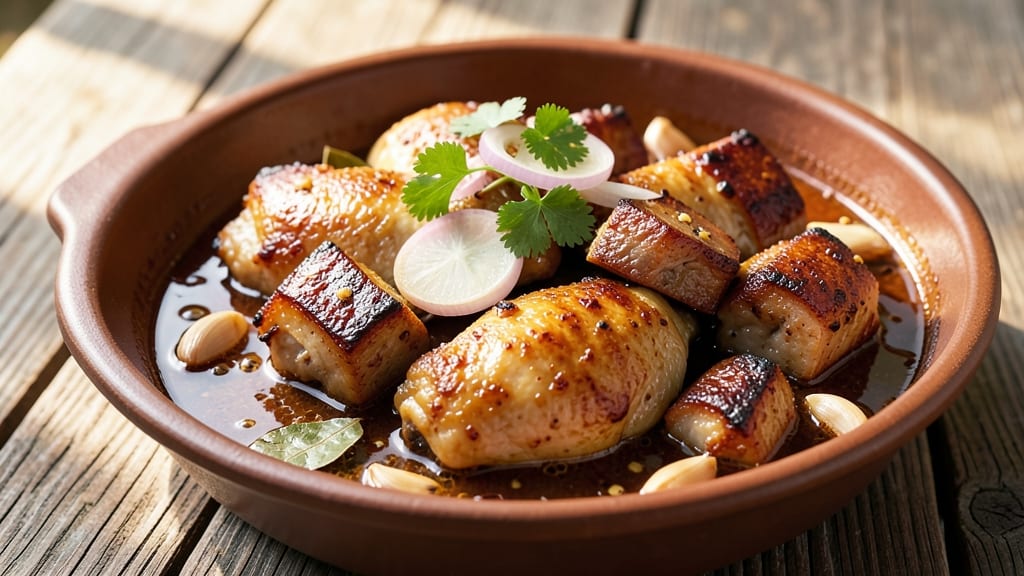
Chicken pork adobo recipe Philippines delivers the bold, tangy-savory magic that makes this dish a Filipino household staple. The secret lies in balancing vinegar and soy sauce, letting garlic and spices infuse the meat until it's fork-tender and deeply flavorful. This one-pot wonder transforms simple ingredients into a restaurant-quality meal with minimal effort—just 45 minutes of active time and hours of simmering for maximum depth.
The beauty of this recipe is its versatility—it works with chicken thighs, pork belly, or a mix of both, all braised until the liquid reduces to a glossy, caramelized sauce.
The vinegar tenderizes the meat while the soy sauce adds umami richness, creating a perfect harmony of tangy, salty, and slightly sweet flavors. Every bite delivers that signature Filipino comfort food experience.
What makes this adobo special is how the flavors develop over time. The longer it simmers, the more complex the sauce becomes, with garlic and spices melding into the meat. The result is fall-apart tender chicken and pork swimming in a rich, aromatic sauce that clings to every bite.
It's the kind of dish that tastes even better the next day—ideal for meal prep or feeding a crowd.
Serve this adobo with steamed rice to soak up every last drop of that tangy, savory sauce. The combination is pure Filipino comfort food at its finest. Let's get cooking!
Ingredients for chicken pork adobo recipe philippines
Six simple ingredients transform into restaurant-quality Filipino adobo with hours of simmered depth.
| Ingredient | Amount | Notes |
|---|---|---|
| Chicken Thighs, Bone-In 🍗 | 1 ½ lb | Skin-on, cut into even pieces |
| Pork Belly, Cubed 🥓 | 1 ½ lb | Fat cap left on for flavor |
| White Vinegar 🍶 | 1 cup | Distilled preferred for tang |
| Soy Sauce 🍶 | ½ cup | Light or all-purpose |
| Garlic Cloves 🧄 | 8 cloves | Smashed with side of knife |
| Bay Leaves 🌿 | 2 whole | Dried, standard size |
| Black Peppercorns 🌶️ | 1 tsp | Crushed, not ground |
| Sugar 🍚 | 2 tbsp | White granulated |
| Olive Oil 🫒 | 2 tbsp | For initial searing |
| Salt 🧂 | 1 ½ tsp | Kosher or sea salt |
| Water 💧 | 2 cups | For initial braising |
| Green Onions 🧅 | ¼ cup | Sliced, for garnish |
The meat selection is everything—bone-in chicken thighs stay juicier than breasts, while pork belly adds rich fat for sauce depth. Look for thighs with skin at Filipino markets or the meat section of Asian grocery stores like 99 Ranch or H Mart. If you can't find pork belly, pork shoulder works, but trim excess fat. The vinegar should be distilled white vinegar—apple cider vinegar works too, but it adds unwanted sweetness. For soy sauce, Silver Swan or Lee Kum Kee brands capture that authentic Filipino flavor.
No white vinegar? Canola vinegar or rice vinegar in a pinch, but taste first—some brands are sweeter. Short on garlic? Garlic powder at half the amount works, but fresh is non-negotiable for that aromatic punch. The bay leaves add subtle earthiness—skip them if you're sensitive to strong flavors. For sugar, brown sugar can replace white, but reduce to 1.5 tbsp since it's less concentrated. The green onions are purely decorative, but they brighten the dish at the end. Pro tip: Toast the peppercorns in a dry pan for 30 seconds before adding—they'll release more aroma.
This adobo tastes better the next day, so make extra. Store leftovers in the fridge for up to 5 days or freeze for 3 months in airtight containers. The sauce thickens as it cools, so add a splash of water when reheating. For meal prep, portion into individual containers with rice—microwave-safe containers work best. If you're feeding a crowd, double the recipe—the flavors only get better with more time. Serve with steamed jasmine rice to soak up every drop of that glossy, caramelized sauce.
Why You'll Love This Recipe
- One-Pan Magic: I swear by this recipe because it’s literally one pan, one pot, and done. Toss in the chicken thighs, pork belly cubes, crushed garlic, and a splash of vinegar—then let it simmer. No chopping mountains of veggies, no fancy techniques, just hands-off flavor that smells amazing while it works.
- Savory Tang Alert: That vinegar-soy sauce combo? It’s the secret weapon. The pork belly gets tender and crispy in the same bite, while the chicken soaks up just enough acidity to keep it juicy—not dry, not bland, but ridiculously good. Honestly, the first time I made this, I nearly licked the pan clean.
- Leftover Goldmine: This dish tastes better the next day—serious truth. The flavors meld into something deeper, and it reheats in minutes. Pack it for lunch, freeze portions for lazy nights, or bring it to a potluck. My roommate’s a skeptic, but he’s always the first to ask for seconds.
- Budget-Friendly Feast: You’re feeding a crowd for less than takeout. Bone-in chicken and pork belly stretch across meals, and the ingredients? Basic pantry staples. I’ll be real: this is how I feed my family of five without breaking the bank, and no one complains—because it’s that good.
Step-by-step instructions for chicken pork adobo
This classic Filipino braise delivers deep flavor with minimal effort—just follow these precise steps.
🍳 Step 1: Sear the Meats for Rich Flavor
Heat a large, heavy pot or Dutch oven over medium-high heat. Add the 2 tablespoons olive oil and let it warm for 1 minute. Working in batches to avoid crowding, add the 1.5 lb chicken thighs, bone-in and 1.5 lb pork belly, cubed, skin-side down. Sear undisturbed for 4-5 minutes until golden brown and crispy in spots.
Flip the meats and cook another 3-4 minutes until deeply browned on all sides. This initial searing builds flavor through the Maillard reaction—don't skip it. Remove the meats and set aside in a plate, leaving all the rendered fat in the pot. You'll notice the pork belly releases fat as it cooks, which will later create a glossy sauce.
👨🍳 Step 2: Build the Aromatic Base
In the same pot, add the 8 cloves garlic cloves that you've smashed with the side of your knife. Sauté for 30 seconds until fragrant but not browned—garlic burns quickly. Add the 2 whole bay leaves and 1 teaspoon crushed black peppercorns, stirring for 10 seconds to release their essential oils.
Pour in the 1 cup white vinegar and 0.5 cup soy sauce, scraping up any browned bits from the bottom of the pot. These bits contain concentrated flavor—this is called deglazing. Let the mixture simmer for 2 minutes until slightly reduced and the vinegar's sharpness mellows. The sauce should smell tangy with underlying sweetness from the soy sauce.
🥘 Step 3: Braise Until Tender
Return the seared meats to the pot along with the 2 cups water. Add the 2 tablespoons sugar and 1.5 teaspoons salt, stirring to dissolve. Bring to a gentle boil, then reduce heat to low and cover partially. Simmer for 45-50 minutes, stirring occasionally, until the chicken and pork are fork-tender and the sauce has thickened slightly.
Here's the key: the pork belly should pull away from the bone easily, and the chicken thighs should have no pink remaining at the bone. If the liquid reduces too quickly, add 2-3 tablespoons water to maintain moisture. The sauce should coat the back of a spoon but still be saucy enough to spoon over the meats.
⏰ Step 4: Finish and Garnish
Once the meats are tender, remove the bay leaves and discard them. Taste the sauce and adjust seasoning if needed—add more soy sauce for saltiness or white vinegar for tang. The perfect adobo balances sweet, salty, sour, and umami flavors.
Transfer the meats and sauce to a serving platter, garnishing with the 0.25 cup sliced green onions. Serve immediately with steamed rice—each bite should deliver tender meat with a glossy, flavorful sauce that clings perfectly. The aromas of garlic, vinegar, and soy sauce will fill your kitchen, promising a restaurant-quality meal at home.
Pro Tips For Making Chicken Pork Adobo Recipe Philippines
- Brown the Meat First: I used to skip this, but now I swear by it—sear the chicken thighs and pork belly in batches until deep golden. The Maillard reaction adds layers of flavor that vinegar alone can’t replicate, and it prevents the meat from turning mushy later. (Yes, even if you’re impatient like me.)
- Use Vinegar Sparingly: The recipe might call for a cup, but I cut it to ¾ cup—adjust to taste. Too much vinegar makes the dish harsh, especially with pork belly’s fat. Start with less, then add more if needed after tasting. (Your future self will thank you.)
- Simmer, Don’t Boil: Keep the heat low enough that you see tiny bubbles but no rolling boil. High heat turns adobo into a watery mess, and the pork belly won’t render its fat properly. If it’s splattering too much, drop the heat—this isn’t a race.
- Crush Garlic, Don’t Mince: I learned this the hard way—minced garlic burns fast and turns bitter. Use a flat side of your knife to smash the cloves into a paste before cooking. It releases flavor more evenly and won’t overpower the dish. (Sounds weird, but it works.)
Essential equipment for great chicken pork adobo recipe philippines
Heavy-Duty Pot
Your Dutch oven is the ultimate workhorse for adobo—its thick walls distribute heat evenly and prevent scorching. I swear by a Le Creuset 5.5-quart or Lodge cast iron Dutch oven for that perfect caramelized sauce.
If you don’t own one, a large, heavy stainless steel pot (like All-Clad) works too. Just avoid thin aluminum or nonstick—those can’t handle the prolonged simmering without warping or releasing toxic fumes. 🔥
Measuring Tools
Precision matters with adobo’s delicate balance of flavors. Use a stainless steel measuring cup for vinegar and soy sauce (liquid ingredients expand when hot) and a digital kitchen scale for meats—1.5 lbs each is ideal.
For garlic, a garlic press saves time, but smashing cloves with the side of your knife releases more aroma. I keep a small spice grinder handy for crushing peppercorns fresh—pre-ground loses potency fast.
Wooden Spoon
A long-handled wooden spoon is non-negotiable for stirring adobo without scratching your pot. I reach for a maple or bamboo spoon—they’re gentle on the pot and won’t leach flavors like plastic. Avoid metal utensils when stirring the sauce later, as they can scrape up the pot’s seasoning over time.
Pro tip: Soak your wooden spoon in hot, soapy water after use to prevent sticking and extend its life.
Instant-Read Thermometer
An instant-read thermometer (like Thermoworks ThermoPop) ensures your meats hit the perfect 165°F for chicken and 195°F for pork belly. This prevents overcooking while guaranteeing safety.
I check the thickest part of the chicken thigh—if it reads 165°F, the pork will be well on its way to tender perfection. No guesswork, just science-backed results. 🌡️
Fine-Mesh Strainer
A fine-mesh strainer comes in handy if you want to strain the sauce for a smoother texture before serving. I use a stainless steel one (like OXO Good Grips) to remove any stray garlic bits or bay leaves.
This step is optional but elevates the dish for special occasions. For quick weeknight meals, skip it—adobo’s rustic charm lies in its hearty texture.
Serving Tools
Serve adobo family-style with tongs for easy meat transfer and a ladle for that glossy sauce. I love stainless steel tongs (like Mercurial) for their durability and heat-resistant silicone handles. Pair them with a ceramic serving spoon to keep the sauce’s rich color intact.
Don’t forget a rice steamer—jasmine rice is the perfect vessel for soaking up every drop of that tangy-savory goodness. ✨
Nutrition facts
Frequently asked questions
Can I substitute pork belly with another cut of pork?
Yes! For a leaner option, use pork shoulder or pork loin, but trim excess fat to avoid a greasy sauce. For extra richness, try pork ribs—they stay tender and add deep flavor. Adjust cooking time: pork shoulder needs 10-15 minutes longer to become fork-tender.
Why does my adobo sauce turn cloudy or separate?
Cloudiness happens when fat and liquid don’t emulsify properly. Simmer uncovered for the last 5 minutes to reduce the sauce and thicken it naturally. If it separates, whisk in 1 tablespoon cornstarch mixed with 2 tablespoons water to restore glossiness. Avoid stirring vigorously while hot.
Is it better to use white vinegar or cane vinegar for adobo?
Both work, but white vinegar delivers the classic tang, while cane vinegar adds a subtle sweetness. For authenticity, stick with white vinegar—it’s the traditional choice in Filipino kitchens. If using cane vinegar, reduce sugar to 1 tablespoon to balance flavors.
How do I make adobo less sour?
Add 1-2 tablespoons sugar or 1 teaspoon honey to the sauce during the last 10 minutes of cooking. For a richer taste, reduce the vinegar to ¾ cup and increase soy sauce to ⅓ cup. Taste as you go—adjust gradually to avoid overwhelming the dish.
Can I cook adobo in an Instant Pot or pressure cooker?
Sear the meats first, then add all ingredients and pressure cook for 20 minutes on high. Release pressure naturally, then simmer uncovered for 5 minutes to thicken the sauce. The meat will be tender in half the time, but the sauce won’t develop as much depth as stovetop simmering.